
Turkey Ripe For Renewable Energy Boom – So Why The Delay?

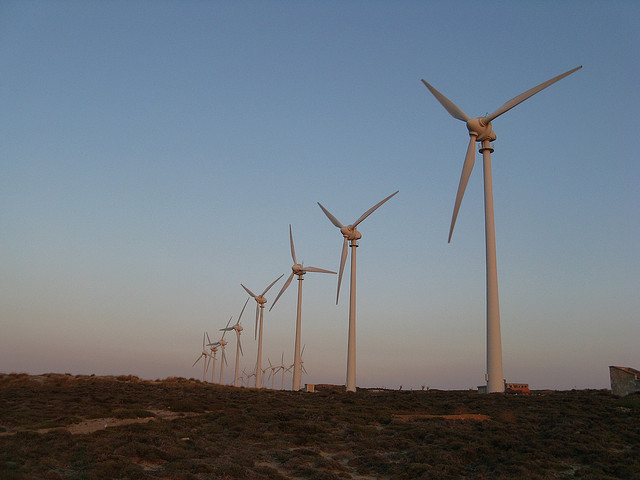
Despite its vast solar and wind energy potential, Turkey’s renewable resources have only been developed in small pockets of the country, such as the windy Aegean island of Bozcaada (pictured above).

With European countries having already tapped most of their low-hanging renewable energy development opportunities, Turkey is perfectly poised to become the new renewable energy dynamo in the region, according to an analysis published yesterday in the Financial Times‘s beyondbrics blog.

The resources

Although Turkey ranks second in Europe with its massive solar and onshore wind potential, according to the article, those resources remain vastly underused.

Given Turkey’s high dependence on energy imports, the main reason behind its current account deficit, and Turkey’s rapidly growing energy demand, now is the perfect time for the country to expand its local energy production in a more local, sustainable direction.

Wind contributes just 1,800 MW to Turkey’s installed power generating capacity, which is expected to top 55,000 MW this year. Solar is even less utilized, with only 5 MW of installed PV systems generating power.

Hydropower has been the focus of Turkey’s renewable energy so far, with nearly one third of the country’s installed capacity from hydropower dams. But those dams are increasingly coming under fire for the environmental and human threats they pose, and most of the economically viable hydro resources have already been sold to developers.

The obstacles

What’s holding Turkey back from becoming the renewable energy behemoth it could be?

Complicated bureaucratic and administrative procedures account for some of the delay. The renewable sector is also dominated by holding companies that invest in renewable energy only to diversify, without any strategic interest in the sector. Licenses for renewable projects have been viewed by many Turkish firms as “a security that could be flipped for a profit”, according to the Financial Times article, and no proper analysis performed on them. Smaller companies tend to also lack the expertise or foreign partners necessary to fully develop the project licenses they win.

On a more specific level, solar is held back by the limited capacity accorded it by the central government. Licenses are required for any power-generating installation greater than 500 kW, but the 2013 solar license round will only include 600 MW worth of licenses.

The wind energy market in Turkey was stalled for several years by a chaotic auction in 2008 that sold licenses for overlapping projects, totaling more than 78,000 MW — well in excess of the economically feasible wind energy potential of 38,000 MW. This year, firms that won valid licenses are just beginning to develop them.

Slow progress, but progress nonetheless

The Turkish government has some ambitious goals for the next several years: 20,000 MW of installed wind capacity by 2023, reducing the current account deficit by 1 percent of GDP, and boosting research and development spending from 1 percent of GDP to 3 percent.

All of these are connected to a stronger renewable energy sector in Turkey. By making the licensing process more rigorous and streamlined, encouraging foreign investment and strategic partnerships, and raising the incentives for renewable developers, the government will guarantee a cleaner and more secure energy future for Turkey.

:: Financial Times

Read more about renewable energy in Turkey:

Turkish Cabinet Invokes Wartime Law To Seize Property For Hydro Projects
14,000 Turkish Homes To Be Powered By World’s Most Efficient 1.5-MW Wind Turbines
Wind Energy and Organic Farming Collide in Western Turkey

Image via tryangulation

Julia Harte
Julia Hartehttp://www.greenprophet.com
Julia spent her childhood summers in a remote research station in the Rocky Mountains of Colorado, helping her father with a 25-year-old experiment in which he simulated global warming over a patch of alpine meadow. When not measuring plant species diversity or carbon flux in the soil, she could be found scampering around the forests and finding snowbanks to slide down. Now she is a freelance journalist living in Istanbul, where her passion for the environment intersects with her interest in Turkish politics and grassroots culture. She also writes about Turkish climate and energy policy for Solve Climate News.
1 COMMENT
  1. Renewable energy is great but, as the United States is fast learning you need to let the private sector run with it and have the government offer incentives to encourage development – not force it or own it.

LEAVE A REPLY

Please enter your comment!
Please enter your name here

TRENDING

Astro uses AI to help procure land for renewable energy

For oil-rich, environmentally vigilant Gulf states, Astro isn’t just another startup story. It is a blueprint for accelerating an energy transition that is now existential, not optional.

Leading Through a Dual-Energy Transition: Balancing Decarbonisation with Energy Security

Experience in one area of the energy industry isn't enough to guarantee readiness across all the others. That's where a structured program like an MBA in energy can come in. Today's advanced curricula explore energy economics, finance, policy, and strategic management alongside the technical subjects. And when pursuing an energy MBA online, professionals can skill up and retrain without having to step out of the labor market -- an important perk at a time when skilled professionals are already in short supply.

What Renewable Energy Means for Long-Term Environmental Planning

In the context of American energy policy (setting the stage for the world as oil prices are in USD), the relevance of renewable energy planning is increasingly evident. Federal agencies are preparing final biofuel blending mandates under the Renewable Fuel Standard, with decisions expected early in 2026 after delays that have left investors and producers in limbo.

How wind energy must adapt to a changing climate

For a wind farm designed on 20 years of historical data, this matters. A project that looks profitable today may deliver less energy in the future, on the opposite, way more. Uncertainty replaces confidence.

Alphabet buys Intersect Power for $4.5 Billion USD to sustainably power its AI infrastructure

That shift helps explain why Alphabet, Google’s parent company, has agreed to acquire American renewable energy company Intersect Power in a deal valued at roughly $4.75 billion. It’s a move that reflects a deeper change: technology companies are paying closer attention to the physical systems that support their growth. 

6 Payment Processors With the Fastest Onboarding for SMBs

Get your SMB up and running fast with these 6 payment processors. Compare the quickest onboarding options to start accepting customer payments without delay.

Qatar’s climate hypocrisy rides the London Underground

Qatar remains a master of doublethink—burning gas by the megaton while selling “sustainability” to a world desperate for clean air. Wake up from your slumber people.

How Quality of Hire Shapes Modern Recruitment

A 2024 survey by Deloitte found that 76% of talent leaders now consider long-term retention and workforce contribution among their most important hiring success metrics—far surpassing time-to-fill or cost-per-hire. As the expectations for new hires deepen, companies must also confront the inherent challenges in redefining and accurately measuring hiring quality.

8 Team-Building Exercises to Start the Week Off 

Team building to change the world! The best renewable energy companies are ones that function.

Thank you, LinkedIn — and what your Jobs on the Rise report means for sustainable careers

While “green jobs” aren’t always labeled as such, many of the fastest-growing roles are directly enabling the energy transition, climate resilience, and lower-carbon systems: Number one on their list is Artificial Intelligence engineers. But what does that mean? Vibe coding Claude? 

Somali pirates steal oil tankers

The pirates often stage their heists out of Somalia, a lawless country, with a weak central government that is grappling with a violent Islamist insurgency. Using speedboats that swarm the targets, the machine-gun-toting pirates take control of merchant ships and then hold the vessels, crew and cargo for ransom.

Leopoldo Alejandro Betancourt López Turned Ocean Plastic Into Profitable Sunglasses

Few fashion accessories carry the environmental burden of sunglasses. Most frames are constructed from petroleum-based plastics and acrylic polymers that linger in landfills for centuries, shedding microplastics into soil and waterways long after they've been discarded. Leopoldo Alejandro Betancourt López, president of the Spanish eyewear brand Hawkers, saw this problem differently than most industry executives.

Why Dr. Tony Jacob Sees Texas Business Egos as Warning Signs

Everything's bigger in Texas. Except business egos.  Dr. Tony Jacob figured...

Related Articles

Popular Categories