Why BrightSource Did not Need that IPO

brightsource IPOWhen BrightSource withdrew its IPO this month, the death knell for solar was sounded, as always. The truth is more mundane.

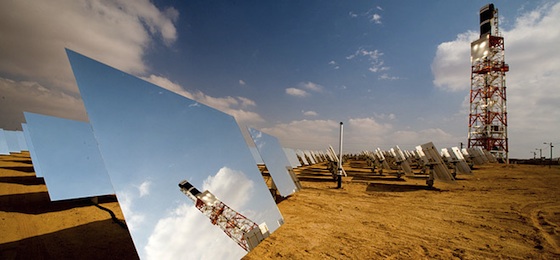
According to the always inquisitive   over at GigaOm who managed to snag a Q&A with the company, BrightSource just doesn’t necessarily need the extra money right now. Its Ivanpah solar thermal project is already fully funded with project financing from NRG Energy and Google.

(Related: Israel’s BrightSource Still Private After IPO Withdrawal.)

Any additional funds from an IPO at this point would just have gone toward things like continued research and development, project development (other ongoing permitting work) and international expansion. And with market conditions as they are a quick cost/benefit analysis in the last days found an IPO not needed.

According to the California Public Utilities Commission (CPUC) data, BrightSource has 13 of its huge utility scale solar thermal projects that will be shipping electrons to the California grid between 2013 and 2017 – that are now going the permitting stage.

The Israeli-birthed (Luz Rises Again as BrightSource) U.S. company is the leader of the pack with projects that will clean the U.S. grid for decades into the future, based on the original projects invented by Israeli engineers that still operate in the California desert – even though the U.S. government drove the original Luz  into bankruptcy with the unstable renewable policies of the Carter-Reagan transition.

Since every last one of these BrightSource solar thermal projects already has a Power Purchase Contract (PPA) with the California utilities for the next 20 to 25 years, (and thus certain and long term bankability) the need for additional funding in an IPO is not so great that they were willing to go for it in a down market.

The IPO was cancelled from a position of strength.

“During our IPO marketing, we did experience significant interest from potential investors in the US and internationally” Keely Wachs, senior director of corporate communications wrote to Greenprophet in an email. “We’re also seeing significant demand for our technology in international markets in addition to the strong reception received domestically over the past six years.”

So do not be alarmed next time you read news like this: news like this is not The End of Solar! As Fehrenbacher shows, the truth is simpler. Even when Solyndra actually filed for bankruptcy it was not The End of Solar! So next time you read of how any one company’s bankruptcy – or setback – or minor revised footstep – Means The End of Solar! just remember how when Netscape went bankrupt – that was the end of the internet!

Read more on BightSource:


1 COMMENT

Comments are closed.

TRENDING

Astro uses AI to help procure land for renewable energy

For oil-rich, environmentally vigilant Gulf states, Astro isn’t just another startup story. It is a blueprint for accelerating an energy transition that is now existential, not optional.

Earth building with Dead Sea salt bricks

Researchers develop a brick made largely from recycled Dead Sea salt—offering a potential alternative to carbon-intensive cement.

Farm To Table Israel Connects People To The Land

Farm To Table Israel is transforming the traditional dining experience into a hands-on journey.

Remilk makes cloned milk so cows don’t need to suffer and it’s hormone-free

This week, Israel’s precision-fermentation milk from Remilk is finally appearing on supermarket shelves. Staff members have been posting photos in Hebrew, smiling, tasting, and clearly enjoying the moment — not because it’s science fiction, but because it tastes like the real thing.

An Army of Healers Wins the 2025 IIE Goldberg Prize for Peace in the Middle East

In a region more accustomed to headlines of loss than of listening, the Institute of International Education (IIE) has chosen to honor something quietly radical: healing. The 2025 Victor J. Goldberg Prize for Peace in the Middle East has been awarded to Nitsan Joy Gordon and Jawdat Lajon Kasab, the co-founders of the Army of Healers, for building spaces where Israelis and Palestinians — Jews, Muslims, Christians, Druze, and Bedouins — can grieve, speak, and rebuild trust together.

Turning Your Energy Consultancy into an LLC: 4 Legal Steps for Founders in Texas

If you are starting a renewable energy business in Texas, learn how to start an LLC by the books.

Tracking the Impacts of a Hydroelectric Dam Along the Tigris River

For the next two months, I'll be taking a break from my usual Green Prophet posts to report on a transnational environmental issue: the Ilısu Dam currently under construction in Turkey, and the ways it will transform life along the Tigris River.

6 Payment Processors With the Fastest Onboarding for SMBs

Get your SMB up and running fast with these 6 payment processors. Compare the quickest onboarding options to start accepting customer payments without delay.

Qatar’s climate hypocrisy rides the London Underground

Qatar remains a master of doublethink—burning gas by the megaton while selling “sustainability” to a world desperate for clean air. Wake up from your slumber people.

How Quality of Hire Shapes Modern Recruitment

A 2024 survey by Deloitte found that 76% of talent leaders now consider long-term retention and workforce contribution among their most important hiring success metrics—far surpassing time-to-fill or cost-per-hire. As the expectations for new hires deepen, companies must also confront the inherent challenges in redefining and accurately measuring hiring quality.

8 Team-Building Exercises to Start the Week Off 

Team building to change the world! The best renewable energy companies are ones that function.

Thank you, LinkedIn — and what your Jobs on the Rise report means for sustainable careers

While “green jobs” aren’t always labeled as such, many of the fastest-growing roles are directly enabling the energy transition, climate resilience, and lower-carbon systems: Number one on their list is Artificial Intelligence engineers. But what does that mean? Vibe coding Claude? 

Somali pirates steal oil tankers

The pirates often stage their heists out of Somalia, a lawless country, with a weak central government that is grappling with a violent Islamist insurgency. Using speedboats that swarm the targets, the machine-gun-toting pirates take control of merchant ships and then hold the vessels, crew and cargo for ransom.

Related Articles

Popular Categories