
Solar Flare and Geomagnetic Storm Spares Earthlings

solar flare, solar storm, nature, science, technology, NASA, space, technology

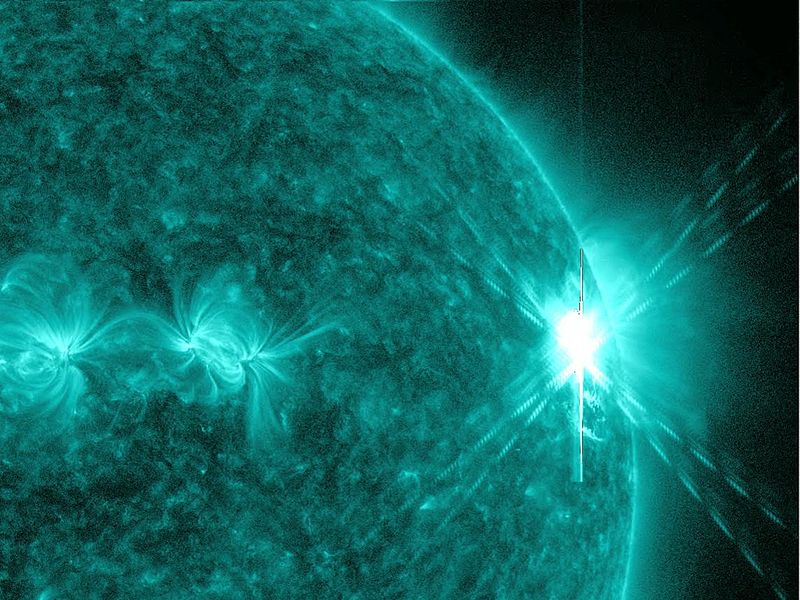
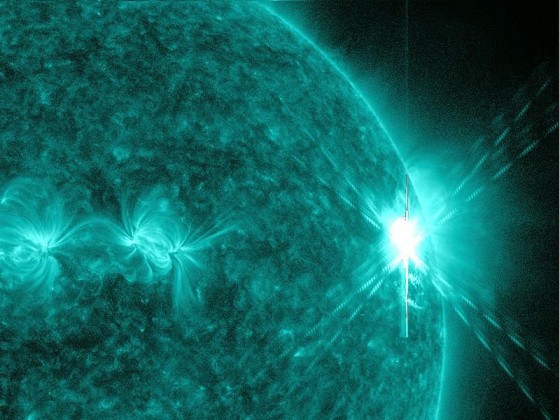
Yesterday a solar flare that slammed into earth did not create any of the disruptions forecasted by scientists. 

Earthlings waited with bated breath yesterday as a solar flare hurled by a coronal mass ejection on the sun slammed into our planet. NASA and the National Oceanic and Atmospheric Association (NOAA) both cautioned that this would be the worst such flare since 2006 and that it could cause “severe” disruptions to modern technology such as GPS and satellite systems and power grids. But the solar storm was far weaker than anticipated and created nary a disruption. This time.

Missed the spin

“Our forecasters really struggled with this one,” National Oceanic and Atmospheric Administration scientist Joseph Kunches told reporters. He compared trying to forecast how a solar flare will behave to predicting how a baseball will act after a pitcher tosses it towards his opponent.

“We missed the spin on the ball,” Kunches said.

Scientists misread the orientation of a magnetic field that is present within the coronal mass ejection that determines what kind of impact the solar storm will have on earth.

“It is very difficult for forecasters, literally almost impossible, as you watch the coronal mass ejection come off the sun to be able to predict the orientation of that embedded magnetic field,” according to Kunches.

Based on these forecasts, air carriers were warned to redirect their flights over polar regions. As it turned out, the solar fire only registered at G1 on a scale of five – with the higher number being more severe.

Future solar flares

NOAA and NASA researchers also expected the intensity of northern lights to increase and to be visible even at more southerly locations. But since the geomagnetic activity was considerably weaker than anticipated, the aurora borealis was only visible in far northern territories.

Since the Sun is transitioning from a solar minimum to solar maximum period, there will be a surge of geomagnetic activity and radiation in the next few years. We are protected by the earth’s magnetic field, but modern technology may not always be so lucky.

Kunches explains the worst case scenario to NPR:

Well, back during the last solar maximum, back in 2003 around Halloween, there were a series of events even stronger than the one that we’re experiencing today. And they disturbed the Earth’s magnetic field to the point where there were some interruptions in satellite operations. The airlines who need to communicate as they fly from North America to Asia over the pole rerouted their flights so they could ensure communications. Electric power grid operators felt unwanted induced currents in their systems and there were a number of other things that were technologically felt because the sun was so eruptive back then.

This time we got lucky, but future incidents should reinforce how vulnerable we are to the mysteries of the universe.

:: Borneo Post

image via wikicommons

More on the Sun:

Could Intense Solar Flares Meltdown Nuclear Reactors Everywhere?

Markus Kayser’s Solar Sinter Prints on Sand – Could Replace Concrete

A Real Live Solar City Shines in Israel

Tafline Laylin
Tafline Laylinhttp://www.greenprophet.com
As a tour leader who led “eco-friendly” camping trips throughout North America, Tafline soon realized that she was instead leaving behind a trail of gas fumes, plastic bottles and Pringles. In fact, wherever she traveled – whether it was Viet Nam or South Africa or England – it became clear how inefficiently the mandate to re-think our consumer culture is reaching the general public. Born in Iran, raised in South Africa and the United States, she currently splits her time between Africa and the Middle East. Tafline can be reached at tafline (at) greenprophet (dot) com.
3 COMMENTS
  1. Nonetheless, the spin on the ball continued – and hit G3 between midnight at 4AM last night. The North/South component of the Earth magnetic field at Gakona and several other stations in Alaska went from a maximum of about 700nT above normal at 3:30 AM UTC to 1200nT below at 11:30 UTC. The total fluctuation was thus 1900nT. Magnetic storm strength, however, is averaged over several stations to the “Dst” measure, which is what categorizes this storm at a G3. Local phenomena can be much, much stronger.

    The legendary magnetic storm in 1859 measured to 1600nT in Bombay so, locally, this one might have been worse. The 1859 storm set several fires in telegraph stations and shocked telegraph operators.

    The solar storm that hit Hydro Quebec in 1989 maxed out at a Dst of -589 nT.

  2. Now, I am waiting for the more latest news related to this Solar Flare and Geomagnetic Storm Spares Earthlings. Now lets see what will happen in the near future.

LEAVE A REPLY

Please enter your comment!
Please enter your name here

TRENDING

What is the Jewish Climate Trust?

Jewish Climate Trust has quickly attracted the attention and support of some of the most influential voices in Jewish philanthropy, drawing backing from prominent family foundations and business leaders connected to the Bronfman and Schusterman philanthropic networks, alongside climate-focused investors and community builders aligned with founding leader Nigel Savage. Together, these donors have committed many millions of dollars to build a serious, long-term climate platform for the Jewish world — not as a symbolic gesture, but as a strategic intervention in one of the defining challenges of this generation.

What a martian ice age left behind tells us about our future

We have heard that peak climate change might be...

Perseverance Rover Uncovers Ancient Martian Chemistry — And Raises the Question: Could This Hint at Past Life?

On Earth, similar mineral–organic interactions can be biological or abiotic. In Jezero Crater, the long geological timescales suggest the reduced vivianite and sulfides may have formed without biology — but organic compounds could still have driven the chemistry.

The Satellite That Sees Earth Breathe: How NISAR Could Transform Sustainability From Space

Critically, NISAR’s data will be publicly available. That means not only scientists and governments, but also nonprofits, local planners, and startups can build tools and services using the data.

How Eco-Friendly Playgrounds Are Reshaping Community Green Spaces

An eco-friendly playground goes a long way toward saving the city money. This is obviously also true for schools and churches that want to create new play spaces for the kids. The equipment can come in at a lower cost because the materials have been repurposed.

Qatar’s climate hypocrisy rides the London Underground

Qatar remains a master of doublethink—burning gas by the megaton while selling “sustainability” to a world desperate for clean air. Wake up from your slumber people.

How Quality of Hire Shapes Modern Recruitment

A 2024 survey by Deloitte found that 76% of talent leaders now consider long-term retention and workforce contribution among their most important hiring success metrics—far surpassing time-to-fill or cost-per-hire. As the expectations for new hires deepen, companies must also confront the inherent challenges in redefining and accurately measuring hiring quality.

8 Team-Building Exercises to Start the Week Off 

Team building to change the world! The best renewable energy companies are ones that function.

Thank you, LinkedIn — and what your Jobs on the Rise report means for sustainable careers

While “green jobs” aren’t always labeled as such, many of the fastest-growing roles are directly enabling the energy transition, climate resilience, and lower-carbon systems: Number one on their list is Artificial Intelligence engineers. But what does that mean? Vibe coding Claude? 

Somali pirates steal oil tankers

The pirates often stage their heists out of Somalia, a lawless country, with a weak central government that is grappling with a violent Islamist insurgency. Using speedboats that swarm the targets, the machine-gun-toting pirates take control of merchant ships and then hold the vessels, crew and cargo for ransom.

Leopoldo Alejandro Betancourt López Turned Ocean Plastic Into Profitable Sunglasses

Few fashion accessories carry the environmental burden of sunglasses. Most frames are constructed from petroleum-based plastics and acrylic polymers that linger in landfills for centuries, shedding microplastics into soil and waterways long after they've been discarded. Leopoldo Alejandro Betancourt López, president of the Spanish eyewear brand Hawkers, saw this problem differently than most industry executives.

Why Dr. Tony Jacob Sees Texas Business Egos as Warning Signs

Everything's bigger in Texas. Except business egos.  Dr. Tony Jacob figured...

Israel and America Sign Renewable Energy Cooperation Deal

Other announcements made at the conference include the Timna Renewable Energy Park, which will be a center for R&D, and the AORA Solar Thermal Module at Kibbutz Samar, the world's first commercial hybrid solar gas-turbine power plant that is already nearing completion. Solel Solar Systems announced it was beginning construction of a 50 MW solar field in Lebrija, Spain, and Brightsource Energy made a pre-conference announcement that it had inked the world's largest solar deal to date with Southern California Edison (SCE).

Related Articles

Popular Categories