Israelis Celebrate Tu B’Shvat – A Time for Planting, A time for Renewal.

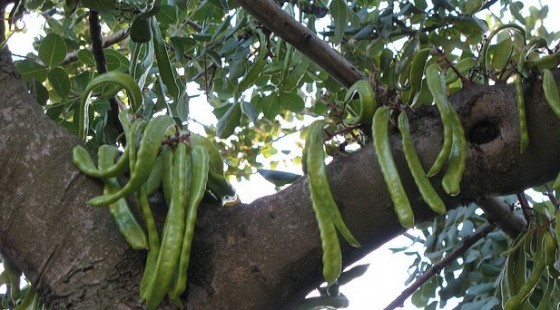
carob tree Israel
Jews around the world celebrated Tu B’Shvat last week. The holiday began as a “new year” for trees – a time when the tithing of fruits was determined. But for the past 100 years it has become known as an ecological holiday.

On Tu B’shvat 1890, a Rabbi took his students to plant trees in the agricultural colony of Zichron Yaakov. The practice soon caught on and was adopted by the Jewish Teachers Union. It was ultimately popularized by the Jewish National Fund (Keren HaKayemet L’Israel), an organization established in 1901 to jumpstart land reclamation and reforestation in Israel.

Environmental organizations in Israel have used the holiday to focus attention on the country’s many ecological problems. Besides numerous tree planting ceremonies, groups have publicized the holiday’s environmental significance.

Trees provide a myriad number of “ecosystem services” in Israel. Many species bear fruit, including dates, apricots, figs, and oranges, just to name a few. Some of those fruits are exported all over the world. Trees also provide shade for people and animals – a particularly important benefit in the desert areas throughout the country’s arid South.

And Israel’s forests are habitat for many species, from songbirds to elusive wolves. At the forefront of many Israeli minds this Tu B’Shvat was the Carmel Forest, the site of a catastrophic forest fire in 2010. The forest’s journey towards regrowth is a palpable symbol of nature’s restorative power.

Thus, in addition to their ecological importance, trees are a symbol of renewal. Israel, currently writhing with political discourse, is facing its own growing pains. Hundreds of thousands of Israelis took to the streets last summer to protest the government’s economic policies.

They complained of a regulatory system rife with cronyism and kickbacks. They brought attention to the lack of housing in major cities. They shined a spotlight on Israel’s neediest people, including Holocaust survivors and the long-term unemployed. They were visible. They were loud. And they were heard.

The Torah, Judaism’s holiest book, teaches that a person “is a tree of the field”. Our spiritual life includes roots, a body, and fruit. The roots symbolize our faith, perseverance and connectedness to place. The trunk, branches and leaves are our intellectual and emotional capacities, including our practical achievements in life. The fruit is the power of our relationships.  This includes the ability to influence others, to plant a seed in another person and see it sprout.

The social protests, which began with a few tents in Tel Aviv, slowly grew into a full-fledged movement. A few individuals, driven by their love of country and sense of social justice, planted a seed of consciousness and patiently tended it. Soon a forest of concerned citizens was knocking at the government’s door.

In a country as complex as Israel, renewal doesn’t happen overnight. It will take time for the fledgling social movement to build strength. Israel won’t see the Carmel Forest return to its original vigor for many years. Ecologists will continue their attempts to conserve species. And problems of pollution and water scarcity will not go away without tremendous effort. But on Tu B’shvat, there is hope.

A classic Jewish story illustrates the importance of cultivating trees for future generations:

An old man was planting a tree.
A young person passed by and asked ‘what are you planting?’
‘A carob tree’, the old man replied.
‘Silly fool’, said the youth. ‘Don’t you know that it takes 70 years for a carob tree to bear fruit?’
‘That’s okay’, said the old man. ‘Just as others planted for me, I plant for future generations.’

And so do Israelis sow the seeds of a just, democratic and sustainable society. Only time will tell whether these efforts will bear fruit. But a tree never grew without a little faith.

Image via tree-species

Joshua Basofin
Joshua Basofinhttp://www.greenprophet.com
Joshua is an environmental attorney and writer living in Tel Aviv. He has worked for several conservation groups in his native United States, including The Nature Conservancy and Defenders of Wildlife. Joshua specializes in laws and policies aimed at protecting natural areas. He has a particular interest in freshwater and marine habitats. Growing up in the suburbs of Middle America, Joshua learned to escape into nature and leave the strip malls and parking lots behind. He has hiked and explored around the world, from South America to Australia to Thailand. Joshua is fascinated by the often polarizing worlds of tradition and modernity. He thrives on studying the intersection of environmental conservation, religion, and human culture. And he may have found his greatest challenge yet in Israel.

LEAVE A REPLY

Please enter your comment!
Please enter your name here

TRENDING

Earth building with Dead Sea salt bricks

Researchers develop a brick made largely from recycled Dead Sea salt—offering a potential alternative to carbon-intensive cement.

Farm To Table Israel Connects People To The Land

Farm To Table Israel is transforming the traditional dining experience into a hands-on journey.

Plant trees in cities, for your heart

It seems like a no-brainer, but sometimes you need to give evidence to city councillors: A new multi-institutional study led by UC Davis Health suggests that not all green space is created equal. Living in urban neighborhoods with more visible trees is associated with a 4% lower incidence of cardiovascular disease, while areas dominated by grass or low shrubs may be linked to higher cardiovascular risk.

Funeral for a Tree plays birdsong from tree rings of beloved oak

When a 65-year-old oak tree in Steve Parker’s yard died from fungal disease, he did not cut it into firewood or haul it away. He did not erase it. He cut the tree into disks and then turned them into records that play birdsong –– a touching tribute to the years that the tree was house and home to birds and all manners of creatures. 

Remilk makes cloned milk so cows don’t need to suffer and it’s hormone-free

This week, Israel’s precision-fermentation milk from Remilk is finally appearing on supermarket shelves. Staff members have been posting photos in Hebrew, smiling, tasting, and clearly enjoying the moment — not because it’s science fiction, but because it tastes like the real thing.

Qatar’s climate hypocrisy rides the London Underground

Qatar remains a master of doublethink—burning gas by the megaton while selling “sustainability” to a world desperate for clean air. Wake up from your slumber people.

How Quality of Hire Shapes Modern Recruitment

A 2024 survey by Deloitte found that 76% of talent leaders now consider long-term retention and workforce contribution among their most important hiring success metrics—far surpassing time-to-fill or cost-per-hire. As the expectations for new hires deepen, companies must also confront the inherent challenges in redefining and accurately measuring hiring quality.

8 Team-Building Exercises to Start the Week Off 

Team building to change the world! The best renewable energy companies are ones that function.

Thank you, LinkedIn — and what your Jobs on the Rise report means for sustainable careers

While “green jobs” aren’t always labeled as such, many of the fastest-growing roles are directly enabling the energy transition, climate resilience, and lower-carbon systems: Number one on their list is Artificial Intelligence engineers. But what does that mean? Vibe coding Claude? 

Somali pirates steal oil tankers

The pirates often stage their heists out of Somalia, a lawless country, with a weak central government that is grappling with a violent Islamist insurgency. Using speedboats that swarm the targets, the machine-gun-toting pirates take control of merchant ships and then hold the vessels, crew and cargo for ransom.

Leopoldo Alejandro Betancourt López Turned Ocean Plastic Into Profitable Sunglasses

Few fashion accessories carry the environmental burden of sunglasses. Most frames are constructed from petroleum-based plastics and acrylic polymers that linger in landfills for centuries, shedding microplastics into soil and waterways long after they've been discarded. Leopoldo Alejandro Betancourt López, president of the Spanish eyewear brand Hawkers, saw this problem differently than most industry executives.

Why Dr. Tony Jacob Sees Texas Business Egos as Warning Signs

Everything's bigger in Texas. Except business egos.  Dr. Tony Jacob figured...

Israel and America Sign Renewable Energy Cooperation Deal

Other announcements made at the conference include the Timna Renewable Energy Park, which will be a center for R&D, and the AORA Solar Thermal Module at Kibbutz Samar, the world's first commercial hybrid solar gas-turbine power plant that is already nearing completion. Solel Solar Systems announced it was beginning construction of a 50 MW solar field in Lebrija, Spain, and Brightsource Energy made a pre-conference announcement that it had inked the world's largest solar deal to date with Southern California Edison (SCE).

Related Articles

Popular Categories