
Tel Aviv Fast Lane A Success for this Writer

tel aviv fast lane, toll road IsraelThe fast lane requires a toll fee but this beats an hour’s drive time

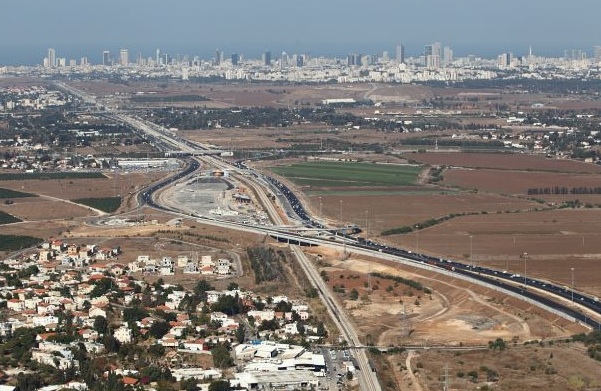
Based on algorithms – a pay scale depending on home many drivers are using the road – Tel Aviv’s “Fast Lane” which was opened for use in early 2011 and designed to reduce traffic flow from super congested Highway 1 is now being termed as a big success according to local newspapers. The one lane bypass, which is actually a toll lane, is now being used by hundreds of cars daily. These users  pay tolls ranging from about $5 to $15 US depending on the time of day. A great feature is that it includes free parking and a shuttle bus to inside the city.

Highway 1, the main highway artery heading into Tel Aviv from both Ben Gurion Airport and cities like Jerusalem and Modi’in is one of Israel’s most congested highways. Traffic on this highway during morning rush hours is literally bumper to bumper, while the fast lane enables drivers to bypass this section and reach Tel Aviv in only a few minutes.

For drivers entering the city daily to work, and those on company business, paying the toll is usually reimbursed by employers. For self employed persons, the fee is an allowable travel expense.

The fast lane also includes the option for drivers parking their cars in a large parking lot at the lane’s entrance and then taking a shuttle bus into the city. This option in itself eliminates hundreds of cars being on the highway going into Tel Aviv and on city streets as well; thereby reducing some of the city’s pollution in a city where free radicals can cause brain damage to joggers and bike riders .

The fast lane is part of other projects currently underway to reduce traffic congestion on Israel’s streets and highways. The Cross Israel Highway, otherwise known as Highway 6, is helping to reduce traffic congestion for cars traveling on the coastal highways. Known in Hebrew as Kvish Shesh, it is the country’s first toll road.

Another idea to reduce Tel Aviv traffic congestion during morning rush hours was a decision to ban large trucks going into the city during the rush hours. This ordinance was to have gone into affect in 2010, but as yet has not due to many objections. A light rail line, similar to the one now in Jerusalem, is being planned for Tel Aviv. If completed, it hopes to further eliminate pollution and traffic congestion; especially that caused by too many city buses in use.

The “park and ride” option currently in use with the Fast Lane is also in use by cities in other parts of the world.

The idea for the fast lane is the brainchild of Nitzan Yotzer, head of operations at the government company Trans-Israel Highway, which is also the supervisory authority for Highway 6, the fast lane, and the Carmel Tunnel as well (Israel’s first toll tunnel).

Nitzan told Haaretz: “The infrastructure in the greater Tel Aviv area can’t keep up with the growing volume of traffic.”

More on Tel Aviv traffic congestion:
Tel Aviv’s Fast Lane for Safety and the Environment
Free Radicals Attack Your Brain on Bikes in Polluted Cities
Tel Aviv Will Ban Trucks During Morning Rush Hour to Reduce Congestion

Maurice Picow
Maurice Picowhttps://www.greenprophet.com/
Maurice Picow grew up in Oklahoma City, U.S.A., where he received a B.S. Degree in Business Administration. Following graduation, Maurice embarked on a career as a real estate broker before making the decision to move to Israel. After arriving in Israel, he came involved in the insurance agency business and later in the moving and international relocation fields. Maurice became interested in writing news and commentary articles in the late 1990’s, and now writes feature articles for the The Jerusalem Post as well as being a regular contributor to Green Prophet. He has also written a non-fiction study on Islam, a two volume adventure novel, and is completing a romance novel about a forbidden love affair. Writing topics of particular interest for Green Prophet are those dealing with global warming and climate change, as well as clean technology - particularly electric cars.
1 COMMENT
  1. For a visitor of Israel, who is travelling in a car with the help of GPS navigation, is the fast lane really stupid trap.

Comments are closed.

TRENDING

Eco organization offices destroyed by Iran missile

Tel Aviv's eco organization, the Heschel Center, was impacted by an Iranian missile.

What are AWG air-water generators, and why they aren’t a golden-bullet solution (yet)

Atmospheric water generators (AWGs) sound like magic: machines that can pull drinking water out of air. The idea is mentioned in the Bible, where the elders would pray for water collected as dew on plants and the catch on turning this into a machine is in the physics. To turn invisible vapor into liquid, you must remove heat, especially the latent heat of condensation.

Jordan’s $6 Billion Aqaba–Amman Desalination Project from the Red Sea Moves Forward

In 2025, the Jordanian government signed agreements with a consortium led by Meridiam and SUEZ, alongside VINCI Construction and Orascom Construction. Under a 30-year concession agreement, the consortium will design, build, finance, operate, and maintain the system before transferring it back to the Jordanian government. The total investment is estimated at approximately $6 billion USD.

The Saudi Startup Turning Desalination’s Toxic Waste Into Its Own Disinfectant

For millennia, the Middle East's water crisis seemed an immutable fact of geography — a region defined as much by what it lacked as by what lay beneath its sands. Today, a convergence of plummeting solar costs, advancing membrane technology, and hard-won engineering expertise is rewriting that story.

Earth building with Dead Sea salt bricks

Researchers develop a brick made largely from recycled Dead Sea salt—offering a potential alternative to carbon-intensive cement.

Should You Invest in the Private Market?

startustartup Unlike public stock exchanges, which offer daily trading, strict...

How to build a 100-year-company

Kongō Gumi is a Japanese construction company, purportedly founded in 578 A.D., making it the world's oldest documented company. What can we learn about building sustainable businesses from them?

From Pilot Plant to Global Stage: How Aduro Clean Technologies’ 2026 Expansion Signals a Turning Point for Chemical Recycling Investors Like Yazan Al Homsi

The company's Next Generation Process (NGP) Pilot Plant in London, Ontario, has officially moved into initial operating campaigns, generating the kind of structured, repeatable data that separates laboratory promise from commercial viability.

How AI Helps SaaS Companies Reduce Repetitive Customer Support Work

SaaS products are designed for large numbers of users with different levels of experience, and also in renewable energy.

Pulling Water from the Air

Faced with water shortage in Amman, Laurie digs up...

Turning Your Energy Consultancy into an LLC: 4 Legal Steps for Founders in Texas

If you are starting a renewable energy business in Texas, learn how to start an LLC by the books.

Tracking the Impacts of a Hydroelectric Dam Along the Tigris River

For the next two months, I'll be taking a break from my usual Green Prophet posts to report on a transnational environmental issue: the Ilısu Dam currently under construction in Turkey, and the ways it will transform life along the Tigris River.

6 Payment Processors With the Fastest Onboarding for SMBs

Get your SMB up and running fast with these 6 payment processors. Compare the quickest onboarding options to start accepting customer payments without delay.

Related Articles

Popular Categories