Turkish Energy Analyst Says Biggest Emitters Avoided Durban Commitments

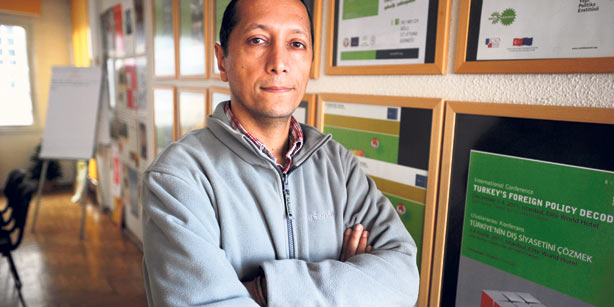
 Özgür Gürbüz, turkey energy analystThe countries that emit the most greenhouse gases only agreed to “vague, fragile” reduction targets at the recent climate change conference in Durban, according to Özgür Gürbüz, who was present at the conference.

For MENA countries, there are some bright spots in the outcome of the most recent United Nations Framework Convention on Climate Change (COP17) in Durban, South Africa. No legally binding greenhouse gas-emissions reduction target was set at the COP17, however. Instead, countries aimed at reducing their emissions by 25 to 40 percent from 1990 levels by 2020.

Prospects for real reductions: slim

But the world’s biggest polluters — the United States, Canada, Russia, and Japan, who together emit approximately one third of global emissions — will probably not adhere to this target without a legally binding protocol.

That’s the opinion of Özgür Gürbüz, a Turkish energy analyst, journalist, and consultant who has attended several climate change conferences, including COP17, who was recently interviewed in the Turkish daily Today’s Zaman.

Compared to the first commitment period of the Kyoto Protocol, which expires next year, says Gürbüz, the targeted 25-40% reduction from Durban is a wide, vague range, and gives countries too much time to reduce their emissions.

“An international, legally binding treaty… has to be finalized and realized by 2017, but preferably earlier,” he told the Zaman. “The current agreement is very fragile and could break down.”

All the technology needed to substantially reduce GHG emissions in developed countries already exists, according to Gürbüz, but political will and commercial interests are holding countries back from doing so.

“When it comes to oil, we are ready to talk about values and human rights, but when it comes to lives that are not attached to material benefits, there is nobody to speak out,” he pointed out.

Turkey’s strategy

Turkey is still included in the list of Annex I (developed) countries in the COP charter, but the “special circumstances” of its in-between stage of development, which exempted it from certain requirements in the Kyoto Protocol’s first commitment period.

Turkey’s emissions since 1990, however, have grown by 97 percent — one of the highest rates in the world. Per capita carbon-equivalent emissions are close to 5.2 tons, close to China’s and higher than the world average.

With very low hydrocarbon reserves of its own and plentiful renewable resources, Turkey’s energy future should be obvious, Gürbüz says.

Yet Turkey’s leaders seem to be fixated on following the same development path as the nations with the highest emissions of today.

“We are taught that higher electricity consumption per capita is a criterion of development. That is nonsense. Let’s keep the lights on all the time in our houses! I am sure it will double per capita consumption but the country will be worse off because of wasted energy.”

Instead, Turkey should focus on improving the energy efficiency of its vehicles, devices, and industrial facilities, adds Gürbüz. That’s the only path to true energy independence and energy security for this rapidly growing country.

:: Today’s Zaman 

Read more about what happened at Durban:
Durban Gives 6 Reasons For The Middle East To Celebrate
How Will Saudi-Driven Carbon Capture Work Under the Durban Climate Agreement? 
Saudi Acts As Oil Cheerleader At COP 17 Circus

Image via Today’s Zaman

Julia Harte
Julia Hartehttp://www.greenprophet.com
Julia spent her childhood summers in a remote research station in the Rocky Mountains of Colorado, helping her father with a 25-year-old experiment in which he simulated global warming over a patch of alpine meadow. When not measuring plant species diversity or carbon flux in the soil, she could be found scampering around the forests and finding snowbanks to slide down. Now she is a freelance journalist living in Istanbul, where her passion for the environment intersects with her interest in Turkish politics and grassroots culture. She also writes about Turkish climate and energy policy for Solve Climate News.
1 COMMENT
  1. …..biggest polluters – USA, Canada, Russia and Japan….
    Don’t we like to offend China and India, who probably also make up over another third of the worlds pollution???

LEAVE A REPLY

Please enter your comment!
Please enter your name here

TRENDING

Huge Fish Nursery Discovered Under Freezing Arctic Seas

In 2019, an underwater robot camera exploring the seabed...

Remilk makes cloned milk so cows don’t need to suffer and it’s hormone-free

This week, Israel’s precision-fermentation milk from Remilk is finally appearing on supermarket shelves. Staff members have been posting photos in Hebrew, smiling, tasting, and clearly enjoying the moment — not because it’s science fiction, but because it tastes like the real thing.

The US leaves 66 United Nations organizations to “put America first”

The world needs a reset and to restart well intentioned cooperation projects from start. Because right now the UN and EU projects look like software built on code from the 80s, rickety, patched, slow to adapt, and prone to crashing under the weight of outdated assumptions.

Turkey named as climate change COP31 home in 2026

Murat Kurum as President-Designate of COP31

Ancient air trapped in Canadian salt bubbles foretells climate future

Opening these samples is like cracking open air that existed long before dinosaurs, before forests, before animals of any kind. As lead researcher Justin Park put it: “It’s an incredible feeling to crack open a sample of air that’s a billion years older than the dinosaurs.”

Qatar’s climate hypocrisy rides the London Underground

Qatar remains a master of doublethink—burning gas by the megaton while selling “sustainability” to a world desperate for clean air. Wake up from your slumber people.

How Quality of Hire Shapes Modern Recruitment

A 2024 survey by Deloitte found that 76% of talent leaders now consider long-term retention and workforce contribution among their most important hiring success metrics—far surpassing time-to-fill or cost-per-hire. As the expectations for new hires deepen, companies must also confront the inherent challenges in redefining and accurately measuring hiring quality.

8 Team-Building Exercises to Start the Week Off 

Team building to change the world! The best renewable energy companies are ones that function.

Thank you, LinkedIn — and what your Jobs on the Rise report means for sustainable careers

While “green jobs” aren’t always labeled as such, many of the fastest-growing roles are directly enabling the energy transition, climate resilience, and lower-carbon systems: Number one on their list is Artificial Intelligence engineers. But what does that mean? Vibe coding Claude? 

Somali pirates steal oil tankers

The pirates often stage their heists out of Somalia, a lawless country, with a weak central government that is grappling with a violent Islamist insurgency. Using speedboats that swarm the targets, the machine-gun-toting pirates take control of merchant ships and then hold the vessels, crew and cargo for ransom.

Leopoldo Alejandro Betancourt López Turned Ocean Plastic Into Profitable Sunglasses

Few fashion accessories carry the environmental burden of sunglasses. Most frames are constructed from petroleum-based plastics and acrylic polymers that linger in landfills for centuries, shedding microplastics into soil and waterways long after they've been discarded. Leopoldo Alejandro Betancourt López, president of the Spanish eyewear brand Hawkers, saw this problem differently than most industry executives.

Why Dr. Tony Jacob Sees Texas Business Egos as Warning Signs

Everything's bigger in Texas. Except business egos.  Dr. Tony Jacob figured...

Israel and America Sign Renewable Energy Cooperation Deal

Other announcements made at the conference include the Timna Renewable Energy Park, which will be a center for R&D, and the AORA Solar Thermal Module at Kibbutz Samar, the world's first commercial hybrid solar gas-turbine power plant that is already nearing completion. Solel Solar Systems announced it was beginning construction of a 50 MW solar field in Lebrija, Spain, and Brightsource Energy made a pre-conference announcement that it had inked the world's largest solar deal to date with Southern California Edison (SCE).

Related Articles

Popular Categories