
Iran Lacks Water Planning

The importance of recycling used water is understood more today by the Iranian environmental authorities, but converting theories to practice needs more investment. Mohammad J. Mohammadi Zadeh, the head of Iranian Environmental Protection Agency has declared how the water supplies of the country, which is among the arid and semi-arid lands, are wasted: “From 410 billion cubic meters of rainfall of the country, 280 billon cubic meters are evaporated, 92 billion cubic meters flow on the surface, and 38 billion cubic meters are added to underground water reservoirs.”

He has also said that the enture water supply of Iran includes a volume of 130 billion cubic meters, of which 50 billion cubic meters are guaranteed as a source of water supply.

The two main issues that are worth considering concerning this problem are recycling plans and water usage patterns. What the mentioned governmental authority focuses on is the high amount of water that is used by Iranian households as a result of poor consumption patterns that wastes water. According to him, the average annual water use per capita is 191 liters, while this figure is 150 liters for the whole world.

What draws attention at the first glance is that Iranians are wasting water unwisely. But if we think a minute, then we see showing consumption patterns to people can be of a central government’s responsibilities. This can happen by means of the media, which are mainly in hands of the government in Iran.

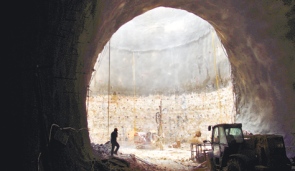
The recycling plans have been fundamentally implemented through building dams during the past two decades. These large construction projects have sometimes caused environmental debates and cultural problems that occurred after the construction of Sivand Dam in southern province of Fars.

However treatment and recycling the industrial used water has so far been neglected. There are many things that could be learnt regarding this issue. Brown and Caldwel in “Water System Management Plan” for the City of Davis, California (1989) have presented the most important factors that should be noted in an industrial water reuse program as follows:

  • Identification of water reuse opportunities
  • Determination of the minimum water quality needed for the given use
  • Identification of wastewater sources that satisfy the water quality requirements
  • Determination of how the water can be transported to the new use

They have also recommended important factors in a more general reuse program in Clover/Chambers Creek Basin Groundwater Management Program and EIS” (1990). For this second recommendation, they have generalized the factors for all recycling plans:

  • Identification of water reuse opportunities
  • Evaluation of the minimum water quality needed for a particular use
  • Evaluation of water quality degradation resulting from the use
  • Determination of the treatment steps, if any, that might be required to prepare the water for recycling

I am urging the government authorities in Iran to consider adopting some of these ideas.

Photo by farrokhi

More Middle Eastern water articles:

Abu Dhabi’s Costly Desalination Plants Prompt Wastewater Treatment Plans

Water from Alaska to the Middle East – Like Towing Icebergs from Antarctica?

Upstream African Countries Sign Nile Water Deal Against Egypt’s Interests

Mehrdad Parsipour
Mehrdad Parsipourhttp://www.greenprophet.com
Mehrdad Parsipour is an urban researcher who is based in Germany. He is originally from Iran and is interested in the traditional urbanism and architecture of Iran and Middle East. Mehrdad’s other research interests are western traditional urban development trends, Islamic cities, and sustainable urban forms, and finally the environment. Since 1997 he has been working in the field of civil engineering, and also urban and regional planning.
2 COMMENTS
  1. I am in favour of building artificial lakes to store water for use in irrigation
    it will assist to some extent floods, and supply water during dry season

    I can also project how to save water in gardening and farming

    Organic Gardener, Farmer

  2. What Tehran needs to do, is implement a real sewage system from every new area built gradually trickling down to the older areas, as at the moment all buildings drain water into there own sespit. Image 12 million people all using sespits!

LEAVE A REPLY

Please enter your comment!
Please enter your name here

TRENDING

Astro uses AI to help procure land for renewable energy

For oil-rich, environmentally vigilant Gulf states, Astro isn’t just another startup story. It is a blueprint for accelerating an energy transition that is now existential, not optional.

Zoroastrianism from Iran is the world’s first eco-religion

When Zarathustra started preaching around 1200 BCE in ancient Persia, which is known today as Iran, he wasn't just founding a religion—he was creating the world's first environmental protection movement. Good thoughts, good words, good deeds. But there was a mantra and words to live by: don't pollute the earth, water, or fire. Ever.

Sink holes from over-watering farmers’ fields

Sinkholes are rapidly appearing in Turkey’s central Anatolian farming region, particularly around Konya and Karapınar. These giant gaping holes in the ground in areas of farmland, known locally as obruk, are not random geological events. They are linked to prolonged drought, climate-driven heat stress, and heavy groundwater extraction for agriculture in one of the country’s most important breadbaskets.

Oil pollution in Basrah’s soil is 1,200% higher than it should be

Soil pollution levels in parts of Basra are 1,200% to 3,300% higher than those typically measured in cities like Toronto or New York, according to new comparative soil data. It's getting into water.

UNESCO forest being developed in Iran

Environmental activists in Iran often face significant personal risk when speaking out about illegal land grabs, deforestation, or the destruction of protected areas. In recent years, several high-profile environmentalists have been detained, interrogated, or imprisoned on broad national-security charges, sometimes without transparent legal proceedings.

6 Payment Processors With the Fastest Onboarding for SMBs

Get your SMB up and running fast with these 6 payment processors. Compare the quickest onboarding options to start accepting customer payments without delay.

Qatar’s climate hypocrisy rides the London Underground

Qatar remains a master of doublethink—burning gas by the megaton while selling “sustainability” to a world desperate for clean air. Wake up from your slumber people.

How Quality of Hire Shapes Modern Recruitment

A 2024 survey by Deloitte found that 76% of talent leaders now consider long-term retention and workforce contribution among their most important hiring success metrics—far surpassing time-to-fill or cost-per-hire. As the expectations for new hires deepen, companies must also confront the inherent challenges in redefining and accurately measuring hiring quality.

8 Team-Building Exercises to Start the Week Off 

Team building to change the world! The best renewable energy companies are ones that function.

Thank you, LinkedIn — and what your Jobs on the Rise report means for sustainable careers

While “green jobs” aren’t always labeled as such, many of the fastest-growing roles are directly enabling the energy transition, climate resilience, and lower-carbon systems: Number one on their list is Artificial Intelligence engineers. But what does that mean? Vibe coding Claude? 

Somali pirates steal oil tankers

The pirates often stage their heists out of Somalia, a lawless country, with a weak central government that is grappling with a violent Islamist insurgency. Using speedboats that swarm the targets, the machine-gun-toting pirates take control of merchant ships and then hold the vessels, crew and cargo for ransom.

Leopoldo Alejandro Betancourt López Turned Ocean Plastic Into Profitable Sunglasses

Few fashion accessories carry the environmental burden of sunglasses. Most frames are constructed from petroleum-based plastics and acrylic polymers that linger in landfills for centuries, shedding microplastics into soil and waterways long after they've been discarded. Leopoldo Alejandro Betancourt López, president of the Spanish eyewear brand Hawkers, saw this problem differently than most industry executives.

Why Dr. Tony Jacob Sees Texas Business Egos as Warning Signs

Everything's bigger in Texas. Except business egos.  Dr. Tony Jacob figured...

Related Articles

Popular Categories