
Algeria To Boost Its Food Security

Following the food riots that rocked the Middle East, Algeria is bolstering its agricultural self-sufficiency through irrigation projects and tax breaks for local producers

Food security is a tricky topic to grasp because food doesn’t just rely on the water and sun it needs to grow but also on the price of oil, the right climate and suitable agricultural land. These along with other factors such as the health of the economy and political stability all affect the price of food staples which we rely on and illustrate the complexity of food security.

Take for example the recent revolts in the Arab world. Sparked by the rising cost of food, they had the effect of pushing up the price of food higher due to the rising price of oil in the period of instability. In response to its own food riots in early January, Algeria has launched a range of projects to improve its agricultural self-sufficiency and food security.

According to reports by the Oxford Business Group, Algeria wants to improve its food security by discouraging imports and raising local production through irrigation projects to limit the country’s vulnerability to external commodity shocks.

As the world fourth largest importer of wheat, Algeria is slowly reducing its dependency with wheat imports falling by 8.5% between 2009 and 2010. Cereal imports were also down from around $5.4bn in 2009 to $5.2bn in 2010.

To help bridge the gap, irrigation projects are planned to increase domestic crop production- the government wants to expand its irrigation networks and increase irrigated surface area from around 400,000 hectares to 1 million hectares by 2015.

Around 9,000 hectares of land in the Bouira and Bejaia province have already earmarked for irrigation which will boost agricultural production in the area from around 30,000 tonnes to more than 120,000 tones a year.  The milk and dairy sector had also been targeted for improvements to productivity and efficiency through training programmes.

As the Global Arab Network remarks: “Should the government initiatives bear fruit, then the increased domestic production will go a long way to reducing the dependency on imports, buffering the country’s economy from external commodity shocks and increasing the efficiency of the local agricultural sector. This, in turn, should help keep prices lower and shelves stocked.”

: Global Art Network

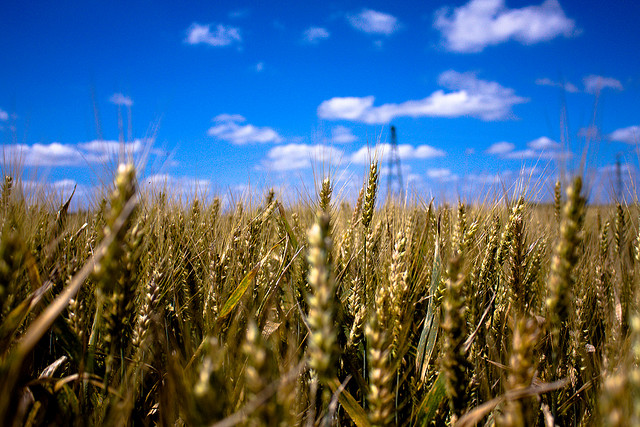
: Image via KevinLallier on flickr.

For more on Algeria and food security see:

How Food Insecurity Fuels Anger in the Middle East

The Water Behind Middle Eastern Woes

Rising Food Prices Behind Riots in Algeria and Tunisia

 

Arwa Aburawa
Arwa Aburawahttp://www.greenprophet.com
Arwa is a Muslim freelance writer who is interested in everything climate change related and how Islam can inspire more people to care for their planet and take active steps to save it while we can. She is endlessly suspicious of all politicians and their ceaseless meetings, especially as they make normal people believe that they are not part of the solution when they are the ONLY solution. Her Indian auntie is her model eco-warrier, and when Arwa is not busy helping out in the neighborhood alleyway garden, swap shopping or attempting fusion vegetarian dishes- with mixed success, she’d like to add- she can be found sipping on foraged nettle tea.

LEAVE A REPLY

Please enter your comment!
Please enter your name here

TRENDING

Farm To Table Israel Connects People To The Land

Farm To Table Israel is transforming the traditional dining experience into a hands-on journey.

Iran’s holiest city about to run dry as terror chosen over water management

Iran’s second-largest city, Mashhad, is facing an acute water emergency after dam reservoirs feeding the city fell below three percent capacity, according to Iranian state and local media. Officials warn that without rainfall or improved inflows from neighboring Afghanistan, the city’s supply could soon collapse.

Arab agricultural land is on the brink

Across the Arab world, croplands face a perfect storm of stressors. Excessive fertilizers and pesticides erode soil ecology. Poor drainage and over-irrigation drive salinization, leaving fields crusted with salt. Rising temperatures, dwindling groundwater, and more frequent sand-and-dust storms—all amplified by climate change—compound the crisis.

Jordan turns to ancient fire and mines volcanic soil to solve water crisis

In the volcanic highlands of northern Jordan, north of Amman engineers are mining a natural resource not for energy, but for agriculture. The material: crushed volcanic rock, now processed into a mineral-rich soil that may hold the key to reducing water and fertilizer demand in arid regions.

How to help Gaza fishermen

The destruction of Gaza's two main aquaculture farms, along with the hatchery facility, has also left the sector unable to produce alternative aquatic foods through aquaculture. 

Qatar’s climate hypocrisy rides the London Underground

Qatar remains a master of doublethink—burning gas by the megaton while selling “sustainability” to a world desperate for clean air. Wake up from your slumber people.

How Quality of Hire Shapes Modern Recruitment

A 2024 survey by Deloitte found that 76% of talent leaders now consider long-term retention and workforce contribution among their most important hiring success metrics—far surpassing time-to-fill or cost-per-hire. As the expectations for new hires deepen, companies must also confront the inherent challenges in redefining and accurately measuring hiring quality.

8 Team-Building Exercises to Start the Week Off 

Team building to change the world! The best renewable energy companies are ones that function.

Thank you, LinkedIn — and what your Jobs on the Rise report means for sustainable careers

While “green jobs” aren’t always labeled as such, many of the fastest-growing roles are directly enabling the energy transition, climate resilience, and lower-carbon systems: Number one on their list is Artificial Intelligence engineers. But what does that mean? Vibe coding Claude? 

Somali pirates steal oil tankers

The pirates often stage their heists out of Somalia, a lawless country, with a weak central government that is grappling with a violent Islamist insurgency. Using speedboats that swarm the targets, the machine-gun-toting pirates take control of merchant ships and then hold the vessels, crew and cargo for ransom.

Leopoldo Alejandro Betancourt López Turned Ocean Plastic Into Profitable Sunglasses

Few fashion accessories carry the environmental burden of sunglasses. Most frames are constructed from petroleum-based plastics and acrylic polymers that linger in landfills for centuries, shedding microplastics into soil and waterways long after they've been discarded. Leopoldo Alejandro Betancourt López, president of the Spanish eyewear brand Hawkers, saw this problem differently than most industry executives.

Why Dr. Tony Jacob Sees Texas Business Egos as Warning Signs

Everything's bigger in Texas. Except business egos.  Dr. Tony Jacob figured...

Israel and America Sign Renewable Energy Cooperation Deal

Other announcements made at the conference include the Timna Renewable Energy Park, which will be a center for R&D, and the AORA Solar Thermal Module at Kibbutz Samar, the world's first commercial hybrid solar gas-turbine power plant that is already nearing completion. Solel Solar Systems announced it was beginning construction of a 50 MW solar field in Lebrija, Spain, and Brightsource Energy made a pre-conference announcement that it had inked the world's largest solar deal to date with Southern California Edison (SCE).

Related Articles

Popular Categories