
Dubai’s Waste amongst the Highest in the World

UAE minister reveals that Dubai is amongst the top producers of waste in the world

Dubai, which is one of the seven emirates of United Arab Emirates, is no stranger to green controversy. From justifying mega malls by certifying them green to a growing market in shark fins despite a 2008 ban, the city certainly does have a few things to answer for. However, some point to a growing trend towards sustainability despite the fact that the region has such high oil reserves. We recently reported on the UAE’s plans to ban plastic bags by 2013, a green gas station in Dubai as well as efforts to encourage the use of public transport by going car-free for the day but it seems that all these initiatives have had a limited impact on the overall green credentials of the city.

According to reports from Emirates 24/7, Dr Rashid Ahmed bin Fahad who is the Minister of Environment and Water revealed that waste produced by the Gulf city of Dubai is amongst the highest globally.

Although he didn’t disclose any statistics, the minister explained that the high waste produced was due to the rapid economic growth the city had experienced. Emirates 24/7 reported that 80 percent of the carbon footprint of the city comes from the generation of water and energy- and 70 percent of the energy generated goes straight into air conditioning devices.

Back in 2009, we reported that waste had become a real issue in Dubai as rapid urbanisation meant that the waste infrastructure had not yet been able to deal with the growing amount of waste produced. The total waste collected in Dubai in 2005 was 11.3 million tonnes compared to 6.6 million tonnes in 2003- clearly waste was spiralling out of control.

Minister Fahad, speaking at the launch of a recycling project in the UAE, revealed that the Northern Emirates of the UAE produces around 30 million tonnes of waste annually. He also explained that the UAE is attempting to reduce its high carbon footprint through the adoption of green building codes, cleaner production and energy conservation.

Environmental security was highlighted as a special priority: “The state has adopted many laws and legislations relating to the work of the quarries and cement production units. We are preparing legislation and standards for the production of dyes and the resulting waste, either gaseous or liquid…” said Minister Fahad to Emirates 24/7. Moves to improve waste management at state level were also under way from early 2010 as ministers took the decision to develop and integrate waste services in Northern Emirates.

At the start of the month, the Dubai municipality launched a campaign to create awareness amongst visitors to desert areas of the need to keep areas clean and protect nature. Amongst their concerns was the threat plastic bags pose to camels who can die from swallowing and chocking on them.

:: Emirates 24/7

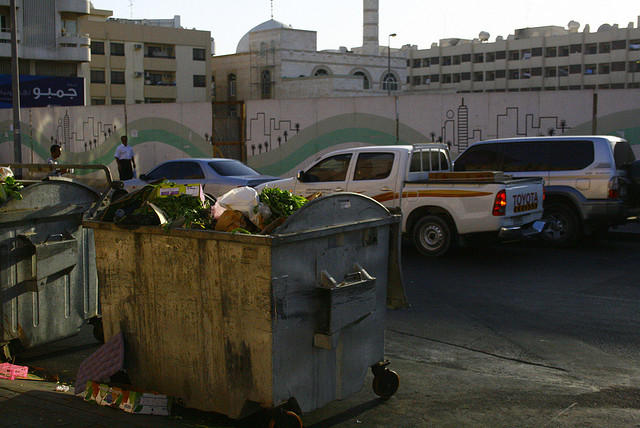
: Image via fumigene via flickr.

For more on Dubai see:

Despite Ban, UAE remains Market Hub for Shark Fins

Dubai Marine Life At Risk After Devastating Shark Catch

After Four Years, Dubai’s ‘Holey’ O-14 Tower Finally Opens

Arwa Aburawa
Arwa Aburawahttp://www.greenprophet.com
Arwa is a Muslim freelance writer who is interested in everything climate change related and how Islam can inspire more people to care for their planet and take active steps to save it while we can. She is endlessly suspicious of all politicians and their ceaseless meetings, especially as they make normal people believe that they are not part of the solution when they are the ONLY solution. Her Indian auntie is her model eco-warrier, and when Arwa is not busy helping out in the neighborhood alleyway garden, swap shopping or attempting fusion vegetarian dishes- with mixed success, she’d like to add- she can be found sipping on foraged nettle tea.
1 COMMENT

Comments are closed.

TRENDING

From Pilot Plant to Global Stage: How Aduro Clean Technologies’ 2026 Expansion Signals a Turning Point for Chemical Recycling Investors Like Yazan Al Homsi

The company's Next Generation Process (NGP) Pilot Plant in London, Ontario, has officially moved into initial operating campaigns, generating the kind of structured, repeatable data that separates laboratory promise from commercial viability.

Urban miner Sortera raises $45 million USD to pull aluminum from the scrap pile

Sortera Technologies, founded in 2020 by Nalin Kumar and Manuel Garcia, is emerging as a major U.S. circular-industry player. Led by CEO Michael Siemer, the company uses AI and advanced sensors to turn scrap metal into high-value aluminum alloys. Its new ~$45 million funding round signals investor appetite for industrial decarbonisation—where emissions cuts come not from PR-friendly solar installs, but from upgrading the materials that power EVs, solar frames, and construction.

Waste Reform from the Ground Up: How Trash Balers Are Helping Cities Rethink Sustainability

If you’ve ever watched a recycling truck weaving through city streets, you’ve seen the problem firsthand. Most of what we call “recycling” still depends on long-distance transportation and centralized sorting facilities. Those systems are energy-intensive and prone to contamination — the dreaded mix of wet food, plastic wrap, and paper that renders recyclables useless.

Scientists Crack the Code for Low-Cost, Low-Carbon Plastic Recycling

While enzymatic recycling offers hope for managing existing plastic waste, scientists and environmental advocates agree it must be paired with the development of bio-based plastics—materials made from renewable biological sources like corn starch, sugarcane, or algae. Unlike conventional plastics derived from fossil fuels, bio-based alternatives can dramatically reduce carbon emissions at the production stage and are often compatible with closed-loop recycling.

Trump brings back plastic straws, what can we do?

On February 10, 2025, President Donald Trump signed an executive order banning the use of paper straws in federal agencies, advocating for a return to plastic straws, which he claims are more effective.

Should You Invest in the Private Market?

startustartup Unlike public stock exchanges, which offer daily trading, strict...

How to build a 100-year-company

Kongō Gumi is a Japanese construction company, purportedly founded in 578 A.D., making it the world's oldest documented company. What can we learn about building sustainable businesses from them?

From Pilot Plant to Global Stage: How Aduro Clean Technologies’ 2026 Expansion Signals a Turning Point for Chemical Recycling Investors Like Yazan Al Homsi

The company's Next Generation Process (NGP) Pilot Plant in London, Ontario, has officially moved into initial operating campaigns, generating the kind of structured, repeatable data that separates laboratory promise from commercial viability.

How AI Helps SaaS Companies Reduce Repetitive Customer Support Work

SaaS products are designed for large numbers of users with different levels of experience, and also in renewable energy.

Pulling Water from the Air

Faced with water shortage in Amman, Laurie digs up...

Turning Your Energy Consultancy into an LLC: 4 Legal Steps for Founders in Texas

If you are starting a renewable energy business in Texas, learn how to start an LLC by the books.

Tracking the Impacts of a Hydroelectric Dam Along the Tigris River

For the next two months, I'll be taking a break from my usual Green Prophet posts to report on a transnational environmental issue: the Ilısu Dam currently under construction in Turkey, and the ways it will transform life along the Tigris River.

6 Payment Processors With the Fastest Onboarding for SMBs

Get your SMB up and running fast with these 6 payment processors. Compare the quickest onboarding options to start accepting customer payments without delay.

Related Articles

Popular Categories