

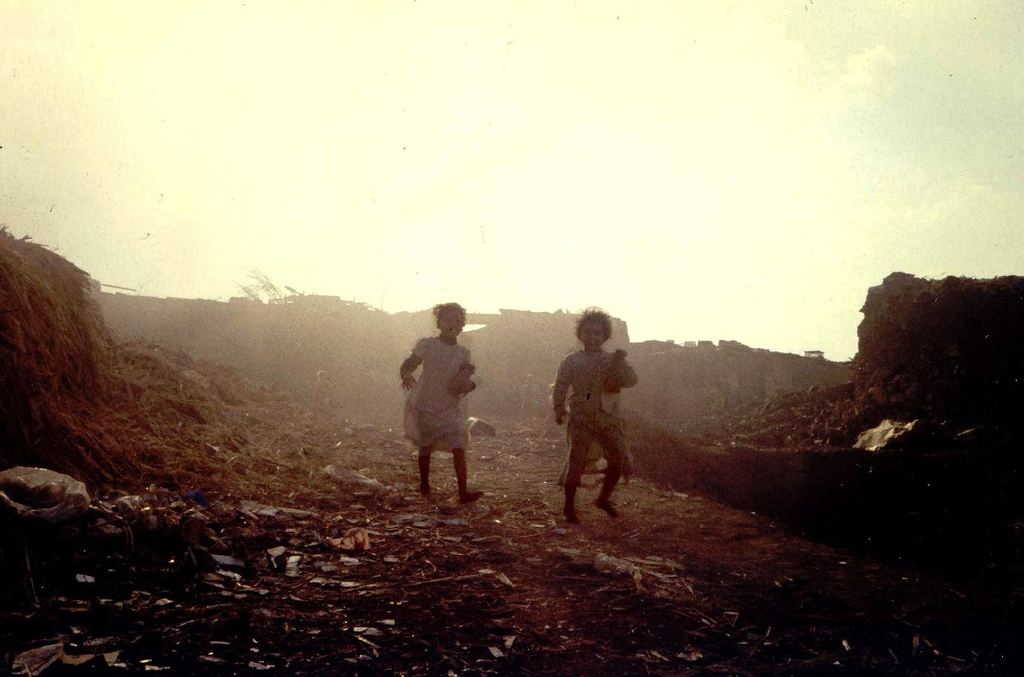
The relationship between poverty and environmental degradation is a major impediment to sustainability. Specialists from throughout the world gathered for the Rehovot Conference in Israel to discuss sustainable development initiatives.
The inherent connection between development and environmental concerns was a major theme of the 2010 Rehovot Conference organized by the Weitz Center for Development Studies (WCDS). The conference on “Inclusive Sustainable Development Initiatives,” took place between Dec. 5-7 at the Robert H. Smith Faculty of Agriculture of the Hebrew University in Rehovot. The conference brought participants from Africa, Asia, Latin America, Russia and Europe for a biennial conclave sponsored by the WCDS. For many of the participants, this was an alumni gathering since a significant number were among the 4000 students from more than 80 countries who have studied in the Center’s programs since 1963.
The Rehovot Conference offered an opportunity for the in depth discussion of issues involved in poverty alleviation, socioeconomic change, planning and environmental welfare. The consensus among these participants is that it is impossible to speak of development without addressing environmental degradation and global change.
Biospheres
Among the sessions I attended was one on Ecosystems and Human Well-Being. A presentation given by Prof. James Kennedy and Alexandria Poole of the University of North Texas reported on the The Omora Ethnobotanical Park, a sub-arctic territory in the southernmost Chile that is a part of UNESCO Cape Horn Biosphere Reserve.
The Omora Ethnobiological Park aims to maintain the biocultural integrity of this region. It is home to indigenous peoples, among them the Yagan, Chilean military families and the descendants of the British settlers who colonized the region.
It is located in Magellan Chile, the area that figured prominently in the work of Charles Darwin and has one of the world’s richest concentration of nonvascular plants (ex. mosses, lichen).
Megiddo Biosphere Region: Citizens Initiative
I was particularly impressed by the presentation made by Yoel Siegel and Hadas Bashan on the Megiddo Biosphere Region, an attempt at bottom-up regional development in Israel’s rural heartland.
The area involved falls roughly between Afula, Yokneaam, Binyamina and Givat Oz in the Jezreel Valley and adjacent lands. It has a population base of ten thousand residents residing in kibbutzim and moshavim. Ninety-six percent of its 10,000 dunams (1000 hectares) consists of forests, groves and open spaces and has an abundance of biodiversity. It is the site of Tel Megiddo, a UNESCO World Heritage Site.
The local population of the Megiddo regional council is expected to expand significantly in coming years. Given its prime location between Tel Aviv and Haifa, the region is targeted by real estate developers for construction.
What is remarkable about the initiative to transform Megiddo into an authorized biosphere region and thus a protected area is the high level of citizen participation in the planning process.
The volunteers have created work groups dealing with infrastructure, agriculture, tourism, economic development, community development and management of the proposed biosphere. Challenging the prevailing winds that have diminished the strength of Israel’s rural cooperative settlements, the project aims at increasing income levels and stemming rural out-migration in a manner that preserves the ecological wealth of the region. Plans are proceeding to have the area recognized as part of the UN biosphere program.
I left the presentation feeling that the Megiddo project is one of the most exciting and promising social and environmental endeavors in Israel today.
Local and Regional Development
A particularly strong session on local and regional development was chaired by Yitzhak Abt, an agricultural specialist who is one of the most veteran movers in Israel’s international cooperation programs (which are facilitated by MASHAV, a division of the Israel Foreign Ministry and one of the Rehovot Conference’s sponsors).
As someone who has worked in Israel’s development cooperation activities as an instructor, planner and researcher (at the Weitz Center, formerly the Development Study Center), I was moved by the praise conferred on the Rehovot Approach by Krishna Bahdur Kunwar of Nepal’s Three S Foundation. Mr. Kunwar, a former student at the Center has promoted the interdisciplinary, inter-sectoral (agriculture, industry and services) model of integrated regional development advanced by Prof. Raanan Weitz, the Rehovot Center’s founder. The approach has been applied in the field in rural areas of Nepal and is taught at the country’s Tribhuvan University.
Rehovot Approach Applied to Europe
Remarkably, the Rehovot Approach has been deemed as relevant to the “developed” world as well as developing ones. Dr. Stefaano Nonfra of the Oxford Sustainable Development Enterprise and a former student of Prof. Weitz and Prof. Massimo Ruggero of the Universita degli Studi di Genova discussed the application of the Rehovot Approach to information systems for development in the European Community.
I assisted Prof. Weitz in preparing his book New Roads to Development in the mid-1980s and suspect that he would have been enthralled to hear how highly valued his theory is to development practitioners around the world.
Arava Institute’s Life Cycle Approach
Shira Kronich of the Arava Institute for Environmental Studies presented a project in capacity building and technology transfer undertaken by its staff. Accompanied by Dr. Shmuel Brenner and Dr. Clive Lipchin of the Institute, Ms. Kronich described the Life Cycle Approach to rural development advocated by the Institute.
She discussed a case involving the introduction of appropriate water and energy technologies formulated in Israel in a pilot project taking place in an arid region of Kenya. The approach is a sophisticated and relevant one and the presentation received the rapt attention of those present.
No Environmental Progress without Poverty Alleviation
A paper that sent a powerful message to the participants was given by Leonard Mulongo, Patrick Kerre and Jacqueline Oseko of Kenya’s Moi University. In his presentation entitled “The Environmental Cost of Poverty to Society, The Kenyan Experience” the speaker passionately argued that environmental degradation will continue to occur in the presence of entrenched poverty.
Given dire hunger and want, rural peoples cannot attend to long-term goals of environmental protection (for example sustainable forestry) when resources at hand are required to fulfill the most rudimentary needs.
This message, of the inextricability of poverty alleviation as an imperative for environmental welfare should be present in the minds of policy makers and activists interested in a sustainable future.


My daughter live in the Meggido area, and they are fighting a drive to establish an additional Israeli international airport in that area!
Go figure…