Saudi Arabia’s Desalination Market A $50 Billion Opportunity


Saudi Arabia now using more reverse osmosis desalination in the Kingdom over any other water processing method.

Like neighboring Kuwait, where virtually all supplies of fresh water comes from desalination, the Kingdom of Saudi Arabia has now reached a level of need for fresh water in which it requires at least $50 billion of investments in new desalination plants to meet its growing fresh water needs. This revelation was reported in the Saudi Gazette. To help bring their needs to market, sesalination and other regional technology issues are part of  the 4-day  Saudi Water and Power Forum (SWPF) 2010 which began earlier this week. Based on the theme of “Sustainable Prosperity Through Knowledge, Innovation and Cooperation”  the held at Jeddah Hilton is aimed at being part of a “catalyst for change.”

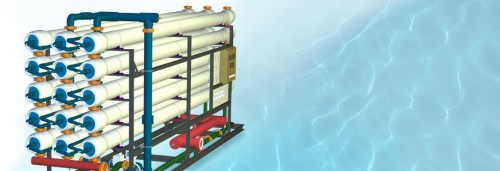
desalination plantInside a reverse osmosis desalination plant, Israel.

The Forum is being attended by water and energy experts from around the Middle East North Africa economic region, and helps to point out the urgency in finding solutions to the water scarcity issue which has become “one of the biggest challenges facing the Arab World at the present time,” according to Dr. Mahmoud Abu Zeid, former Egyptian Minister of Water Resources and Irrigation and Chairman of Arab Water Council.

In addressing the Forum participants, Dr Abu Zeid gave them these sobering facts:

“The volume of water renewed annually is about 335 billion cubic meters, while the amount of groundwater (in the Arab world) is estimated at 143 billion cubic meters, and  that the agricultural sector alone consumes about 89.5% of the water, while domestic purposes consumption accounted for 8.6% and industrial purposes accounted for 7.3%”.

In regards to the use of desalination to produce fresh drinking water, which is a very energy intensive process, Dr. Abu Zeid  said that Saudi Arabia produces about 30% of world’s desalinated water, and that per capita share of water in the Arab region is about 1060 cubic meters per year, while it is about 177 cubic meters in the GCC (Gulf Cooperation Council) countries.

Investing large sums for the building of new desalination plants in the Kingdom is probably easier than in other locations, due to large revenues still being earned from oil and natural gas by the Saudi government, which is composed of members of the Saudi Royal Family, who still hold the controlling power in this country.

Many desalination plants already built in the Kingdom have been joint ventures with other countries, and even includes an agreement for a joint Saudi and Japanese plant to construct the equipment needed for building additional desalination plants as well as maintaining existing ones.

As mentioned in the Saudi Gazette, most desalination in Saudi Arabia is through multi-stage flashing, using counter current heat exchangers. Reverse osmosis has emerged as an important water desalination technology and is growing at a rate of 20 percent annually.

Saudi Arabia and IBM are planning to build a solar powered desalination plant featuring ultra-high concentrator photovoltaic (UHCPV) technology.

The worldwide desalination market is estimated to be worth $105 billion over the 2010-16 year period with 50-60 percent of which to be directed toward the Middle East North Africa region. At present, Saudi Arabia, the UAE, Kuwait, Qatar, Bahrain, Oman, Iraq and Iran account for about 40 percent of the world’s desalination capacity, according to reports in the Global Water Intelligence tracking site DesalData .com.

While environmentalists don’t generally support the energy-intensive processes involved in desalination, there are certainly business opportunities to be made in Saudi Arabia for investors around the globe.

::Saudi Gazette

More articles about Saudi Arabia and Gulf Region desalination projects on Green Prophet:
Japan and Saudi Arabia Plan Giant Desalination Equipment Plant
Saudi Arabia to Replace Oil With Sun Power for Desalination Plants
Kuwait Water Worries Reminiscent of Other Gulf Region Countries

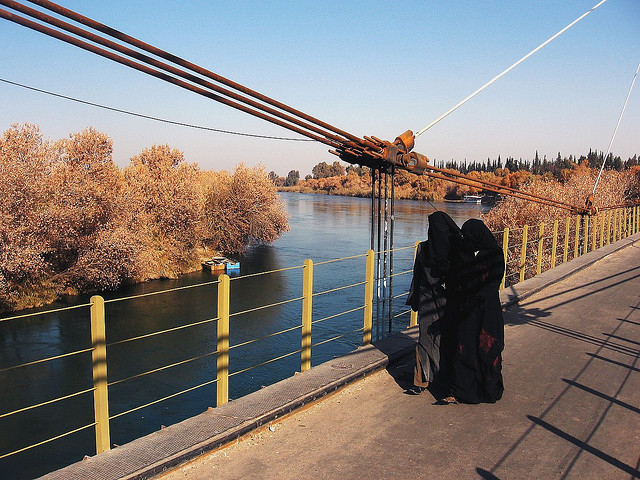
Above image: The Shuaibah IWPP steam power plant with integrated seawater desalination facility in Saudi Arabia. Siemens Energy built the power plant as a turnkey project together with its consortium partner Doosan Heavy Industries & Construction Co. Ltd. for Shuaibah Water and Electricity Company (SWEC).


Maurice Picow
Maurice Picowhttps://www.greenprophet.com/
Maurice Picow grew up in Oklahoma City, U.S.A., where he received a B.S. Degree in Business Administration. Following graduation, Maurice embarked on a career as a real estate broker before making the decision to move to Israel. After arriving in Israel, he came involved in the insurance agency business and later in the moving and international relocation fields. Maurice became interested in writing news and commentary articles in the late 1990’s, and now writes feature articles for the The Jerusalem Post as well as being a regular contributor to Green Prophet. He has also written a non-fiction study on Islam, a two volume adventure novel, and is completing a romance novel about a forbidden love affair. Writing topics of particular interest for Green Prophet are those dealing with global warming and climate change, as well as clean technology - particularly electric cars.

TRENDING

Australian camels fly on a plane to Saudi Arabia

Australia has the largest population of feral camels in the world. Some get repatriated to Saudi Arabia.

Seaweed fashion brands can source from Saudi Arabian sea

From Red Sea seaweed to runway-ready fabric, Saudi Arabia is quietly reshaping fashion’s material future. KAUST scientists, designers, and textile innovators are proving that sustainability can begin in local ecosystems. As seaweed becomes wearable, fashion is learning to grow not from fields — but from tides.

The Line’s 15 minute city failure and the limits of green futurism

The failure of The Line is not a failure of imagination. It is a failure of restraint by western architects and planners who go along with the charade. Who is holding these firms accountable? This is actually a reasonable kind of project for the UN to take on and challenge. 

10 Proven Israeli Technologies to Help Somaliland Build Food, Water, and Energy Security

Israel’s water and agricultural technologies didn’t emerge from ideal conditions. They were developed under pressure: low rainfall, saline water, political isolation, lack of energy resources, and the constant need to feed a growing population with limited land. Over the years, I’ve written about many of these companies not as miracle-makers, but as problem-solvers. That’s what makes them relevant to places like Somaliland. Israel was the first country in the world to recognize Somaliland as an independent state although Ethiopia has been treating the nation as such for decades.

Dead shark on beach injured by fishing nets

  A dead shark that washed ashore this week at...

Turning Your Energy Consultancy into an LLC: 4 Legal Steps for Founders in Texas

If you are starting a renewable energy business in Texas, learn how to start an LLC by the books.

Tracking the Impacts of a Hydroelectric Dam Along the Tigris River

For the next two months, I'll be taking a break from my usual Green Prophet posts to report on a transnational environmental issue: the Ilısu Dam currently under construction in Turkey, and the ways it will transform life along the Tigris River.

6 Payment Processors With the Fastest Onboarding for SMBs

Get your SMB up and running fast with these 6 payment processors. Compare the quickest onboarding options to start accepting customer payments without delay.

Qatar’s climate hypocrisy rides the London Underground

Qatar remains a master of doublethink—burning gas by the megaton while selling “sustainability” to a world desperate for clean air. Wake up from your slumber people.

How Quality of Hire Shapes Modern Recruitment

A 2024 survey by Deloitte found that 76% of talent leaders now consider long-term retention and workforce contribution among their most important hiring success metrics—far surpassing time-to-fill or cost-per-hire. As the expectations for new hires deepen, companies must also confront the inherent challenges in redefining and accurately measuring hiring quality.

8 Team-Building Exercises to Start the Week Off 

Team building to change the world! The best renewable energy companies are ones that function.

Thank you, LinkedIn — and what your Jobs on the Rise report means for sustainable careers

While “green jobs” aren’t always labeled as such, many of the fastest-growing roles are directly enabling the energy transition, climate resilience, and lower-carbon systems: Number one on their list is Artificial Intelligence engineers. But what does that mean? Vibe coding Claude? 

Somali pirates steal oil tankers

The pirates often stage their heists out of Somalia, a lawless country, with a weak central government that is grappling with a violent Islamist insurgency. Using speedboats that swarm the targets, the machine-gun-toting pirates take control of merchant ships and then hold the vessels, crew and cargo for ransom.

Related Articles

Popular Categories