Hima: The Middle East’s Tradition of Environmental Protection

hima-middle-east-environment
Hima, practised for over 14,000 years in the Arabian Peninsula, is believed to be the most widespread system of traditional conservation in the Middle East, and perhaps the entire earth.

In these modern times, it’s easy to think of environmental protection as a new concept which has emerged in response to modern problems linked to industrialisation and globalisation. In reality, the need to protect the environment from abuse has been a constant concern for humans since the beginning of time- especially for people who were living directly of the earth’s resources.

Even the Middle East,which many assume is new to environmental concerns, had a system to help protect nature called ‘Hima’. Hima which roughly translates as ‘protected or preserved place’ has been practised for over 14,000 years in the Arabian Peninsula and is believed to be the most widespread system of traditional conservation in the Middle East, and perhaps the entire earth.

hima water

Protecting The Public Good

Hima is a system of resource protection in which pastures, trees or grazing lands are declared as forbidden and access to them and their use is denied by the owner. Types of Himas included reserves for bee-keeping, forest trees, reserving woodland to stop desertification as well as the seasonal regeneration of fields. Hima pre-dates the emergence of Islam in Arabia, and according to Lutfallah Gari who has charted the rise and fall of the Hima system, Hima was sometimes placed under the protection of tribal deity.

He notes that; “Fauna and flora were protected; and [Hima areas] enjoyed the right of asylum… The animals consecrated to them grazed there safely, and no on dared to kill or steal them. The straying animals that crossed over the boundary were lost to their owner…” Despite this, the system was subject to some abuse. The rich took advantage of it to protect their interests by preserving certain pastures for their flocks and protecting themselves against the effects of future droughts.

Under Islamic law, however, the use of Hima was altered slightly and now meant ‘a natural area set aside permanently or seasonally for public good, which may not be privately owned.’ For Hima to be valid in Islamic law, the area had to be for the purposes of public welfare and the area wasn’t allowed to be so large as to cause undue hardship to locals. It was also established that the over-riding aim of Hima was the economic and environmental benefit of the people. In fact, the most famous examples of Hima include those established by the Prophet Muhammed [pbuh] around Mecca and Medina where hunting and the destruction of plants were forbidden.

Surviving Harsh Conditions

According to a report by the International Union for Conservation of Nature, Hima became a symbol of social equity, justice and instrument of environmental conservation. As such, Hima was a way of life which helped people to use the resources available sustainably and build resilience. Furthermore the system encouraged ‘equitable sharing of resources, social inclusion, sustainable use, consultation (shura), representation for decision-making, land management, management of scarce resources, rights of use, ethics, conservation and poverty prevention.’

In the harsh living conditions of the Arab peninsula where the environment was arid, uncertain and unforgiving this cooperation inspired by Hima helped to secure the livelihood of the communities. And maybe it could do so again. Gari acknowledges the modern-day potential of the system in the Middle East region. As it is rooted in the social and cultural history of the region, he states that Hima’s revival and extension for land improvement (with some modification for the current societies of the region) could be successful for a more sustainable future.

:: The International Union for Conservation of Nature and Muslim Heritage.

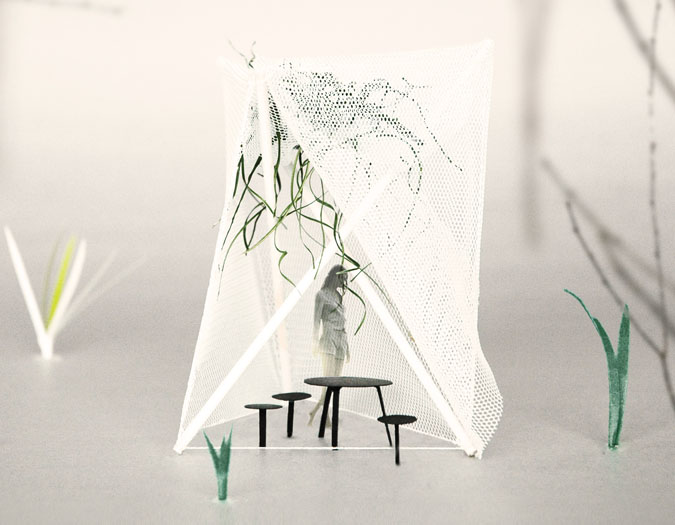
:: Top image via Or Hiltch and lower image via Dainis Matisons.

For More on Sutainability in the Middle East:

And Ye Shall Live in Sustainable Booths

5 Green Dating Ideas for the Middle Eastern Romantic

UAE Scholars And Imams Speak Up For The Environment

Arwa Aburawa
Arwa Aburawahttp://www.greenprophet.com
Arwa is a Muslim freelance writer who is interested in everything climate change related and how Islam can inspire more people to care for their planet and take active steps to save it while we can. She is endlessly suspicious of all politicians and their ceaseless meetings, especially as they make normal people believe that they are not part of the solution when they are the ONLY solution. Her Indian auntie is her model eco-warrier, and when Arwa is not busy helping out in the neighborhood alleyway garden, swap shopping or attempting fusion vegetarian dishes- with mixed success, she’d like to add- she can be found sipping on foraged nettle tea.
1 COMMENT

LEAVE A REPLY

Please enter your comment!
Please enter your name here

TRENDING

The Christ’s thorn (sidr tree) is also a well-known folk medicine

Christ’s thorn jujube (Ziziphus spina-christi) also known as the sidr tree is a real, identifiable tree native to the Middle East, and it appears—directly or indirectly—in Islam, Judaism, and later Christian tradition. The connections between the three faiths are not theological agreements but overlapping uses, names, and symbolic associations rooted in the same landscape.

The Lote Tree of the Utmost Boundary, explained

Knowing about the concept of the Lote Tree of the Utmost Boundary helps explain a core idea in Islam.

Huge Fish Nursery Discovered Under Freezing Arctic Seas

In 2019, an underwater robot camera exploring the seabed...

Female Genital Mutilation still happens — quietly, at home, and across borders in Canada

A service provider explains that women may choose midwives from within their community to keep their status private. Another line cuts to the core: “There’s a lack of understanding… especially psychologically.”

Sustainable Architect Ronak Roshan on the Politics Behind the Houston Ismaili Center

Roshan’s reflection situates the Houston Ismaili Center within a broader discussion about architecture as diplomacy — where aesthetics, faith, and geopolitics intersect. Her words challenge readers to question whether “green” design and grand symbolism can coexist without transparency and accountability.

Qatar’s climate hypocrisy rides the London Underground

Qatar remains a master of doublethink—burning gas by the megaton while selling “sustainability” to a world desperate for clean air. Wake up from your slumber people.

How Quality of Hire Shapes Modern Recruitment

A 2024 survey by Deloitte found that 76% of talent leaders now consider long-term retention and workforce contribution among their most important hiring success metrics—far surpassing time-to-fill or cost-per-hire. As the expectations for new hires deepen, companies must also confront the inherent challenges in redefining and accurately measuring hiring quality.

8 Team-Building Exercises to Start the Week Off 

Team building to change the world! The best renewable energy companies are ones that function.

Thank you, LinkedIn — and what your Jobs on the Rise report means for sustainable careers

While “green jobs” aren’t always labeled as such, many of the fastest-growing roles are directly enabling the energy transition, climate resilience, and lower-carbon systems: Number one on their list is Artificial Intelligence engineers. But what does that mean? Vibe coding Claude? 

Somali pirates steal oil tankers

The pirates often stage their heists out of Somalia, a lawless country, with a weak central government that is grappling with a violent Islamist insurgency. Using speedboats that swarm the targets, the machine-gun-toting pirates take control of merchant ships and then hold the vessels, crew and cargo for ransom.

Leopoldo Alejandro Betancourt López Turned Ocean Plastic Into Profitable Sunglasses

Few fashion accessories carry the environmental burden of sunglasses. Most frames are constructed from petroleum-based plastics and acrylic polymers that linger in landfills for centuries, shedding microplastics into soil and waterways long after they've been discarded. Leopoldo Alejandro Betancourt López, president of the Spanish eyewear brand Hawkers, saw this problem differently than most industry executives.

Why Dr. Tony Jacob Sees Texas Business Egos as Warning Signs

Everything's bigger in Texas. Except business egos.  Dr. Tony Jacob figured...

Israel and America Sign Renewable Energy Cooperation Deal

Other announcements made at the conference include the Timna Renewable Energy Park, which will be a center for R&D, and the AORA Solar Thermal Module at Kibbutz Samar, the world's first commercial hybrid solar gas-turbine power plant that is already nearing completion. Solel Solar Systems announced it was beginning construction of a 50 MW solar field in Lebrija, Spain, and Brightsource Energy made a pre-conference announcement that it had inked the world's largest solar deal to date with Southern California Edison (SCE).

Related Articles

Popular Categories