Architect From Fortune 500 Company Criticizes Middle East’s “Glass Monsters”

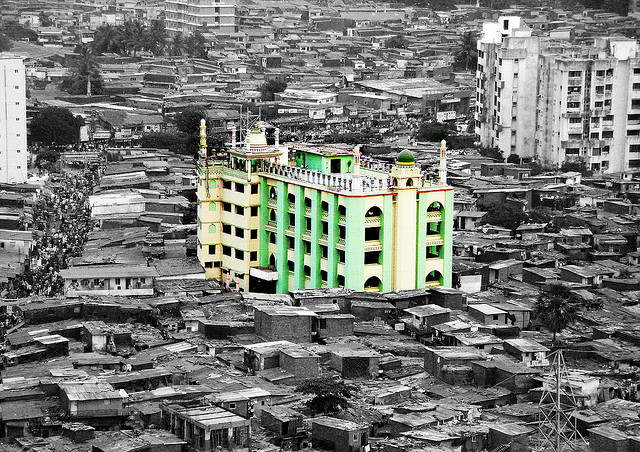
glass-skyscraper-middle-eastGlass may be beautiful, but in the Middle East, it’s far from eco-friendly

It’s one thing for environmental bloggers to criticize architects or project managers for designing buildings that do nothing to preserve natural resources or inspire beauty in moderation. Foster and Partners, prolific in the Middle East, and just about anything built in Dubai are among such companies and schemes that have elevated our (green) blood pressure in the past.

So it’s deeply refreshing to learn we’re not alone, that architects and environmental planners such as Romi Sebastian, who works in Qatar with the Fortune 500 company AECOM, are also frustrated with architectural practices that defy ecological logic.

Glass facade

Sebastian especially scorns the use of glass facades in the Middle East, where soaring temperatures should dictate a more sensible material.

He reminds us that “glass facades were initially possible only due to the development of powerful cooling systems; otherwise these buildings would have been inhabitable…”

Glass, he says, is designed to trap heat, and acts like a “solar cooker,” and expresses bewilderment that we would build with a material that has this property in a region that should instead deflect as much heat as possible.

Bending nature to (hu)man will

Sebastian claims that architects essentially ignore the environmental constraints imposed upon them, leaving human beings to bend the laws of nature to conform to the will of man. But this is no easy feat, and entails a significant expenditure of natural resources.

The architect and environmental planner also has a penchant for philosophy, and ponders the why behind certain material choices architects and designers make.

I wonder why glass is considered to be a material that symbolises ‘progress’ in the Middle East whereas traditional and practical materials like mud, clay, limestone are often related to concepts of backwardness and poverty. This impractical dissociation between materials and the environmental context of a region causes a slow degradation of the architectural expression prevalent in the Islamic world. Even the local builders often ignore simple concepts of how they can make their lives more comfortable within a living space.

Sebastian suggested to Gulf News that “governments in the region could consider new bylaws to minimise the use of glass for energy conservation purposes,” and that “using thicker stone and concrete walls, for example, and less glass can reduce the thermal signature during the day of a structure…”

Back to our roots

He does not provide exact statistics but draws attention to the idea that even keeping glass buildings and solar panels clean is water, energy, and labor intensive. Additionally, to shelter against this heat trapped by glass buildings, tenants are required to spend extra money to keep the sun out.

None of this makes a lot of sense to Sebastian, who is a fearless, outspoken proponent of more traditional building methods and materials.

“We should go back to our roots,” he says, “stick to our principles of how we used to build in this area.”

:: image via faithful chant

More Architecture News From the Middle East:
Haim Dotan’s Tao of Architecture

The Epitome Of Sustainable Architecture: 700 Year-Old Iranian Cave Homes

Architectural Design To Memorialize Assault On Free Speech In Turkey

Tafline Laylin
Tafline Laylinhttp://www.greenprophet.com
As a tour leader who led “eco-friendly” camping trips throughout North America, Tafline soon realized that she was instead leaving behind a trail of gas fumes, plastic bottles and Pringles. In fact, wherever she traveled – whether it was Viet Nam or South Africa or England – it became clear how inefficiently the mandate to re-think our consumer culture is reaching the general public. Born in Iran, raised in South Africa and the United States, she currently splits her time between Africa and the Middle East. Tafline can be reached at tafline (at) greenprophet (dot) com.
2 COMMENTS
  1. Dear laylinn,

    Thanks a lot for your support on this literature.

    Lets work hard – create good architecture that is comforting, nature respecting and a dependable shelter to our basic needs.

    All the very best.

    ROMI SEBASTIAN

LEAVE A REPLY

Please enter your comment!
Please enter your name here

TRENDING

How you create green steel on a blockchain

The thing about raw materials is that once they are melted down, you can't prove the source of the material. Same is true with gold, cucumbers and even forged products that look the same as the real thing. When it comes to steel, and how we produce it, it has a massive carbon problem. What's happening in Japan right now could change how we think about heavy industry and climate action.

Ancient mud buildings in the Muslim world are spectacular and sustainable

Other notable mud structures in the wider Muslim world include the Bob Dioulasso Grand Mosque in Burkina Faso, and the Khiva Wall in Uzbekistan, which is built around a collection of Islamic schools and mosques. The Siwa Oasis in Egypt (which we visited and posted about here) and the Eastern Castle in Syria have also employed mud bricks in their construction, and research shows that the famous walls of Jericho were built using sun-dried mud bricks.

The 2025 Aga Khan Architecture Winners: Building Resilience and Community

The 2025 Aga Khan Award for Architecture honors seven projects from Bangladesh to Iran that blend sustainability, cultural heritage, and community empowerment — from flood-resilient homes to the revival of Egypt’s historic Esna — showcasing how design can tackle climate, social, and urban challenges with beauty and purpose.

Iran’s water mafia and thirst for war leaves the country on brink of being dry

Iran’s Lake Urmia, once the Middle East’s largest saltwater lake, has shrunk by 90 percent due to mismanagement, dams, and drought. As Tehran pours billions into foreign conflicts, water activists face repression at home. The crisis mirrors Syria’s drought-driven unrest, showing how water scarcity can destabilize entire regions.

BIG Palliative Care: Denmark’s Nature and Spirituality in Dignified End-of-Life Care

Bjarke Ingels Group has won the competition to design the new Sankt Lukas Hospice and Lukashuset, a 8,500 m² palliative care center envisioned as a village nestled within nature. Building on the legacy of the Sankt Lukas Foundation, established in the 1930s, this project will significantly expand Denmark's palliative care capacity, tripling its current facilities to serve approximately 2,100 patients each year.

Qatar’s climate hypocrisy rides the London Underground

Qatar remains a master of doublethink—burning gas by the megaton while selling “sustainability” to a world desperate for clean air. Wake up from your slumber people.

How Quality of Hire Shapes Modern Recruitment

A 2024 survey by Deloitte found that 76% of talent leaders now consider long-term retention and workforce contribution among their most important hiring success metrics—far surpassing time-to-fill or cost-per-hire. As the expectations for new hires deepen, companies must also confront the inherent challenges in redefining and accurately measuring hiring quality.

8 Team-Building Exercises to Start the Week Off 

Team building to change the world! The best renewable energy companies are ones that function.

Thank you, LinkedIn — and what your Jobs on the Rise report means for sustainable careers

While “green jobs” aren’t always labeled as such, many of the fastest-growing roles are directly enabling the energy transition, climate resilience, and lower-carbon systems: Number one on their list is Artificial Intelligence engineers. But what does that mean? Vibe coding Claude? 

Somali pirates steal oil tankers

The pirates often stage their heists out of Somalia, a lawless country, with a weak central government that is grappling with a violent Islamist insurgency. Using speedboats that swarm the targets, the machine-gun-toting pirates take control of merchant ships and then hold the vessels, crew and cargo for ransom.

Leopoldo Alejandro Betancourt López Turned Ocean Plastic Into Profitable Sunglasses

Few fashion accessories carry the environmental burden of sunglasses. Most frames are constructed from petroleum-based plastics and acrylic polymers that linger in landfills for centuries, shedding microplastics into soil and waterways long after they've been discarded. Leopoldo Alejandro Betancourt López, president of the Spanish eyewear brand Hawkers, saw this problem differently than most industry executives.

Why Dr. Tony Jacob Sees Texas Business Egos as Warning Signs

Everything's bigger in Texas. Except business egos.  Dr. Tony Jacob figured...

Israel and America Sign Renewable Energy Cooperation Deal

Other announcements made at the conference include the Timna Renewable Energy Park, which will be a center for R&D, and the AORA Solar Thermal Module at Kibbutz Samar, the world's first commercial hybrid solar gas-turbine power plant that is already nearing completion. Solel Solar Systems announced it was beginning construction of a 50 MW solar field in Lebrija, Spain, and Brightsource Energy made a pre-conference announcement that it had inked the world's largest solar deal to date with Southern California Edison (SCE).

Related Articles

Popular Categories