10 Tips For Greening Your Passover

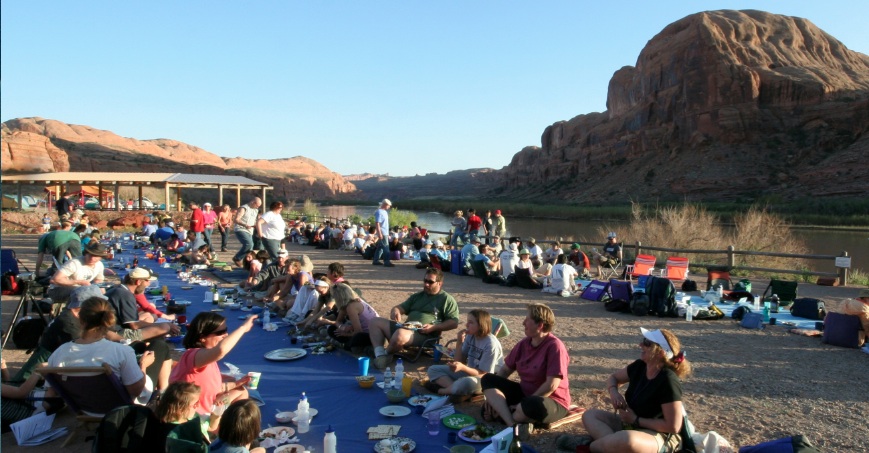
Getting outside is one way to “green” your Pesach. 

Pessach, or Passover in English, is an interesting paradox of both returning to a way of simple living as well as celebrating the holiday in a truly royal manner. Matza, one of the primary mitzvot of the holiday, is made of the most basic ingredients – flour and water.

Yet, the Seder (the holiday meal) should be a truly royal event to the extent that it is the only day of the year when Jews are supposed to use all of their finest dishes. Dig into matza ball soup!

Perhaps this paradox is symbolic of the Jewish belief that one can only become a free man, a member of royalty, by freeing oneself from materialism. In this guest pot, Sviva Israel – an environmental education center – offers 10 tips to make Pesach more meaningful and kinder to the environment and one another.

1. Clean out your shelves– Do we really need all the things in your closet? Most of us don’t need 30% of what we own. Clear up your shelves and enjoy the extra space. You don’t need to rent space in Public Storage for unnecessary possessions.

2. Your Trash Can Save Others Cash – Clothing, food and other items in good condition can be used by others if you don’t need them. Give them to friends, charity organizations, or leave them neatly by the trash bin for others to take. What must be trashed can be separated into paper and plastics for recycling, which reduces landfill and helps preserve our green spaces.

3. Scavenger Hunt – There are some great treasures to be found that others have thrown out. Before Pesach, many people leave out great books, toys, furniture and the like. Save money and landfill space by taking them home and enjoying them.

4. Avoid Harmful Chemicals – Heavily acidic chemicals are bad for your health and the environment. If you can afford it, buy organic cleaners, or try old-fashioned alternatives like vinegar and baking soda.

5. Holy Fire – Fuel your hametz fire with recycled mitzvoth by burning your lulav from Sukkot . Burn your hametz in an area that won’t leave the fire marks until the winter rains. Remove the hametz from plastic and polystyrene packaging before burning, to avoid releasing dangerous chemicals in the air that can cause respiratory disease.

6. Seder Solutions – Ideally, according to Halacha and to minimize our environmental impact, one should not use disposables for the Seder. If you feel you can only host the 30 guests you have invited to your Seder by serving it on disposables, plan to use the minimal amount for each table setting, without superfluous courses and trappings.

7. The Simple Life – Do we really need flour-free Cheerios and pot-noodles for Pesach? Try skipping processed and over-priced Kosher-L’Pesach Foods and enjoy the simple pleasures of a baked potato and salad. Your body, your wallet and the earth will appreciate it.

8. Afikoman – Don’t offer the kids the latest electronic fad. Try suggesting your children a family trip during the year. You may be surprised to find they prefer to spend special time with you to the latest gadget. Alternately, think of gifts that can inspire their love of the natural world – binoculars, bug-identification kits, nature books, etc.

9. Stay Close to Home – Instead of guzzling gas by driving for hours up north and getting stuck in traffic jams, discover the beautiful trails that can be found near your home. There are some beautiful trails and nature sights close to most cities in Israel.

10. Aliya LaRegel – Recall the traditional pilgrimage on foot or mule to Jerusalem using the modern-day equivalent of public transportation. You’ll discover that it can be fun, economical, less stressful than trying to find parking places, and you’ll help reduce your ecological footprint.

2 COMMENTS
  1. I like no. 10 – use public transportation. I waited about 40 minutes for a bus home from Rehov Yaffo this evening. The sun was setting and it was freezing outside. After spending the afternoon in the Old City in Jerusalem (aliyah l'regel, you say) it was standing room only when a bus finally came and all 50 people waiting at the bustop piled in. Yeah, green. – Less stressful my tuchus.

LEAVE A REPLY

Please enter your comment!
Please enter your name here

TRENDING

Earth building with Dead Sea salt bricks

Researchers develop a brick made largely from recycled Dead Sea salt—offering a potential alternative to carbon-intensive cement.

Farm To Table Israel Connects People To The Land

Farm To Table Israel is transforming the traditional dining experience into a hands-on journey.

Remilk makes cloned milk so cows don’t need to suffer and it’s hormone-free

This week, Israel’s precision-fermentation milk from Remilk is finally appearing on supermarket shelves. Staff members have been posting photos in Hebrew, smiling, tasting, and clearly enjoying the moment — not because it’s science fiction, but because it tastes like the real thing.

An Army of Healers Wins the 2025 IIE Goldberg Prize for Peace in the Middle East

In a region more accustomed to headlines of loss than of listening, the Institute of International Education (IIE) has chosen to honor something quietly radical: healing. The 2025 Victor J. Goldberg Prize for Peace in the Middle East has been awarded to Nitsan Joy Gordon and Jawdat Lajon Kasab, the co-founders of the Army of Healers, for building spaces where Israelis and Palestinians — Jews, Muslims, Christians, Druze, and Bedouins — can grieve, speak, and rebuild trust together.

What is the Jewish Climate Trust?

Jewish Climate Trust has quickly attracted the attention and support of some of the most influential voices in Jewish philanthropy, drawing backing from prominent family foundations and business leaders connected to the Bronfman and Schusterman philanthropic networks, alongside climate-focused investors and community builders aligned with founding leader Nigel Savage. Together, these donors have committed many millions of dollars to build a serious, long-term climate platform for the Jewish world — not as a symbolic gesture, but as a strategic intervention in one of the defining challenges of this generation.

6 Payment Processors With the Fastest Onboarding for SMBs

Get your SMB up and running fast with these 6 payment processors. Compare the quickest onboarding options to start accepting customer payments without delay.

Qatar’s climate hypocrisy rides the London Underground

Qatar remains a master of doublethink—burning gas by the megaton while selling “sustainability” to a world desperate for clean air. Wake up from your slumber people.

How Quality of Hire Shapes Modern Recruitment

A 2024 survey by Deloitte found that 76% of talent leaders now consider long-term retention and workforce contribution among their most important hiring success metrics—far surpassing time-to-fill or cost-per-hire. As the expectations for new hires deepen, companies must also confront the inherent challenges in redefining and accurately measuring hiring quality.

8 Team-Building Exercises to Start the Week Off 

Team building to change the world! The best renewable energy companies are ones that function.

Thank you, LinkedIn — and what your Jobs on the Rise report means for sustainable careers

While “green jobs” aren’t always labeled as such, many of the fastest-growing roles are directly enabling the energy transition, climate resilience, and lower-carbon systems: Number one on their list is Artificial Intelligence engineers. But what does that mean? Vibe coding Claude? 

Somali pirates steal oil tankers

The pirates often stage their heists out of Somalia, a lawless country, with a weak central government that is grappling with a violent Islamist insurgency. Using speedboats that swarm the targets, the machine-gun-toting pirates take control of merchant ships and then hold the vessels, crew and cargo for ransom.

Leopoldo Alejandro Betancourt López Turned Ocean Plastic Into Profitable Sunglasses

Few fashion accessories carry the environmental burden of sunglasses. Most frames are constructed from petroleum-based plastics and acrylic polymers that linger in landfills for centuries, shedding microplastics into soil and waterways long after they've been discarded. Leopoldo Alejandro Betancourt López, president of the Spanish eyewear brand Hawkers, saw this problem differently than most industry executives.

Why Dr. Tony Jacob Sees Texas Business Egos as Warning Signs

Everything's bigger in Texas. Except business egos.  Dr. Tony Jacob figured...

Related Articles

Popular Categories