



It can take decades of forest growth before the ‘cooling’ CO2 sequestration can overtake these opposing ‘warming’ processes, finds new study on Yatir Forest (above).
We’ve been buying carbon credits, and have been busy planting trees hoping to stave off climate change, but the simple formula we’ve learned in recent years – forests remove the greenhouse gas carbon dioxide (CO2) from the atmosphere; therefore forests prevent global warming – may not be quite as simple as we thought, finds a new research project.
It could take decades until trees we plant now will have any effect on the overall greenhouse gases they sequester.
Forests can directly absorb and retain heat, and, in at least one type of forest, these effects may be strong enough to cancel out a good part of the benefit in lowered CO2. This is a conclusion published January 22 in Science by scientists from the Weizmann Institute’s Faculty of Chemistry in Israel.
For the past 10 years, the Weizmann Institute has been operating a research station in the semi-arid Yatir Forest, a pine forest at the edge of the Negev Desert. This station is part of a world-wide project composed of over 400 stations, called FLUXNET, which investigates the relationship between forests, the atmosphere, and climate around the globe.
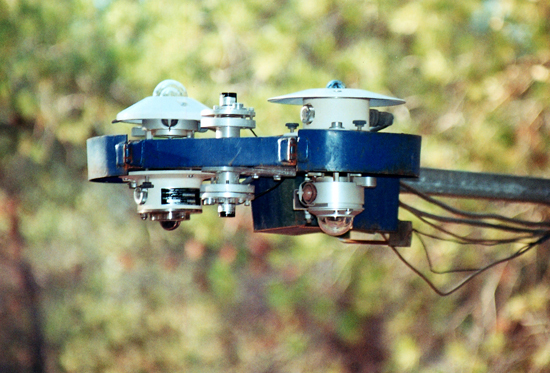 A tool in place at the Yatir Forest. A living lab to study the effects of global warming on forests.
The contribution of the Yatir station, says Prof. Dan Yakir is unique. It “is one of very few in the semi-arid zone, which covers over 17% of the Earth’s land surface, and it has the longest record of the processes taking place in semi-arid forests.”
Forests counteract the greenhouse effect by removing heat-trapping CO2 from the atmosphere and storing it in living trees. Over the years of measurement, Prof. Yakir’s group has found that the semi-arid forest, even though it’s not as luxuriant as the temperate forests farther north, is a surprisingly good carbon sink – better than most European pine forests and about on par with the global average.
This was unexpected news for a forest sitting at the edge of a desert, and it indicated that there is real hope for the more temperate forests if things heat up under future global climate change scenarios.
But forests do more than just store CO2, and Prof. Yakir, together with Dr. Eyal Rotenberg, decided to look at the larger picture – the total energy budget of a semi-arid forest. The first hint they had that other processes might be counteracting the cooling effect of CO2 uptake came when they compared the forest’s albedo – how much sunlight is reflected from its surface back into space – with that of the nearby open shrub land.
They found that the dark-colored forest canopy had a much lower albedo, absorbing quite a bit more of the sun’s energy than the pale, reflective surface of the surrounding areas. In a cloudless environment with high levels of solar radiation, albedo becomes an important factor in surface heating.
Next, the researchers looked at the mechanisms for “air conditioning” within the forest itself. To cool down, trees in wetter areas of the globe use water-cooled systems: They open pores in their leaves and simply let some of the water evaporate, drawing heat away in the process. But the semi-arid pine forest, with its limited water supply, is not built for evaporation. The scientists found that it uses an alternative, efficient, air-cooling system instead.
As semi-arid forests are not as dense as their temperate counterparts, the air in the open spaces between the trees comes into contact with a large surface area, and heat can be easily transferred from the leaves to the air currents. This semi-arid air cooling system is quite efficient at cooling the treetops, and this cooling, in turn, leads to a reduction in infrared (thermal) radiation out into space.
In other words, while the semi-arid forest can cool itself well enough to survive and take up carbon, it both absorbs more solar radiation energy (through the albedo effect) and retains more of this energy (by suppressing the emission of infrared radiation). Together, these effects turned out to be stronger than the scientists had expected. “Although the numbers vary with location and conditions,” says Prof. Yakir, “we now know it will take decades of forest growth before the ‘cooling’ CO2 sequestration can overtake these opposing ‘warming’ processes.”
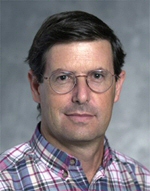 Prof. Yakir (left) and Dr. Rotenberg then asked one more question: If planting semi-arid forests can in fact lead to warming over a good part of the forests’ life cycles, what happens when the opposite process – desertification – takes place? By applying what they had learned to existing data on areas that have turned to desert, they found that desertification, instead of hastening global warming, as is commonly thought, has actually mitigated it, at least in the short term.
By reflecting sunlight and releasing infrared radiation, desertification of semi-arid lands over the past 35 years has slowed down global warming by as much as 20%, compared with the expected effect of the CO2 rise over the same period. And in a world in which desertification is continuing at a rate of about six million hectares a year, that news might have a significant effect on how we estimate the rates and magnitude of climate change.
Says Prof. Yakir, “Overall, forests remain hugely important climate stabilizers, not to mention the other ecological services they provide, but there are tradeoffs, such as those between carbon sequestration and surface radiation budgets, and we need to take these into consideration when predicting the future.”


Hi there would you mind letting me know which hosting company you’re using?
I’ve loaded your blog in 3 completely different web browsers and I
must say this blog loads a lot quicker then most.
Can you suggest a good web hosting provider at a honest price?
Cheers, I appreciate it!
Here is my blog post – google
[…] ways can the deleterious effects of greenhouse gases be mitigated, through reductions in emissions, sequestration, or other […]
So, these guys with their expertise in taking apart complex situations to be able to render linear analysis of fairly simplified relationships are suggesting exactly what? (And you know there is a pack of hyenas just ready to pounce on any bit of seeming contradiction as “evidence” that we don’t need to do anything at all). So, sure, let’s cut down all the pine forests sheltering arid soils, ramp up the old albedo and say it’s good for the planet. Hmmmmmmmmmm. Not convinced.
[…] irrigation procedures, leading to improved water conservation, they have restored much of the country’s deforested regions in order to prevent the further spread of drylands. Leading experts are now preparing to share […]
“Heat” Forests Make Us Rethink Tree Clusters as Efficient Carbon Sink http://bit.ly/cOpSEX
“Heat” Forests Make Us Rethink Tree Clusters as Efficient Carbon … http://ow.ly/16uvjU
“Heat” Forests Make Us Rethink Tree Clusters as Efficient Carbon …: http://url4.eu/1JDKt
“Heat” Forests Make Us Rethink Tree Clusters as Efficient Carbon … http://bit.ly/9ZqedH
כבר לא כל כך בטוח שהעצים יצילו אותנו מהתחממות גלובלית via @greenprophet http://bit.ly/9qOzSc
#carbon “Heat” Forests Make Us Rethink Tree Clusters as Efficient Carbon …: We've been buying carbon credits, an… http://bit.ly/9ZqedH
“Heat” Forests Make Us Rethink Tree Clusters as Efficient Carbon … http://bit.ly/bRKOcp
Tree planting can take decades to be effective carbon sink against CO2: http://www.greenprophet.com/2010/02/03/16912/trees-carbon-sink/
News:: "Heat" Forests Make Us Rethink Tree Clusters as Efficient Carbon Sink http://bit.ly/ajr5gh