
In the Middle East, aromatic traditional foods are regarded as medicine. Soup made with basil and thyme warms the body. Traditional Moroccan mint tea, or tea with a sprig of wormwood in it, aid digestion after a rich meal. Arab grandmothers well know the value of za’atar as a cough remedy.
Food well-seasoned with spices arouse the appetite. Those little dishes of spicy mezze set on the table aren’t enough to satisfy a good lunch-time hunger, but nibbling on them makes you cheerful, looking forward to the main dish. Spicy foods make you aware you’re thirsty, and drinking plenty is a good thing in hot, dry climates where dehydration can happen quickly. And spices provide trace minerals that some populations, especially impoverished or vegetarian ones, depend on to maintain health.
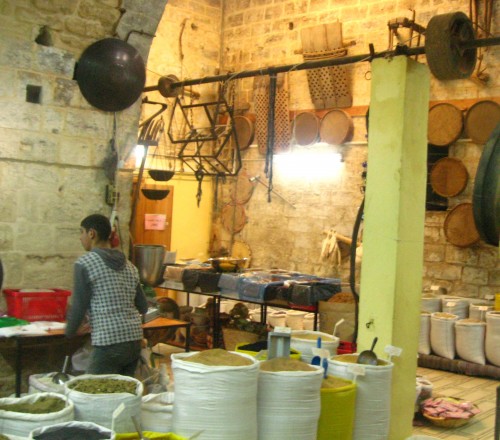
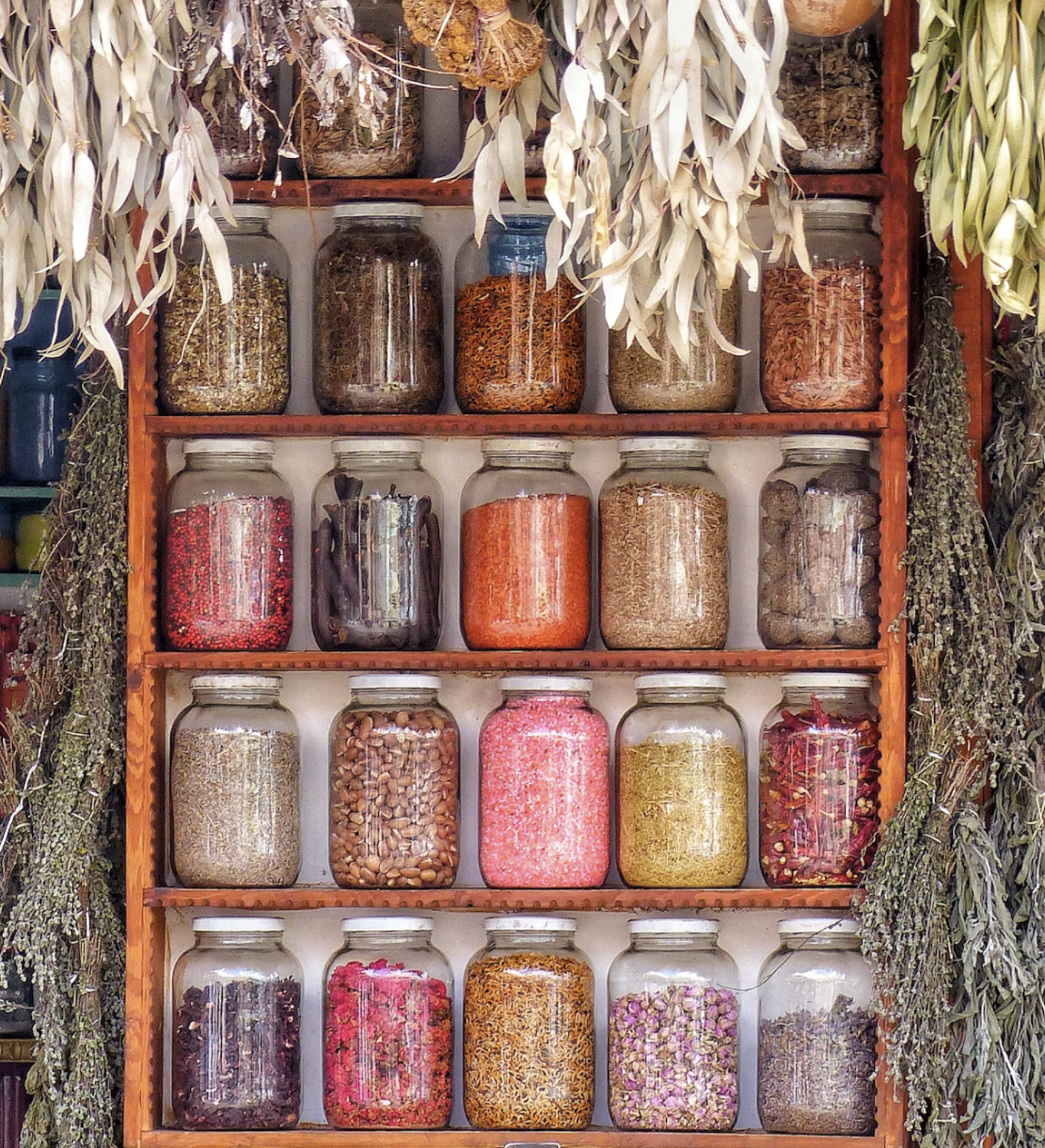
No wonder that every shuk, every grocery store and supermarket, has rows of colorful spices loosely heaped up in burlap sacks or packed into hygienic cellophane bags. Let’s have a look at some of spices so well-loved in the Middle East. Please keep in mind that ordinary culinary use is different from using spices as medicine. Very high intake of some spices can be toxic or dangerous to pregnancy.
Anise
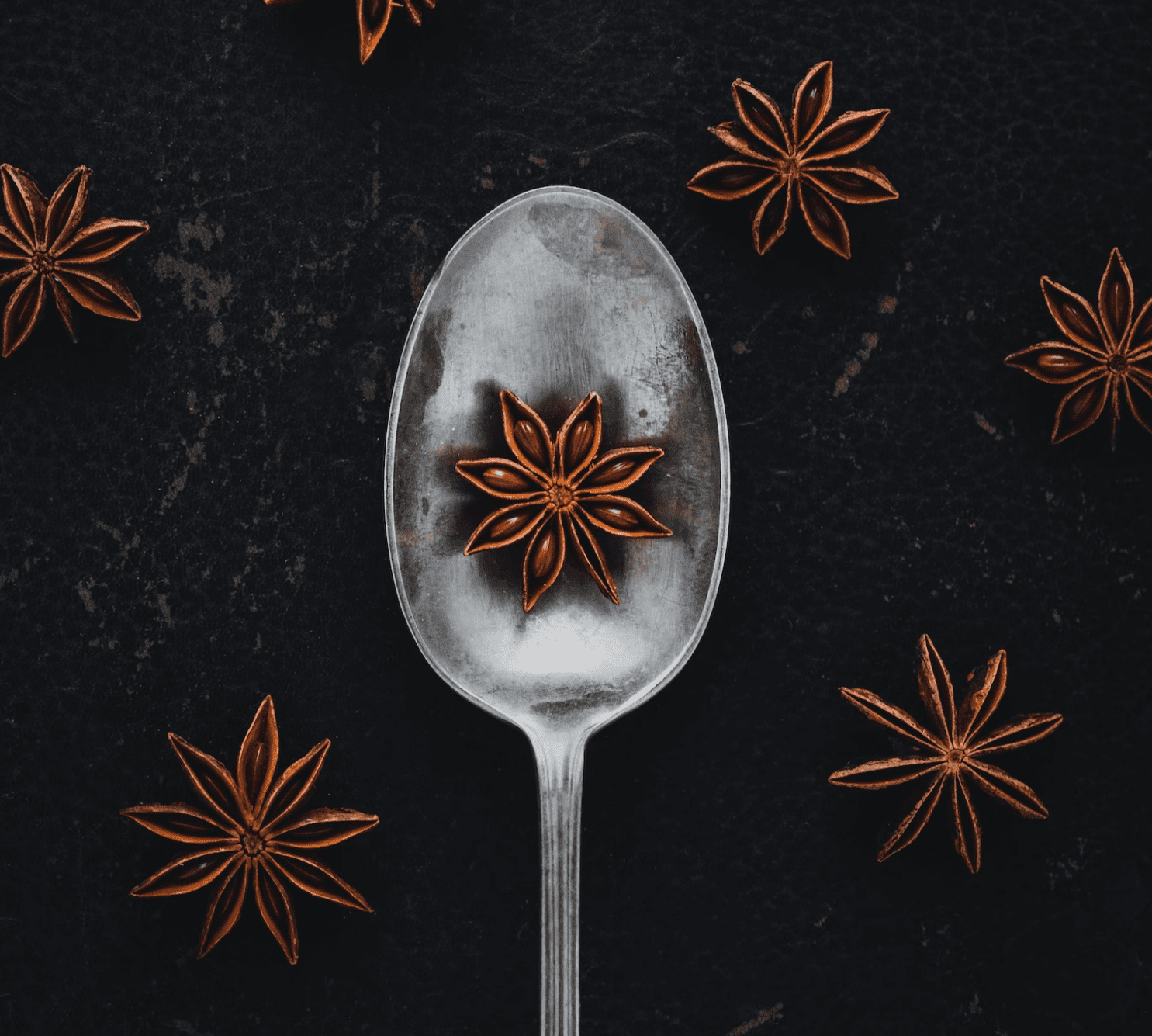
Anise seeds steeped in hot water treat coughs, bronchitis and asthma. The spice loosens mucus in the respiratory tract. They also relieve indigestion in children and grownups.
For colicky babies, cumin and fennel seeds are also used. The breastfeeding mother can drink a cup of seed tea just before or during nursing, and the benefit will pass through her milk to the baby. Otherwise, a teaspoon of very weak seed tea can be given directly.
To make an infusion, gently crush 1 teaspoon of anise seeds per cup of boiling water. Steep for 10-20 minutes and strain. Drink 1/2 cup 3 times a day. If you want a weaker infusion, use 1/2 teaspoon and steep only 10 minutes.
Do not exceed the recommended strength: high or very strong doses of anise may cause nausea and vomiting.
Basil

Basil is a good companion to mint when making a tea for stomach cramps, diarrhoea and vomiting. If you suffer from travel sickness, it’s a good idea to drink a cup of basil tea before starting to travel, or take some with you in a thermos. Basil tea also treats nervous headaches and anxiety. A wash of basil tea is antiseptic and especially good for treating acne.
Basil is one herb that loses a lot of its beneficial properties once dried, so it’s worth keeping a small pot of basil in the kitchen windowsill, to pinch off leaves for cooking and for tea. It’s easy to grow.
Bay Leaves

Bay (Laurel) Leaves in cooking made food more digestible, and relieve flatulence. A tea made of several bay leaves broken in half and allowed to steep for 10 minutes is tasty and soothing for people suffering from colds and flu and, especially, menstrual cramps. It also warms the body because it promotes circulation – which is why it’s good first aid for cramps. Pregnant women should not drink more than one cup of mild bay leaf tea at any given time.
Bay leaves are diuretic. Tea from the leaves will promote sweating, which is useful when there’s fever. Its antiseptic properties are useful as a skin wash for treating acne and small wounds and scrapes.
Bay leaves repel insects, and are often scattered around closets where grains are stored.
Caraway
Caraway (Kumel) – Half a teaspoon of caraway seeds steeped in a cup of water and drunk, settles the stomach after a large meal. Its medicinal uses are the same as for anise seeds.
Caraway is also a powerful appetite stimulant and a standard infusion can be drunk half an hour before a meal.
As caraway appears to have anti spasmodic properties that might relax the uterus, pregnant women should be careful to use the herb only for seasoning food, not to take it in large, medicinal doses.
Chamomile
Chamomile is an herb, not a spice, but it grows readily in all kinds of climates (in Israel we pick it wild in neglected lots and fields) and it’s uses are so many that it’s worth including here. While chamomile is seldom used in cooking, it’s well-known as a soothing tea, easily available both loose and in tea bags. It’s good to drink after a heavy meal or to use in treating diarrhea. For people with fever, a cup of chamomile tea refreshes and relieves some of the body pain.
Chamomile calms down jitters. Hand a grouchy teenager a cup of chamomile as he or she walks in after school, and you will have a much more relaxed son or daughter in the house.
A soothing oil for earache can be made by opening a teabag of chamomile and simmering it in olive oil to cover it well for a few minutes. Allow the herbal oil to steep, covered, for 20 minutes, then strain well through fine cloth or something similar like a coffee filter (you do not want herb particles in the ear!). Heat over a candle and when it is pleasantly warm, drop 1-3 drops into the affected ear. Cover with cotton wool and rest for at least 5 minutes.
This same oil is lovely for massaging babies, children, and anyone in need of relaxation.
Cinnamon
Cinnamon. Used more often for flavoring than as medicine, this woody, aromatic spice can be infused as tea to effectively relieve flatulence, soothe nausea and stop vomiting and diarrhea. Modern research has proved that as little as 1/4 teaspoon of ground cinnamon daily helps to lower blood sugar.
Cinnamon, by the way, is one of the spices that stimulated the birth of the great spice trade in the 15th and 16th centuries.
Cloves
Cloves treat nausea and vomiting. Placed between the gum and a painful tooth, a clove will take the edge off toothache till you can get to the dentist.
Coriander
Coriander, both green leaf and seed, stimulates appetite and digestion.
Cumin
Cumin: The spice that seasons all the falafel in the Middle East. It’s a mainstay in seasoned meats, soups and it’s almost like salt to a Middle East kitchen. And also like coriander, it stimulates appetite and digestion. It also relieves flatulence. Taken as tea sweetened with honey, it increases breast milk.
Read PART II: Middle Eastern Spices D through G (Dill to Ginger)
You’ll enjoy these food-related posts:



[…] in the Middle East and Asia, has been used for centuries in folk medicine to relieve inflammation. Medicinal spices have been reviewed on Green Prophet here. To relieve internal inflammation in the digestive tract, Ayurvedic medicine from India advises […]
[…] The ABCs of Traditional Middle-Eastern Spice Medicines […]
[…] help him cope with the pain in his hands. He has psoriatic arthritis. We’re familiar with spices as medicine. I began reading more. While turmeric’s anti-cancer properties are already well-known, it was […]
[…] for spices in Middle Eastern cuisine extend beyond just adding flavor; they are also commonly used medicinally, both to treat and prevent ailments. Ginger tonic is thought to alleviate nausea, clove is believed […]
wonderful series, miriam! thank you so much for compiling this useful and valuable information.
[…] way, I trekked across a handful of loose scree peaks and verdant valleys, occassionally stopping to drink mint tea with the locals, and admire their terraced agriculture plots. Naturally, what seems “so […]
[…] hearty vegetarian stew, aromatic with herbs and spices (see our series on Middle Eastern spices). Great with rice or fresh pita and a simple protein like cheese or an omelet on the side. Or for […]
[…] Green Prophet | PART I: The ABCs of Traditional Middle-Eastern … […]
[…] chicken fillets. They’re more interesting than the usual fried shnitzel because herbs like the ones featured in our Middle Eastern spice series, breadcrumbs and nuts protect the meat and keep it juicy – and make a lively, flavorful […]
[…] this series, we’re only considering the medicinal properties of dried seasonings. (See parts I, II, and III here on Green […]
[…] or stuffed and roasted quickly. We love to serve them well doused in olive oil, seasoned with Middle Eastern spices, and surrounded with sweet potato chunks. Have lots of red wine to drink with this […]
Great post. I'd love to read more things like this.