Order Negev Nectars’ Sustainable Milk and Honey CSA Box in America

doron-checking-trees-irrigation-story
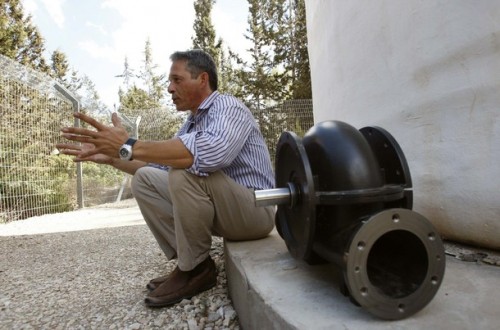
Negev farmer Doron Akiva, grows organic olives for Negev Nectars. His piece of land has reputedly been farmed since the time of David and Solomon.

“A land flowing with milk and honey” – that’s one of the most well-known passages from Exodus describing the Land of Israel and one of the first biblical expressions to make its way into the English language. Today, Israel is known for its abundant variety of high-quality food products made from these very ingredients.

While olive oil and dates from Israel are widely available in the United States at supermarkets and health food stores, a new American company called Negev Nectars – based in the Tri-State region – is making sure that the very “best of the sustainable best” from Israel will be delivered to American doorsteps, three times a year.

In a community-supported agriculture (CSA) style distribution network, Americans interested in enjoying Israeli-grown organic olive oil, herbal teas, honey, dates, chutneys and preserves, can satisfy their passion and eco-yearnings by subscribing to Negev Nectars’ CSA.

For $180 a year (the number translates to “life” multiplied by 10 in Jewish numerology), subscribers enjoy hand-selected foods that meet the rigorous standards and values of the most discriminating eco-aware individuals. Profits are channelled back to supporting the farms and people in Israel that practice sustainable farming. These practices benefit the Middle East region and ultimately the entire world.

A green gift from the Middle East

Initially, the boxes will be delivered before major Jewish holidays, but as the endeavour grows, Negev Nectars’ founders Marvin Israelow and Jeffrey Yoskowitz plan to expand deliveries to coincide with major seasons and holidays for people of other faiths as well.

It’s a healthy idea that sends the right message. When you support Negev Nectars, you’re putting your money where your mouth is, because the venture gives back to individuals and farms that are working in desert agriculture R&D and growing crops in harsh desert climates. These practices can and do reverberate across the entire Middle East.

“Most of the shelf-stable products I’m bringing over to the US are made from crops grown with brackish water, using the latest water saving technology to grow in the desert, and for the olive trees, using mainly a desert olive, the Barnea olive, which was discovered in the Sinai and yields more oil per fruit than most other varieties,” says Yoskowitz.

While some people believe it’s essential to reduce the size of your ecological footprint by supporting no-impact or low-impact food – meaning that the food that you eat should be grown and produced locally – Yoskowitz sees no contradiction between maintaining these values and buying into a Negev Nectars’ CSA box.

Thinking global, acting locally

In the Northeast United States where Negev Nectars is setting up, there is no locally produced olive oil. “You can’t get sustainable organic olive oil here,” says Yoskowitz. In fact, he adds “you can’t get [locally grown] olive oil at all.” Despite that, “everyone’s’ still buying olive oil,” he points out.

Olive oil, a staple food in Mediterranean climates, is known for its health properties. It can reduce ‘bad’ cholesterol, while providing the good cholesterol our bodies’ need to function.

200_jeffrey-yoskowitz-green-prophet-olive-treeNegev Nectars’ founder Israelow is an American philanthropist who supports desert farming research out of Ben Gurion University in Israel. Yoskowitz (pictured left) is an environmental activist, filmmaker, writer and blogger for Green Prophet. Both scoured Israel this summer to locate and select the best products for their CSA members.

“It’s one of the ways to get to know the land of Israel,” says Yoskowitz, who seems particularly pleased that Negev Nectars offers an olive oil produced from the biblical site Kadesh Barnea. It’s likely a spot where the Israelites camped along the Exodus route they took from Egypt to their Promised Land.

Update June, 2019: Negev Nectars is no longer in business. 

Karin Kloosterman
Karin Kloostermanhttp://www.greenprophet.com
Karin Kloosterman is an award-winning journalist, innovation strategist, and founder of Green Prophet, one of the Middle East’s pioneering sustainability platforms. She has ranked in the Top 10 of Verizon innovation competitions, participated in NASA-linked challenges, and spoken worldwide on climate, food security, and future resilience. With an IoT technology patent, features in Canada’s National Post, and leadership inside teams building next-generation agricultural and planetary systems — including Mars-farming concepts — Karin operates at the intersection of storytelling, science, and systems change. She doesn’t report on the future – she helps design it. Reach out directly to [email protected]
1 COMMENT

LEAVE A REPLY

Please enter your comment!
Please enter your name here

TRENDING

Earth building with Dead Sea salt bricks

Researchers develop a brick made largely from recycled Dead Sea salt—offering a potential alternative to carbon-intensive cement.

Farm To Table Israel Connects People To The Land

Farm To Table Israel is transforming the traditional dining experience into a hands-on journey.

Remilk makes cloned milk so cows don’t need to suffer and it’s hormone-free

This week, Israel’s precision-fermentation milk from Remilk is finally appearing on supermarket shelves. Staff members have been posting photos in Hebrew, smiling, tasting, and clearly enjoying the moment — not because it’s science fiction, but because it tastes like the real thing.

An Army of Healers Wins the 2025 IIE Goldberg Prize for Peace in the Middle East

In a region more accustomed to headlines of loss than of listening, the Institute of International Education (IIE) has chosen to honor something quietly radical: healing. The 2025 Victor J. Goldberg Prize for Peace in the Middle East has been awarded to Nitsan Joy Gordon and Jawdat Lajon Kasab, the co-founders of the Army of Healers, for building spaces where Israelis and Palestinians — Jews, Muslims, Christians, Druze, and Bedouins — can grieve, speak, and rebuild trust together.

The US leaves 66 United Nations organizations to “put America first”

The world needs a reset and to restart well intentioned cooperation projects from start. Because right now the UN and EU projects look like software built on code from the 80s, rickety, patched, slow to adapt, and prone to crashing under the weight of outdated assumptions.

Qatar’s climate hypocrisy rides the London Underground

Qatar remains a master of doublethink—burning gas by the megaton while selling “sustainability” to a world desperate for clean air. Wake up from your slumber people.

How Quality of Hire Shapes Modern Recruitment

A 2024 survey by Deloitte found that 76% of talent leaders now consider long-term retention and workforce contribution among their most important hiring success metrics—far surpassing time-to-fill or cost-per-hire. As the expectations for new hires deepen, companies must also confront the inherent challenges in redefining and accurately measuring hiring quality.

8 Team-Building Exercises to Start the Week Off 

Team building to change the world! The best renewable energy companies are ones that function.

Thank you, LinkedIn — and what your Jobs on the Rise report means for sustainable careers

While “green jobs” aren’t always labeled as such, many of the fastest-growing roles are directly enabling the energy transition, climate resilience, and lower-carbon systems: Number one on their list is Artificial Intelligence engineers. But what does that mean? Vibe coding Claude? 

Somali pirates steal oil tankers

The pirates often stage their heists out of Somalia, a lawless country, with a weak central government that is grappling with a violent Islamist insurgency. Using speedboats that swarm the targets, the machine-gun-toting pirates take control of merchant ships and then hold the vessels, crew and cargo for ransom.

Leopoldo Alejandro Betancourt López Turned Ocean Plastic Into Profitable Sunglasses

Few fashion accessories carry the environmental burden of sunglasses. Most frames are constructed from petroleum-based plastics and acrylic polymers that linger in landfills for centuries, shedding microplastics into soil and waterways long after they've been discarded. Leopoldo Alejandro Betancourt López, president of the Spanish eyewear brand Hawkers, saw this problem differently than most industry executives.

Why Dr. Tony Jacob Sees Texas Business Egos as Warning Signs

Everything's bigger in Texas. Except business egos.  Dr. Tony Jacob figured...

Israel and America Sign Renewable Energy Cooperation Deal

Other announcements made at the conference include the Timna Renewable Energy Park, which will be a center for R&D, and the AORA Solar Thermal Module at Kibbutz Samar, the world's first commercial hybrid solar gas-turbine power plant that is already nearing completion. Solel Solar Systems announced it was beginning construction of a 50 MW solar field in Lebrija, Spain, and Brightsource Energy made a pre-conference announcement that it had inked the world's largest solar deal to date with Southern California Edison (SCE).

Related Articles

Popular Categories