
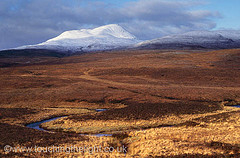
 Reading has its own geography. I read this book The Nature of the State while I traveled back and forth from the West Highlands of Scotland to London for work . . . while Israeli-Palestinian relations erupted into open conflict in Gaza, while fire in Greece turned to fire Australia, while it snowed hard in the South of England, while the rulers of neo-liberal advanced capitalist economies cowed, begged, and then apologised to elected officials.
I read it with the words of the book review editor of Green Prophet in mind: ‘make it relevant to the Middle East.’
The review refused to emerge. I admit this volume sat on various desks and was carried many times in bags back and forth to work and further afield.
I think the reason for keeping hold of the review was fear.
As a UK based researcher I was cautious about how to place this book in a Middle East context. This was compounded by the bombing of Gaza by Israel that ran alongside my reading of the volume, and echoed in my thoughts afterwards. After all, this is a book that explores the relationship between nature, nations and states.
In the UK their charge raises a little static, transposed to a context where the material and symbolic boundaries of these terms are violently contested, it is like a mains shock.
Nations and states are very different things. Let me illustrate with a slightly safer example that is more familiar to me: As a West Highland Scot I am fairly comfortable with the idea that, even before the establishment of a devolved parliament, Scotland’s distinct cultural and social practices made it a nation.
I would even argue that the the Gaeltachd (Gaelic speaking West Highlands) is a nation as well. Scotland is not a state because it only has partial autonomy and London still controls most of its affairs. States are essentially self determining political entities that occupy particular geographic areas with internationally recognised boundaries.
While nations are social and cultural grouping that may (but do not always), live in and identify with, particular geographic locales.
The basic premise of this book, that states and nations still play an important role in our understanding of nations, may well be lost on some readers. Readers, who were not aware that in light of the global environmental threats that we face, like climate change, rising sea levels, environmental pollution and destruction to name just a few, many political ecology theorists have abandoned the nation and the state.
True, nature does not respect political boundaries. However, nature is entwined with the politics of the state, nature as a resource base, nature as protected, nature is monitored and nature is controlled.
Likewise nation and nature – blood and soil – whether that is the thistle, the eagle, the red deer, or those hills and glens, each helps to constitute the other.
The authors use resource conflict over water between Wales (nation) and England (acting as state) to illustrate how the geopolitics of state nature interactions soon becomes about nature and nation. Welsh water (a nation’s nature) for English homes (state nature) soon becomes about nationalist politics. Here state nature (a water supply for industrial towns in NW England) becomes about national nature and the politics of identity. Pure clean plentiful Welsh water collected in the Welsh Hills, kept pure through the careful Welsh stewardship used to flush a dirty old [English] industrial town.
As a Zoologist I found the case study on the relationship between nationalism, state building and the natural history museums really interesting. The authors note the relationship between the collection and display of nature, the building of national identities and the consolidation of state power.
I felt that the authors should have allocated some space to the way states demonstrate their power and influence through the collection and display of flora and fauna from others states. For example, the Natural History Museum in London can be read as a map of the ex British Empire. In addition to this display of power, the collection of flora and fauna from across the world and its mapping onto the museum space seems to reinforce the sense of an ‘exotic other’.
As I thought about these museums I could not help but recall the many undergraduate hours I spent in the basement of the University collection examining specimens.
One of the things that I recall the curator telling me was about the search for examples of the average within a species. For example, such is the genetic-spatial variations between species animals on the outer fringes of a species may not be able to breed with species at the opposite edge. This variation also means the boundary between species can be a little fuzzy. Taxonomists need to account for the variation and curators would like to collect the average.
However, most public natural history museums are reliant in elderly displays that may, or may not, represent an average example of that species within that nation. It may matter to the taxonomist, but it does not effect natures place in reinforcing the identity of the nation and the state. Thus reinforcing the idea that, while state nature is about the use and control of material resources, it is also about the symbolic production of nature. A symbolic nature that is only fleetingly related to material nature.
Who will read this book? I think the principle audience will be undergraduate geography students with an interest in political ecology. As it is an excellent introduction to theories of nature, nation and the state and makes a compelling case for retaining nation and state within our reading of nature.
However, I feel that it will also be of use to readers who are interested in environmental and resource conflict. For activists who need to learn more about the way that nature becomes transformed through the actions of nations and states. This volume would provide locally based environmentalists throughout the world with the tools and language required to engage in national debates with state structures.
As to the relationship to Middle East – read between the lines.
‘The Nature of the State: Excavating the Political Ecologies of the Modern State’ by Mark Whitehead, Rhys Jones, and Martin Jones, 2007 published by www.oup.co.uk
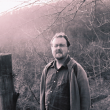
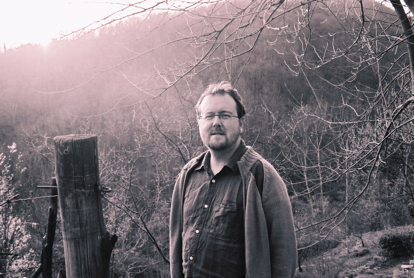
Ronald Macintyre is a writer and researcher based in the West Highlands of Scotland. A tenant farmer, he runs a small consultancy business and also works as a researcher for the Open University.
At the moment he is working on; landscape interpretation, digital exclusion in remote rural areas, understanding virtual learning environments, putting the finishing touches to an online course on sustainability, building an agricultural shed from locally grown timber (milled on the croft – ecohouse to follow), and (when he can) spending time with his patient wife and two beautiful children. He likes cycling, camping and (of course) books.


Ronald Macintyre Excavates ‘The Nature Of The State’ http://ow.ly/4m7L
Ronald Macintyre Excavates ‘The Nature Of The State’ http://ow.ly/4m7M
Ronald Macintyre Excavates ‘The Nature Of The State’ http://ow.ly/4m7J
#GTNews : Ronald Macintyre Excavates ‘The Nature Of The State’ – http://bit.ly/u3kWV – http://bit.ly/19rnx4