

Cradle to Cradle or Cradle to Grave?

William Andrews McDonough is an American architect, designer and author. McDonough is founding principal of William McDonough + Partners, co-founder of McDonough MBDC as well as co-author of Cradle to Cradle: Remaking the Way We Make Things and The Upcycle: Beyond Sustainability—Designing for Abundance.
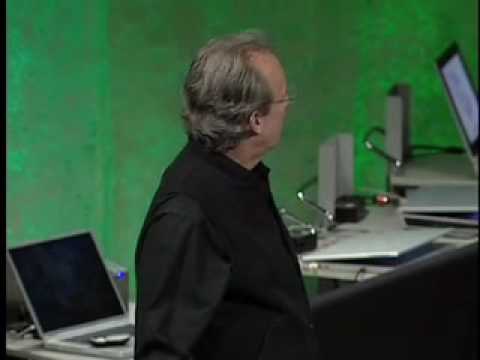
William McDonough is an architect who woke the profession up to the idea of designing with no waste.

Two of the most basic terms in the ecological and sustainable design and architecture fields are Cradle to Grave and Cradle to Cradle. They relate to the product life cycle from the raw materials (Cradle) to disposal (Grave). If you are in design school or architecture college or are thinking about an MBA in a sustainable field, you should know the book Cradle to Cradle. It’s a primer for sustainabilists. Well, for anyone in the design or product business.

What is Cradle to Grave

Cradle to Grave is a term used in life-cycle analysis to describe the entire life of a material or product up to the point of disposal. In other words, cradle-to-grave is a take, make, waste system. Making a plastic bottle by Coca Cola that has no intention of being recycled or which physically cannot be recycled or used is a product that goes from the cradle to the grave. Flip-flips that wash up onshore. Cradle to the grave. It gets more complex when we talk about cars, electronics, and large building projects. But architects today, especially in forward-thinking sustainable cities like Rotterdam are thinking about building materials that can see a new life after the current structure is demolished.

What is Cradle to Cradle

Cradle-to-cradle is the creation and qualification of a circular economy. It’s a way of designing and producing that honors all future generations by designing and manufacturing for next use, instead of end of life.

A model of industrial systems in which material flows cyclically in appropriate, continuous biological or technical nutrient cycles. All waste materials are productively re-incorporated into new production and use phases, such as “waste equals food,” according to William McDonough, the architect who conceived the concept.

William McDonough
William McDonough

The famous three Rs—reduce, reuse, recycle—are steadily gaining popularity in the home as well as the workplace. Reduction, reuse, and recycling slow down the rates of contamination and depletion but do not stop these processes.

Watch a TED video of William McDonough below

Recycling is more expensive than it needs to be, partly because traditional recycling tries to force materials into more lifetimes than they were designed for. Very few objects were designed with recycling in mind. If the process is truly to save money and materials, products must be designed from the very beginning to be recycled or even “upcycled”—a term we use to describe the return to industrial systems of materials with improved, rather than degraded, quality.

Why Cradle to Cradle is more important

The notion of Cradle to Cradle conveys a message of “Do good” instead of “Do less bad.”

Here’s an experiment. Choose any of your favorite blogs/websites and skim their latest articles. How many of them are all about how to do less so it will have less of an effect on the environment?

The environmental message that consumers take from all of this can be strident and depressing: stop being so bad, so materialistic, so greedy. Do whatever you can, no matter how inconvenient, to limit your consumption. Buy less, spend less, drive less, have fewer children — or none.

About the technical metabolism

Aren’t the major environmental problems today — global warming, deforestation, pollution, waste — products of our decadent Western way of life? If you are going to help save the planet, you will have to make some sacrifices, share some resources, perhaps you can go without.

With a Cradle to Cradle mindset you don’t try to design a bottle from less plastic but rather design a bottle from materials that can fully enter a new life cycle either back to nature or back into the design process as a new product.

Biological nutrients will be designed to return to the organic cycle—to be literally consumed by microorganisms and other creatures in the soil. Products composed of materials that do not biodegrade should be designed as technical nutrients that continually circulate within closed-loop industrial cycles—the technical metabolism.

Lea Aharonovitch
Lea Aharonovitchhttp://www.greenproducts.co.il/blog
Up until a year ago Lea used the word “Environment” only referring to nice scenery.But somewhere the switch flipped and now we’re talking about a real environmentalist (with a husband that had to get rid of his obsession for collecting plastic bags…) In addition to being a Senior Product Manager at Answers.com ( & wikianswers.com) Lea also publishes her own blog about Eco-Design and running a green business. She can be reached at lea (at) greenprophet (dot) com.
4 COMMENTS

LEAVE A REPLY

Please enter your comment!
Please enter your name here

TRENDING

Pea pod wine recipes are making a comeback with allotment gardeners

Yes, pea pod wine is a real thing, an old-fashioned, home-brewed country wine made from the leftover pods after shelling fresh peas. It is a sustainable, no-waste practice, often popular among allotment gardeners.

Making Jerusalem a Sustainable City

I personally coordinate a Center for Sustainability in the Ultra-Orthodox neighborhood of Romema. Most people would say that is quite unique because that population typically gets a bad rap when it comes to environmental friendliness and that is because the families are large, on average 7.7 children per household and they use a lot of ‘one-time-use’ dishware, therefore producing a large amount of non-recyclable waste.

Leveraging Social Media to Showcase Your Building’s Sustainability

In today’s digital world you need essential online tools for sharing your building’s sustainability journey. With strategic content planning, you can showcase your commitment to the environment, involve your tenants, and inspire others to join the movement.

Tentsile tent cocoon for palm trees and attention seekers

No need for a travel van with this hanging tent. Tent over rivers and hang between trees.

Will these trash sorting robots make zero waste our future?

Can a garbage collecting robot find me a pile of money in a mattress? Can it spare real-life sorters from the dangers of e-waste? Will they take over jobs and a way of life?

Qatar’s climate hypocrisy rides the London Underground

Qatar remains a master of doublethink—burning gas by the megaton while selling “sustainability” to a world desperate for clean air. Wake up from your slumber people.

How Quality of Hire Shapes Modern Recruitment

A 2024 survey by Deloitte found that 76% of talent leaders now consider long-term retention and workforce contribution among their most important hiring success metrics—far surpassing time-to-fill or cost-per-hire. As the expectations for new hires deepen, companies must also confront the inherent challenges in redefining and accurately measuring hiring quality.

8 Team-Building Exercises to Start the Week Off 

Team building to change the world! The best renewable energy companies are ones that function.

Thank you, LinkedIn — and what your Jobs on the Rise report means for sustainable careers

While “green jobs” aren’t always labeled as such, many of the fastest-growing roles are directly enabling the energy transition, climate resilience, and lower-carbon systems: Number one on their list is Artificial Intelligence engineers. But what does that mean? Vibe coding Claude? 

Somali pirates steal oil tankers

The pirates often stage their heists out of Somalia, a lawless country, with a weak central government that is grappling with a violent Islamist insurgency. Using speedboats that swarm the targets, the machine-gun-toting pirates take control of merchant ships and then hold the vessels, crew and cargo for ransom.

Leopoldo Alejandro Betancourt López Turned Ocean Plastic Into Profitable Sunglasses

Few fashion accessories carry the environmental burden of sunglasses. Most frames are constructed from petroleum-based plastics and acrylic polymers that linger in landfills for centuries, shedding microplastics into soil and waterways long after they've been discarded. Leopoldo Alejandro Betancourt López, president of the Spanish eyewear brand Hawkers, saw this problem differently than most industry executives.

Why Dr. Tony Jacob Sees Texas Business Egos as Warning Signs

Everything's bigger in Texas. Except business egos.  Dr. Tony Jacob figured...

Israel and America Sign Renewable Energy Cooperation Deal

Other announcements made at the conference include the Timna Renewable Energy Park, which will be a center for R&D, and the AORA Solar Thermal Module at Kibbutz Samar, the world's first commercial hybrid solar gas-turbine power plant that is already nearing completion. Solel Solar Systems announced it was beginning construction of a 50 MW solar field in Lebrija, Spain, and Brightsource Energy made a pre-conference announcement that it had inked the world's largest solar deal to date with Southern California Edison (SCE).

Related Articles

Popular Categories