Cedars of Lebanon Threatened By Climate Change

Lebanon cedars global warming Middle East

Here in the Middle East,  echoes of the Biblical prophets are never far off–even in environmental discourse.

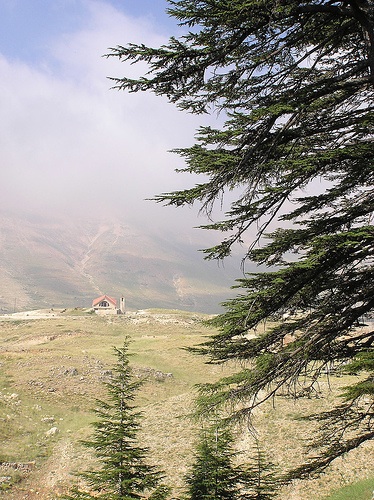
Nowhere is that more apparent than in the famous cedars of Lebanon, which have been a wonder to the world for thousands of years, and were used to build King Solomon’s palace. Some of the remaining cedars in Lebanon are in fact 2,000 years old.

But now global warming, which we have seen will be particularly pernicious in the Middle East, threatens the existence of these ancient trees.

Back in Biblical times, the idea of conservation was nowhere near human awareness. Consequently the cedars that once covered vast stretches of the Middle East, including Syria and Turkey, are now in decline due to the huge numbers that were cut down throughout history. (And perhaps even prehistory.)

But while Lebanon’s cedars are no longer threatened by the forces of human architecture and shipbuilding, they are vulnerable to the changing climate. Cedars need a certain degree of moisture in the soil and humidity in the air in order to survive, according to Rania Masri, an assistant professor at the University of Balamand in North Lebanon.

Since the progress of climate change has indicated a decrease in humidity and rainfall, this could spell the eventual end of the cedars–and the diverse species that are fostered in their shade.

Read more on Climate Change:

Our Climate’s Tipping Point: Only 100 Months Left

Israel Lacks National Plan to Address Climate Change

::Reuters

TRENDING

Huge Fish Nursery Discovered Under Freezing Arctic Seas

In 2019, an underwater robot camera exploring the seabed...

Remilk makes cloned milk so cows don’t need to suffer and it’s hormone-free

This week, Israel’s precision-fermentation milk from Remilk is finally appearing on supermarket shelves. Staff members have been posting photos in Hebrew, smiling, tasting, and clearly enjoying the moment — not because it’s science fiction, but because it tastes like the real thing.

Lebanon reporting fellowship for truth-tellers

Lebanon’s environmental crisis is not abstract. It is shaped by war, neglect, corruption, and silence. Rivers carry untreated sewage and industrial waste into the Mediterranean. Dynamite fishing shatters fragile marine ecosystems along the coast. In many areas, Hezbollah’s military presence and decades of instability have made environmental accountability nearly impossible. What flows into the sea is not only pollution — it is politics, poverty, and unresolved war. And yet, these stories are rarely told with depth, care, or courage. Silat Wassel’s Environmental Justice Journalism Fellowship is opening space for exactly that. They are looking for a few brave souls. 

How you create green steel on a blockchain

The thing about raw materials is that once they are melted down, you can't prove the source of the material. Same is true with gold, cucumbers and even forged products that look the same as the real thing. When it comes to steel, and how we produce it, it has a massive carbon problem. What's happening in Japan right now could change how we think about heavy industry and climate action.

The US leaves 66 United Nations organizations to “put America first”

The world needs a reset and to restart well intentioned cooperation projects from start. Because right now the UN and EU projects look like software built on code from the 80s, rickety, patched, slow to adapt, and prone to crashing under the weight of outdated assumptions.

Should You Invest in the Private Market?

startustartup Unlike public stock exchanges, which offer daily trading, strict...

How to build a 100-year-company

Kongō Gumi is a Japanese construction company, purportedly founded in 578 A.D., making it the world's oldest documented company. What can we learn about building sustainable businesses from them?

From Pilot Plant to Global Stage: How Aduro Clean Technologies’ 2026 Expansion Signals a Turning Point for Chemical Recycling Investors Like Yazan Al Homsi

The company's Next Generation Process (NGP) Pilot Plant in London, Ontario, has officially moved into initial operating campaigns, generating the kind of structured, repeatable data that separates laboratory promise from commercial viability.

How AI Helps SaaS Companies Reduce Repetitive Customer Support Work

SaaS products are designed for large numbers of users with different levels of experience, and also in renewable energy.

Pulling Water from the Air

Faced with water shortage in Amman, Laurie digs up...

Turning Your Energy Consultancy into an LLC: 4 Legal Steps for Founders in Texas

If you are starting a renewable energy business in Texas, learn how to start an LLC by the books.

Tracking the Impacts of a Hydroelectric Dam Along the Tigris River

For the next two months, I'll be taking a break from my usual Green Prophet posts to report on a transnational environmental issue: the Ilısu Dam currently under construction in Turkey, and the ways it will transform life along the Tigris River.

6 Payment Processors With the Fastest Onboarding for SMBs

Get your SMB up and running fast with these 6 payment processors. Compare the quickest onboarding options to start accepting customer payments without delay.

Related Articles

Popular Categories