
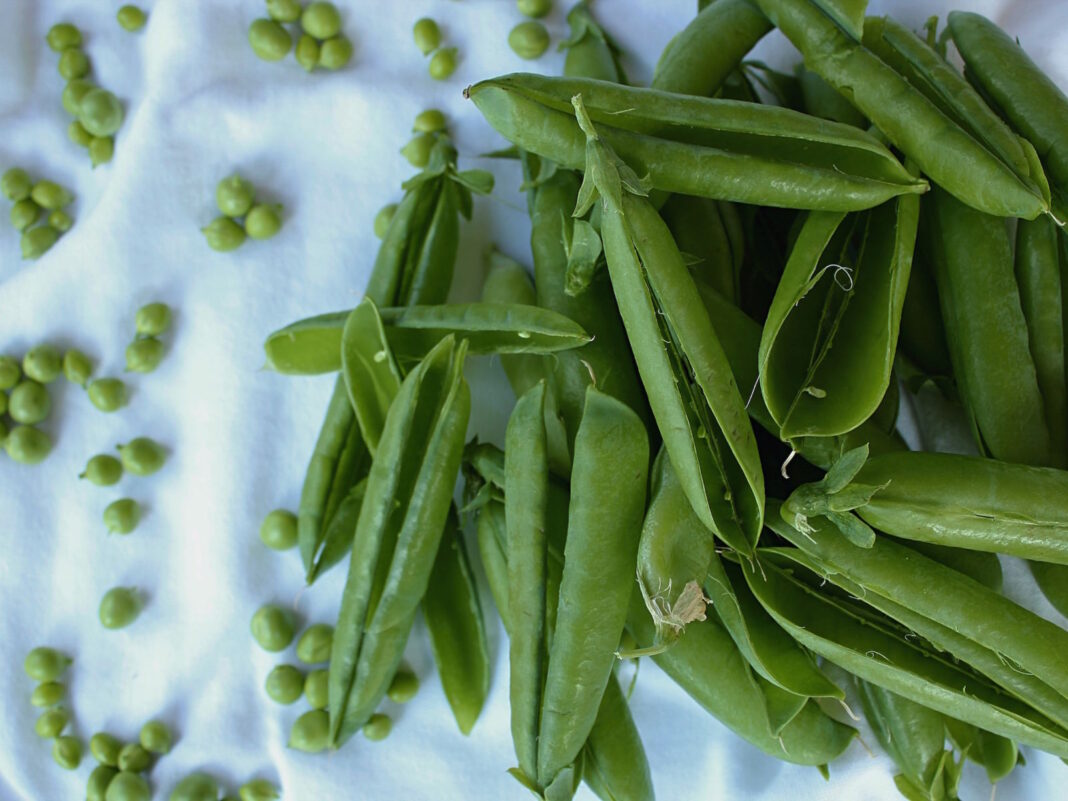


Fresh peas are delightful. They are bursts of green, garden-tasting goodness, immensely better the moment they are picked than even a day or two later. Peas can be snacked on raw out of the pod, simmered in cream, tossed with lemon zest and pasta, puréed with olive oil and ricotta and spooned on crostini. These are all excellent treats, and highly recommended.
But here’s the thing about fresh peas: once you’ve shelled them, your pile of pods will inevitably be an order of magnitude larger than your pile of peas. The process of shelling, on good days, is meditative and relaxing. On days that are even the slightest bit busy, it is finicky, tiresome, and given how small the pile of peas you end up with, likely to strike you as not worth the trouble.
Unless, that is, you get to turn the pods into something yummy as well.
Make Delicious Pea Pod Wine
Pea pods are very fibrous and tough, and can’t just be cooked and eaten. They can, however, get diverted from your compost heap, and turned into soup. Not a cream soup – nothing so heavy seems seasonal – but a smooth, thin, refreshing soup, perfect for summertime. It’s a subtle, mossy green way to make the the most of your hard pea-shelling work.
Pea Pod Soup Recipe
- 2 tbsp olive oil
- 1 medium onion, roughly chopped
- 2 cloves garlic, minced
- 1 large mixing-bowl’s worth of pea pods (about 2 quarts)
- 1 L light veggie or chicken stock (I diluted some regular stock with water)
- 1 handful of fresh thyme
- 1 lemon, zest thereof
- salt and pepper to taste
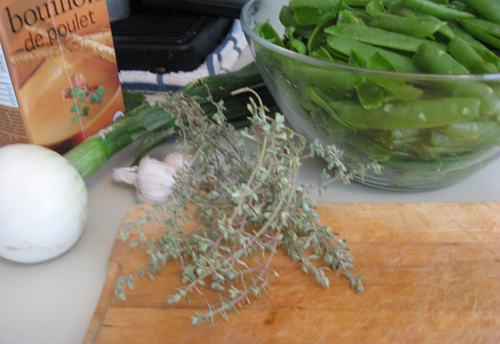
Method for making pea pod soup
1. Place a large soup pot over medium heat. Pour in a glug of oil, and leave to warm through. Add in onion; sauté until softened and beginning to turn translucent, about 5 minutes. Stir in garlic and sauté another couple of minutes.
2. Add pea pods to the pot and pour in the stock, which should just barely cover the pods. (Add a bit of water if the stock seems scanty.) Throw in the thyme, stems and all, cover and bring to a gentle simmer.
3. Uncover pot and allow soup to simmer until pea pods are very tender, about 45 minutes. Remove soup from heat and let cool for a few minutes. Pick out the thyme stems.
4. Transfer the soup to a blender and process for a few seconds (you’ll need to do this in batches). You’re not trying to purée the soup – the pods won’t ever break down that far – but rather to chop the pods up and release all their juices and soft flesh.
5. Strain the soup through a fine-mesh sieve, pressing on all the solids with the back of a spoon to extract as much liquid as possible. Return soup to the pot, and discard the solids.
6. Stir lemon zest into the soup, and taste. Add as much salt and pepper as you like. Ladle into bowls, or (our preference) refrigerate and have the soup chilled.

7. Serve soup with thick slices of toast and a salad for a light, easy-going hot weather lunch or supper.




A very tasty soup but why is it so sweet? We also make a soup with Broad Bean Tops, you know the plant tops we remove to prevent black fly infestation. In that soup we dd a potato to aid thickening.
[…] Wasting Not… A Recipe for Pea Pod Soup – Fresh peas are delightful. They are bursts of green … Our recipe is indebted to this one, which got us started down the pea-pod-utilizing road. […]
Soooo gooooood! I’ve been learning how to make soup whenever I can, and this is the most delicious soup I’ve made yet! Unbelievable, the flavor from bits that you’d throw out!
This was delicious. I used a hand blender and my previously frozen pods broke down quite well. I still ran it through a mesh sieve and some of the pod puree made it through. The final product was nicely thickened but not fibrous. I will definitely make this again with the pods from my next crop. Thank you for the delightful dish!
Can you freeze this soup?
[…] Pea Pod Soup […]
[…] shells on the shelling peas is fibrous and not edible. However, if you hate wasting there is a Pea Pod Soup which uses this waste item. It makes the crop feel a bit more productive by using the shells […]
Great receipe. I had always thought of using the pods somewhere and had been giving them away as cows fodder. Now it will be in my soup.
Thanks
Cooking it as I type, smells absolutely lovely can’t wait to taste it…
[…] and great in salads or side dishes (if they get that far) and even the pods can be used to make peapod soup. If you have any peas that get a bit old (which is unlikely) you can dry them for planting next […]
That has to be the best-written recipe ever! My mouth is watering, I have to try this.
Deeeeelish !!! I served it at a dinner party yesterday as a hot starter with a very large French bread garlic crouton covered in grilled strong mature cheddar cheese with a few ‘blops’ of Worcester Sauce floating in the middle. It almost stole the show !!!!
Thanks for the recipe, never thought you could use those pods for anything this tasty….