Small Shops Add Soul

character-vs-flash.jpg
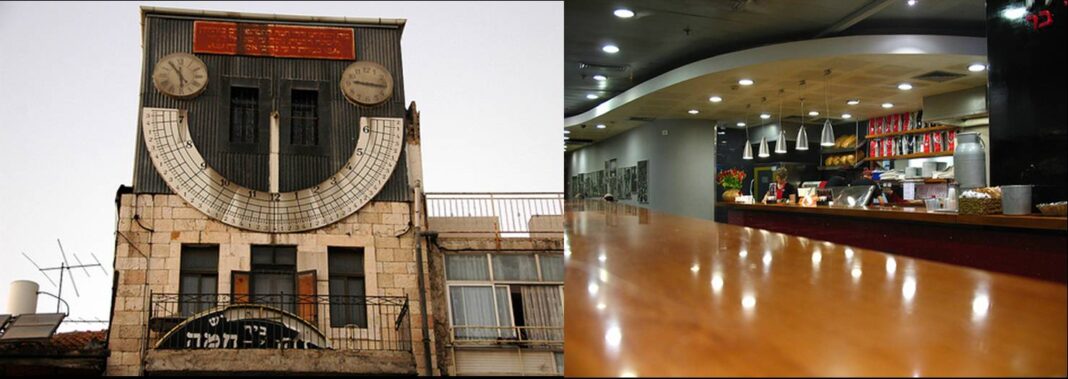
Character vs. flash: An old building in the city center, and a shiny, new Aroma.

What gives a city its particular character? Is it the city’s architecture, its parks and open spaces, its scents, its people?

An article in Ha’aretz’s Real Estate section last week did a pretty good job of conjuring up downtown Jerusalem by describing its shops: “You can’t mistake these stores. They look like they’re out of a movie about the 1950’s. Next to a shiny Castro, Golf or Fox outlet you see a pole from which hang nightgowns and 10 NIS undershirts, or a grimy metalwork shop showcasing a broken-down hot-water boiler, with a mess of tar affixing it to the ground. Or a locksmith or a backgammon club. Until half a year ago Nahalat Shiva Street featured a ceramicist making clay pots for a throwback era.”

Not exactly flattering, but a pretty accurate picture. Like it or not, all of those small, old, “hole in the wall” shops are an integral part of the city’s character and identity. However, the author of these lines, Ranit Nahum-Halevy, is not trying to paint a poetic picture of the city center, she is describing a problem, and the above lines are followed by the rhetorical question: “What can the city do?”

The problem, as Nahum-Levy describes it, is this: while the authorities are investing billions in the light rail project and generally trying to upgrade the city center, a significant proportion of the buildings downtown are in terrible shape, and are not likely to be fixed up any time soon. Worse still, much of the downtown economy’s development has been frozen in time. The reason for this stagnation is the “protected tenant” status of some 30% of the merchants downtown. A form of rent control left over from decades ago, protected tenant status means that shop owners pay landlords rents way below market rate (some 200-500 shekels a month) for their shops, but are not allowed to make any significant changes to their shops without losing their status. A real catch 22.

This being an article in the Real Estate section, Nahum-Levy spends the rest of the piece discussing prices, regulations and policy options. Implicit in the article is the understanding that the old must make way for the new; the city must progress.

The article notes that an organization called the Movement to Strengthen Jerusalem is working to bring about a body to mediate between protected tenants and their landlords, in order to expedite the development of the city. So, assuming that the protected tenant merchants and their landlords eventually come to an agreement, possibly even one which gives the merchants relatively fair compensation, what will that mean for the city center? All of those old shops, their displays, proprietors and customers will no longer be there. But what will take their place in all of that empty retail space in the city center?

mamilla3.jpg
Mamilla today – commercialization in place of character.

The recently redeveloped Mamilla area, just next to Jaffa Gate, may provide a clue. Like the city center, Mamilla was once an area overflowing with history and character, and hosted a variety of different activities and people. However, the city decided to redevelop the area, and lots of money was invested in its reconstruction.

Today, Mamilla is just another mall, with the same old retail chains, security guards checking bags and all of the charm of a duty-free store at an airport. All of the area’s character and identity have been commercialized and sterilized beyond recognition.

A city needs a mix of new and old buildings, locally-owned businesses and chains, wealthy and working class residents to be vital. But just as we should think twice before accepting the city’s plans to demolish hundred year old buildings in order to erect bland skyscrapers that add nothing to the urban landscape, perhaps the time has come to ask what kind of city center Jerusalem should have in the future – a unique, varied, human landscape, or a strip mall of generic stores and chain cafes.

Jesse Fox
Jesse Fox
Jesse Fox is hoping to complete a graduate degree in urban planning at the Technion sooner rather than later. In the meantime, he is working at green NGO’s,volunteering with African refugees and writing as much as he can to try and get the word out. He is also a regular contributor at TreeHugger.com. Originally from North Carolina, Jesse has lived in Memphis, Boston, Quito and the Arava before finally settling down in Tel Aviv. There he can occasionally be found chilling at the beach. Jesse can be reached at jesse (at) greenprophet (dot) com

LEAVE A REPLY

Please enter your comment!
Please enter your name here

TRENDING

Luxury tower in Jerusalem ruins its sacred heritage and eco-architects are worried

Critics of a new set of luxury towers including Israeli-Greek architect Elias Mesinas, warn that the scale of the towers, loss of public green space, and creeping luxury-led gentrification risk undermining Jerusalem’s historic skyline, community fabric, and long-standing planning principles — raising a fundamental question: not whether Jerusalem should densify, but how it can do so responsibly while preserving what makes the city unique.

Blackdot’s painless AI-based tattoos will make inked skin less taboo?

Blackdot’s AI-powered tattoo machine promises precision and less pain, but sparks debate over health risks, artistry, and spirituality. From religious prohibitions to smart tattoos, the future of ink is being rewritten by technology.

Ancient mud buildings in the Muslim world are spectacular and sustainable

Other notable mud structures in the wider Muslim world include the Bob Dioulasso Grand Mosque in Burkina Faso, and the Khiva Wall in Uzbekistan, which is built around a collection of Islamic schools and mosques. The Siwa Oasis in Egypt (which we visited and posted about here) and the Eastern Castle in Syria have also employed mud bricks in their construction, and research shows that the famous walls of Jericho were built using sun-dried mud bricks.

Battling the Blaze: Israel’s Wildfire Response

On a dry, windy afternoon in late April 2025,...

Rewilding the Suburb: Lagoon Valley’s Profound Plan for Conservation Community in California–– An Interview with Developer Curt Johansen

Lagoon Valley developers have set aside a remarkable 85% of its total land for open space, trails, and protected habitats—a rare move in an era of unchecked development. This isn’t just a nod to green space; it’s a full embrace of a conservation community model, where nature isn’t a backdrop but a partner.

Qatar’s climate hypocrisy rides the London Underground

Qatar remains a master of doublethink—burning gas by the megaton while selling “sustainability” to a world desperate for clean air. Wake up from your slumber people.

How Quality of Hire Shapes Modern Recruitment

A 2024 survey by Deloitte found that 76% of talent leaders now consider long-term retention and workforce contribution among their most important hiring success metrics—far surpassing time-to-fill or cost-per-hire. As the expectations for new hires deepen, companies must also confront the inherent challenges in redefining and accurately measuring hiring quality.

8 Team-Building Exercises to Start the Week Off 

Team building to change the world! The best renewable energy companies are ones that function.

Thank you, LinkedIn — and what your Jobs on the Rise report means for sustainable careers

While “green jobs” aren’t always labeled as such, many of the fastest-growing roles are directly enabling the energy transition, climate resilience, and lower-carbon systems: Number one on their list is Artificial Intelligence engineers. But what does that mean? Vibe coding Claude? 

Somali pirates steal oil tankers

The pirates often stage their heists out of Somalia, a lawless country, with a weak central government that is grappling with a violent Islamist insurgency. Using speedboats that swarm the targets, the machine-gun-toting pirates take control of merchant ships and then hold the vessels, crew and cargo for ransom.

Leopoldo Alejandro Betancourt López Turned Ocean Plastic Into Profitable Sunglasses

Few fashion accessories carry the environmental burden of sunglasses. Most frames are constructed from petroleum-based plastics and acrylic polymers that linger in landfills for centuries, shedding microplastics into soil and waterways long after they've been discarded. Leopoldo Alejandro Betancourt López, president of the Spanish eyewear brand Hawkers, saw this problem differently than most industry executives.

Why Dr. Tony Jacob Sees Texas Business Egos as Warning Signs

Everything's bigger in Texas. Except business egos.  Dr. Tony Jacob figured...

Israel and America Sign Renewable Energy Cooperation Deal

Other announcements made at the conference include the Timna Renewable Energy Park, which will be a center for R&D, and the AORA Solar Thermal Module at Kibbutz Samar, the world's first commercial hybrid solar gas-turbine power plant that is already nearing completion. Solel Solar Systems announced it was beginning construction of a 50 MW solar field in Lebrija, Spain, and Brightsource Energy made a pre-conference announcement that it had inked the world's largest solar deal to date with Southern California Edison (SCE).

Related Articles

Popular Categories