

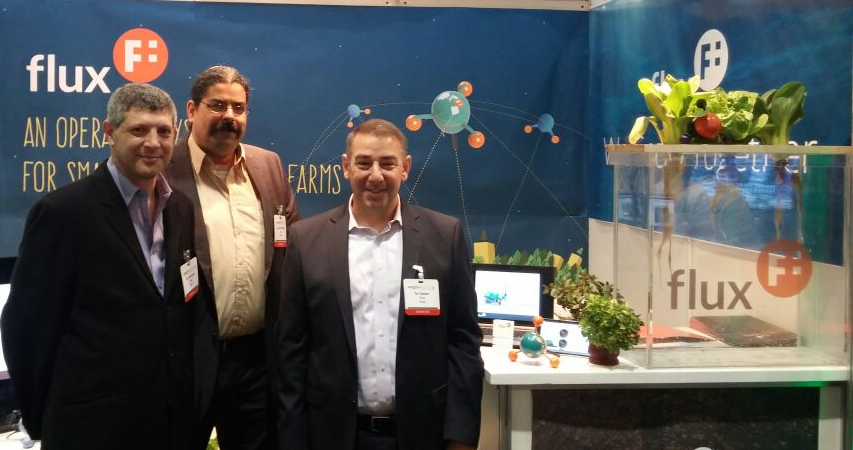
The flux team, one of the featured companies at the Innovation Pavillion at the annual Agritech Conference. Agrivest for investors kicked off the week of “agmania”.
Steve Rhodes the CEO and co-Founder of the Trendlines Group opened this year’s Agrivest conference in Israel showing some interesting trends. Last year 2014 saw a steady increase to $2.36 billion in investments across 264 financing deals citing Rob Leclerc, CEO of US based Agfunder, from precision agriculture, to biotech, to drones.
Things are heating up and fast. Venture Capitalists are investing in companies set on revolutionizing how we grow, produce, and distribute food around the world.
“The challenge is for the community to work together – entrepreneurs, investors, regulators, policymakers, government and the market,” said Oded Distel, Director of Israel New Tech and Invest in the Ministry of Economy. “Everybody has to see the same things, share the same vision, have the same goals and try to work together.”
Trendlines Agrivest conference: ‘bigger and better’, message ‘loud and clear’.
Embrace collaboration, innovation and investment if we are to overcome the challenge of feeding 10 billion sustainably by 2050, say the experts. The question for agriculture investors is how to capitalize accordingly, what horses to back and where to find the intelligence.
Collaboration was the theme at the 3rd AgriVest showcase conference held at the prestigious Weizmann Institute of Science in Israel. The premier annual agtech investment event of the season, launched by the Trendlines Agtech team under the leadership of CEO Nitza Kardish, rapidly positioning as the Queen of Agtech.
The event was held in partnership with GreenSoil Investments, Israel New Tech and the Ministry of Economy with some 350 delegates and heavyweight investors from more than 20 nations spanning the globe: “It’s a week of AgMania” said one delegate given Agrivest precedes Agritech Israel Exhibition taking place at the Tel Aviv convention centre over three days.
Google’s Farm2050 hosted a networking event the evening prior to Agrivest, and we were there, so AgMania it is.
‘Loud and clear’ is the understatement of the 21st century after NASA’s ominous warning to the sunshine state, California: “You have one years’ supply of groundwater remaining, the countdown is on.”
Keynote speaker, Pam Marrone, CEO and Founder of Marrone Bio Innovations sets the record straight: “We need a global arms race across the world of sustainability, one arms race, humanity should welcome.”
Midway through the day, Pam gave incredible insights into her tough experiences as a serial entrepreneur, from Start-Up to IPO, not once but twice, receiving huge adulations from the audience.
Which is just as well, because later that afternoon, we listened to panel experts exploring key drivers in agtech investments, the subject of gender diversity amongst the entrepreneurial and VC community raised after the recent Kleiner Perkins case.
Throughout the day 12 selected Start-up’s pitched the audience, asked to vote after each presentation on a scale of 1-5. It was a strong line-up, difficult to grade due to the high quality, but the eventual winner Doux Matok took the title.
How sweet it can be
Founded in 2014, Doux Matok has managed to do the impossible, find a way to enhance the sweetness of sugars whilst significantly reducing actual sugar consumption, therefore reducing caloric values of foods and beverages, retaining the taste and “energizing effect” of sugar without the aftertaste. They were looking to raise $4 million Series A, definitely a company to watch out for in the future.
The morning’s panel focused on profiling tomorrow’s agtech solutions and listening to the experts, it was clear; a massive food consumption shift is approaching as world attention shifts towards the food, energy and water security nexus. There’s a growing surge of interest in the ‘Nexus’ way of thinking about the interdependencies, tensions, trade-offs but in the wider context of technology, the economy and environmental change, California recently being designated as ‘ground zero’.
“The world will have a serious crisis on its hands if venture capital and agricultural innovations and inventions don’t materialize. The challenges are so vast, we must establish collaborative ecosystems” said Sam Fiorello, COO, Danforth Plant Science Center and President of the Bio-Research and Development Growth Park. The Danforth Center is the world’s largest independent research institute focused on plant science helping life science firms, bridge research and relationships to achieve success.
Agtech is “going through digital transformations and the industry will be adapting, innovative uses of information across all aspects of farming,” said Eyal Lipetz-Eliassi, Israel Country Manager and Innovation-Based Growth leader, DuPont.
Whilst some experts called for collaboration, others warned of the legal minefields, complications and pitfalls. Change on this scale can throw hand grenades due to escalating costs, patent issues and contractual problems warned Barry Schindler, Co-Chair Global Patent Prosecution Group at Greenberg Traurig.
Farming for data
Visibly unnerved by the term ‘collaboration’ Schindler said, “we have to be careful with any collaborations, it can be a legal minefield, who owns what from an IoT, big data perspective, who decides how data can be used, how much data can be used? There are no easy solutions; it’s all down to the fine details within contracts and IP.
It’s the Wild West in the United States with regards to self-regulation on big data, there’s no legislation. Does the farmer own the data, or the OEMs? In Europe regulations are a little tighter but I’m certain problems will emerge.”
Sam Fiorello also raised some good points warning, “farmers are already overloaded with data” suggesting solutions should be simple and always developed with the end users in mind.
The afternoon panel session focussed on exploring key drivers in agtech investments, moderated by Gideon Soesman, Co-Founder and Managing Partner of GreenSoil Investments.
Of particular interest was UK based Michael Lee, Managing Director of Syngenta Ventures suggesting they had significant ‘strategic’ advantages as investors for Start-Ups over the ‘minion’ VCs. “Benefits of scale and strong existing distribution channels” as an example.
That opened up some light afternoon megalomaniac entertainment as the VCs immediately returned fire listing why they’re a better bet than the “strategics”, so much for collaboration then! Has to be a good sign for entrepreneurs in the agtech space when the financial community starts fighting over who gets to invest first.
Other interesting discussions focussed on funding gaps highlighted by a knowledgeable member of the audience during an open Q&A.
The closing consensus seems to be the agtech sector as a whole is in its early days, still evolving with many strengths, weaknesses, opportunities, threats ahead, but the mega-macro trend lines are off the charts, agtech is rapidly becoming an exciting industry sector and Israel is pulling ahead as a world leader on the field.
I can’t help but be reminded that investment in agtech is investment in the human race. We must continue to expand the scale and scope of consciousness across, food, energy and water security. We must spread the word and sow the seed for future generations.


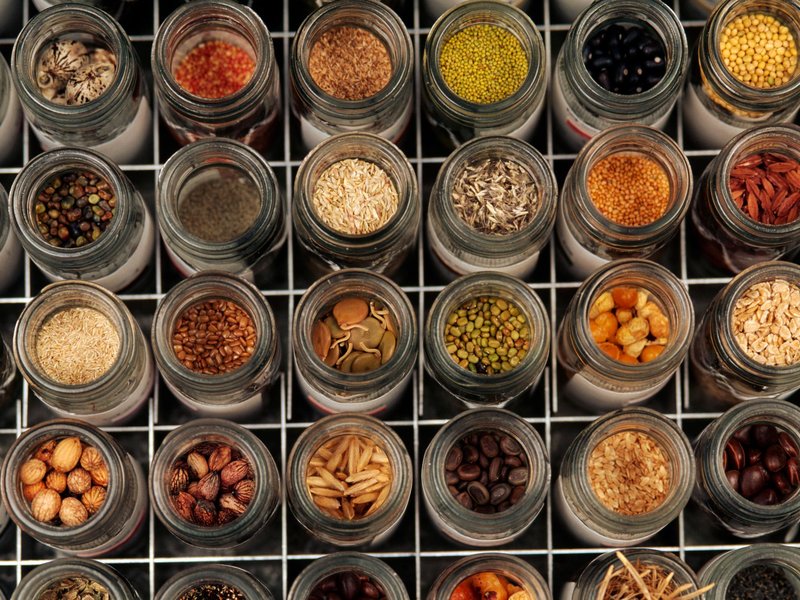

Keen to embrace d knowhow in my country
[…] AgriTech, AgriVest 2015 at the Weizmann Institute of Science in Rehovot showcased the top Israeli agri-tech startups. It featured a competition, won by Israel’s DouxMatok for its development of sweeter sugar that […]
[…] foods. http://trendlines.com/agritech-investment-event-agrivest-2015/ http://www.douxmatok.com/ http://www.greenprophet.com/2015/04/agmania-in-the-land-of-milk-and-honey/ . 35,000 attended Agritech 2015 in Tel Aviv, including 200 Gaza farmers. Israel’s Netafim […]
[…] http://www.greenprophet.com/2015/04/agmania-in-the-land-of-milk-and-honey/ […]
[…] http://www.greenprophet.com/2015/04/agmania-in-the-land-of-milk-and-honey/ […]
[…] Collaboration was the theme at the 3rd AgriVest showcase conference held at the prestigious Weizmann Institute of Science in Israel. The premier annual agtech investment event of the season, launched by the Trendlines Agtech team under the leadership of CEO Nitza Kardish, rapidly positioning as the Queen of Agtech. Read the full Green Prophet article. […]
[…] Green Prophet: “Agmania in the land of milk and honey” […]