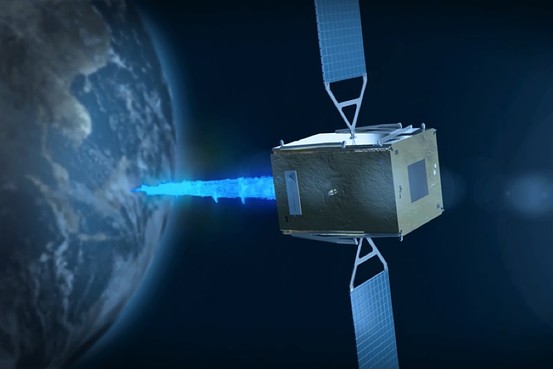
The ever increasing amount of space junk makes it dangerous to pass through Earth’s orbit. Space junk can intercept and hit satellites throwing them out of orbit. But wayward satellites still able to perform may get a tow back to position thanks to a new Israeli startup.
Need a lift?
The robotic space tow truck developed by Effective Space Solutions (an Israeli company) wants to create a tugboat or DeOrbiter microsatellite. The company expects to “launch” within two years. Fast forward to 2020 and they have!
Update December, 2020: Israeli startup bought by Japan’s Astroscale
Astroscale working for “long-term orbital sustainability”, was today awarded Grand Prix during the UNESCO Netexplo Innovation Forum 2020, out of 10 breakthrough digital innovations which were selected for their disruptive potential.
Netexplo, an independent observatory that studies the impact of digital tech on society and business, has been a UNESCO partner since 2011. This year’s UNESCO Netexplo Innovation Forum showcased 10 breakthrough digital innovations with the potential of profound and lasting impact on digital society.
Astroscale won Grand Prix for its innovative satellite technologies that will reduce orbital debris and support the long-term, sustainable use of space.
“We are truly honored to be named Netexplo Grand Prix 2020, and I share this win with everyone on our team working hard on the technology, policy and business case challenges of this complex, global issue,” said Nobu Okada, Founder & CEO of Astroscale.
“I am encouraged to see what’s happening in Earth’s orbits as having a profound and positive impact on society. Right now COVID-19 and countless environmental catastrophes are wreaking havoc all over the globe, and we’re committed to stopping another potential disaster from unfolding over our heads.”
The rise of large commercial satellite constellations in low Earth orbit (LEO) means that the threat of a potential collision or break-up in key orbits will escalate.
This increasing amounts of debris endangers current and future satellite missions and puts society’s reliance on data from space at risk. Astroscale will launch its End-of-Life Services mission later this year as part of its critical end-of-life services, which will safely remove defunct satellites from orbit and maintain the viability of LEO.
The aim of inventors is to help it reposition satellites if they’ve gone off course – or push them off course where they can effectively “die” in a satellite graveyard several hundred miles above their usual orbit of about 25,000 miles above our heads.
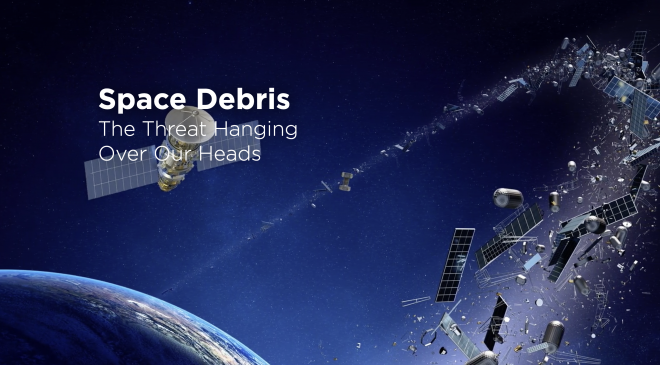
When we first wrote this article there were two stranded Galileo Project satellites, and the company says that their solution could bring them back on course and live out their days until the satellites run out of energy.
Effective Space Solutions (well now Astroscale) was founded in 2012 by veterans of the Israeli space industry and the company They raised a $1.5 million seed fund from Singulariteam and the Israel Space Agency.

Arie Halsband (goes to LinkedIn) is the company’s founder.
Astroscale US Inc., announced this summer that it plans to acquire intellectual property and other assets and to hire certain members of the staff of Israeli satellite life-extension and servicing company Effective Space Solutions R&D Ltd. (ESS).
This is the first acquisition of an Israeli space technology company by a foreign company, but also the end of Effective Space founder Arie Halsband’s dream of producing micro-satellites in Israel. Halsband founded the company in 2012 with the vision of the miniature satellites, or space drones, attaching on to older, existing satellites to propel them in space and thus extend their missions even after their fuel runs out.
Astroscale U.S is a subsidiary of Japan-based Astroscale Holdings Inc., and operates in the same field as Effective Space Solutions, focused on solutions for LEO, low-earth satellites (200 to 400 miles above the Earth’s surface) where surveillance and observations satellites orbit, while Effective Space’s solutions are meant for GEO, geostationary communication satellites (25,000 miles above the Earth’s surface).
Astroscale is scheduled to launch a satellite into orbit next March, 2021 on a test mission to remove space debris, according to the company’s officials. The satellite will be carried into space by a Russian Soyuz rocket lifting off from Kazakhstan’s Baikonur Cosmodrome.
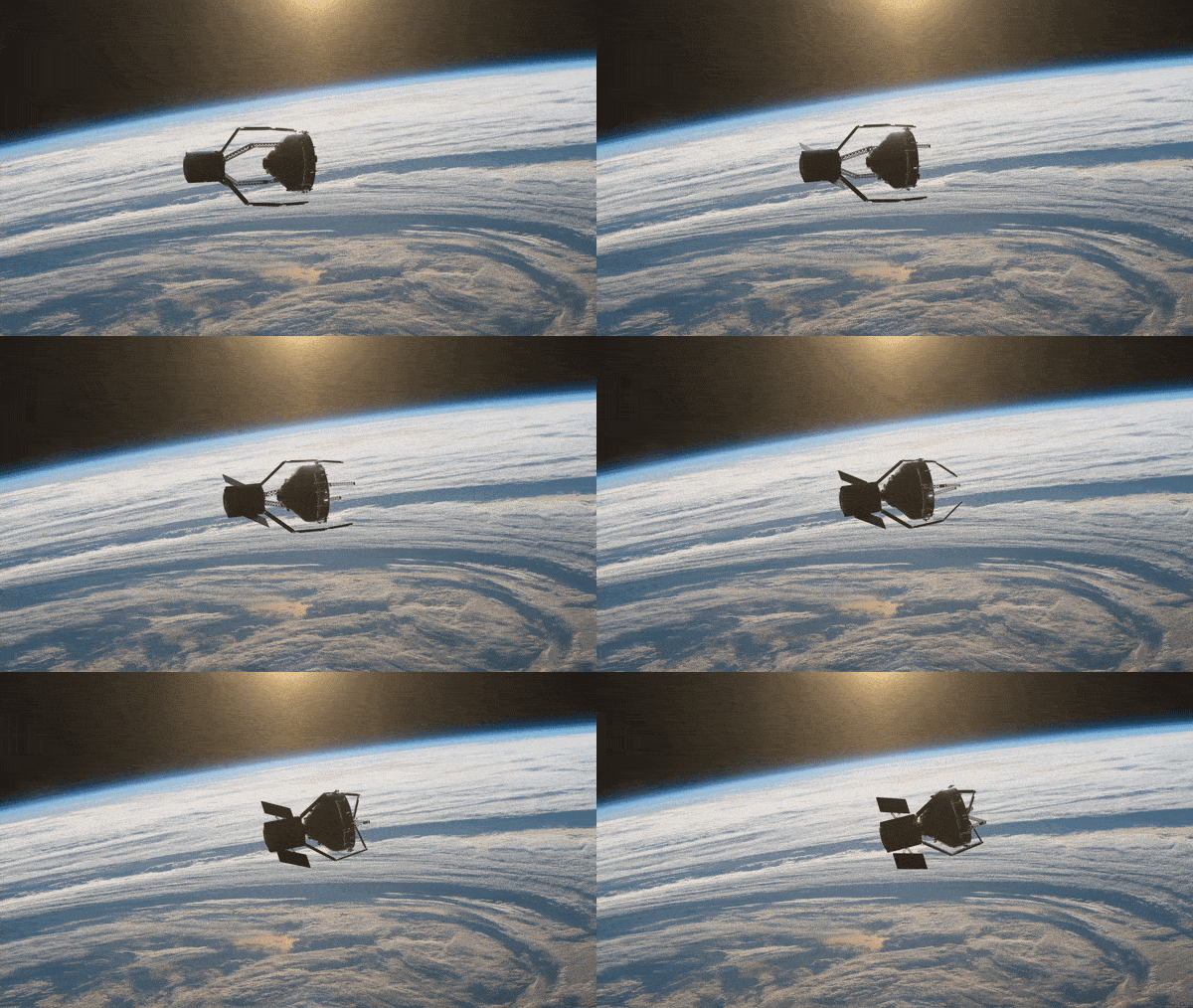
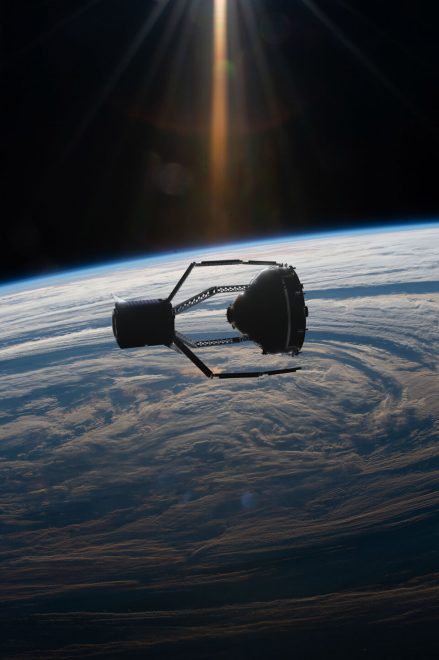
The Japanese are with Russia and Israel and the ESA with the Swiss, who plans to launch ClearSpace in 2025 as a commercial service to clean up space junk. They plan on rescuing Vespa, says Spacenews: The mission, dubbed ClearSpace-1, is slated to launch in 2025 to capture and deorbit a 100-kilogram Vespa payload adapter an Arianespace Vega left in orbit after deploying ESA’s Proba-V remote-sensing satellite.
According to the European Space Agency’s Space Debris Office, around 8,950 satellites have been launched into space. Out of that number, 5,000 satellites are still orbiting the earth, while 1,950 are operational satellites.
This invention reminds me of that 80s show What Will They Think of Next. Or maybe I need a new job title. Imagine being head of the Space Debris Office? Or, Space Janitor?