Al Gore Talks Turkish Climate Policy

Turkey has a critical role to play in a clean energy future, says former vice president Al Gore. But when is it going to start taking that role seriously?

The unusual political identity of Turkey — a stable, democratic, Islamic country — serves as inspiration for democratic reformers in the Arab world. Its government is a model of political progressiveness for its neighbors to the east and south. In the same fashion, strong climate and energy policy in Turkey could inspire environmental action as radical as the democratic revolutions currently sweeping the region. That was the message of former U.S. vice president Al Gore at the “Leaders of Change” summit in Istanbul on Monday, according to the Turkish daily Today’s Zaman.

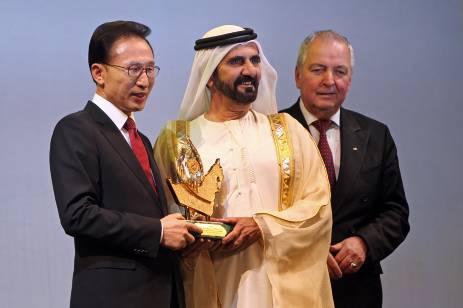
Speaking alongside several former prime ministers and former UN secretary Kofi Annan, Gore commended Turkey for displaying “unprecedented leadership” in its region of the world, and urged the government to position itself at the center of an intercontinental renewable energy grid. Gore also pointed out that Turkey would be among the countries most affected — make that desertified — by a devastating drought predicted to set in toward the middle of this century if carbon emissions continue at current rates. (This desertification has already started occurring in some parts of the country, according to the environmental news site TreeHugger.)

Turkey’s government has long claimed to be concerned about environmental issue. In fact, Gore’s words came almost one year after Turkish Environment and Forestry Minister Veysel Eroğlu announced that Turkey was “ready to become the world’s most environmentally friendly country“. So in the last year, Turkey’s energy and environmental ministries have teamed up to reduce carbon emissions and encourage a cleaner energy industry in the country, right? Wrong.

“Turkish bureaucracy still wants the 1970s kind of energy developmental path,” Alidost Numan, who works with Greenpeace Turkey, tells Green Prophet. “They want to walk down the path that has already been tested rather than the more sustainable, decentralized policies that other countries are now pursuing.”

Indeed, despite the government rhetoric, most of Turkey’s power still comes from plants that run on fossil fuels, with at least sixty more currently under construction. Turkey’s hydropower dams, which account for about one fifth of the country’s installed capacity, have faced strong opposition from environmental groups and local residents because of their inefficient use of water and destruction of riparian ecosystems.

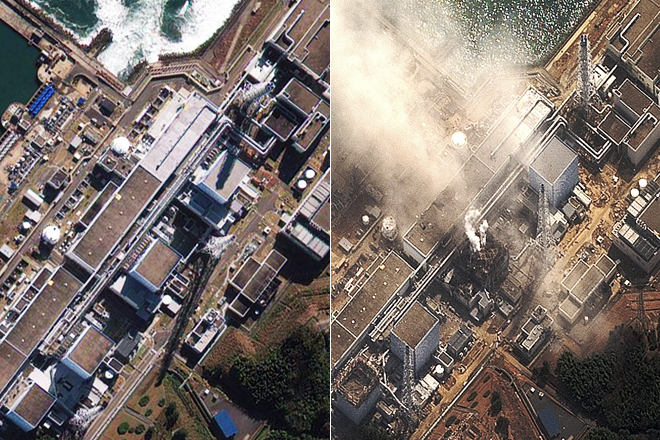
Rather than offer financial subsidies to get Turkey’s tiny wind and solar industries off the ground, the government is investing heavily in nuclear power at the moment. One reactor has already been commissioned from a Russian company, and Turkey’s energy minister has said that construction on it will begin in the next few months.

The plant, which would supply roughly ten percent of Turkey’s current installed capacity, is slated to be built just 15 miles from an active fault line. Furthermore, it probably won’t actually be plugged into the grid for another 20 years — if it withstands the current tide of anti-nuclear sentiment and gets built at all, that is.

So when is Turkey going to step up, and become the environmental exemplar its leaders claim it is ready to be?

:: Today’s Zaman

Read more environment news from Turkey:

“Anatolia Won’t Be Blackened” Declare Turkish Anti-Fossil Fuel Groups

Dam Victory for Turkey’s Environmentalists

Turkey: The World’s Most Environmentally-Friendly Country? Maybe, With Water

Image via simone.brunozzi

Julia Harte
Julia Hartehttp://www.greenprophet.com
Julia spent her childhood summers in a remote research station in the Rocky Mountains of Colorado, helping her father with a 25-year-old experiment in which he simulated global warming over a patch of alpine meadow. When not measuring plant species diversity or carbon flux in the soil, she could be found scampering around the forests and finding snowbanks to slide down. Now she is a freelance journalist living in Istanbul, where her passion for the environment intersects with her interest in Turkish politics and grassroots culture. She also writes about Turkish climate and energy policy for Solve Climate News.

TRENDING

Jujube, the sidr tree of medicine and magic

A magic holy sidr bath to deflect the evil eye? It needs 7 powdered sidr leaves stirred into a bucket of warm water. The hadith of the Prophet Muhammad allows to repeat healing prayers and verses from the Koran to increase the water’s potency. 5 grams, or 1 tablespoon of sidr powder equals 7 leaves.

The Christ’s thorn (sidr tree) is also a well-known folk medicine

Christ’s thorn jujube (Ziziphus spina-christi) also known as the sidr tree is a real, identifiable tree native to the Middle East, and it appears—directly or indirectly—in Islam, Judaism, and later Christian tradition. The connections between the three faiths are not theological agreements but overlapping uses, names, and symbolic associations rooted in the same landscape.

The Lote Tree of the Utmost Boundary, explained

Knowing about the concept of the Lote Tree of the Utmost Boundary helps explain a core idea in Islam.

Huge Fish Nursery Discovered Under Freezing Arctic Seas

In 2019, an underwater robot camera exploring the seabed...

Remilk makes cloned milk so cows don’t need to suffer and it’s hormone-free

This week, Israel’s precision-fermentation milk from Remilk is finally appearing on supermarket shelves. Staff members have been posting photos in Hebrew, smiling, tasting, and clearly enjoying the moment — not because it’s science fiction, but because it tastes like the real thing.

Turning Your Energy Consultancy into an LLC: 4 Legal Steps for Founders in Texas

If you are starting a renewable energy business in Texas, learn how to start an LLC by the books.

Tracking the Impacts of a Hydroelectric Dam Along the Tigris River

For the next two months, I'll be taking a break from my usual Green Prophet posts to report on a transnational environmental issue: the Ilısu Dam currently under construction in Turkey, and the ways it will transform life along the Tigris River.

6 Payment Processors With the Fastest Onboarding for SMBs

Get your SMB up and running fast with these 6 payment processors. Compare the quickest onboarding options to start accepting customer payments without delay.

Qatar’s climate hypocrisy rides the London Underground

Qatar remains a master of doublethink—burning gas by the megaton while selling “sustainability” to a world desperate for clean air. Wake up from your slumber people.

How Quality of Hire Shapes Modern Recruitment

A 2024 survey by Deloitte found that 76% of talent leaders now consider long-term retention and workforce contribution among their most important hiring success metrics—far surpassing time-to-fill or cost-per-hire. As the expectations for new hires deepen, companies must also confront the inherent challenges in redefining and accurately measuring hiring quality.

8 Team-Building Exercises to Start the Week Off 

Team building to change the world! The best renewable energy companies are ones that function.

Thank you, LinkedIn — and what your Jobs on the Rise report means for sustainable careers

While “green jobs” aren’t always labeled as such, many of the fastest-growing roles are directly enabling the energy transition, climate resilience, and lower-carbon systems: Number one on their list is Artificial Intelligence engineers. But what does that mean? Vibe coding Claude? 

Somali pirates steal oil tankers

The pirates often stage their heists out of Somalia, a lawless country, with a weak central government that is grappling with a violent Islamist insurgency. Using speedboats that swarm the targets, the machine-gun-toting pirates take control of merchant ships and then hold the vessels, crew and cargo for ransom.

Related Articles

Popular Categories