Summer has, without a doubt, arrived in Israel. School is about to end, summer vegetables and fruits are in season, and there’s a greater desire to be outdoors. Enter the Adam and Eve farm (or, in Hebrew, Hava & Adam) in Modiin, which offers lots of great ways to celebrate summer.
This educational-ecological center integrates social and environmental education with a focus on sustainability. Founded in 2003, this 8 acre plot of land tries to demonstrate sustainable living by using solar and thermal energy, conscious waste management, ecological construction, recycling, and organic farming. Twenty volunteers live and work on the farm at any given time, and teach by example.
Have you ever had trouble keeping your spices longer than a day? If you leave them out they dry out, if you keep them in a bag they rot… what to do? You can keep your aromatics (leafy spices) and salad lettuce leaves fresh for longer by washing them, then wrap them is a paper towel and seal them in a ziplock bag. Make sure to squeeze out the air from the bag before you seal it. Your spices can last up to two weeks this way giving you the opportunity to cook with freshness. This also means less waste!
Israel. Another week, another delegation of foreign politicians. This time it’s the French President Nicolas Sarkozy gracing our shores and as I write this he is dining with his Israeli counterpart, Shimon Peres, at his official residence ten minutes from my flat.
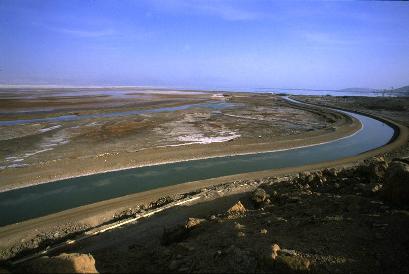
Apart from the usual topics that concern foreign dignitaries in the Holy Land (stalled peace talks with the Palestinians and Syria, what do about Iranian nukes, so on and so on), one issue that the two premiers are equally enthusiastic about is the euphemistically-titled “Peace Canal” or “Peace Valley”, a huge man-made channel which would potentially connect the Red and Dead Seas.
The announcement of the initiative at the Facing Tomorrow conference last month, with an audience of another President (Mr George W.), was greeted with rapturous applause in Jerusalem. The project requires massive investment – 5 billion dollars – to pump a projected two billion cubic meters of water each year from the Gulf of Eilat north to the ailing Dead Sea via the Kingdom of Jordan. Media headlines have been full of the tired rhetoric of “making the desert bloom” by building a complex of hotels, lakes and even safari parks in the largely undeveloped and arid Arava Valley.
Needless to say, rushing into a huge engineering feat of this kind will have enormous ecological consequences – especially before a World Bank feasibility study has even been completed – prompting condemnations from environmentalists led by Friends of the Earth Middle East.
“French President Sarkozi appears not to realize that he has stepped into a mine field of controversy. The project ideas of building an open canal across the desert, Dubai style hotels, Los Vegas casinos and African safaris are unprecedented in size not only for the Middle East but globally. They threaten to completely alter the World Heritage values of the Arava Valley and the Dead Sea itself,” said Munqeth Mehyar, Jordanian Director of FoE Middle East.
Their Israeli director, Gidon Bromberg, was equally damning of the project: “Since time immemorial it was the Jordan River that replenished the Dead Sea. In just 50 years we have managed to turn the holy Jordan into a sewage canal and dry up a third of the Dead Sea.”
It wasn’t long ago that Green Prophet reported on FoE Middle East’s own “Peace Park” at the opposite end of the Jordan Valley, south of the Sea of Galilee. Unlike the touted “Peace Canal” which aims at a technical fix for a complex ecological quandary, the ecological Peace Park hopes to rehabilitate the River Jordan and the Dead Sea by tackling its root causes – unsustainable water management – rather than throwing cash at the problem.
According to Bromberg: “It appears that the French Government led by French business interests is using the demise of the Dead Sea as the means to try to greenwash the public and cover up their true intentions of reaping the profits from the tens of billions of dollars that the project would need to attract.”
The Israel cleantech world is buzzing over BrightSource and its subsidiary Luz II. The companies recently invited the press to visit the world’s first operating solar thermal field in the Negev Desert, for creating clean and efficient solar energy. The 12,000 square meter test site will generate 1.5 MW of electricity.
Cheaper heliostats, no need for oil since water (used for steam) is directly heated, and the fact that they can achieve a higher concentration of sunlight (focused by 1,600 computerized heliostats atop a 60 meter tower) are all factors that make BrightSource the most efficient solar energy solution (says the company). If the pilot tests to be true, the company plans on building 5 similar power plants in California’s Mojave Desert in the next 10 years.
Also check out Autoblog Green where we were criticized for being a latte slurping, Prius collecting liberal. It’s pretty funny. For the record, this Green Prophet does not slurp and she does not even own a car.
Imagine if air conditioning came without the hefty price tag of electric bills—if it was, in fact, entirely free. Tel Aviv University Professor Avi Kribus, best known now for his discovery of electricity-creating bacteria, has invented a solar energy device that would power air conditioning and heating. Additionally, Kribus’s device is smaller and therefore cheaper to manufacture than conventional solar units, fitting easily on the consumer’s roof.
Kribus’s solar project is a top priority for the European Union, who are subsidizing its development for the next three years. Demonstration units are currently being built in Italy and Spain.
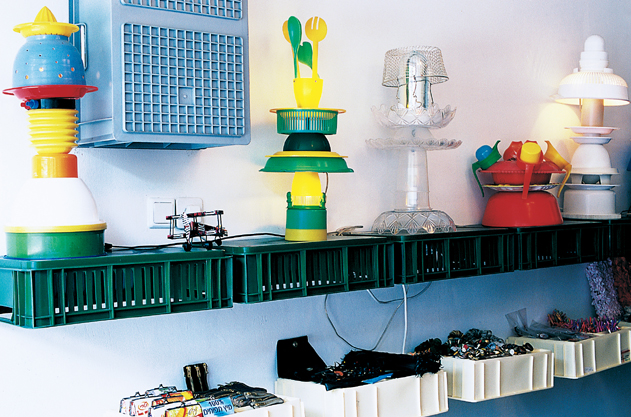
Baladi, a word that Israelis adopted from Arabic, means “national” or “of the country”. It is also the name that French-born Israeli designer, Brigitte Cartier, decided to give her design studio. Her Baladi Company for Ecological Progress takes our national garbage and transforms it into beautiful designs that we can all be proud of.
After studying art, design, and film in Paris, Cartier moved to Tel Aviv where she became a recycling force to be reckoned with. Armed with Israeli waste materials and a certain French je ne sais pas, she recycles without sacrificing style.
A clean KumKum (electric water urn) is an efficient one. Keep your KumKum clean by periodically boiling equal parts water and lemon juice inside. This will extent your urn’s life and keeping it boiling happy.
Now that we’ve eco-toured Israel and Jordan, let’s move right along to another green tourism spot in the Middle East. Lebanon.
And it’s no surprise that a country that places a regional cedar tree in the center of its flag (colored in green) has lots and lots of eco tourism options.
Here are some of our favorite ways to enjoy Lebanon in an environmentally-friendly way:
1. TLB Destinations: TLB is a tour company that offers sustainable tourism trips all over the Middle East. The small company is local and multilingual (they speak English, French, Arabic, and German), and promotes responsible tourism. This means that their tour guides inform travelers about local concerns regarding the conservation of natural areas, support local communities, and that the company itself tries to raise awareness about biodiversity and heritage. TLB offers a diverse range of trips in Lebanon, including adventure, biking, cultural, gastronomical, discovery, trekking, and hiking tours.
Last week, I visited the town of Umm El Fahem with staff members from Friends of the Earth Middle East (FoEME). FoEME is a trilateral Israeli, Palestinian, and Jordanian environmental organization that brings environmentalists together to work on issues of shared regional concern. As the Summer 2008 FoEME intern, I am assisting with the Pro-Aquifer project. Israelis and Palestinians share the Mountain Aquifer, which has become very polluted. We are working with communities in both Israel and Palestine to protect the shared water resource.
In Israel, we are working with Umm El Fahem, a Palestinian town inside Israel, (roughly 20% of Israel’s citizens are Palestinian. They are also referred to as Israeli-Arabs or Arab-Israelis). During my visit last week, I was sad to learn of one more example where social and environmental justice intersect. (Quick background note: There are huge civil rights issues within the Palestinian sector in Israel. Palestinian citizens face both legal and socioeconomic discrimination in many aspects. Obviously more complicated than that, but that’s the 30 second version).
Essentially, I learned that because of discrimination in planning, the environment – which of course includes the society in the environment – suffers greatly.
While Israel has some of the world’s most promising clean technology companies in producing renewable energy — consider the geothermal power company Ormat [ORA (TLV)]and its geothermal power station in Nevada or Solel’s solar energy plant in the Mohave Desert – proving viability on Israeli turf has been a sore spot for inventors and would-be international and local investors.
Lack of policy and infrastructure in the Israeli government stalls the rapid implementation of new clean technologies. This harms not only Israelis who need cleaner, alternative fuel sources, but it is a disservice to the environment and people around the world, who would readily adopt this tiny nation’s innovative solutions if proven they could work.
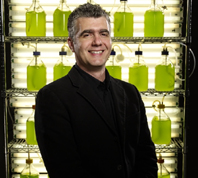
Thanks to a little green vision in the form of algae, Isaac Berzin, the founder of GreenFuel Technologies in Cambridge MA, has returned to Israel to help turn Israeli ingenuity into action. Now a senior fellow at the Interdisciplinary Center (IDC) in Herzliya, Berzin has plans to build a new Institute for Alternative Energy Policy in Israel under the IDC.
Berzin looks to collect the best-fit alternative energy solutions from across academia and the industry in Israel – about 10 different technology platforms – to build a center of excellence, “10 times bigger and stronger than GreenFuel,” Berzin tells Green Prophet.
Recently voted as a Time Magazine most influential person for 2008, if anyone could build a biofuel powerhouse in Israel it would be Berzin, who has a kind of rock star popularity in the US for his work with GreenFuel. Continuing on as an advisor in the company, he says, “GreenFuel is doing great, the baby is walking now.”
The father of three, who now lives in Jerusalem, sees the importance of creating a real solution to end the world’s dependence on oil within the next few years. If it’s not found, in 10 years he says, the planet will have “reached the point of no return.”
Taking advantage of Israeli technology and research, Berzin is planning to have a serious biofuel solution ready within five years. While there is no one silver bullet solution, he admits, Israel has all the tools to start making a renewable fuel alternative.
Israel’s toolbox includes decades-long research into water technologies and grey-water irrigation, and the know-how for taking advantage of low-quality land and growing crops on brackish water. “Algae can grow in salt water, with sewage and on any type of land quality,” says Berzin. “The world is moving to a ‘grow your own solution’ for energy crops, and there is no reason why Israel shouldn’t be a leading country in this field,” he says.
The new institute he is currently setting up, will develop sustainable and strategic global alternative energy policies and will collaborate with the Institute for the Analysis of Global Security (IAGS) based in Washington, where Berzin is also a senior fellow.
A representative from the IAGS wrote me, “[We] congratulate senior fellow Dr. Isaac Berzin for his inclusion in TIME Magazine’s 2008 list of the world’s 100 most influential people. Berzin received this honor for his important scientific contribution to the development of alternative fuels and for his leadership role in the global movement to end the world’s oil dependence.”
Earlier this month, Berzin signed a memorandum of understanding with the National Energy Technology Laboratory of the US Department of Energy as an “honest broker” for helping his new institute choose what technologies and research to implement. The institute, after all, is expected to be a money-making endeavor as well.
According to Berzin, investing in the clean fuel solutions of oil-rich algae is a “zero-risk exercise. The solution is attractive, because I am not punishing the industry. The world is moving to producing its own energy crops. Algae for biofuel is (finally) an economically viable solution. It is also a moral solution – not competing with food crops on valuable resources such as fertile land and potable water.”
Isaac Berzin update 2020:
Berzin is currently the Founder and Chief Technology Officer of Algaennovation LTD. that produces ultra-high Omega-3 algae for feed and food application. The microalgae are sustainably cultivated in an integrated process within one of the world’s largest geothermal power plants, located in Hellisheiði, Iceland.
He is a co-author, together with Nobel Prize Laureate, WilliamMoomaw, of the Industrial Biotechnology cover paper “Cutting out the Middle Fish”, positioning sustainably cultivated microalgae as next generation superfood.
Seventy-six thousand tonnes of waste pour out of Dubai’s construction sites every single day. Just one side effect of the massive building boom there/here. But the Emirate is now running out of space to put it as existing landfill sites reach capacity.
So it’s building new plants to recycle more of that waste, and as Ben Thompson now reports, that could help business, as well as the environment. Watch the video for the whole story.
Said Leemor Chandally, who sent us these photos, “I was passing by Rabin Square, when I noticed this situation and had to laugh. A bunch of people were waiting for a bus, but nobody was waiting inside the bus stop, which was obviously brand new. Instead, everyone was crouching behind it, trying to stay in the shade.”
I was so anxious on Monday as I awaited word of delivery of my very first Israeli community supported agriculture (CSA) delivery to its drop spot in Tel Aviv. I was nervous, not because I thought the vegetables wouldn’t be good or because I was unsure if I was getting a good deal (the veggies are great and it’s very cost-effective), but because I was relying on this week’s box of straight-from-the-farm vegetables to convince my Israeli flatmates that CSAs are a worthwhile investment.
I picked up the box right near the corner of Dizengoff and Gordon in Tel Aviv. I walked home with vegetables in hand for ten minutes, smelling the basil and thinking about making pesto, which I probably won’t have time to make this week.
As I approached my apartment I saw that nobody was home. Damn. I wanted my flatmates to see me walk in with it and “ooh” and “ahh” at the produce. I left the box prominently displayed in the kitchen and gently rearranged the chard and arugula to look a bit more presentable. Within twenty minutes one flatmate returned home. She was visibly excited about our new abundance so we started unpacking the box together when we noticed that one of the tomatoes was squished.
She looked disappointed and I panicked. “We’ll use it for sauce,” I think I muttered in Hebrew, trying a bit too hard to stay positive. “Lo Nora,” she said, it’s not a big deal.
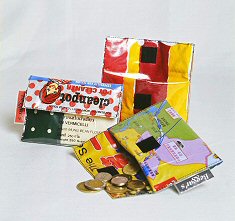
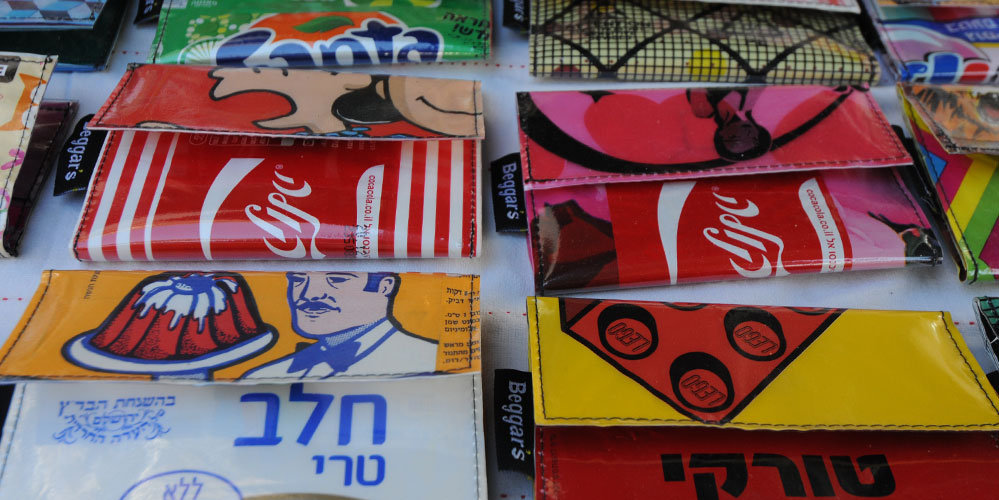
Amit Brilliant chooses Hebrew brands to feature on the outside of her plastic wrapped wallets
According to that old expression, beggars can’t be choosers. But Israeli designer Amit Brilliant proves that saying wrong with her line of recycled wallets, bags, notebook covers, and hats – Beggars.
She chooses not to dump what would normally end up in the trash and turn it into something useful and aesthetic instead.
In other words, she begs to differ.
Brilliant’s brilliant creations are made out of old maps, paper shopping bags, Bamba bags, laundry detergent wrappers, and whatever else she can get her hands on. She usually uses the wrappers of classic Israeli products, so these make a great souvenir or gift from Israel. (Pair these up with some of Yoav Kotik‘s Israeli beer cap earrings and you’ve got quite the environmental and patriotic gift.)
Amit Brilliant transforms old bags of waste
In transforming packaging – something that was supposed to be disposable – into something that can be used over and over again, Brilliant makes an optimistic statement about how we can transform and hopefully change the negative effects of mass consumerism.
You can find these great wallets in the Nachalat Binyamin crafts market (open every Tuesday and Friday afternoon in Tel Aviv).
Being green is about being clean. In order to remove dust effectively from furniture use a slightly damp cloth – dusters only move the dust around. For a green polish try beeswax, it’s great for unpolished wood; or use a drop of olive oil, then buff with a dry cloth. This way you can cut down the circulation of nasty chemicals normally used when cleaning around the house.





 Baladi, a word that Israelis adopted from Arabic, means “national” or “of the country”. It is also the name that French-born Israeli designer, Brigitte Cartier, decided to give her design studio. Her

 Now that we’ve eco-toured