There are lots of green businesses out there – cleantech businesses, organic farmers, environmentally conscious designers, and plenty more. But what about businesses with no clear environmental agenda? What’s a software company or a furniture manufacturer that wants to go green supposed to do?
Hire a greener. A business greener, that is.
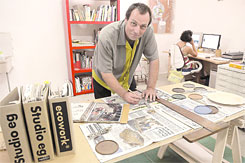
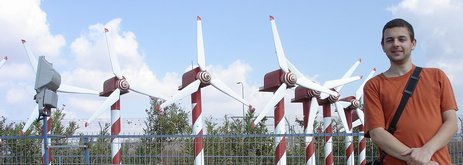
Erez Steinberg, an Israeli industrial designer who returned to Israel two years ago after spending twenty years in the San Francisco area, does just that. He’s in the business of making businesses green while helping them earn green.
Steinberg’s company in San Francisco – Studio eg – focused on ecologically smart design. He opened the studio in the early nineties with a focus on using wasted materials and coming up with clever and practical design solutions.
These days he runs a “company greening” business in Ein Hod, teaches a course in sustainable ecological design at the Bezalel School in Jerusalem, and lectures about green design (he participated in the Eco-Play Bamboo Conference recently). His business card, which is stamped on the back of a used railway ticket, exemplifies what he’s all about – helping companies find practical solutions for reducing their negative impact on the environment in a way that is creative and, inevitably, helps the company reduce waste (and increase profit).
Gideon Greenspan, founder of Copyscape, looking to lower our carbon footprints
From creating the world’s most popular puzzle website (and a Time Magazine top 50), Israeli-British entrepreneur and hightech whiz Gideon Greenspan decided to change gears and put a focus on the environment.
A couple of years ago, Gideon (who is based in Tel Aviv) was looking for a way to offset his travel and was confronted with a maze of possibilities in the online environment. A master of invention, Gideon’s wheels started turning: he decided to build his own user-friendly directory that offered an independent and balanced rating system. Today he is helping people make sense of all the carbon offset options, and wildly varying prices per ton of CO2e, through his project Carbon Catalog.
He also runs a blog, Carbon Catablog, a repository of insider news and interviews.
Today Gideon talks with Green Prophet about how the Carbon Catalog idea started, where we’re headed and how Israel, in particular, can lighten the carbon load on our planet.
Can you tell us a little bit about you and your background?
I’m originally from the UK and moved to Israel in 2000. By trade I’m an Internet entrepreneur – my creations include Websudoku.com, the world’s most popular puzzle website, and Copyscape.com, a search engine for plagiarism. I’m also involved in a number of Israeli startup companies.
I’ve always been aware of green issues. One thing I like about the software business is that you can create a lot of economic value while consuming (relatively) few natural resources. But I’m no “tree hugger” and my approach is pragmatic rather than ideological. The environmental steps we take in the coming decades will have a large effect on the quality of life for generations of humans to come
Can you tell us about Carbon Catalog and your rationale for starting the project?
As your readers probably know, carbon offsets allow you to neutralize your carbon emissions, by funding an equal reduction in emissions somewhere in the world. A year or two ago I started buying offsets for myself, and found the process to be extremely frustrating.
While there were tons of providers selling offsets online, I wanted a central repository of information that compared and contrasted the providers, so I could make an informed choice about where to buy.
Eventually I decided to solve the problem myself, and created Carbon Catalog. Carbon Catalog is a directory of carbon offset providers and the projects that they support. The listings are continuously updated based on the information on each provider’s website. Carbon Catalog also rates providers based on their transparency and the quality of their projects.
But there’s also an entrepreneurial angle. Depending on what happens in the UN, and in America’s corridors of power, the next decade could see massive growth in the carbon markets, and I’m positioning Carbon Catalog to take advantage of that. But this is for the longer term – for now, I’m focused on providing a non-commercial service for voluntary offset buyers.
What makes Carbon Catalog different from any other resource out there, ie carbon footprint calculators?
Carbon Catalog’s goal is provide an objective and transparent source of information, without any interest or agenda. In other words, it makes no difference to us whether you buy offsets, how many you buy, and who you buy them from. This is unlike most carbon offsetting sites, whose end goal is to encourage you to make a purchase.
Do you think carbon offsets can be an important intermediate step for curbing climate change?
It depends what you mean by carbon offsets. If you mean voluntary offsets, of the sort that are currently purchased by a small number of individuals and companies, then the answer is sadly no. While they do a good job of increasing awareness and encouraging innovation, they will never be a serious part of the solution, because the volume is too small.
On the other hand, if you mean the kind of carbon market that would be created if the world’s politicians and statesmen were brave and principled enough, then it’s a very different matter. While the voluntary market is nibbling at the edges, widespread international regulation would enable the dual problems of climate change and fossil fuel dependency to be tackled head on. Whether we like it or not, money and economics – not words and aspirations – are going to make the crucial difference.
Who are the players most likely to drive the carbon offsets market?
Without a doubt it’s politicians. There is a vast amount of financial and human capital poised to participate in an international carbon trading system. But everything depends on policy and regulation being in place.
Can you give us some examples of ways people in the Middle East can offset, or some steps they can do to lighten their impact?
In this part of the world we’re cursed (and blessed) with abundant heat and sunlight. This means lots of air conditioning, leading to high electricity demand during peak day hours. So a simple step is to turn down our air conditioning, and make sure windows and doors are closed. But the flipside is the huge potential for solar electricity generation. This could both serve local needs, and then be exported to the wider world.
Some say the market could explode to $1 trillion by 2020 in the US alone. Any ideas about what Israel is doing or could do in this market?
On a global scale, Israel’s energy consumption and carbon emissions are very small, so I don’t think it will be a significant source of carbon projects. Rather, I think Israel’s main role will be in research and development. Israel already has a lot of experience in solar energy, and its culture of entrepreneurship and innovation should enable it to expand rapidly into other related areas.
What is carbon financing and how can an Israeli or company in the region get carbon financed? Israel and its neighboring countries could be viewed as “developing” countries. How could prospective projects get certified for providing offsets? Is it a difficult process?
[I combined these two questions]
Carbon financing is the method by which a project which leads to reduced carbon emissions can receive funding from a company or entity which is seeking to offset its emissions. It’s needed by projects which are not economically viable in and of themselves.
The best way to get carbon financed is to work with a company which specializes in developing and reselling carbon credits. In Israel the two main players seem to be Elysium and EcoTraders.
Experts say that if the cataclysmic effects of climate change happen, further instability and violence in the region would ensue. How would you respond to that?
It is undoubtedly a concern – environmental degradation tends to exacerbate conflicts which are lying just below the surface. In the case of Israel and its neighbors, the most pressing issue is water. If climate change leads to less rain and more evaporation, it will become even harder to satisfy the water needs of all the populations in the region.
Maybe if more people offset in this volatile region, ie in the Palestinian Authority, it could help bring stability to the region. Is this so? We understand that “educational” projects can also be construed as carbon offsetting by some standards. If so, how could people in the region connect to the financing for their projects?
There are some offset providers who consider education as part of their offsetting portfolio. However I’m fairly skeptical about this, since it’s impossible to predict or measure the carbon reductions that result from these activities. I’m not saying they are a bad thing, but I don’t think they can play a serious role in a carbon portfolio.
Do you think it’s important for people flying to Israel to offset? If yes, any recommendations?
Of course, it’s a great idea for people flying anywhere to offset their emissions! As for a recommendation, I can’t suggest better than checking out the listings at Carbon Catalog, to find a suitable provider.
In a way the KKL is the world’s first carbon offset organization by planting millions of trees in the Land of Israel. Would you agree?
Well, I don’t know if it was the first organization in the world to support tree planting, but it is interesting how issues of deforestation have gained renewed urgency in the context of climate change. It is estimated that 20-25% of global carbon emissions come from burning and cutting down trees. That is almost as much as is generated by the world’s cars, trucks and buses.
Some say that treeplanting is not the most effective way for offsetting. Why? What do you think is the best way to offset?
Yes, many people question the effectiveness of tree planting as a means to offset carbon emissions. Most offsets based on reforestation look 50 to 100 years ahead when calculating their reduction in carbon emissions. In other words, if you pay to offset a tonne of carbon dioxide from a reforestation project today, it will take up to a century for this tonne of carbon dioxide to actually be absorbed.
What’s more, if the trees are burnt or chopped down at some time in the future, all of the carbon they absorbed will simply be re-emitted into the atmosphere, leading to a net zero effect. By contrast, most other offset projects look no more than 10 or 20 years ahead, and this strikes me as a more realistic basis for calculating reduced carbon emissions.
I believe the best offsets are those which lead to long-term reductions in the burning of fossil fuels. This primarily means investing in electricity generation from renewal sources. Once a solar panel, wind tower, or hydropower station is built, it can generate clear power continuously for many decades. Cheap and clean electricity will also encourage us to run our cars off the power grid, rather than fossil fuels.
Have you ever found that your carrots become limp and rot after just a few days, no matter how you store them? Instead of letting them go to waste, try this simple, sustainable method to keep them fresh for weeks—even up to a month!
Why Sustainability Matters
Food waste is a major contributor to environmental issues, including greenhouse gas emissions and resource depletion. By extending the life of your carrots, you:
Reduce food waste – Less produce thrown away means less methane production in landfills.
Save water – Carrot production requires water, so preserving them reduces the need for additional agricultural resources.
Lower your grocery costs – Fresher produce means fewer trips to the store and less money spent on replacements.
The Best Way to Keep Carrots Crispy
Wash or Peel (Optional)
You can store carrots with their peels on, but if you prefer, peeling or washing them beforehand can make them easier to grab and use.
Submerge in Water
Place the carrots in a container filled with clean, cold water.
Ensure they are fully submerged to maintain hydration.
Store in the Fridge
Keep the container at the bottom of the fridge, where it is coldest.
Change the water every 4–5 days to prevent bacteria growth.
Bonus: This Also Works for Celery!
Celery stalks can also be stored in water using the same method, keeping them crisp and ready to eat for weeks.
Alternative Storage Methods (if you want to avoid plastic or use less water):
? Damp Cloth Wrap – Wrap carrots in a damp cloth or reusable beeswax wrap to keep them hydrated. ? Sand or Soil Storage – If you have a cool storage area, bury carrots in sand or soil to mimic their natural environment.
By using these sustainable storage hacks, you can enjoy crisp carrots for longer while minimizing waste and helping the planet. ??
This week’s Bible segment describes revolution and miracles. The leadership of Moses and his brother Aaron are questioned and God comes and backs up his choice with various miracles.
But the challenge was no simple disagreement.
Korach’s challenge to Moses was seen as blasphemy. God had set up the camp to be an incubator for his young nation. The people who had caused the uprising were unraveling the seams of the nation that God and Moses had worked so hard to build.
Metaphorically, God took care of the waste in the camp.
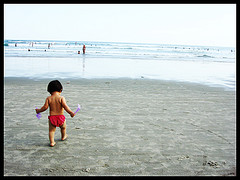
Summer is here, the pools are open and the sea is beckoning. Let’s pack our bags get our swimsuits and go for a swim. Going to the pool or beach with your little ones can be great fun, a fabulous way to cool down and relax with the kids and helps build their confidence in the water.
So when you go swimming with your baby you will need a swim nappy, no pool is going to be happy about donations our little ones my feel free about giving. Even at the beach it is recommended that baby wear a nappy.
At the pool recently I was confronted by the disposable swim nappy, this little horror is not a pleasant site, I couldn’t help but compare my daughter with the child next to her, she was wearing a reusable swim nappy which looked lightweight and comfortable to the baby next to her who looked like they were being dragged down by half the pool water that their nappy had absorbed. For anyone that thinks going green is expensive disposable swim nappies are the biggest waste off money around and oh, so bad for the environment!
So what are our options for a green day at the pool or beach.
“The illumination is made possible thanks to the emergence of an exhilarating new discipline,
one that integrates unprecedented knowledge of plants as living organisms with their fossil record and the role they play in driving global environmental change.
“As we do so, we can see clearly that plants are not ‘silent witnesses to the passage of time’ but dynamic components of our world that shape and are, in turn, shaped by the environment. The power of the new science is that it brings to life the plant fossil record in previously hidden ways to offer a deeper understanding of Earth’s history and pointers to our climatic future.”
–– David Beerling ‘The Emerald Planet’
David Beerling’s The Emerald Planet is not a simple book to digest, but the patient reader will find much to absorb. The topics under consideration are newsworthy and relevant; many chapters deal directly or indirectly with climate change and global warming. In nine chapters, Beerling covers about 500 million years of earth’s history, going into detail in specific prehistoric eras or following discoveries until we see how the hazy, scarcely documented terrain of our past can become the mainstream doctrines of modern science.
Summer has, without a doubt, arrived in Israel. School is about to end, summer vegetables and fruits are in season, and there’s a greater desire to be outdoors. Enter the Adam and Eve farm (or, in Hebrew, Hava & Adam) in Modiin, which offers lots of great ways to celebrate summer.
This educational-ecological center integrates social and environmental education with a focus on sustainability. Founded in 2003, this 8 acre plot of land tries to demonstrate sustainable living by using solar and thermal energy, conscious waste management, ecological construction, recycling, and organic farming. Twenty volunteers live and work on the farm at any given time, and teach by example.
Have you ever had trouble keeping your spices longer than a day? If you leave them out they dry out, if you keep them in a bag they rot… what to do? You can keep your aromatics (leafy spices) and salad lettuce leaves fresh for longer by washing them, then wrap them is a paper towel and seal them in a ziplock bag. Make sure to squeeze out the air from the bag before you seal it. Your spices can last up to two weeks this way giving you the opportunity to cook with freshness. This also means less waste!
Israel. Another week, another delegation of foreign politicians. This time it’s the French President Nicolas Sarkozy gracing our shores and as I write this he is dining with his Israeli counterpart, Shimon Peres, at his official residence ten minutes from my flat.
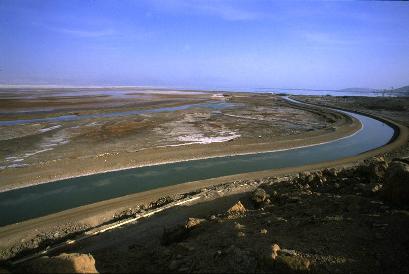
Apart from the usual topics that concern foreign dignitaries in the Holy Land (stalled peace talks with the Palestinians and Syria, what do about Iranian nukes, so on and so on), one issue that the two premiers are equally enthusiastic about is the euphemistically-titled “Peace Canal” or “Peace Valley”, a huge man-made channel which would potentially connect the Red and Dead Seas.
The announcement of the initiative at the Facing Tomorrow conference last month, with an audience of another President (Mr George W.), was greeted with rapturous applause in Jerusalem. The project requires massive investment – 5 billion dollars – to pump a projected two billion cubic meters of water each year from the Gulf of Eilat north to the ailing Dead Sea via the Kingdom of Jordan. Media headlines have been full of the tired rhetoric of “making the desert bloom” by building a complex of hotels, lakes and even safari parks in the largely undeveloped and arid Arava Valley.
Needless to say, rushing into a huge engineering feat of this kind will have enormous ecological consequences – especially before a World Bank feasibility study has even been completed – prompting condemnations from environmentalists led by Friends of the Earth Middle East.
“French President Sarkozi appears not to realize that he has stepped into a mine field of controversy. The project ideas of building an open canal across the desert, Dubai style hotels, Los Vegas casinos and African safaris are unprecedented in size not only for the Middle East but globally. They threaten to completely alter the World Heritage values of the Arava Valley and the Dead Sea itself,” said Munqeth Mehyar, Jordanian Director of FoE Middle East.
Their Israeli director, Gidon Bromberg, was equally damning of the project: “Since time immemorial it was the Jordan River that replenished the Dead Sea. In just 50 years we have managed to turn the holy Jordan into a sewage canal and dry up a third of the Dead Sea.”
It wasn’t long ago that Green Prophet reported on FoE Middle East’s own “Peace Park” at the opposite end of the Jordan Valley, south of the Sea of Galilee. Unlike the touted “Peace Canal” which aims at a technical fix for a complex ecological quandary, the ecological Peace Park hopes to rehabilitate the River Jordan and the Dead Sea by tackling its root causes – unsustainable water management – rather than throwing cash at the problem.
According to Bromberg: “It appears that the French Government led by French business interests is using the demise of the Dead Sea as the means to try to greenwash the public and cover up their true intentions of reaping the profits from the tens of billions of dollars that the project would need to attract.”
The Israel cleantech world is buzzing over BrightSource and its subsidiary Luz II. The companies recently invited the press to visit the world’s first operating solar thermal field in the Negev Desert, for creating clean and efficient solar energy. The 12,000 square meter test site will generate 1.5 MW of electricity.
Cheaper heliostats, no need for oil since water (used for steam) is directly heated, and the fact that they can achieve a higher concentration of sunlight (focused by 1,600 computerized heliostats atop a 60 meter tower) are all factors that make BrightSource the most efficient solar energy solution (says the company). If the pilot tests to be true, the company plans on building 5 similar power plants in California’s Mojave Desert in the next 10 years.
Also check out Autoblog Green where we were criticized for being a latte slurping, Prius collecting liberal. It’s pretty funny. For the record, this Green Prophet does not slurp and she does not even own a car.
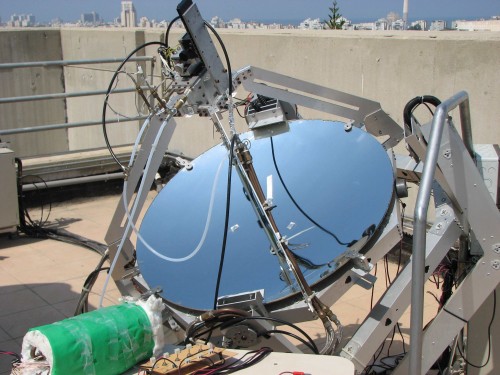
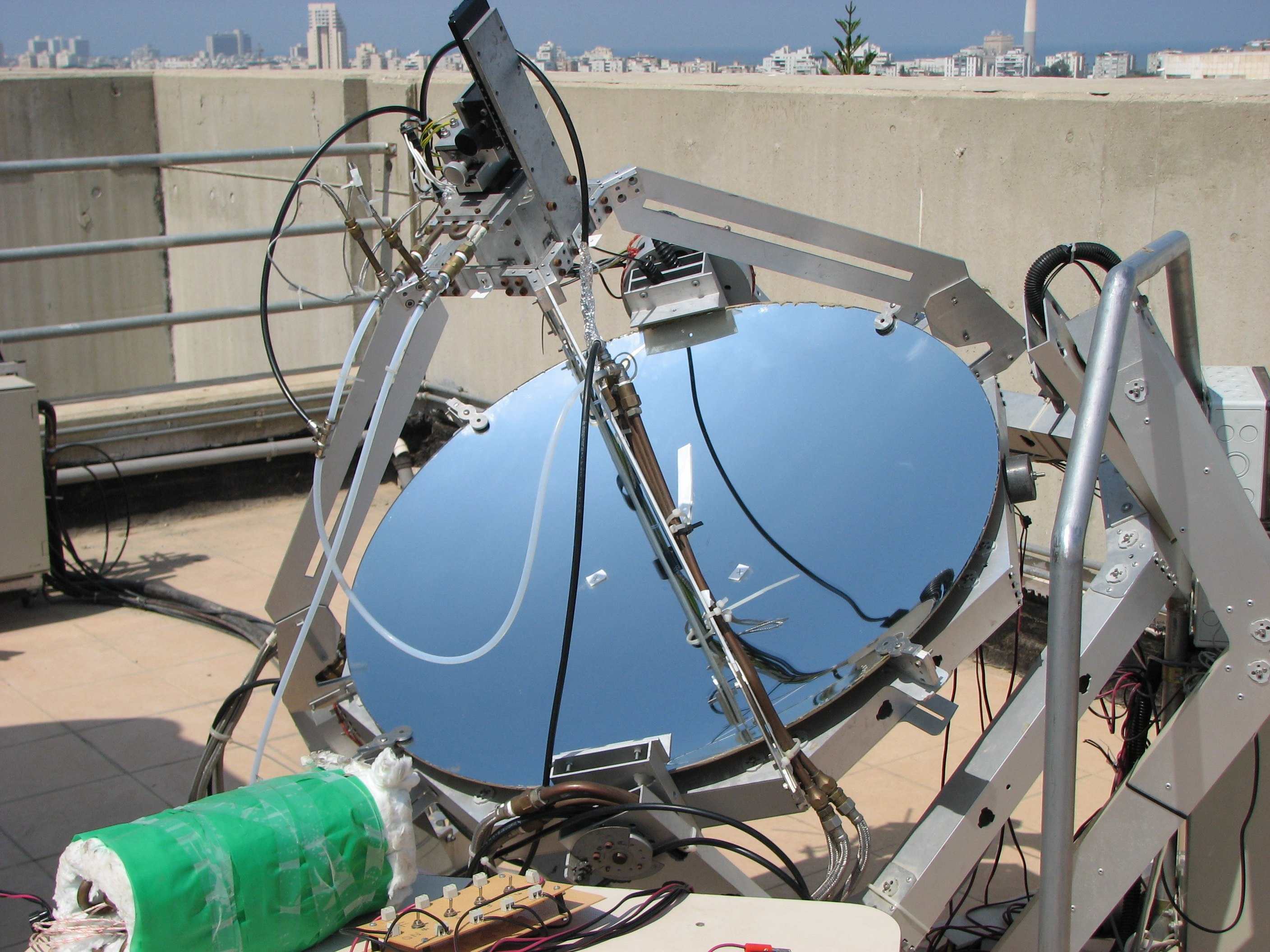
Imagine if air conditioning came without the hefty price tag of electric bills—if it was, in fact, entirely free. Tel Aviv University Professor Avi Kribus, best known now for his discovery of electricity-creating bacteria, has invented a solar energy device that would power air conditioning and heating. Additionally, Kribus’s device is smaller and therefore cheaper to manufacture than conventional solar units, fitting easily on the consumer’s roof.
Kribus’s solar project is a top priority for the European Union, who are subsidizing its development for the next three years. Demonstration units are currently being built in Italy and Spain.
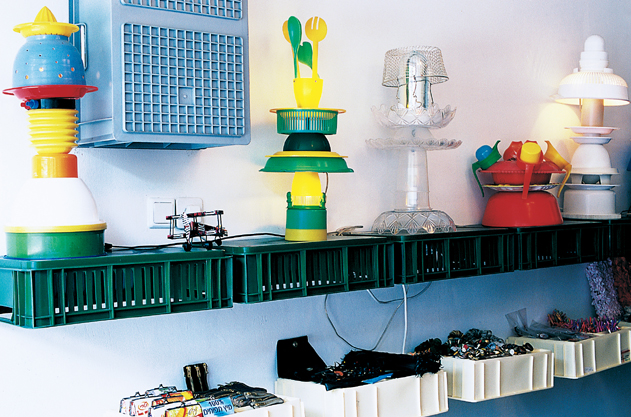
Baladi, a word that Israelis adopted from Arabic, means “national” or “of the country”. It is also the name that French-born Israeli designer, Brigitte Cartier, decided to give her design studio. Her Baladi Company for Ecological Progress takes our national garbage and transforms it into beautiful designs that we can all be proud of.
After studying art, design, and film in Paris, Cartier moved to Tel Aviv where she became a recycling force to be reckoned with. Armed with Israeli waste materials and a certain French je ne sais pas, she recycles without sacrificing style.
A clean KumKum (electric water urn) is an efficient one. Keep your KumKum clean by periodically boiling equal parts water and lemon juice inside. This will extent your urn’s life and keeping it boiling happy.
Now that we’ve eco-toured Israel and Jordan, let’s move right along to another green tourism spot in the Middle East. Lebanon.
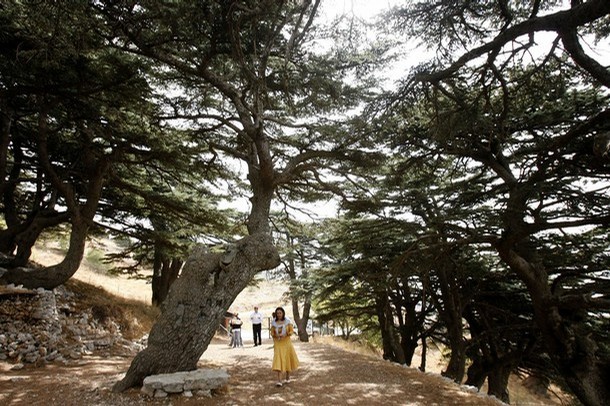
And it’s no surprise that a country that places a regional cedar tree in the center of its flag (colored in green) has lots and lots of eco tourism options.
Here are some of our favorite ways to enjoy Lebanon in an environmentally-friendly way:
1. TLB Destinations: TLB is a tour company that offers sustainable tourism trips all over the Middle East. The small company is local and multilingual (they speak English, French, Arabic, and German), and promotes responsible tourism. This means that their tour guides inform travelers about local concerns regarding the conservation of natural areas, support local communities, and that the company itself tries to raise awareness about biodiversity and heritage. TLB offers a diverse range of trips in Lebanon, including adventure, biking, cultural, gastronomical, discovery, trekking, and hiking tours.
Last week, I visited the town of Umm El Fahem with staff members from Friends of the Earth Middle East (FoEME). FoEME is a trilateral Israeli, Palestinian, and Jordanian environmental organization that brings environmentalists together to work on issues of shared regional concern. As the Summer 2008 FoEME intern, I am assisting with the Pro-Aquifer project. Israelis and Palestinians share the Mountain Aquifer, which has become very polluted. We are working with communities in both Israel and Palestine to protect the shared water resource.
In Israel, we are working with Umm El Fahem, a Palestinian town inside Israel, (roughly 20% of Israel’s citizens are Palestinian. They are also referred to as Israeli-Arabs or Arab-Israelis). During my visit last week, I was sad to learn of one more example where social and environmental justice intersect. (Quick background note: There are huge civil rights issues within the Palestinian sector in Israel. Palestinian citizens face both legal and socioeconomic discrimination in many aspects. Obviously more complicated than that, but that’s the 30 second version).
Essentially, I learned that because of discrimination in planning, the environment – which of course includes the society in the environment – suffers greatly.

 There are lots of green businesses out there – cleantech businesses, organic farmers, environmentally conscious designers, and plenty more. But what about businesses with no clear environmental agenda? What’s a software company or a furniture manufacturer that wants to go green supposed to do?





 Baladi, a word that Israelis adopted from Arabic, means “national” or “of the country”. It is also the name that French-born Israeli designer, Brigitte Cartier, decided to give her design studio. Her
 Now that we’ve eco-toured