Each week Orthodox Jews read one segment of the Five Books of Moses so that they can complete the entire Five Books within the course of a year. In last week’s Eco-Rabbi post we discussed Jacob’s passing on and blessing his children, this week begins several generations later. Jacob’s children have been living in Egypt and multiplying in numbers but have been oppressed into slavery.
Moses has run away from Egypt. Apparently being raised in Pharaoh’s home isn’t enough to avoid being chased into the desert for killing in defense of a slave. Traveling through the wilderness Moses finds himself a home with one of the Medians. Moses finds a helpmate there and becomes a shepherd of his father in law’s sheep.
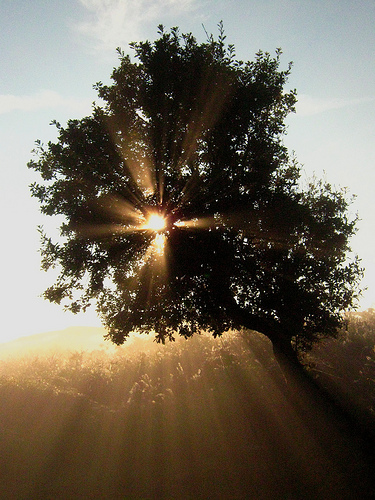
While out with his father in law’s sheep Moses stumbles upon Mount Horev, which consequently, tradition explains, is actually Mount Sinai. On the mountain Moses finds a “sneh boer,” a burning bush from which God appears to him and presents him with the task of taking the Jewish people out of Egypt.
The commentaries have a field day explaining the significance of the burning bush, especially since trees are so important in Judaism. Midrash Exodus Rabbah, 11th century exegesis on the Bible, asks why is it that God appears to Moses from a burning bush? Bushes have thorns, are short, live off of any water source; in short, are not divine in any way.
Mifal Hapayis (the Israel National Lottery) is opening new windows of opportunity for environmentally aware artists and designers. This year, the Arts and Culture Council turned to the public for suggestions on areas worthy of support and the people spoke up! Letting in a breath of fresh air in more ways than one, the new categories reflect a growing interest in ecology and awareness of the environment.
Seeking to encourage environmental awareness in all aspects of design, performance and art, Mifal Hapayis will give special attention to ecologically oriented projects.
In the performing arts, street theater and other performance events taking place outside conventional frameworks have been added to the list.
In the visual arts, the committee will place an emphasis on:
Architecture and the Urban Environment
Art and Ecology
One project already in the works is “Ecosphera” – which aims to be the largest green event held in Israel. Scheduled to take place in the Artist’s Village of Ein Hod and its environs in mid-April, the festival will be dedicated to the theme of “sustainability.”
In addition to workshops, theatrical events, and an organic farmer’s market, the highlight of the festival will be an international exhibit of green art curated by Dana Tagger.
The Board of Directors has allocated 12 million NIS to fund projects in a variety of areas. Artists, designers, cultural institutions and dreamers who would like to submit proposals may do so in the months of February and May.
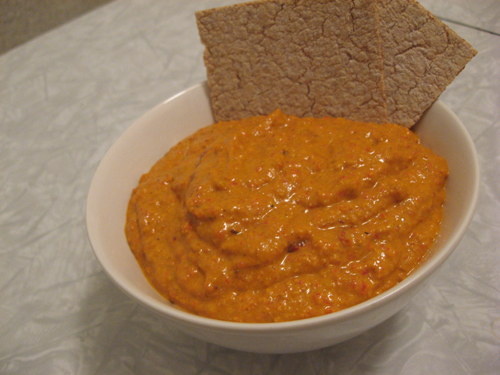
It’s a spread like hummous; it’s used like ketchup. And it’s also a sauce. The recipe is from Syria, but find it in Lebanon, Turkey, and Jordan.
Winter cooking is often pantry cooking. When the rain is coming down at a 45° angle, the last thing most of us want to do is brave the elements to make a grocery run.
It’s handy to have a stash of recipes that rely on what you already have in the cupboard – and conversely, to stock your cupboard with great ingredients you can use whenever the spirit strikes. It’s especially great if those recipes aren’t last resorts, but lead to dishes that you find cozy and comforting and help you combat the stormy weather outside.
We’re obviously big fans of cooking with the seasons, using whatever is just fresh and coming ripe. But – even in the Mediterranean – there’s not always something to be harvested. Cooking healthy food made from the locally-sourced dry and canned goods is a great alternative.
In the hopes of fighting our own winter blahs, we thought it would be fun to try and work through some of the classic recipes in the canon of Middle Eastern cooking – the old standbys and familiar dishes that are especially soothing when you’re spending the weekend curled up inside.
Now, we’re not claiming that we’ll be able to reproduce your favourite hummus perfectly – that kind of standard is entirely beyond us. There are as many versions of hummus as there are people that make it, after all. If your grandmother has passed her secrets on to you, consider yourself blessed. (And share in the comments!) If you’re still trying to muddle your way through, however, consider these your yummy, customizable starting-points.
First up, muhammara: the garlicky, earthy, addictive red pepper and walnut spread that originally hails, so we understand, from Aleppo, Syria.
Muhammara
2 slices of bread (can be stale, whole wheat is good), toasted
4 whole roasted red peppers (preferably packed in oil), coarsely chopped
1/2 cup walnuts, toasted lightly and chopped
2 garlic cloves, mashed with 1/2 tsp salt
1 tablespoon fresh lemon juice, or to taste
1 tablespoon pomegranate molasses
1 teaspoon ground cumin
1/2 teaspoon dried hot red pepper flakes
1/4 cup extra-virgin olive oil
Place the toasted bread in the bowl of a food processor and pulse until it is reduced to fine breadcrumbs.
Add in all the remaining ingredients except the oil and process until the mixture is uniform and the ingredients are fully incorporated. With the motor running, add the oil gradually; continue blending until the dip reaches your preferred consistency – anywhere from smooth to slightly chunky.
Taste and adjust seasonings, adding salt if necessary and a bit more pomegranate syrup if you’d like more sourness.
Transfer the muhammara to a bowl and serve with pita triangles and veggies for dipping.
Despite the ongoing conflict in Israel, a three-day international conference on renewable energy planned for February is going ‘full steam ahead,’ according to organizers.
This is the second major renewable energy conference for Eilat, and hundreds of clean technology leaders, entrepreneurs, VCs, companies and government representatives from around the world are expected to take part.
A perfect destination for clean energy
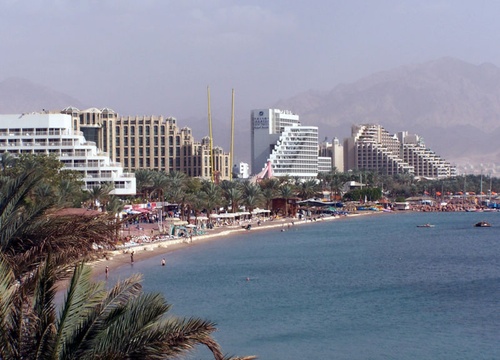
An abundance of blinding sun, and few rainy days, makes the Israeli city of Eilat a perfect destination for farming clean energy from the sun. Located at the tip of the Red Sea, where Israel meets Sinai and Jordan, Eilat has been getting serious about clean technologies for some years.
Noam Ilan, project developer for the Renewable Energy Authority of Eilat-Eilot, the body organizing the conference, says that a major goal of the event is to show how Israel plans to implement its own world-class clean technologies. Known around the world for water technologies and solar energy, the conference will shine a bright green light on local projects, and the region’s own Timna Renewable Energy Park.
The conference will “stir up a great momentum,” for clean technology projects, Ilan tells ISRAEL21c. He predicts that within a short time, Eilat will be a renewable energy hub in Israel, and possibly the world.
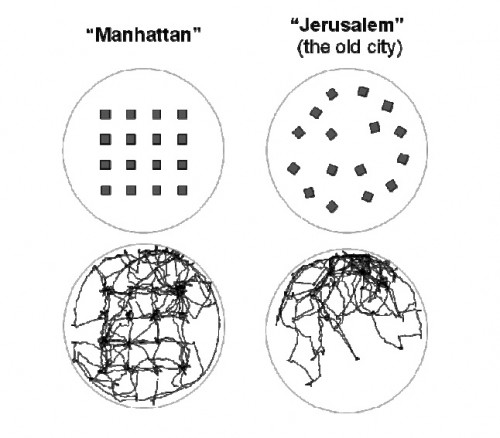
“Rat tracks” made by rats in two city plans: Manhattan-style (left) and New Orleans or Jerusalem-style (right). In both plans rats cover the same distance, but rats in the “Manhattan” grid cover more territory.
Rats Say: Manhattan Rules!
Before “green” urban planners build that new sub-division, neighborhood, city street, or town, they might want some invaluable advice that can spare years and millions of dollars from going down the drain. They just need to ask the rats.
Researchers at Tel Aviv University have found that if you leave it up to the rats, New York City beats the Old City of Jerusalem or New Orleans any day.
This surprising finding comes from new research by TAU zoologists and geographers, who are working together to invent a novel way to test urban designers’ city plans. Instead of using humans as guinea pigs, the scientists went to their nearby zoo and enlisted lab rats to determine the functionality of theoretical and existing plans.
They’ve already tried their theory in the academic setting by blindfolding human biology students to confirm that human orientation strategies and instincts are similar to those of their fellow four-legged city dwellers.
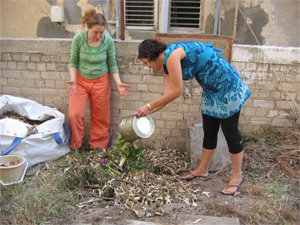
If you are looking to sharpen your composting skills, banish flies, kill odors, and speed along the making of rich fertilizer for your garden, while running a greener kitchen, City Tree has the answer.
This Thursday at 8 at Bialik 23 in Tel Aviv is the First Israeli Composters’ Forum.
Bring a notebook and maybe some shekels to buy worms for your indoor bins.
For more information (in Hebrew), check out the Facebook event.
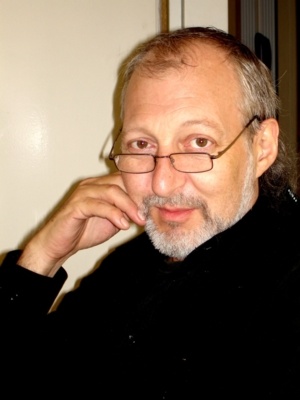
Green Prophet recently interviewed Achmed Khammas. Achmed grew up in Syria and now lives in Germany, and he tells us about the new popular online resource he built: The “Book of Synergy,” and his vision and research in renewable energy, environmental activism in Syria, and personal views on Middle East peace.
My full name is Achmed Adolf Wolfgang Khammas, and I was born to a German mother and Iraqi father in 1952 in Berlin. I grew up in Damascus.
After finishing the school in Syria I worked, but did not study, for a few years at the Technical University in Berlin (TUB). Then, in 1977, I took over the engineering office of my parents in Damascus.
I started my own experiments and developments in 1979 in the field of domestic solar thermal devices and the training of staff members.
The first solar collector was produced then in 1980, which was the beginning of a ten year long odyssey with a lot of trouble and a lot of fun and success. Our team also worked in the field of wind energy, in which I used to have a European Patent for a new ‘splitted blade.’
As a Green Prophet studying at Ben Gurion University, for the last two weeks I have been out of school due to rockets on Beer Sheva. Earlier this week I took advantage of BGU’s location in the desert to hike away from the sirens and remember the beauty of being outside in the undeveloped areas of Israel.
Enjoy this account of a night hike, first posted on January 11 at TheTruthHerzl.com.
***
I woke up this morning thinking I was on the streets of Chicago with the wind loudly blowing between the blocks of skyscrapers. It took a few minutes to realize this howling wind was actually the rocket siren, an especially long one.
The siren is a wail that crescendos and decrescendos; usually the rockets fall 60 seconds after it starts. Since this one was so long, I heard a boom in the middle of it. The house shuddered; the rocket must have fallen nearby (I returned to Beer Sheva last week). The siren stopped and I dozed off again.
On Thursday, January 15, several organizations are joining together for a forum titled “Greening of Jerusalem.” The event is bringing together local cleantech companies, investors, Jerusalem government officials and the Jerusalem public in a joint effort to make the vision of a cleaner, more sustainable world possible and to make Jerusalem and Israel the center of innovation for it and prime example of it.
The event will feature some of Jerusalem’s cleantech companies including bSolar, Cequesta, Leviathan Energy, EnerT Global, EXX Solar, 3GSolar and Solaris Synergy.
During these tough times in the south of Israel and Gaza, it’s heartening to discover that some events are continuing, and that the determination to green things up, either by accident or design, continues apace.
Here at Green Prophet, we’ve kept a keen eye on green design and sustainable architecture, both here and abroad. I was cheered this weekend to discover that the Jerusalem Seminar in Architecture is planning its annual conference shortly, and its to be held here in Jerusalem this month, from the 25th to the 27th, with the theme of ‘Green Design – from theory to practice.’
A distinguished panel of practicing architects and experts, chaired by Dr. Ken Yeang, will explore an array of current projects and technological advancements in the field. Bringing together architects from the US, the UK, Holland and Malaysia and several other nations as well as Israel, this conference promises much in the way of green thinking and reflections upon how the natural world can and should influence our buildings and structures.
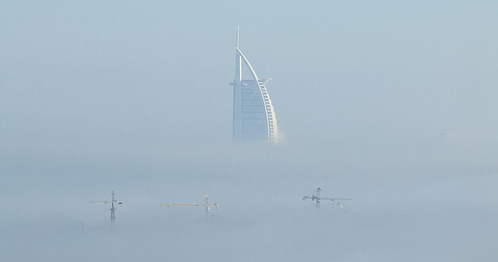
We’ve oohed and awed over the green building projects in Dubai: A recent survey has consigned that old saying ‘Location is everything,’ to the scrapheap when it comes to property investors looking to flash their cash in the Middle East. Instead, eco is where it’s at, according to a new United Arab Emirates report.
A recent survey by one of the biggest Gulf developers, Nakheel, has shown that environmental friendliness is top of the list for investors who are considering a purchase.
In the Jewish community, there are many innovative initiatives that fulfill this responsibility, and the Jewish newswire service, the Jewish Telegraphic Agency (JTA) wants to tell the world about them.
For those of you out there who may have been planning an eco tourist trip to Israel but have… ahem… postponed your plans for the time being, don’t cancel all of your vacation plans just yet. Katan Adventures, a New York based travel company, might be able to provide help planning an alternative trip with the same kavana (or, intention).
Katan Adventures attempts to provide “action-packed, eco-centric, guided outdoor adventure trips and travel for Jews and friends of the Jew in their 20s and 30s.” Their trips are not religious in the sense that they are not affiliated with any Jewish movement and do not promote any religion.
Katan Adventures does, however, operate in a manner that reflects the fundamental Jewish value of tikkun olam (heal the world). In their own words, “this means that our guides will show you the best outdoor adventure activities that our destinations have to offer, such as surfing, skiing, rock climbing, mountain biking, hiking and more all while being mindful of our impact on the environment within which we travel and, ultimately, live.”
In other words, they’re putting the Jew in ecological. (Or, as they so cutely put it, into ecoloJEWcal.)
Orthodox Jews read a segment of the Five Books of Moses each week so that they can complete the entire Five Books within the course of a year. In last week’s Eco-Rabbi post we discussed Jacob’s descent to Egypt and the grand cedars that he brought with him.
This week’s segment, Parshat Vayechi, is the last segment of the book of Genesis. The story finishes laying out the setting to the background story of the ancient Jew’s slavery in Egypt.
Most of this segment deals with the Jacob preparing for his death.
In preparation Jacob blesses all of his children. But his blessings are not the classic blessings that one would expect. One son Jacob calls a donkey. For another two, he includes their extreme violent nature in their blessing; Jacob actually curses them to be dispersed amongst their brethren. So what is the deal here? Why would a father bless his children such?
The commentaries explain that a blessing, if it is to be authentic and have any affect, has to include the nature of the person that is being blessed. Jacob needed to include the nature of his children in his blessings for them to take effect. But this concept goes deeper than simple hocus-pocus.
(This AP photo shows a concentrating solar power (CSP) plant in Spain which reflects light to a central tower to produce power. A pilot project using CSP is underway in Tehran.)
Does a country that “promises” to wipe Israel off the map have a right to create nuclear energy for “power?” I must admit, news that Iran is looking to create power from solar energy puts some of my (irrational?) fears of living in Israel aside. According to the Iran Daily, Iran’s first solar powered station has been inaugurated.
The new plant is a concentrating solar power (CSP) plant, similar to one in Spain which reflects light to a central tower.
The plant was inaugurated at the beginning of 2009, in Shiraz, the Fars province. The CSP system uses parabolic mirrors which focuses sun onto a tube of water. Eventually becoming super-heated, steam in the tube is used to turn electricity-generating turbines.

 Each week Orthodox Jews read one segment of the Five Books of Moses so that they can complete the entire Five Books within the course of a year. In last week’s Eco-Rabbi post we discussed Jacob’s passing on and blessing his children, this week begins several generations later. Jacob’s children have been living in Egypt and multiplying in numbers but have been oppressed into slavery.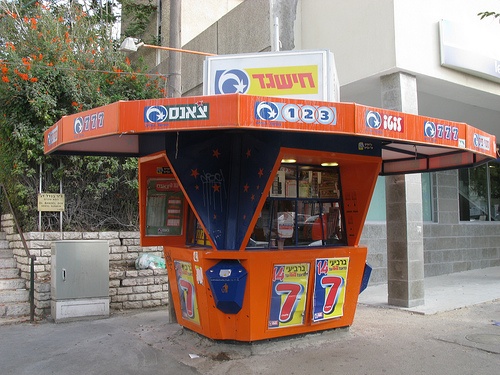




 Green Prophet recently interviewed Achmed Khammas. Achmed grew up in Syria and now lives in Germany, and he tells us about the new popular online resource he built: The “Book of Synergy,” and his vision and research in renewable energy, environmental activism in Syria, and personal views on Middle East peace.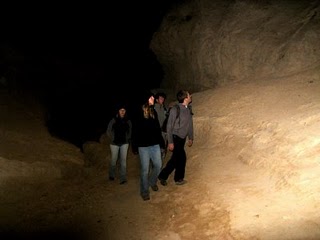
 As a Green Prophet studying at Ben Gurion University, for the last two weeks I have been out of school due to