Home Blog Page 725

Designing from Nature at Jerusalem's Green Design Seminar

2

jerusalem design conference photo

Green Design – From Theory to Practice (see preview post here), a major international architectural seminar took place this week here in Jerusalem, bringing together leading experts from the worlds of architecture, design, and integrated studies.

Despite the recent war in the south, all but one of the international practitioners came, and by doing so, in a single stroke they reinvigorated Israel’s green thinking community, overcoming as one speaker noted, “our sense of collective depression.”

With early starts, through packed daytime lectures and workshops, to the last session finishing late every night, the conference, located in the big central venue at Binyanei HaUmma (or ICC), this Green Design Seminar has been a success in every way possible.

Bio-Climactic Skyscrapers

Speaking exclusively to Green Prophet, conference chairman and internationally renowned architect Ken Yeang said: “Today we are exploring the theoretical work done in this field of designing for a sustainable future, and using the range of technical solutions. I’m delighted to be back in Jerusalem, and proud to have helped to bring such an outstanding group together.”

Elite coffee uses leftover beans to power factor

9

elite-coffee-tsfat-green-prophet

The Israeli town of Tsfat (or Safed) is typically associated with the colour blue, owing to the tint that many of its buildings are painted with. But modern Tsfat, famous for being a centre of Jewish mysticism, its graves of tsadikim and art galleries, could just as easily be associated with brown. Since 1956, Israel’s major coffee and chocolate manufacturer, Elite, built a factory there, making the smell of coffee, not to mention smoke from the plant and traffic which have become part of many residents’ daily lives.

According to a recent report in Ha’aretz, the Elite plant is now undergoing a “green revolution”. Last week, a large furnace was installed to burn leftover coffee beans to power the plant instead of oil, a move which the company says will reduce the consumption of the fossil fuel by 50%. Typically, vehicles also burn gas to truck the spent beans from the factory, passing lorries carrying oil on their way in.

“This creates a direct connection between being ‘green’ and being efficient,” Pini Kamari, vice president of Strauss. “Motivation for the change came from our desire to cut costs, reducing energy costs and transportation costs for both the shale and the waste. At the same time, emissions will be much lower, both from the smokestacks and from the trucks. We will create less waste and need to bury less garbage. Noise will also be reduced.”

:: Ha’aretz, Wake up and smell the green revolution.

Photo: miscpix.

Coffee grounds into energy

2

Ada Hanina cafe Jaffa

You know that great smell that tickles your nose when you walk into a coffee shop?  The wonderful aromatic smell of roasting beans?  Well, if you are a resident of Safed, Israel – where the Elite coffee factory is located – that sweet smell is currently mingled with the harsh odor of the shale oil used to power the factory.  Thus destroying the great scent.

How is the coffee factory going green?

But not for much longer.  The factory is going green, using its beans not only to make great coffee but to power the plant as well.

Large furnaces that were recently installed will burn the leftover coffee beans at high temperatures to create steam that will serve as alternative energy.

Until now the leftover beans have been mostly buried or sold as fertilizer and livestock feed – a solution that is better than tossing them into a landfill but that still requires many trucks and lots of gas.

How does using biological waste cut down air pollution?

By using the leftover beans to create energy the factory will cut down on air pollution and also reduce shale oil consumption by 50%.

Pini Kamari, the Vice President of the Strauss Elite Company, explained that: “This creates a direct connection between being ‘green’ and being efficient.  Motivation for the change came from our desire to cut costs, reducing energy costs and transportation costs for both the shale and the waste.

“At the same time greenhouse gas emissions will be much lower, both from the smokestacks and from the trucks.  We will create less waste and need to bury less garbage.  Noise will also be reduced.”

The Strauss Elite initiative may be coming at a good time for the city of Safed, which is trying to change its environmental image.  The new mayor, Ilan Shochat, recently established an environmental affairs committee that will promote recycling and river preservation.

Read more about other green coffee:
Tel Aviv’s LovEAT Loves to Drink Organic Coffee
Perach Rafian’s Cupocket Handles Your Hot Drinks with Care
Coffee Grinds
Coffee Break

Geotectura to Build Israel's Greenest Building at Tel Aviv University

6

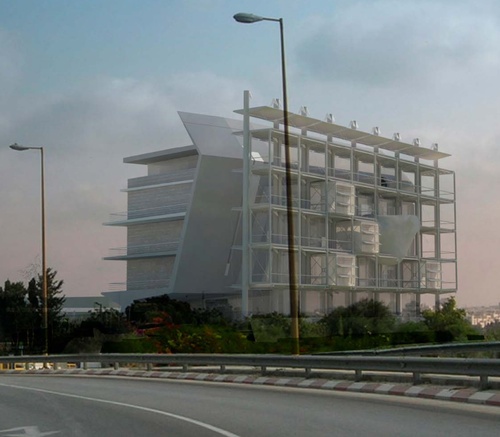
Eco-Wall Geotectura Porter School of Environmental Studies

Within a few years Israel’s greenest building will be located at Tel Aviv University (TAU). That’s the goal of Joseph Cory of Geotectura. He and two other architecture companies have won first prize in an architectural competition to design a 4,000 square meter green building for TAU’s Porter School of Environmental Studies (PSES).

Cory’s partners in this project, which is being funded by the Porter Foundation and other organizations, are the companies NCArchitects and Axelrod-Grobman Architects. The team’s entry was selected in a competition given by PSES, which included 40 architecture companies.

Green architects focus on conserving energy – which is not only good for the environment, but also saves vast amounts of money for the consumer. Another focus of green architecture is quality of life, ensuring that buildings are made of safe, non-toxic materials and that the people in them live healthy lives.

But with the PSES project, Cory – who has won numerous awards for his green designs – is not content to simply design another green building. The goal of Cory and his team is to design a building worthy of a “platinum” rating according to the US Leadership in Energy and Environmental Design rating system – the first building of its kind in Israel. Such a building would stand as an example to other architects and, Cory hopes, move the country forward toward implementing green architecture on a regular basis.

Putting green science on show with an Eco-Wall

Work on the new $7 million PSES building will begin in 18 months to two years, and should be completed by 2011 to 2013. Its most unique feature will be the Eco-Wall – what Cory describes as a “dynamic changing façade” to the new building. This façade of transparent glass will reveal the various labs in which selected researchers are performing their environmental studies and experiments. The Eco-Wall façade is constantly changing because over the years, different researchers with different work will take over the various labs.

Ford Designs New EcoGuide to Maximize Fuel Efficiency

0

[youtube]http://il.youtube.com/watch?v=5dRzx7YGBNM[/youtube]

It’s one thing to buy a hybrid car, but another to understand and know how to use it wisely. Ford has a solution: Ford Motor Company’s Smart Gauge with EcoGuide educates drivers to maximize fuel efficiency on the 2010 Ford Fusion and Mercury Milan Hybrids.

The technology uses two digital dashboard LCD screens on either side of the analog speedometer to inform drivers about fuel usage, battery levels and more.

Eilat Renewable Energy Conference Full Steam Ahead For February

0

eilat-israel

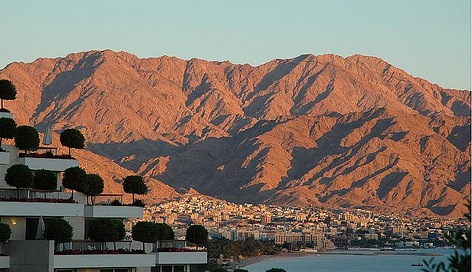
In the wake of conflicts with Gaza, organizers of Israel’s three-day international energy conference say the show must go on. Following the World Future Energy Summit in Abu Dhabi, United Arab Emirates, Israel will host a massive renewable energy conference in Eilat –– the  Eilat-Eilot International Renewable Energy Conference –– from February 17-19 at Eilat’s Herod’s Palace. 

This is the second major renewable energy conference for Eilat, and hundreds of clean technology leaders, entrepreneurs, VCs, companies and government representatives from around the world are expected to take part. 

Israel, Egypt & Abu Dhabi All Set Renewable Energy Goals

3

Energy_ Solar_Farm_Middle_EastJust weeks into 2009, at least three Middle Eastern governments have made commitments to increase the green-ness of their energy supplies.

Last week, Cairo has committed that renewables will supply 20 percent of Egypt‘s electricity needs by 2020, Israel says solar power will provide 10 % and Abu Dhabi says 7% of its total power needs will come from renewable supplies by the same date.


Egyptian Minister of Electricity and Energy Hassan Younes told this week’s World Future Energy Summit that “Wind farms clustered in the Saidi area of Egypt will employ thousands and produce 20 percent of the country’s diversified energy needs by 2020.”

If Egypt comes anywhere close to accomplishing this bold target, it may well be the Middle East’s leader in adopting renewable energy sources. Younes’ comments came as he was a guest on a new CNBC Arabiya TV show entitled Bil Akhdar (‘Green Business’) which is to broadcast Sunday evenings on the Arabic business news network.

Zalul's Tu B’Shvat 2009 Photo Competition

0

Photo courtesy of Sagit Rogenstein, Deputy Director of Zalul Environmental Association

Tu B’Shvat is just around the corner!  Traditionally known as the “New Year of the Trees”, in modern times it has been reinterpreted as the Jewish Earth Day.  Each year, Jews around the world come together to celebrate the holiday by planting trees, cleaning beaches, and participating in other acts of “Tikkun Olam” (repairing the world).

Zalul Environmental Association is inviting you to join us by participating in our special 2009 Tu B’Shvat photo competition celebrating our most precious natural resource – water – the source of life not just for trees, but for all living things.

The photographs should fit the theme “Mayim Chaim” (”Water of Life”) and embody the theme of Tu B’Shvat as well as the need to protect the world’s seas and rivers.  GREAT prizes will be awarded to the top three winners – including gear from both Columbia Sportswear and Billabong Clothing Company.  Please read the following rules for more details (in both Hebrew and English).

We’ll be posting participants’ photographs on the Zalul blog and the Zalul website, so check back often to see the latest additions.  Chag sameach!

More on Tu B’Shvat:
Feed Your Green Soul On Tu B’Shvat
What To Do On Tu B’Shvat
In Israel We Say Happy New Years Trees!
Win A Green Beanie on Tu B’Shvat

Savta Connection Takes Urban Knitting to Tel Aviv's Streets

10

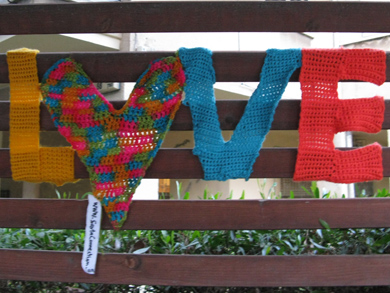
Thanks to Tel Aviv based blog, Oh So Arty, we recently learned of a new decorating trend hitting the sometimes dirty and dreary streets of Tel Aviv.  Urban knitting.

If the term “urban knitting” makes you think of old ladies sitting in the middle of Rothschild Boulevard with needles and yarn in tow, think again.  And if it makes you think of large gatherings of women getting together in some city apartment to knit scarves and socks for their loved ones – a la 2 Knitting Needles Studio based in Haifa – then you’re a little closer but not quite there yet.

The urban knitting we’re talking about is executed by a group called Savta Connection (or, Grandma Connection) that wishes to add beauty and softness to the city by integrating knitted pieces into the urban landscape.  Knitted pieces are attached to benches, adding warmth and color to people’s days.  On an environmental level, the presence of local, handmade (and therefore low-energy) decorations are a far greener alternative to the omnipresent billboard ads and flyers that usually decorate the streets.
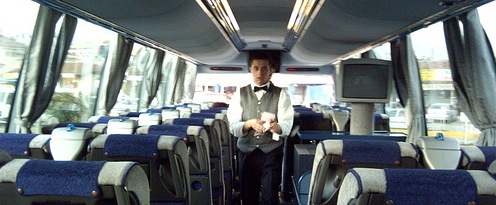
Turkey Creates and Tests Hybrid Buses As Part of Project Ğ

1

bus-turkey

If you’ve ever had the pleasure of living in or visiting Turkey, you’ll find it’s very hard to get lost off the beaten trail. The public transportation system there is so well oiled; bus owners of private buses or the smaller minibuses –– the dolmus –– are so well organized, you can literally scoot across the country by just telling one of the bus assistants (who approach you), where you’d like to go.

A few years back when I was there, I noticed the service was great too: buses are on time; the assistant –– who operates like a steward –– splashes cologne in your hands as a refresher, and then serves you tea, coffee and cookies. A delight.

The world has a lot to learn from the Turkish public transportation system which may just be getting a whole lot better: According to the Ankara newspaper Hurriyet, the Turks have developed their own hybrid buses at the Scientific and Technological Research Council of Turkey (TÜBİTAK), and feasibility studies are underway to test how the buses will work in the urban environment.

Qatar To Set Some Environmental Goals

0

green-future-qatarQatar’s environmental goals and ambitions will be discussed at a national seminar organised by the General Secretariat for Development Planning (GSDP) on January 27 at the Four Seasons Hotel, according to the Gulf Times.

The seminar’s aims are twofold. The first is to identify and discuss issues and challenges related to achieving the environmental goals of the Qatar National Vision 2030, reports the paper.

The second objective is to provide ideas and a framework to Qatar’s second Human Development Report, which GSDP is preparing in partnership with United Nations Development Programme. The seminar will concentrate on the themes such as:

  • Qatar’s sustainable development challenges
  • marine environment
  • water security
  • climate change and their human development issues.

Ibrahim Ibrahim from the GSDP is set to make the opening speech before four panels named after the above themes. 

The QNV 2030, launched by HH the Heir Apparent Sheikh Tamim bin Hamad al-Thani in October last year, builds a bridge between the present and the future and envisages a vibrant and prosperous country with economic and social justice for all.

::Gulf Times

More on Qatar’s environment:
Qatar’s Desert Seawater Greenhouses
(Image credit: Syd Mead)

Shai Agassi Goes Canadian, eh, With Better Place in Ontario

9

snow bus sorry canada photo

We were too distracted by the war with Gaza over the last few weeks to take notice that Shai Agassi from Better Place, the Israeli electric car guru, is now working on a deal with Canada. Those Canadians love their SUVs, and trucks to plow through Canadian winters, but maybe some Torontonians and yuppies that don’t drive their kids in 4x4s to school, would go for the plan.

Here’s the press release, issued January 15: Better Place today announced a partnership with the government of Ontario to help bring an electric car network to the province and create a model for the adoption of electric cars in Canada.

Ontario, which is one of North America’s largest car producing regions, seeks to transition its auto manufacturing sector for future growth from electric vehicle production while reducing greenhouse gas emissions.

“With today’s announcement, Ontario is taking a system-wide approach to retooling its economy for growth and environmental leadership,” said Shai Agassi, Founder and CEO, Better Place. “Our partnership will move Ontario toward a new era in personal transportation – from the current Car 1.0 model centered on the internal combustion engine to a Car 2.0 model of electric cars powered by renewable energy. Today’s announcement is the all-important first step in an expected electric car charging network rollout for Canada, and we look forward to working in partnership with the Ontario government on it.”

"Agam Energy Systems" Pulls Out The Pistons For 100 Miles To The Gallon

0

People love their cars, even environmentalists. In the Middle East, it’s less so, but in America, people and own more cars per capita than anywhere else on earth — some 765 for every 1,000 people. But turbulent financial times everywhere threaten both the automotive industry and the ability to put gas in the tanks of our favored mode of transportation.

agam-energyElectric cars offer promise, but switching over still has limits: infrastructure is lacking, new cars need to be built, and the electric car just doesn’t have the same “muscle” as the petrol-fueled machines that people love.

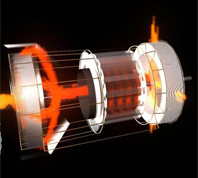
An entirely new solution may come by way of an Israeli company – Agam Energy Systems — which has developed a piston-less turbine engine, featuring a new kind of compressor that the company hopes will revolutionize the automotive industry.

American automakers are already taking notice, the company reports.

Why Don't Cars Last Forever? Some Tips on Greening Your Ride

0

 green-your-ride photoI was in Grade 4, in Canada, and learning about all the secrets and marvels of life. There was the discovery of books like 1984, new information about sex and how our parents’ genes combine to make us who we are; we were taught how to make our own movies, and program computers – and one other thing stuck in my mind: It was when Mr. Birch taught us about the automobile industry.

“Why don’t cars last forever,” he asked? “It’s not like the materials aren’t there to prevent them from rusting, or the technology for the motor from wearing out,” he explained.

The real reason, the big secret was… Yes? I was on the edge of my seat, waiting for a special answer… “The real reason,” he said, “is that automobile manufacturers don’t want to make their cars last forever. It isn’t in their interests. A car that last forever isn’t good for business.”

Courtney Nichols’ on Charity: Water

2

courtney nichols blood water film photoHow do changemakers form bold ideas, and turn them into a massive project like a major documentary film? Today we talk with Courtney Nichols, producer of the new film Blood For Water, on how she came from the world of business to take on the global problem of water politics head on. She’s planning on turning the film into An Inconvenient Truth, about water.

And the film, we’ll read, talks about the implications for people living in the Middle East. 

So here she is: Courtney Nichols, a 38-year-old NYC resident, and founder/CEO of CampaignWater Inc.:

How did you transition from the world of business, to as you say “make a real impact?” in the world of water. Was it a dream in the middle of the night, an aching sensation, or just something you were leaning towards? It was a slow creep really. I quit my job after four years because i wanted to find a way to use my skills at launching businesses to doing something more connected to “doing good” but I also just needed a break!

About a year ago, I sat around a table with some folks and heard them talking about the water crisis. Now, I consider myself a relatively engaged person, maybe not the MOST informed, but certainly caring and connected to the world around me and yet I have never heard this talked about.

I thought, How is this possible? What came to me as this NGO talked about its goals for fundraising was this: what you basically have is a branding problem.

This issue needs to be “marketed” to a mass audience so people understand that water, in fact, is at the root of or related to many of the problems they hear about: disease, conflict, environmental degradation and food shortages as well as lack of education (mostly women and children). I began to volunteer my time advising two fantastic organizations: Charity:Water and Blue Planet Run both with strategy advice/connections and fundraising.

About 6 months later at a dinner I was hosting just to start reaching out to friends, influencers etc. to get people talking about water, a friend told a story having just returned from Sudan (south) about seeing men with guns fighting over access to a well.

He was there to research the subject of his book (Stefan Templeton subject of biography by David Matthews, to be published by penguin in 2010) who works as a humanitarian mercenary of sorts and is dedicated to this issue of water as a source of conflict. As he was talking, I thought, that’s it, let’s make the Inconvenient Truth about water!