Home Blog Page 710

Daniella Unpicks Israel's Relationship With Land and Housing In Amiran Gonen's "Between City and Suburb"

herzliya pituach villa house israel photo

If you’ve heard about the demise of the kibbutz movement, then you may also know that financially strapped communal farms have recently climbed out of debt by building suburban-style detached housing developments and selling them to upwardly mobile Israelis.

Suburbanizing kibbutzim and moshavim (village settlements), along with several new suburban-style towns like Shoham (near Ben Gurion Airport), Kochav Yair (on the West Bank border in the country’s center) and Maccabim-Re’ut (between Jerusalem and Tel Aviv) are transforming the Israeli landscape from what used to be small villages surrounded by agricultural fields towards American conceptions of large, well-appointed homes in neighborhoods dependent on cars.

One of the best looks at the roots of this revolution is Amiram Gonen’s 1995 book ‘Between City and Suburb’, an extensive academic take on the changing forms of Israeli communities.

Looking for the Sustainable in Beer Sheva's Development Debate

rubik-danilovichWhile in the center of the country, the concern is to improve food quality, public transportation and vehicle efficiency, in the periphery Israel’s decision-makers worry about building a satisfying enough environment to attract and keep young people who otherwise flee to Tel Aviv. This reality was clear at a conference this morning on industry in the Negev, organized by Ben Gurion University and attended by newly appointed Minister of Development in the Negev and Galilee, Silvan Shalom.

The opening remarks were telling. Beer Sheva’s newly elected mayor Rubik Danilovitch (photo) was the first speaker. He announced that long-delayed plans to erect a high-tech park in the city were finally moving along, which would hopefully provide quality employment. He also thanked the chemical industry, whose representatives were at the conference, for their recent steps to improve their environmental record.

Afghan Opium Growers Get Burned Out

6

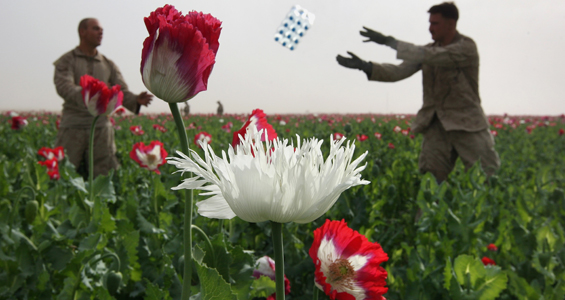
afghanistan-poppy-opium-heroin-photo growers farm afghanAfghan farmers get “burned out” as government tows to US pressure. But for poppy farmers, it’s poppies or starvation. Wheat crops, or biofuel crops cannot compare in value.

Molar (not his real name) is an Afghan farmer living in the central Hazzrajat Province of Afghanistan. His 60 hectare farm along the Helmand River has been in his family’s possession for generations. The crop that he and his family grow to subsist on has also been the same crop for as long as his family has been living there.

And that ‘crop’ is opium.

“This type of farming is all we have to live for,” the bearded father of 12 children said recently when he was informed by Afghan police that they were coming to cut down his crop of opium poppies as part of a continuing crackdown on the growing of this crop.

Molar and his two wives, as well as all of his children over age 8 help grow, and eventually harvest, the raw opium that when finally processed becomes pure heroin sold in places like New York and other major American cities.

As heroin continues to make its way into North America, the number of addicts seeking help for heroin abuse remains significant.

Growing opium is a tradition that has been going on in poor Asian countries like Afghanistan for more than two millennium. In fact, opium is considered as this country’s major export and amounts to more than 90% of the world’s raw opium. But farmers there are getting burned out — their crops destroyed as a method of cutting back on the illegal drug trade.

Life has never been easy for farmers like Molar and his family. Afghanistan is an arid, mountainous country with scorching hot summers and frigid winters.

What tillable soil is available is located on the plains and in mountain valleys, along rivers such as the Helmand, which is the country’s largest. For centuries, the numerous warlords who ruled there made considerable sums of money by selling opium to dealers who shipped the narcotic to markets that included the royalty of Europe and the opium dens of Shanghai and Hong Kong.

And in more recent years, processed opium, otherwise known as heroin, found a ready market all over America.

Opium is the only “cash crop” that farmers like Molar have grown, as it is relatively easy to cultivate and harvest, and does not require a big investment in modern farming equipment. The most important part of the plant, known by its Latin name papaver somniferine, are the seed bulbs that form when the opium flower withers; usually in late summer.

The opium-rich sap is harvested by making slits in the bulb and then collecting the sap when it oozes from the cut bulb. The sap is then mixed with ammonia, and cooked to form a thick paste, which is then dried. At this stage, the opium is ready to be used as a narcotic by smoking it in a pipe. Although this is still done in many parts of the world, the most financially lucrative use of opium is to refine it into a fluffy white powder, known as heroin.

As an indication of the difference in price between harvested opium and finished heroin, a farmer like Molar only receives the equivalent of around $300 for 100 kg of raw opium sap.

When processed into a kilogram of processed heroin, it has a ‘street value’ at destination of half a million dollars!

To give one an idea of how much this stuff is worth to Afghan farmers, it is estimated that they made as much as $3.4 billion in exports in 2008 alone. Of this the Taliban received a cut of at least $15 million.

Since the ouster of the fanatical Taliban regime from Afghanistan in 2001, intense efforts have been made to curtail the growing and export of opium. New projects, such as one called: “wheat instead of poppies,” have been introduced to try to wean farmers off growing opium poppies and into other crops, such as wheat and other grains.

So far, this hasn’t worked out as the land available for agriculture is much less suited for cereal grains, and not nearly as profitable.

Even with the financial assistance of America and other countries, including paying subsidies for growing alternative crops, this still doesn’t replace the profits made from growing poppies.

A 1970 edition of Encyclopedia Americana makes no mention of papaver somniferine poppy growing as part of the Afghan economy. Other crops, including wheat, corn, barley, cotton, and a variety of fruits, especially apricots and pomegranates are noted; as well as a variety of minerals, including extensive natural gas fields. Due to continuous military strife in that beleaguered land, growing opium poppies has sadly become the occupation of choice.

Though the Taliban are no longer ruling, their continued presence is still felt by all, and frustrated farmers are again turning to them for assistance in keeping government forces away from the poppy fields. Terrorist elements, including Al Qaeda, still have their influence with the poppy farmers, and incomes derived from the sale of opium help fund these movements in both Afghanistan and abroad.

“This relationship between farmer and terrorist is propping up the Taliban,” an Afghan narcotics enforcement official remarked recently while supervising the cutting and burning of several poppy fields. Government corruption is rampant, however, and often poorly paid government officials corporate with the Taliban and the drug traders, including the country’s judiciary system.

Due to the country’s virtually porous borders with both Iran and Pakistan, the collected and crudely processed opium sap is merely loaded on the backs of donkeys and camels and carried over the mountains into Pakistan, where it is shipped out to waiting markets in both Asia and the West.

American narcotic agents have been working actively with the Afghans to find and destroy the poppy crops before the opium can be shipped out. Many farmers have become very agitated with the source of their livelihood being threatened.

They have been involved in this form of agriculture for so long that they consider it as a natural part of their way of life; even though many are aware that even in their own country, many people, particularly young men, have become addicted to opium and to a crude, locally processed form of heroin .

A televised documentary by CNN concluded that despite intense efforts being made to stem the growing and export of opium form Afghanistan, the narcotic will continue to be grown and sold to both terrorists and drug dealers who are more than willing to accept the risks involved in marketing a commodity that is responsible for so much human misery and is worth so much on the open market.

And an article published by Al Jazeera, noted a large amount of confiscated opium was burned recently by Afghan police authorities, most likely under orders from Gen. Mohammad Daoud, the Deputy Foreign Minister, who himself was probably under pressure from American and other Western governments.

As for Molar and his family, trying to eke out a subsistence living on their 60 hectare patch of land, it’s either the poppies or starvation.

What’s the solution in Afghan? Could biofuel crops compete with opium?

Agri Projects Offers Liquid Know-How To India

monsoon-pollution-india
(Monsoons in India channel pollution to potable water sources, contaminating water everywhere.)

Monsoons in India are both a blessing and a curse. As the heavy rains pour down, they provide the season’s much-needed water for irrigating crops. But monsoons also wipe out entire villages. They cause mudslides, and contaminate potable water. Diseases fester and spread quickly.

Now an Israeli company is using its expertise in water management to try to help Indians living in the Cherrapunjee region in the Indian state of Meghalaya – known as the wettest place on earth – to store rainwater and reforest.

Agri Projects, which is based in Petah Tikvah, combines clean technologies from about 15 major Israeli water companies like the Israeli firm, Plastro Irrigation, with other Israeli water management technologies to build clients in countries ranging from India, to the Ukraine, Thailand and Mexico, complete turn-key solutions in water management, and greenhouse construction and cultivation, offering people who need it most, the opportunity to grow food year round.

Providing water storage facilities

According to experts, the devastation during monsoon season in Cherrapunjee is particularly drastic. Clear-cutting of trees in the region has led to the disappearance of perennial springs, causing an acute water shortage despite heavy rains.

David Rumnong Ashkenazy, the business head and India representative for Agri Projects welcomed a team of Israeli experts recently to India where they are starting the new water conservation project that will give communities in India the ability to be self-sustainable by showing them how to build, water, and sustain their own nurseries and plantations.

The company is also helping the people redevelop and reforest the land based on the Israeli Jewish National Fund model.

“We have planned a holistic approach and steps will be taken wherein rainwater harvesting and a distribution system for livelihood, forestry and agriculture will be created together with the local experts for a phase-wise implementation,” Ashkenazy tells ISRAEL21c.

Building work on the $5 to $10 million dollar project, paid for by the Indian government, will start next month. The project will be a pilot that provides India with both the Israeli technology and know how for conserving water, and for growing and irrigating agricultural produce and trees.

“This is the first pilot project,” says the company director Motti Sharon. “The plan is for them to use this as a model and multiply it around the province, with the power to improve the lives of hundreds of thousands of people,” he says.

“We are not only transferring the technology solutions, but the know-how of how to manage these types of projects so they will be able to take care of themselves.”

The new project will be the third in India for Agri Projects. The company is working on a post-harvest project there and is also running a citrus scheme set up in an Indian state just above Bangladesh. While the citrus tree project only benefits a few hundred people, the Israeli model in agricultural is catching on. “It is a small and growing project,” explains Sharon.

Agri Projects was founded in 2005 by Sharon who now runs a team of 25 experts, based all over the planet, some in remote locations. Born on a kibbutz in Israel, Sharon has over 25 years experience in managing irrigation systems, integrating agricultural projects, and managing and establishing water delivery and agriculture projects around the world.

For-profit for the social good

Agri Projects is a for-profit company which gives people around the world access to Israeli greenhouse and irrigation technology, but along the way, also helps make the planet a better place.

In Mexico, Agri Projects set up cooperative greenhouses with a local partner, and the Mexican government. The idea was to give Mexicans in rural locations Israeli high-tech greenhouse equipment, so that they could grow greenhouse produce hydroponically for the US market in the winter, when fresh produce in some parts is rare.

Including about 100 greenhouses over a five-hectare area, Agri Projects helped give a viable income to about 25 villages in the Yucatan region. “These are not just regular greenhouses, but small, very high-tech and fully computerized ones,” says Sharon, adding that in Mexico the company has also helped set up large farms. “If they run it in the right way for producing in the winter, they can get excellent prices for their produce in the US.”

Infrastructure was paid for by the Mexico government, with an investment from the US.

“We are satisfied after we do a project in these kinds of regions,” Sharon says. “It gives you a great feeling.”

Not yet active in America, Agri Projects has only just started negotiating with some clients there, but the opportunities for expansion are great says Sharon.

“The US is buying most of its greenhouse vegetables from Mexico and Canada. The percentage of what Americans produce is quite low and I don’t understand why they don’t make their own greenhouses to produce vegetables,” he says.

“This is one of our strengths in Mexico and the Ukraine: a very cost effective-price, which is an advantage,” he adds.

ZenithSolar – The Most Efficient Solar Energy Collector In The World?

6

zenith-solar-energy-israel
(ZenithSolar’s Jetson-style sunshine-collecting DPV –  concentrating photovoltaic – dishes in the Negev Desert)

As the old saying goes: necessity is the mother of invention. And nothing appears to be truer than in the field of alternative forms of energy, especially solar energy. An Israeli company, Zenith Solar, has announced the invention of a new type of solar energy collector that is said to be much more efficient than current photovoltaic ones.

Green Prophet has covered the Israeli solar company ZenithSolar (or Zenith Solar) a number of times. Most recently when it launched its new solar energy farm last month.

The new collection device, is a series of rotating dishes made up of mirror which are said to be able to collect as much as 75% of the sun’s energy or five times those of ordinary solar collectors. The use of mirrors will reduce the need for so many photovoltaic cells as are required in other types of solar collectors, making the new system much more affordable, and even comparable to generating electricity with fossil fuels.

Walk for Love, Peace, and the Environment

8

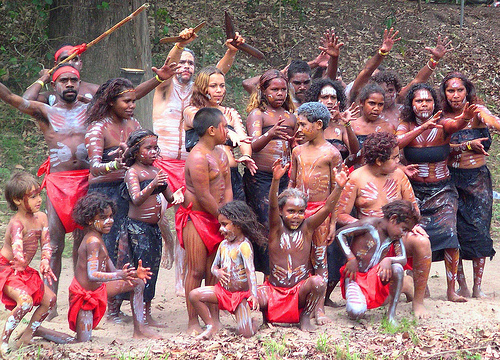
aboriginal-dancers-australia-photo walkabout

(Aboriginal men in Australia mark manhood by going on a long distance trek. Israelis too, are on a “walkabout,” but for love and the environment.)

Although a lot of people are getting into the act for environmental awareness in Israel. An organization that calls itself Walk About Love has decided to go about this in a most unusual way, by doing a “walkabout” of the entire length of Israel, from the southernmost city of Eilat to the foothills of Mr. Hermon in the north (about 1,000 kilometers).

The name of their organization is derived from the Australian term which means to go on a long distance trek, and comes from a walk that young Aborigines go on as part of their initiation into Manhood.

I caught up with the group who were spending the weekend at  a beach resort called Bamboo Village, on  Netanya’s southern beachfront.  A young participant named Avigail said that the group has been involved in a number of environmental related projects since the beginning of the trek on March 1.

The group had set up camp on the Netanya’s Green Beach beachfront and were involved in activities that included Yoga and other health related events, plus a disco tent for partying later that evening. Avigail directed me to another person, Sheri Sidot-Amir, who is one of the organizers of the project.

Sheri, age 40, and a mother, lives in Hod HaSharon, and has worked in occupations such as Graphic Art Design, Marketing, and Education. She became interested in doing something to help further ecology and environmental awareness in Israel and abroad, as well as improving cultural relations between peoples.

Sheri said that activities the project has been involved in up to now have included:

 1. Sharing environmental and cultural ideas with similar groups outside of Israel, including Columbia.

 2. Interacting with Black Hebrews living in Mitzpeh Ramon

 3. Working in an agriculture project in Modiin and with a group of Palestinians at the All Nations Café at the Beitar checkpoint in East Jerusalem

 4. In Jerusalem’s Old City, they participated in a musical jam festival with young Arab youths and in a cross religion and cultural event  ( with a Rabbi, Protestant minister, and priests) at a Franciscan Church

 5. Various community service clean up projects, including helping to clean up the Dead Sea area following a recent Dead Sea Festival “each one of us filled up at least one large garbage sack – and that after the area had been formally cleaned up by area workers!” Sheri said.

Group members have worked in a number of service projects to earn money to continue the journey (including the one at the Dead Sea) and have received assistance from both governmental and private sources, including the Ministry of Tourism, the Jewish National Fund and the Nature Reserves Authority.

Walk About Love video during the day:

Following their stay in Netanya, the group will be going to Hadera, Caesarea, then up north to Kibbutz Ziporit, and eventually to the end of  their journey at Kibbutz Dan in northern Hula Valley.

“We cover between 15 and 20 kilometers a day when on the road,” she added. 

“We have been working on various ecology projects and also conduct workshops to train people to head future environmental projects” she said.

At least 50% of the participants have been tourists, who have participated on a “come and go basis” while going on private tours around Israel. “One of them, a guy named Michael from California, was with us almost the entire time up to now.”

Many of the tourists are non-Jewish and just wanted to be involved with the project.

Sheri hopes that there will be other such events after this one is completed at the end of May. “It’s too early to tell now, as much work has had to be done to get this project going successfully,” she said. 

Go On "Hajj" To Mecca and Medina On Saudi's New High Speed Train

SAUDI ARABIA HAJJMillions of Muslims go on the annual Hajj pilgrimage to Mecca and Medina every year. A new high speed train planned by Saudi Arabia is bound to make the journey smoother, cooler, and much more environmentally-friendly.
The Kingdom of Saudi Arabia has long been thought of as a country where white gowned sheikhs drive luxury American, German, and Japanese cars along desert highways at break-necked speeds from one city or village or another, and then simply dump their car in the desert when it has outlived its usefulness.

Now, it appears that this mode of transportation may finally be augmented by a network of high speed commuter trains, which will be built alongside major highways, and will connect the country’s two holiest cities, Makkah (Mecca) and Medinah with the country’s largest port city, Jeddah.

A joint venture agreement singed between the London based Foster + Partners architecture and planning company, and the Buro Hapold engineering consulting giant (also headquartered in the UK) to design the fast commuter train network, which will connect the Kingdom’s holy sites with a four station train capable of reaching speeds up to 300 km per hour.

The project will be designed to make it easier for religious pilgrims to reach Makkah and Medinah, by an alternative and fast means of transport, other than buses and private vehicles, especially during the annual Hajj pilgrimage, when as many as 3 million pilgrims descend on the country in a short period of time.

Breastfeeding and Keeping Up With "Supply and Demand"

7

mom-kissing-baby photo milk production

Breastfeeding involves no processing and no waste, and helps protect the environment, as we’ve been exploring here on Green Prophet’s breastfeeding series.

Even though breastfeeding is a natural continuation of pregnancy and birth, mothers still worry about producing enough milk. An understanding of  how milk production works can help mothers avoid problems and know when to seek help.

From mid-pregnancy a woman’s breasts produce a concentrated, antibody-rich milk called colostrum. Quantities are small to suit a baby’s tiny stomach.  A few days after birth, the breasts begin to produce large amounts of “mature” milk.  Most mothers experience engorgement at this point, but if the baby has nursed well from birth it may be less noticeable.

Agritech 2009 Expo In Tel Aviv Aims To Help Feed the World

tal-ya-water-israel-dew-collectors
(Tal Ya Water technologies, featured at the Agritech expo in Tel Aviv next week, could provide the world’s best – possibly first – effective dew drop collector for watering crops.)

Growing tomatoes and raising dairy cows in 113 degrees Fahrenheit is no easy feat, but over the last 30 years or so, Israeli agriculture technologies have been made to cope with whatever Mother Nature throws at them.

It’s taken special fans, software, innovative dew collectors, drip irrigation, integrated pest control tactics, and state of the art greenhouses along with some “mother of invention.”

Old Macdonald would be proud: mainly as a means to survive in the hostile desert climate, Israeli agronomists, entrepreneurs, academics, and government agencies, started focusing on agriculture.

The fruits of their labor will be on show next week at Israel’s international agriculture exhibition Agritech, from May 5 to 7 in Tel Aviv.

We Come From Comets, Finds New Icy Research

5

mcnaught-nasa-comet-australia
(A picture taken by NASA of McNaught comet in Australia)

Comets have always fascinated us. A mysterious appearance could symbolize God’s displeasure or mean a sure failure in battle, at least for one side. Now Tel Aviv University justifies our fascination — comets might have provided the elements for the emergence of life on our planet, finds a new study.

While investigating the chemical make-up of comets, Prof. Akiva Bar-Nun of the Department of Geophysics and Planetary Sciences at Tel Aviv University found they were the source of missing ingredients needed for life in Earth’s ancient primordial soup.

“When comets slammed into the Earth through the atmosphere about four billion years ago, they delivered a payload of organic materials to the young Earth, adding materials that combined with Earth’s own large reservoir of organics and led to the emergence of life,” says Prof. Bar-Nun.

Subsidized Sustainable Food Tour in Israel in November

hazonpic1

At Green Prophet, we often post on organic vegetables and dairy products being grown in Israel; this November two Jewish environmental organizations are offering a heavily subsidized chance to see the farms and produce yourself. Hazon (which runs an annual Food Conference in the USA) and the Heschel Center will lead an Israel Sustainable Food Tour from November 15-19.

Trip highlights  include farms near Modi’in and Emek Hefer, as well as  Palestinian organic farms in Wadi Fuqin. The itenerary also includes Jerusalem’s Mahane Yehuda market, Bedouin permaculture sites in the Negev, and Kibbutz Maagan Michael on the Mediterranean coast. In fact, the trip is by happy coincidence a sort of “Greatest Hits of the Green Prophet.”

Hazon’s Web site stresses that the trip is not only about eating, but rather about understanding the complex webs behind Israel’s food delivery system. Some Jewish learning will further round out the itinerary.

The five-day tour is an outrageously cheap $400, although if you are coming from abroad the flight is on you. The application deadline is June 15. Get more information here. (Photo from Hazon.org).

::Hazon website

Swine Flu and The Future of Israeli Pigs – Domestic and "Wild"

10

wild-boar-nose-israel swine flu israel photo
(Israel raises non-Kosher pigs? Yup. And it has a pretty healthy wild population of wild boars, as well).

They are calling to cull all the “swine” in Egypt, as an apparent “pandemic” of swine flu appears to be on the verge of being something out of a nightmarish version of a Stephen King novel. Following the breaking news of more than a hundred deaths from the disease in Mexico, virtually shutting down the country’s Federal District and capital, Mexico City, cases of the disease have appeared in France, the USA, the UK and two cases are reported in Israel.

A 26 year old Sharon region resident is now hospitalized in an isolation section of Laniado Hospital, after returning from a holiday in Mexico with symptoms that resemble this very strong type of influenza, which has symptoms like high fever, coughing, headaches, and other maladies.

Like all cases of flu, including the dreaded avian or bird flu, weaker individuals, including young children, the sick and the elderly, and people with chronic respiratory problems, can develop complications such as pneumonia and heart seizure, that can result in death.

The young man, Tomer Vajim, a resident of Moshav Geulim outside Netanya, went to the emergency room of Laniado after complaining of flu-like symptoms.

Egypt Culls 300,000 Pigs In Response to Swine Flu Virus

81

pigs egypt luxor swine-flu

At the time of writing this post, there are 6 confirmed cases of swine flu now in Israel. Out of fear that the virus might spread to Epypt, authorities there have ordered the slaughter of the country’s 300,000 pigs, reports the Associated Press.

“It has been decided to immediately start slaughtering all the pigs in Egypt using the full capacity of the country’s slaughterhouses,” Health Minister Hatem el-Gabaly told reporters after a Cabinet meeting with President Hosni Mubarak.

Egypt Culls 300,000 Pigs In Response to Swine Flu Virus

At the time of writing this post, there are 6 confirmed cases of swine flu now in Israel. Out of fear that the virus might spread to Egypt, authorities there have ordered the slaughter of the country’s 300,000 pigs, reports the Associated Press. You would assume that Israel being a “kosher” Jewish country wouldn’t be raising pork, but certain loopholes that don’t raise the pigs on the land allow the pig industry to survive.

“It has been decided to immediately start slaughtering all the pigs in Egypt using the full capacity of the country’s slaughterhouses,” Health Minister Hatem el-Gabaly told reporters after a Cabinet meeting with President Hosni Mubarak.

While it’s not exactly clear how swine flu first started –- reports are that it “jumped” to humans in Mexico where the animals where being raised in squalor (and in mass feeding operations) – it is still not sure if killing all pigs will effect the transmission of the flu.

“But where did it originate? David Kirby has some ideas, and they involve “confined animal feeding operations”, or CAFOs. There are hundreds of such operations with pigs in Mexico. The more animals get clustered together, and the more time they spend in that state, the more viruses will spread between them—and the thousands of humans that work at the CAFOs. Free range proponents take note–this could’ve been pevented with more sanitary animal living conditions.”

A Reuter’s report, via the blog ConnectAfrica, also from today, says that Egypt is “just considering” the mass slaughter, and this has been prompted mainly because the pigs in the country are raised in terrible conditions:

““The question now is should we kill them or relocate them, and the prevailing idea now is to kill the existing (pigs) and of course compensate their owners,” cabinet spokesman Magdy Rady said on Wednesday. He put the number of pigs that could be culled at between 300,000 and 400,000, and said a decision was expected in days.

““If you see the conditions of the swine farms in Egypt, they are not healthy at all. They are hazards in themselves, even without the swine flu. That’s why people are really getting afraid,” he told Reuters.”

Will culling all the world’s pigs stop this virus from reaching pandemic proportions?  When will us humans learn that when we don’t treat nature with respect, and raise animals with dignity, that nature will just bite us back.

Update: As of April 30, the cases of swine flu in Israel has been downgraded from 6 to 2

Ronald Macintyre Excavates 'The Nature Of The State'

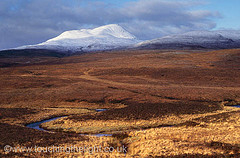
scottish highlands natureReading has its own geography. I read this book The Nature of the State while I traveled back and forth from the West Highlands of Scotland to London for work . . . while Israeli-Palestinian relations erupted into open conflict in Gaza, while fire in Greece turned to fire Australia, while it snowed hard in the South of England, while the rulers of neo-liberal advanced capitalist economies cowed, begged, and then apologised to elected officials.

I read it with the words of the book review editor of Green Prophet in mind: ‘make it relevant to the Middle East.’

The review refused to emerge. I admit this volume sat on various desks and was carried many times in bags back and forth to work and further afield.

I think the reason for keeping hold of the review was fear.

As a UK based researcher I was cautious about how to place this book in a Middle East context. This was compounded by the bombing of Gaza by Israel that ran alongside my reading of the volume, and echoed in my thoughts afterwards. After all, this is a book that explores the relationship between nature, nations and states.

In the UK their charge raises a little static, transposed to a context where the material and symbolic boundaries of these terms are violently contested, it is like a mains shock.