Creators who want to influence people for good should also think carefully about tone. Environmental storytelling does not need to lecture or shame audiences. It can invite curiosity instead.
The company's Next Generation Process (NGP) Pilot Plant in London, Ontario, has officially moved into initial operating campaigns, generating the kind of structured, repeatable data that separates laboratory promise from commercial viability.
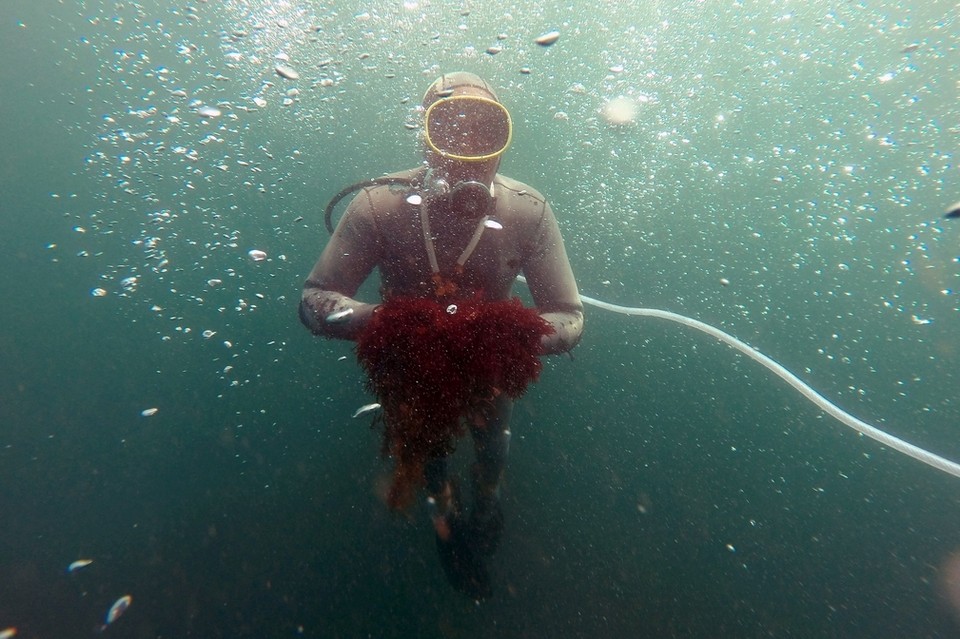
In the modern nutrition universe, that level of commitment deserves an applause. But for those who don’t live in a Nordic fishing village, the nutrition company Zinzino has built its omega-3 research and formulations around these principles, combining biomarker testing, antioxidant protection and traceable sourcing across both sustainably harvested small-fish oils and a vegan marine-microalgae alternative.
Dubai Municipality has set up 12 AI-powered "Ehsan Stations" to safely and officially feed strays. The city also officially supports Trap-Neuter-Return (TNR) programs.
Creators who want to influence people for good should also think carefully about tone. Environmental storytelling does not need to lecture or shame audiences. It can invite curiosity instead.
The company's Next Generation Process (NGP) Pilot Plant in London, Ontario, has officially moved into initial operating campaigns, generating the kind of structured, repeatable data that separates laboratory promise from commercial viability.
In the modern nutrition universe, that level of commitment deserves an applause. But for those who don’t live in a Nordic fishing village, the nutrition company Zinzino has built its omega-3 research and formulations around these principles, combining biomarker testing, antioxidant protection and traceable sourcing across both sustainably harvested small-fish oils and a vegan marine-microalgae alternative.
Dubai Municipality has set up 12 AI-powered "Ehsan Stations" to safely and officially feed strays. The city also officially supports Trap-Neuter-Return (TNR) programs.
Creators who want to influence people for good should also think carefully about tone. Environmental storytelling does not need to lecture or shame audiences. It can invite curiosity instead.
The company's Next Generation Process (NGP) Pilot Plant in London, Ontario, has officially moved into initial operating campaigns, generating the kind of structured, repeatable data that separates laboratory promise from commercial viability.
In the modern nutrition universe, that level of commitment deserves an applause. But for those who don’t live in a Nordic fishing village, the nutrition company Zinzino has built its omega-3 research and formulations around these principles, combining biomarker testing, antioxidant protection and traceable sourcing across both sustainably harvested small-fish oils and a vegan marine-microalgae alternative.
Dubai Municipality has set up 12 AI-powered "Ehsan Stations" to safely and officially feed strays. The city also officially supports Trap-Neuter-Return (TNR) programs.
Creators who want to influence people for good should also think carefully about tone. Environmental storytelling does not need to lecture or shame audiences. It can invite curiosity instead.
The company's Next Generation Process (NGP) Pilot Plant in London, Ontario, has officially moved into initial operating campaigns, generating the kind of structured, repeatable data that separates laboratory promise from commercial viability.
In the modern nutrition universe, that level of commitment deserves an applause. But for those who don’t live in a Nordic fishing village, the nutrition company Zinzino has built its omega-3 research and formulations around these principles, combining biomarker testing, antioxidant protection and traceable sourcing across both sustainably harvested small-fish oils and a vegan marine-microalgae alternative.
Dubai Municipality has set up 12 AI-powered "Ehsan Stations" to safely and officially feed strays. The city also officially supports Trap-Neuter-Return (TNR) programs.
Creators who want to influence people for good should also think carefully about tone. Environmental storytelling does not need to lecture or shame audiences. It can invite curiosity instead.
The company's Next Generation Process (NGP) Pilot Plant in London, Ontario, has officially moved into initial operating campaigns, generating the kind of structured, repeatable data that separates laboratory promise from commercial viability.
In the modern nutrition universe, that level of commitment deserves an applause. But for those who don’t live in a Nordic fishing village, the nutrition company Zinzino has built its omega-3 research and formulations around these principles, combining biomarker testing, antioxidant protection and traceable sourcing across both sustainably harvested small-fish oils and a vegan marine-microalgae alternative.
Dubai Municipality has set up 12 AI-powered "Ehsan Stations" to safely and officially feed strays. The city also officially supports Trap-Neuter-Return (TNR) programs.
Creators who want to influence people for good should also think carefully about tone. Environmental storytelling does not need to lecture or shame audiences. It can invite curiosity instead.
The company's Next Generation Process (NGP) Pilot Plant in London, Ontario, has officially moved into initial operating campaigns, generating the kind of structured, repeatable data that separates laboratory promise from commercial viability.
In the modern nutrition universe, that level of commitment deserves an applause. But for those who don’t live in a Nordic fishing village, the nutrition company Zinzino has built its omega-3 research and formulations around these principles, combining biomarker testing, antioxidant protection and traceable sourcing across both sustainably harvested small-fish oils and a vegan marine-microalgae alternative.
Dubai Municipality has set up 12 AI-powered "Ehsan Stations" to safely and officially feed strays. The city also officially supports Trap-Neuter-Return (TNR) programs.
Creators who want to influence people for good should also think carefully about tone. Environmental storytelling does not need to lecture or shame audiences. It can invite curiosity instead.
The company's Next Generation Process (NGP) Pilot Plant in London, Ontario, has officially moved into initial operating campaigns, generating the kind of structured, repeatable data that separates laboratory promise from commercial viability.
In the modern nutrition universe, that level of commitment deserves an applause. But for those who don’t live in a Nordic fishing village, the nutrition company Zinzino has built its omega-3 research and formulations around these principles, combining biomarker testing, antioxidant protection and traceable sourcing across both sustainably harvested small-fish oils and a vegan marine-microalgae alternative.
Dubai Municipality has set up 12 AI-powered "Ehsan Stations" to safely and officially feed strays. The city also officially supports Trap-Neuter-Return (TNR) programs.
Creators who want to influence people for good should also think carefully about tone. Environmental storytelling does not need to lecture or shame audiences. It can invite curiosity instead.
The company's Next Generation Process (NGP) Pilot Plant in London, Ontario, has officially moved into initial operating campaigns, generating the kind of structured, repeatable data that separates laboratory promise from commercial viability.
In the modern nutrition universe, that level of commitment deserves an applause. But for those who don’t live in a Nordic fishing village, the nutrition company Zinzino has built its omega-3 research and formulations around these principles, combining biomarker testing, antioxidant protection and traceable sourcing across both sustainably harvested small-fish oils and a vegan marine-microalgae alternative.
Dubai Municipality has set up 12 AI-powered "Ehsan Stations" to safely and officially feed strays. The city also officially supports Trap-Neuter-Return (TNR) programs.
If you’re in the South today and haven’t yet seen An Inconvenient Truth, the Watermelon series of six “Green and Red” lectures at Beer Sheva‘s Ashan Hazman cafe/bookshop kicks off with a movie screening and discussion (in Hebrew) at 7 p.m.
For the last few months, Ashan Hazman (The smoke of time) has gradually become a neighborhod sustainability center thanks to the tireless work of local Matan Golan.
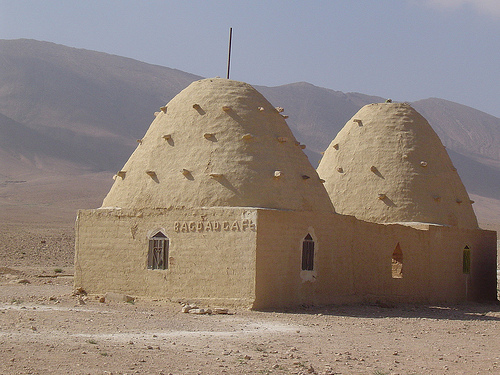
He put up a compost heap in the cafe’s yard, replaced the bathroom sink pipes with a bucket for collecting grey water, and made benches by slathering mud on stacks of books that couldn’t be sold.
The Watermelon Series is sponsored by Ben-Gurion University and the Social-Economic Academy (SEA) a national organization which offers lectures on social issues around the country.
Next week’s lecture, also at 7 p.m., covers the Israeli health system and features Michael Moore’s Sicko. Other topics include the meat industry, the Israel Lands Administration reform (see GP post here), the water crisis and the rising power of Israel’s capitalist class, featuring the movie Shitat HaShakshuka.
Each lecture is NIS 10, or you can buy tickets for all six for NIS 45. For more information, contact SEA Beer Sheva Director Eyal Kosowski at eyalkoso[at]gmail[dot]com.
And if you’re in Beer Sheva all week long, don’t forget about the upcoming Eco-Thiopia festival at Earth’s Promise.
Israeli NGOs, such as Earth’s Promise, are involved with helping Ethiopian populations within the country (check out the Eco-Thiopia festival in Beer Sheva next week). And the Israeli government, apparently, is involved with helping Ethiopian populations… in Ethiopia.
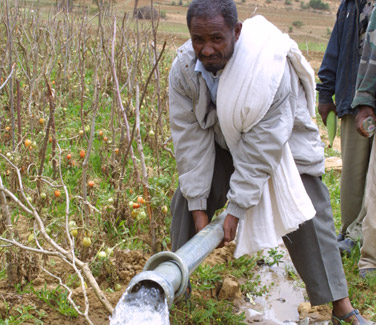
On Wednesday the German Environment Ministry announced that Israel and Germany have launched a joint irrigation project in Addis Ababa, the Ethiopian capital. The initiative is the result of an agreement signed last year between former Israeli foreign minister, Tzipi Livni, and the German Environment Minister. The project aims to provide advice and assistance in implementing efficient and environmentally sustainable irrigation among Ethiopian farmers.
If you are planning to be in Beer Sheva next week, make it Thursday and drop by the Earth’s Promise community garden for a festival of Ethiopian culture.
Earth’s Promise founder Isaac Hametz started the garden about a year ago as a way to help newly arrived immigrants adapt to life in Beer Sheva.
The immigrants, who come from a farming background, tend 50 plots planted with vegetables from Israel and other plants from Ethiopia.
While they plant, their children play in the garden (photo below, by Daniella Cheslow). It’s one of the few green spaces around the Kalisher absorption center.
Instead of using synthetic sponges for your shower and dishes use a luffa! Sponges tend to collect bacteria and for heath reasons should be thrown out 1-2 times a week. But if they are not biodegradable, that is a LOT of waste filling up landfills. Additionally, the “antibactirial” sponges have a chemical called Triclosan which is officially a pesticide. Do you really want to be using that on your dishes? The best part about Luffas, are that they can be grown in your own backyard!
Those of you who have been to Egypt’s eastern Sinai coast can vouch that even though the area is quite lovely, it’s also quite dry – from a freshwater standpoint.
An American desalination company, Energy Recovery Inc (NASDAQ: ERII), is now changing this fact by installing a very unique desalination plant in Sharem al Shiekh that not only supplies an ample amount of potable fresh water to the resorts and private residents of the town, but even enough to supply water for an 18 hole golf course.
Energy Recovery Inc (ERI) has patented a very special process that entails a rotary positive displacement pump that enables normal reverse osmosis desalination plants to “harness” the power from the high-pressure waste streams created by the desalination process.
Nature’s right to water was the focus of the latest conference in the wave of water crisis conferences in Israel in the past month (pun intended).
Giving water back to nature is not exactly top priority when Israelis are trying to limit consumption in order to ensure a source of drinking water for the future. The government is pushing drying up public and private gardens and parks to ease the burden on the already over-pumped Kinneret and underground aquifers.
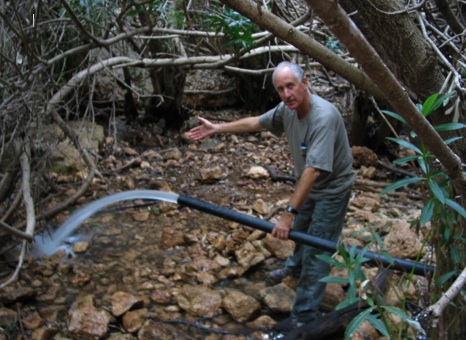
So it’s easy to understand the skepticism that surrounds the idea of pumping clean, drinkable water back into dried-up stream beds, which is exactly what is already happening in several streams in Israel (see below picture of Hillel Glazman of the National Parks Authority “watering” Nahal Betzet).
American ethanol is driving food prices up globally. And this Saudi sheik thinks it’s a bad thing. Time to rethink the allure of biofuels?
There is a lot of debate around the use of ethanol and other plant-based fuels. Many claim that the energy required to produce ethanol (including fertilizers, farm equipment, transformation from plant materials, and transportation) just doesn’t sufficiently counteract all the environmental damage caused by the fossil fuels that is replaces.
So as if the discussion weren’t heated enough… Saudi Arabian scholar (and member of the Saudi Islami Jurisprudence Academy), Sheikh Mohamed Al-Najimi, warned Saudi Arabian students leaving the country for study abroad programs not to use ethanol or other fuels containing alcohol in their cars. It can be complicated avoiding ethanol at the pumps because in some US states it’s mixed in with every fuel type as a blend.
Why Muslims don’t like biofuel?
Because it could be a sin.
The sheikh of Saudi Arabia explained that his statement shouldn’t be considered an official fatwa, but was instead his own personal opinion. And his opinion was based on a saying by the prophet that all kinds of dealings with alcohol – including buying, selling, carrying, serving, drinking, and manufacturing – were prohibited.
One Green Prophet reader writes: “Good old Scholar, Sheikh Mohamed Al-Najimi – considering the fact that ethanol alcohol hand cleansers are already in use all over Saudi Arabia in Hospital to kill bacteria, I’d say he’s a little out of touch with reality!”
The sheikh called for the issue of biofuel usage by Muslims to be discussed more widely by Islamic leaders.
It’s also a conflict of interest when the world’s biggest oil producer condemns biofuel as a replacement to more polluting fuel types like fossil fuels. It sounds more like a convenience to ban ethanol.
In 2020, the Indonesian government launched the biodiesel 30 percent (B30) program in January 2020, which aims to reduce greenhouse gas emissions and fuel imports, as well as to help Indonesia meet its national renewable energy target, among other goals.
“As the world seeks to satisfy the rising demand for affordable power and water, ACWA Power remains committed to being at the forefront of the energy transition and providing transformative solutions, including the early adoption of emerging energy solutions like biofuels, to deliver power responsibly.
“We are delighted to be collaborating with Neutral Fuels, enabling us to accelerate our commitment to support the Kingdom’s ambitions to deliver a tourist destination that limits the environmental impact through the provision of zero-carbon emitting utility services,” said Paddy Padmanathan, President & CEO of ACWA Power.
In the event that the sheikh’s 2009 opinion were made into law, though, it might pose a problem for some Muslim countries and companies that are beginning to support biofuels. This includes Masdar, the renewable energy investment arm of Abu Dhabi’s government.
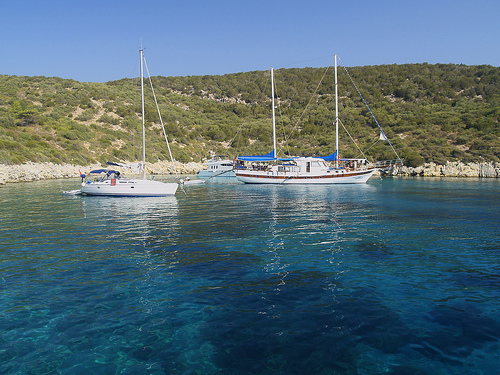
The Turkish Tourism and Culture Ministry is turning the western Bodrum Peninsula into an official tourism site.
The peninsula, located not far from the city of Izmir, will not be turned into a “concrete jungle” the ministry head, Ertuğrul Günay assured concerned residents. Known for its natural beauty, Gunay went on to say “some think that there will be buildings on these areas. I’m completely against creating concrete jungles.
“I don’t like to see concrete buildings when watching the land from the sea.”
Turkey has become a major tourist location in recent years, particularly its southern coast, where resorts in cities like Antalya have become extensively commercialized with lavish resorts, five star hotels and casinos to cater to millions of foreign tourists who are looking for elegant, yet budget priced holiday packages.
Mr. Gunay was quick to make his comments during the country’s June 5th Environment Day commemoration, and said that “no buildings destroying the shores or damaging historical remains will be constructed during or after my term as minister.”
Despite Mr. Gunay’s remarks, however, the Bodrum Peninsula has already been affected by overbuilding, as was shown by comparing two aerial photographs, one taken in 1965, and the other in 2009. Mustafa Öztürk of the ruling Justice and Development Party, or AKP, noted that the problem of overbuilding “is the same not only in the Bodrum area but everywhere throughout the Aegean and Mediterranean.”
He added that the government must take responsibility in areas containing seashores and forests.
Another politician, Kemal Demirel, a member of Turkey’s Environment Commission, commented that “Bodrum’s latest situation proves that Turkey has never had a serious plan for its shores.”
Turkey has a very long marine coastline, with only its eastern border with Russia, Armenia, and Iran, and part of its southern borders with Syria and Iraq being land locked.
Local residents in the Bodrum Peninsula fear that their city and surrounding areas will become “another Antalya.”
“The town (Bodrum) is beyond the point of returning to the old days,” Gürol Ergin of the Republican Peoples Party (CHP) said.
If we’d thought that talk about global warming in the Middle East should stay in the future tense, news from Syria suggests a lot is going to change in these parts, and fast.
A climate change domino effect has caused the eco-migration of villagers from their homes in about 160 Syrian villages, reports the AFP. Reporting from Damascus, some 160 villages in northern Syria were deserted in the years of 2007 and 2008 writes the news wire.
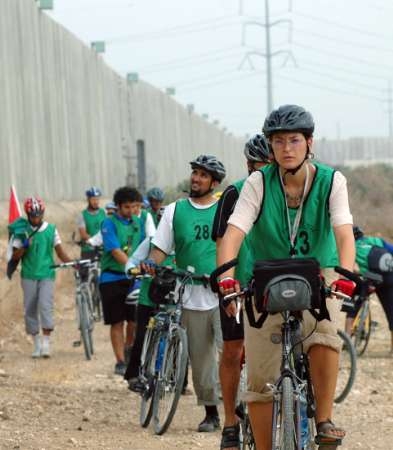
We’ve posted here before about a Walk About Love, a hike for Israel and a bike ride to benefit Israel’s environment. This October, get a more regional view through Peace Cycle, a bike trip from Amman to Jerusalem.
While the rough terrain and stunning views will certainly be rewarding, Peace Cycle’s main purpose is activism on behalf of Palestinians. The trail will start in refugee camps in Jordan, wend through the Arab villages outside of Israeli cities Haifa and Nazereth, and then hit the major urban centers of the West Bank – Jenin, Nablus, Ramallah, Bethlehem and Hebron. Jerusalem is last.
Cellulosic ethanol has often been viewed as the class of ethanol with the most promise, as it converts agriculture and forestry wastes, city sewage treatment wastes, and free growing and specially grown grasses, into usable fuel.
While cellulosic ethanol has the advantage of using a variety of materials that would otherwise be waste products, the limiting factors in the industry have been high costs, low conversion yields, and environmentally damaging practices such as excessive water and Hydrochloric acid use.
Israel’s HCL CleanTech has set out to counter the major issues that the cellulosic ethanol industry is dealing with, through its new method of cellulosic ethanol production that centers around a 97 percent conversion rate from biowaste into biofuel, significantly less the HCL and water use, along with a significantly cheaper production cost.
With the financial crisis effecting more and more people every day and spending becoming significantly more conscious, many consumers are choosing to trim the fat.
Unfortunately, this often means becoming more dollar conscious and less eco conscious.
Greener choices – such as organic, shade-grown, or local – often cost a little bit more, and so another adverse effect of the financial crisis is that the cheaper and more environmentally harmful choices are gaining more popularity.
One green company suffering as a result is No Sweat Apparel, an organic clothing company working exclusively with union shops and run by American entrepreneur Adam Nieman.
Starting in 2006, No Sweat Apparel has been active in the Middle East through its production of organic t-shirts in Bethlehem.
This endeavor both encourages green practices and provides jobs in an area where many are unemployed.
Unfortunately, No Sweat Apparel is not untouched by the financial crisis… hence a current liquidation of their online store. Including the Bethlehem line of organic tees.
There are some very beautiful wine bottles around and it seems a terrible shame to just throw them away. Here are a few ideas of how to harness that beauty and make your house classier as well.
Some fancy restaurants use empty wine bottles to serve water. It certainly looks more elegant than a plastic soda bottle and even nicer than some pitchers.
Do you ever make homemade sauces, cordial or liqueur? Fill your old wine bottles with one of your products. Make sure you clean and sterilize the bottles properly before you fill them. If you want to go the extra mile you can put a pretty label of your own design on it and give it for a gift.
You can also use them as a candle stick. As the candle burns it decorates the outside of the bottle with wax. As you use more candles it can become very colorful!
With the help of a wine bottle you can also save a lot of water each day. In fact, with every flush.
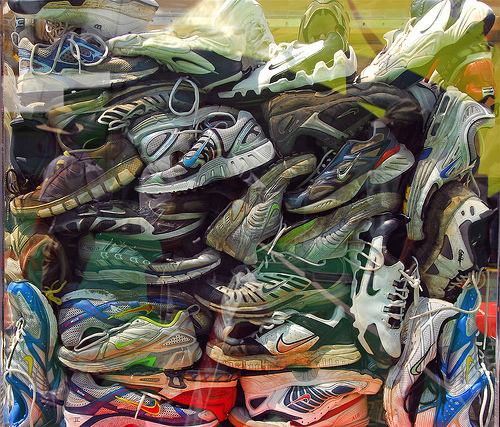
During the week of June 7, 2009, Deloitte released a survey indicating the extent of how hard hit VCs have been and that changes are on the way. Phoebus Energy raised $1 million and AORA’s hybrid solar-gas turbine will be turning on soon. Nike’s shoe recycling project is now in Israel and an agreement on funding for expanding the desalination plant in Hadera was reached. For these stories and the rest of this week’s 10 Israel-related cleantech headlines, see below.
A UN worldwide tree planting campaign has now reached the 4 billion mark in its drive to plant 7 billion trees world wide.
The campaign is being undertaken to fight the effects of climate change; as well as to prevent soil erosion, one of the most common reasons for desertification in many parts of the world.
More than 169 countries will have taken part in the campaign, scheduled to finish by the end of 2009. Some countries near the Middle East that so far benefited the most form this campaign include Ethiopia, which received 687 million trees in 2008, Lebanon, Turkey (300 million trees), Pakistan (120,000 million trees pledged), and Turkministan (150 million trees pledged).


 If you’re in the South today and haven’t yet seen An Inconvenient Truth, the Watermelon series of six “Green and Red” lectures at Beer Sheva‘s Ashan Hazman cafe/bookshop kicks off with a movie screening and discussion (in Hebrew) at 7 p.m.