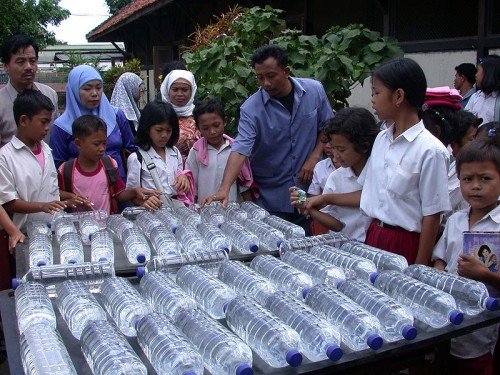
Plant pathologist Norman Borlaug, 95, died this Saturday, raising questions about the legacy of industrial food in the Third World. In 1970, Borlaug received a Nobel Peace Prize for averting famine through bringing fertilizers, pesticides and new plant strains to countries like India, Mexico and Pakistan. But environmentalists argue that his plant engineering only delayed catastrophe at great ecological costs.
According to the Washington Post, Borlaug grew up in Iowa and was touched by the lines of people in bread lines during the Great Depression. He wanted to solve the issue of hunger. After getting his Ph.D in plant pathology in 1942, he worked on a team requested by the Mexican government to increase wheat production. First, he grew wheat in two seasons rather than one. Then, Borlaug developed a short-stalked “dwarf” wheat because fertilizer had made the old variety so tall the stalk fell over.
With Mexico on his resume, Borlaug went to develop dwarf rice species for Southeast Asia. By the end of his career, according to his foundation, the World Food Prize, he had programs in Latin America and Southeast Asia, along with a fat portfolio in the Middle East: Beginning in the early 1960’s, his approach to wheat breeding was introduced in Egypt, Tunisia, Syria, Iran, Libya, Jordan, Lebanon, Turkey, Iraq, Afghanistan, Algeria and Saudi Arabia. By the mid-1980s, he was pushing for a Green Revolution in Africa, too.

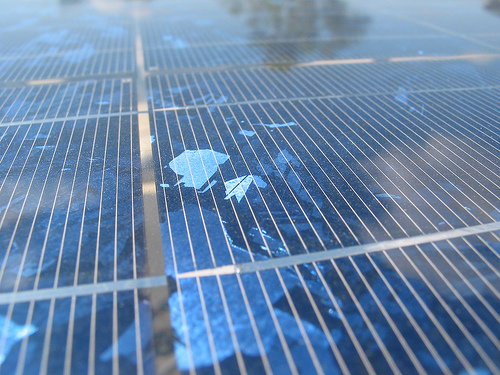
 Future investors in Israeli businesses may be able to judge a company by its green record. According to the Jerusalem Post, last week the Environmental Protection Ministry, financial groups, the European Commission green and the green umbrella organization Life and the Environment, got together to hash over a green metric system.

 If asked whether the glass is half empty or half full, we’re pretty sure that Israeli artist Cecilia Cohen would say full. Full of possibilities.


 With the Jewish New Year (Rosh Hashanah) coming up this week, many of us are reflecting on the past year and making resolutions for the next. These resolutions may include ways to treat ourselves better, ways to be better to those around us, and ways to make a more positive impact on our surroundings.

 Israel was the only Middle East representation to make the new Global Cleantech 100 list, and according to the survey 5 companies made the cut.