Home Blog Page 687

NATO Aids Water Bridge Between Jordan, Israel and the US

5

clinton-rabinIsrael and Jordan share environmental problems, but regional politics and prejudices – despite a peace agreement – keep them from solving them together.

A new North Atlantic Treaty Organization (NATO) grant set up to develop two inland water desalination plants – one in Israel and one in Jordan – not only gets two Middle East universities collaborating, but the end-product could quench the region’s thirst. It could also boost an under-used new technology that promises to save energy and water the world over.

According to the terms of the project, three universities – Ben Gurion University in Beersheba, the Hashemite University of Jordan and the University of Colorado in the United States – are to implement a new Israeli reverse osmosis desalination technology at two pilot sites.
Tel Aviv Pushes Green Metric

2

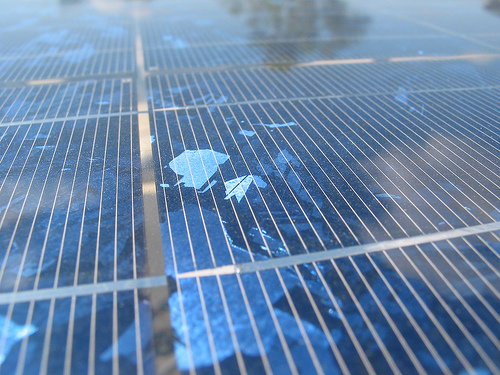
solar-panelsFuture investors in Israeli businesses may be able to judge a company by its green record. According to the Jerusalem Post, last week the Environmental Protection Ministry, financial groups, the European Commission green and the green umbrella organization Life and the Environment,  got together to hash over a green metric system.

Opinion writer Asher Meir noted a few potential pitfalls – how can the environmental parameters ensure accuracy, how much will it cost, and who will keep tabs on smaller companies?

Meet Inbal Limor Who Is Upcycling Jaffa's Junk Into Art

8

inbal-limor-israel-artistGreen Prophet loves to feature Middle East designers and artists who are turning junk into art. Meet Inbal Limor, who we’ve featured before as an “artist in transition”:

A few blocks from where artist Inbal Limor lives in Jaffa, Israel, is a junk collector’s dream. The Florentine neighborhood in South Tel Aviv is crammed with furniture studios, carpentry shops and young fashion designers who all throw their scraps and odds and ends into the big metal dumpsters that line the street.

Unlike in New York, the dumpsters in Israel considerately open from the side, making it easier to pull out finds without having to commit and dive inside.

The dumpsters hold a treasure trove of bags bursting with scraps of material, wooden blocks and furniture, old and new magazines, blueprints, stuffing, plastics and Styrofoam.

The 29-year-old collects all these, transforming them into paintings, sculptures, crafts and art. Limor is a little reluctant to divulge her trade secrets but she is willing to reveal that one of her best hunting spots is Jaffa’s nearby shuk (flea market).

She doesn’t go there to shop. After the garbage collectors sell whatever they can for pennies and dollars, they toss the “garbage of the garbage” left over from the day back onto the street.

Cecilia Cohen's Recycled Artwork Teaches Us That When the Beer Bottle is Empty, the Possibilities Are Full

3

cecilia cohen recycled glass beadsIf asked whether the glass is half empty or half full, we’re pretty sure that Israeli artist Cecilia Cohen would say full.  Full of possibilities.
A self-described “mother earth type”, Cecilia has always been conscious of her impact on the environment and is the kind of person “who worries about the survival of coral and bats and picks up garbage at the beach.”  She has brought this awareness to her art production and business practices.

Working mostly with glass and in a wide variety of ways, Cecilia creates beads, jewelry, boxes and other decorative items, all the while constantly finding ways to recycle and upcycle.  She transforms wine and beer bottles into beads (as shown above), old jewelry into stained glass, and integrates found shards of ancient pottery into her designs (as seen below).  She finds uses for even the smallest pieces of material, rather than throwing them away.

IQwind and 7 Israel-related Cleantech Headlines, Week of September 6, 2009

3

solar-panels

During the week of September 6, 2009, IQwind was named a top 100 cleantech company. Researchers at Ben Gurion University announced that they developed thin films that have potential for solar applications and Norman Borlaug, Father of the “Green Revolution,” passed away. For these stories and the rest of this week’s 7 headlines, check below.

Water
Environmentalists blast Mideast water projects

Solar
Ben-Gurion University of the Negev develops thin films showing promise for solar applications

Bechtel to Build Solar Plant in California

Phone home with Israeli solar cells

In Israel
GoEco Pioneers Volunteer Eco Tourism in Israel

Wind
IQwind Ltd. Named a Global Cleantech 100 Clean Technology Company

Miscellaneous
Father of “Green Revolution” Leaves Behind Big Questions

Turkey Rivals Iran as Pomegranate Powerhouse

2

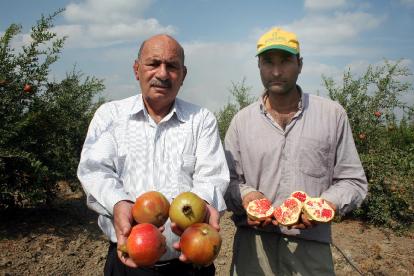
pomegranates-turkeyAlthough Iran holds the world title for pomegranates, runner-up Turkey is expecting a bumper crop this year that could propel it into the top spot. The Hurriyet Daily News reports that as world demand for pomegranates rises, Turkey has converted field after field of relatively unprofitable cotton over to the crowned red fruit that features prominently in the upcoming Jewish New Year (Rosh Hashana), which starts Friday.

Turkey’s pomegranate exports more than doubled between 2006 and 2008; last year it sent abroad 29,000 tons.

Experts credit the expansion to the easy payout, government incentives and skyrocketing demand. Ali Ergezer, the chairman of the chamber of agriculture in the pomegranate city of Tarsus, said the future looks good:

Father of "Green Revolution" Leaves Behind Big Questions

7

norman-borlaugPlant pathologist Norman Borlaug, 95, died this Saturday, raising questions about the legacy of industrial food in the Third World. In 1970, Borlaug received a Nobel Peace Prize for averting famine through bringing fertilizers, pesticides and new plant strains to countries like India, Mexico and Pakistan. But environmentalists argue that his plant engineering only delayed catastrophe at great ecological costs.

According to the Washington Post, Borlaug grew up in Iowa and was touched by the lines of people in bread lines during the Great Depression. He wanted to solve the issue of hunger. After getting his Ph.D in plant pathology in 1942, he worked on a team requested by the Mexican government to increase wheat production. First, he grew wheat in two seasons rather than one. Then, Borlaug developed a short-stalked “dwarf” wheat because fertilizer had made the old variety so tall the stalk fell over.

With Mexico on his resume, Borlaug went to develop dwarf rice species for Southeast Asia. By the end of his career, according to his foundation, the World Food Prize, he had programs in Latin America and Southeast Asia, along with a fat portfolio in the Middle East: Beginning in the early 1960’s, his approach to wheat breeding was introduced in Egypt, Tunisia, Syria, Iran, Libya, Jordan, Lebanon, Turkey, Iraq, Afghanistan, Algeria and Saudi Arabia. By the mid-1980s, he was pushing for a Green Revolution in Africa, too.

Table to Table "Recycles" Left Over Food to the Needy

1
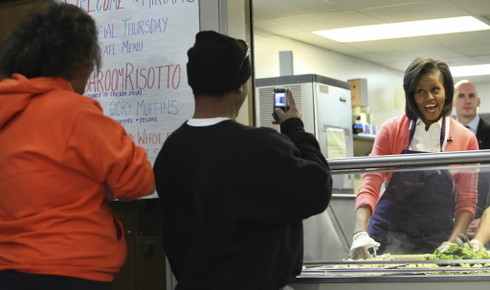
A special "volunteer" serves the needy
A special “volunteer” serves the needy

You’ve read many Green Prophet articles dealing with all kinds of recycling; ranging from paper and plastic materials , to plant and animal refuse for use as compost heaps.

But not a lot has been mentioned concerning a very important and essential type of “recycling” that not only is environmentally friendly, but also helps to provide food for those less fortunate in Israel, and in other parts of the world.

This type of recycling involves an organization known as Table to Table, which provides left over food from restaurants and social events, surplus farm produce, and other sources (hospitals and other institutions, etc) and distributes this food to needy people.

Israel’s Table to Table NGO is based on an American version bearing the same name and headquartered in New Jersey.

Have a Sweet and Green Rosh Hashanah

19

plastic yarn pomegranate limitzWith the Jewish New Year (Rosh Hashanah) coming up this week, many of us are reflecting on the past year and making resolutions for the next.  These resolutions may include ways to treat ourselves better, ways to be better to those around us, and ways to make a more positive impact on our surroundings.

Making a green resolution is a way to do all of those things at once.  Need help thinking of one?  Here are just a few ideas to get you started:

Make your own… fill in the blank.  Make your own tomato sauce, grow your own vegetables, craft your own gifts, sew your own clothes and for those adventurous ones out there – make your own energy by building a solar oven.  Making your own saves precious fossil fuels and reduces waste, but you can also look at it as an opportunity to fuel your creativity.

Buy local, handmade and recycled.  If you must buy, buy something that is local, handmade, and that has been given a second (or third, or fourth, or fifth) life.  Local food is a given, and if it can be as local as your window sill or backyard then all the better.  But what about everything else?  Need some notebooks from school?  A new sweater?  A gift for someone?  Be conscious of your choices and of the impact that your consumerism makes.  If you need help finding things that fit these categories, try looking locally on Etsy or shopping Etsy’s ecoetsy category.  (The above pomegranates, handmade out of upcycled plastic yarn, were created by Israeli Etsy seller LIMITZ – stay tuned next week for a feature on her upcycled designs.)

New ideas for dusty kitchen curios

2

bundt pan jewelry boxThink Again is a series that provides fun ideas for how to reuse items in your home that you would normally throw out or recycle.  Reusing is higher on the “green” food chain than recycling, because getting another use out of an object is always more effective than spending the energy to recycle it.  Plus, trying to reuse can force us to be creative!

The Think Again series has featured mini projects so far, but sometimes reusing an item literally means just thinking again.  Look at an item that you have in a different way, turn it over or on its side, and think of a new use for it.

So why not start with an area of our homes that needs some decluttering anyway – the back of the kitchen cabinet, home of all those unused kitchen appliances?

GoEco Pioneers Volunteer Eco Tourism in Israel

4

volunteer ecotourism nazarethThere are plenty of eco tourism options all over the Middle East.  With the vast range of habitats present in this relatively small region, it’s no wonder that eco tourism is gaining popularity in Egypt, Jordan, Syria, Lebanon, Yemen, Iran and Israel.

But volunteer tourism?  That’s something new.

GoEco, a volunteer organization established in 2005 by Jonathan Gilben and Jonathan Tal (both of whom have degrees in Environmental and Geographical Studies), is a pioneer in introducing the concept of volunteer tourism to Israel.  Volunteer tourism is a relatively new field in which travel benefits not only the tourist but the community that he or she visits.

Gilben said about GoEco‘s mission that “we believe in giving tourists the opportunity to get involved with the communities they visit… GoEco is the first and only volunteer tourism organization in Israel, and we have directed many participants to programs in Israel and abroad that are both inspirational and fun.”

We hope that the concept of volunteer tourism spreads all over the Middle East.

GoEco’s first volunteer project was an Israeli Sea Turtle Rescue Center in Michmoret, on the Mediterranean Sea, in the summer of 2006.  Since then they have successfully organized volunteer projects in Israel and all over the world – in locations such as Nepal, Thailand, South Africa, Kenya, Uganda, Namibia, and Zimbabwe.

Global Cleantech 100 Includes 5 Israeli Companies

11

wind-turbineIsrael was the only Middle East representation to make the new Global Cleantech 100 list, and according to the survey 5 companies made the cut. 

According to the search engine on the Guardian, only 4 made the cut, they are water purification company AqWise, solar company Solel Solar Systems, energy storage company EnStorage, wind energy gear box company IQWind. 

Additionally, Better Place, the electric car company which is registered as a US company, but founded by Israelis, made the cut; as did BrightSource the solar energy company, also founded by Israelis.

The list is developed by the UK-based newspaper, The Guardian and the Cleantech Group which providers of leading research, events and advisory services for the cleantech world. Supported by the Carbon Trust, the Global Cleantech 100 recognises companies at the forefront of cleantech innovation offering solutions to some of the world’s most pressing environmental challenges.

Reuse Your Pillows!

3

pillow-fightPillows are made of not the best synthetic material for landfills. That plus the fact that pillow manufacturing companies recommend getting new ones every 6 months – 2 years. That can lead to a lot of unhealthy non-degradable fluff filling up our dumps.

The good news is that there are plenty of wonderful ways to reuse your old pillows, just make sure that you wash them first…

  • Use the stuffing to pad new pillows making them even firmer!
  • Donate them to a local animal shelter. What isn’t fluffy enough for you is a pillow heaven for an unwanted puppy.
  • Make decorative pillows for your living room and use the old pillows to stuff them.
  • Save them for the next time you pack. Your dishes will never have a smoother move.

Image Credit: Pensiero

Dead Sea and 8 Israel-related Cleantech Headlines, Week of August 30, 2009

2

gulf of aqaba moses rock

During the week of August 30, 2009, news included that the Dead Sea is drying quicker than usual. Israeli and Jordanian scientists have come together to study and protect the Gulf of Aqaba in the south and wastewater treatment company, BPT announced that it raised $12 million. For these stories and more see the headlines below.

Investments
Israel’s BPT Raises $12M For Clean Water Technology

Siemens, Areva, Alstom Said to Bid for Israeli Solar Firm Solel

Projects
Jordanian and Israeli Scientists Collaborate to Study and Protect the Gulf of Aqaba

A solar-powered COMET lights up Palestinian homes

Solar
AlwaysOn Names 2009 GoingGreen 100 and Overall Winner BrightSource Energy

Israel Pioneering Use of “Bottled” Solar Energy Has Many Following Suit

Environment
Dead Sea drying quicker than usual

Wind
Wind turbine project gathers steam

Israel Firm "WaterSheer" Sends Emergency Equipment to Typhoon-Battered Taiwan

4

sulis-water-gadget-israel photoTAIPEI, TAIWAN — When Typhoon Morakot hit Taiwan in early August, causing massive landslides in the southern part of the country, Israel, as soon as the extent of the destruction was known, sent Israeli-made water-purification equipment and high-speed water transport equipment to Taiwan.

The monster typhoon hit on August 8, causing widespread flooding in the south — the worst in over 50 years — and leading the death of over 700 people in remote villages in mountainous terrain. By August 13, Israel answered Taiwan’s call for help with a shipment of water-purification equipment, according to Raphael Gamzou, head of the Israeli Economic and Cultural Office, which serves as Israel de facto embassy in Taipei in the absence of formal diplomatic relations.