Before promoting sustainability progress, companies must ensure their initiatives are genuine and measurable. Today’s audiences are increasingly skeptical of vague environmental claims, particularly as awareness of “greenwashing” has grown.
Sydney is best known for the Opera House and the Harbour Bridge. If you’re looking to enjoy dinner with views of these landmarks, here are some great options.
It's sea turtles which may in the end save islands in the Seychelles. They may also better help us understand climate change. Like rings on a tree, scientists have found a way to read sea turtle shells and how they are impacted by climate change tells a story.
For centuries, the Sámi shaman drum was one of the most powerful sacred objects in northern Europe, and one of the most feared by church and state. If ISIS looks bad to us today for its religious fundamentalism, Christians were just as fervent.
Before promoting sustainability progress, companies must ensure their initiatives are genuine and measurable. Today’s audiences are increasingly skeptical of vague environmental claims, particularly as awareness of “greenwashing” has grown.
Sydney is best known for the Opera House and the Harbour Bridge. If you’re looking to enjoy dinner with views of these landmarks, here are some great options.
It's sea turtles which may in the end save islands in the Seychelles. They may also better help us understand climate change. Like rings on a tree, scientists have found a way to read sea turtle shells and how they are impacted by climate change tells a story.
For centuries, the Sámi shaman drum was one of the most powerful sacred objects in northern Europe, and one of the most feared by church and state. If ISIS looks bad to us today for its religious fundamentalism, Christians were just as fervent.
Before promoting sustainability progress, companies must ensure their initiatives are genuine and measurable. Today’s audiences are increasingly skeptical of vague environmental claims, particularly as awareness of “greenwashing” has grown.
Sydney is best known for the Opera House and the Harbour Bridge. If you’re looking to enjoy dinner with views of these landmarks, here are some great options.
It's sea turtles which may in the end save islands in the Seychelles. They may also better help us understand climate change. Like rings on a tree, scientists have found a way to read sea turtle shells and how they are impacted by climate change tells a story.
For centuries, the Sámi shaman drum was one of the most powerful sacred objects in northern Europe, and one of the most feared by church and state. If ISIS looks bad to us today for its religious fundamentalism, Christians were just as fervent.
Before promoting sustainability progress, companies must ensure their initiatives are genuine and measurable. Today’s audiences are increasingly skeptical of vague environmental claims, particularly as awareness of “greenwashing” has grown.
Sydney is best known for the Opera House and the Harbour Bridge. If you’re looking to enjoy dinner with views of these landmarks, here are some great options.
It's sea turtles which may in the end save islands in the Seychelles. They may also better help us understand climate change. Like rings on a tree, scientists have found a way to read sea turtle shells and how they are impacted by climate change tells a story.
For centuries, the Sámi shaman drum was one of the most powerful sacred objects in northern Europe, and one of the most feared by church and state. If ISIS looks bad to us today for its religious fundamentalism, Christians were just as fervent.
Before promoting sustainability progress, companies must ensure their initiatives are genuine and measurable. Today’s audiences are increasingly skeptical of vague environmental claims, particularly as awareness of “greenwashing” has grown.
Sydney is best known for the Opera House and the Harbour Bridge. If you’re looking to enjoy dinner with views of these landmarks, here are some great options.
It's sea turtles which may in the end save islands in the Seychelles. They may also better help us understand climate change. Like rings on a tree, scientists have found a way to read sea turtle shells and how they are impacted by climate change tells a story.
For centuries, the Sámi shaman drum was one of the most powerful sacred objects in northern Europe, and one of the most feared by church and state. If ISIS looks bad to us today for its religious fundamentalism, Christians were just as fervent.
Before promoting sustainability progress, companies must ensure their initiatives are genuine and measurable. Today’s audiences are increasingly skeptical of vague environmental claims, particularly as awareness of “greenwashing” has grown.
Sydney is best known for the Opera House and the Harbour Bridge. If you’re looking to enjoy dinner with views of these landmarks, here are some great options.
It's sea turtles which may in the end save islands in the Seychelles. They may also better help us understand climate change. Like rings on a tree, scientists have found a way to read sea turtle shells and how they are impacted by climate change tells a story.
For centuries, the Sámi shaman drum was one of the most powerful sacred objects in northern Europe, and one of the most feared by church and state. If ISIS looks bad to us today for its religious fundamentalism, Christians were just as fervent.
Before promoting sustainability progress, companies must ensure their initiatives are genuine and measurable. Today’s audiences are increasingly skeptical of vague environmental claims, particularly as awareness of “greenwashing” has grown.
Sydney is best known for the Opera House and the Harbour Bridge. If you’re looking to enjoy dinner with views of these landmarks, here are some great options.
It's sea turtles which may in the end save islands in the Seychelles. They may also better help us understand climate change. Like rings on a tree, scientists have found a way to read sea turtle shells and how they are impacted by climate change tells a story.
For centuries, the Sámi shaman drum was one of the most powerful sacred objects in northern Europe, and one of the most feared by church and state. If ISIS looks bad to us today for its religious fundamentalism, Christians were just as fervent.
Before promoting sustainability progress, companies must ensure their initiatives are genuine and measurable. Today’s audiences are increasingly skeptical of vague environmental claims, particularly as awareness of “greenwashing” has grown.
Sydney is best known for the Opera House and the Harbour Bridge. If you’re looking to enjoy dinner with views of these landmarks, here are some great options.
It's sea turtles which may in the end save islands in the Seychelles. They may also better help us understand climate change. Like rings on a tree, scientists have found a way to read sea turtle shells and how they are impacted by climate change tells a story.
For centuries, the Sámi shaman drum was one of the most powerful sacred objects in northern Europe, and one of the most feared by church and state. If ISIS looks bad to us today for its religious fundamentalism, Christians were just as fervent.
This “Noah’s Ark” sculpture above is part of an environmental community project run by Haggit Rich of SafsaPesel in Israel.
In her workshops, groups make usable sculptures for kindergartens, schools and parks. Once Rich and the children decide on a project, they collect materials such old bottles, tires and newspapers. These discarded items form the foundation. It’s a nice way to get kids creative and learning about environmental concepts. Read on for more pictures.
Noam Dolgin: Jewish religious values can help green The Holy Land.
Noam Dolgin is a Jewish environmental educator and the executive director of the Green Zionist Alliance (GZA). Based in Vancouver, Canada, he travels regularly around North America teaching about Jewish
environmental values and Israel’s environment.
Green Prophet sits down with Noam to learn a little more about the Green Zionist Alliance and what it does.
What are your organization’s core activities, when was it founded, why?
The GZA was founded in 2001 to be the first environmental party at the World Zionist Congress. Our original goals where to green the Zionist movement and its constituent agencies, such as Keren Kayemet L’Yisrael (Jewish National Fund), through our involvement with the Congress. In 2006, when we became a 501(c)3 nonprofit, we expanded our scope to include educational programming and become the full-time Diaspora voice for Israel’s environment
Why green Zionism? What’s the connection?
Zionism is green at its core because the Land of Israel has always been central to the Zionist philosophy. When the Uganda option was debated, it became clear that there could be no Zionism without Zion. To that end, many early Zionist pioneers came to Israel to work the land the way our ancestors did.
I believe that protecting the land continues to be a central value of Zionism. Without an intact ecosystem, access to drinking water, agricultural land and clean air, both Israeli citizens and their economy are threatened. Moreover, solving these environmental challenges is essential to creating a lasting peace in the Middle East.
What is the role of the Jewish Diaspora in this organization?
We are a Diaspora-based organization. While we have members in Israel, and we do work in Israel, the majority of our members are in the Diaspora and one of our main missions is to connect Diaspora Jews to Israel’s environment.
What role do you see for religion in general (Islam, Judaism, Christianity) for helping improve environmental awareness in the Middle East?
Jewish ethics have much to offer when it comes to building a modern environmental ethic. Values such as ‘Bal Taschit’, (not wasting) ‘Tzaar Baalei Chayim‘ (animal welfare) and a general care for creation are as relevant today as they have ever been.
Since the Land of Israel is core to Jewish values and it is important in Islam and Christianity as well, it is our collective moral and religious obligation to protect the Holy Land.
Tell us about one of your organization’s biggest successes.
Through appointing leading Israeli environmentalists, such as Alon Tal, to the KKL board of directors, we have had a direct impact on Israel’s environment, including making sustainable afforestation the top KKL priority, declaring new nature preserves, and implementing the Trans-Israel Bike Trail and the Kinneret Circumference Trail.
Faith-based groups from all religions are getting more involved in using their religion as means to educate about the environment. To learn more about the Green Zionist Alliance visit their website.
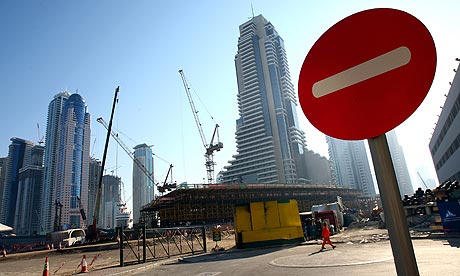
Proposed vertical farms like this one in Dubai may be the only way for supplying food to Middle East countries.
Dickson D. Despommier is a professor of public health at Columbia University in New York, and if he gets his way, the future will be full of “vertical farms’ (a farm on every floor) in cities across the world, including major players in the Middle East.
In a recent oped column in the New York Times, Despommier looked into his crystal ball and came up with these insights as to why.
Want to test drive Better Place’s electric car at climate event of the year?
The biggest international green event of the year is happening from December 7 in Copenhagen, Denmark. The climate change event is meant to set global standards to stop climate change. Want to go zoom zoom in the electric car of the future?
Press who will be attending the event are invited to test drive Better Place and Renault’s electric car for a full EV driving experience, Better Place reports. Read on for more details.
ETV Motors claims their recently unveiled proof-of-concept vehicle can run for 50 miles on one charge. Watch their video, courtesy of ISRAEL21c.
The new ETV jet turbine engine generates its own electricity to recharge the battery pack and is different from the Prius and other hybrids (read the pleasure of owning one) because “it’s always electric power that powers the wheels, whereas with the Prius, sometimes it’s electric power, sometimes it’s the energy generated by the pistons,” says Arnold Roth, COO of ETV.
The jet turbine won’t be used to propel the car, but will generate electricity to periodically recharge the battery packs. The engineers at the Israeli company, from the former Soviet Union, were the fathers of the MIG and the Russian jet turbine industry.
With $12 million in investments, ETV Motors, based on the central coast of Israel in Herzliya, recently unveiled a proof-of-concept vehicle that the company claims can run for 50 miles on one charge, reportedly twice as far as other electric hybrid cars in development.
Care about alternative energy and an oil-free future? Then you might want to meet Prof. Doron Aurbach who is working to “green” the battery industry, making better, long-lasting batteries to store clean power. He’s now collaborating with LG on a new magnesium battery.
He developed the first rechargeable lithium battery, and now Prof. Aurbach and his team of 35 may develop the first rechargeable magnesium battery.
The story of Israel’s most prominent battery researcher has a shaky beginning. Prof. Doron Aurbach’s parents both pulled themselves from the ashes of Nazi death camps to cobble together a new life in Israel. Into their first son Doron they poured their own lost education, their hopes and their dreams.
Some hopeful news: a group of coral, located near the Persian Gulf off-shore Safaniyah oil field, was in danger of being destroyed by an oil pipeline being laid in the area where they were located.
Planting berries as a means for financial independence in the West Bank.
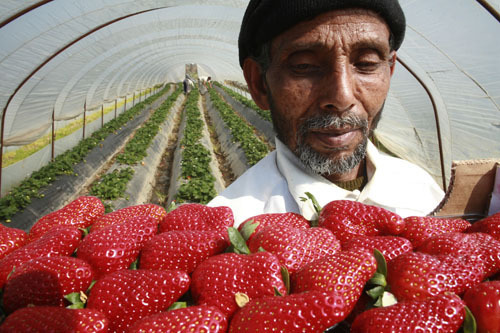
This story has been reported by the Mideast News Source, the Media Line: There was a time when Kalkilya was the focus of bomb making and terrorism but a new program is aiming to turn this Palestinian city into the strawberry capital of the West Bank.
The first crop of the ruby red fruit in this pilot program is halfway to harvest. The Palestinians hope to be able to cash in on the lucrative Christmas markets in Europe and possibly sell strawberries to a major international ice cream producer.
“I grow strawberries here, and this is where it starts,” said Ahmed Zed, 31, a Palestinian carrot farmer who decided to take up the risky endeavor and grow strawberries.
“Inshallah (God willing) we’ll get the support we need and we’ll become millionaires,” he told The Media Line during a visit to his fields, adjacent to the security barrier Israel set up five years ago.
But Dubai’s real estate debt crisis may not be as serious as people think, according to comments made over the weekend by CNN’s Jim Boutin and Financial Times correspondent Simon Kerr.
Speaking on a CNN financial new program, dealing with the effects of the so-called “Dubai Domino Effect” Kerr said that Dubai is “set to start a press campaign, headed by senior members of the supreme fiscal committee and department of finance aimed to reschedule the $25 billion in bad debts around Nakheel and Istithmar, developers of the Dubai World island project.”
The plan involves issuing special bonds, known as Sukuk or Islamic bonds, in order to defer the debt on assets that have a current estimated market value of more than $75 billion over the next few years.
Most of us are familiar with the movie Fight Club, where the protagonist’s house is blown up as a result of a gas leak. Gas leaks are serious, if you smell a leak you should stop what you are doing immediately and call a technician.
However, not all leaks are noticeable. You may have a small leak where the gas dissipates before you can smell it. The good news is that most gas suppliers offer a free yearly check. So call up your gas provider and ask them to send someone your way.
Also, make sure that the areas in your home that use gas – kitchen, heaters – are well ventilated. While natural gas is relatively clean, one byproduct is carbon monoxide. If you do not ventilate properly, your oxygen supply will be depleted.
Israeli-Arab Dr. Sobhi Basheer of TransBioDiesel: using his experience with enzymes to replace conventional polluting practices.
Many people today know that science can make biofuel from organic waste. But what a large percentage of people don’t realize is that the biofuel process actually creates pollution and waste. Looking to minimize the damage, and set an example for his community in Israel, is Dr. Sobhi Bashee, founder of TransBioDiesel based in Shfar’am, Israel.
Bashee has developed a catalyst-based solution that helps create usable fuel from organic materials, while reducing the toxic wastewater produced in the process. The biocatalysts he develops are environmentally benign, he tells ISRAEL21c, and can lower the total production costs of biodiesel fuels.
Rima Malallah, a young woman living and creating in Amman, Jordan, is bringing her colorful handmade art to the Ammanian masses. Different from other galleries in Amman, Malallah offers a wide variety of products (including original paintings, prints, postcards, journals, cards, jewelry, handpainted ties, hand-knit scarves, bottle vases, key chains and coasters) and encourages interaction with her clients. Customers can walk in and commission a piece from her directly.
What this means, in “green” terminology, is that Jordanians have a colorful, fun place to buy local, handmade products instead of imported, machine-made products that take their toll on the environment.
Malallah’s store is called Love on a Bike and opened in July 2007. It is located in the Jabal Amman neighborhood and, appropriately, right off of Rainbow Street. The bright colors and reasonable prices make it a luring attraction.
Encouraging people to develop a love for making handcrafted arts themselves, Malallah hosts a knitting circle at her shop every Saturday.
In advance of Copenhagen, a new survey shows that Israelis seek action against climate change.
The Israeli public is a few steps ahead of its government in wanting to see strong action on climate change, according to a new poll conducted by Ben Gurion University.

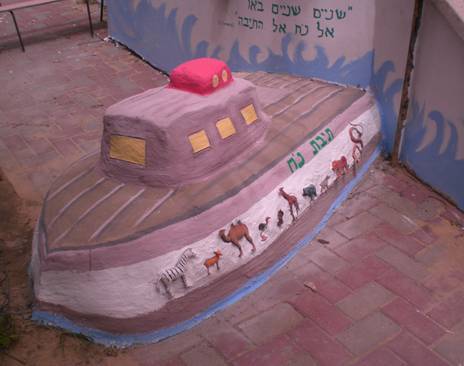
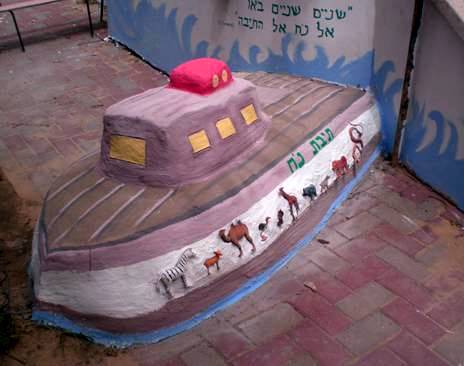 Making arks and art out of trash kids collect.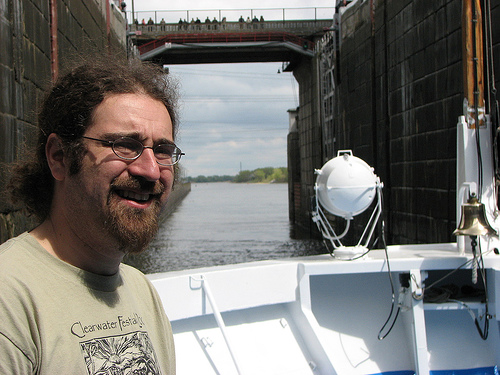
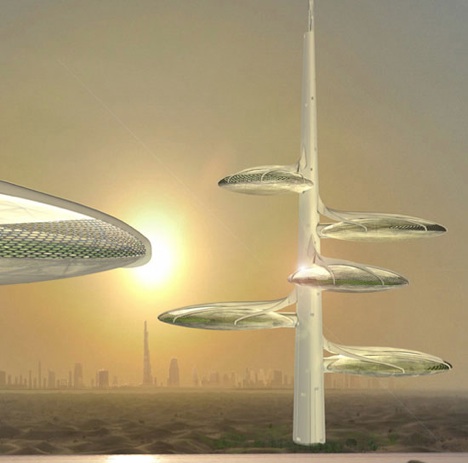
 Proposed vertical farms like this one in Dubai may be the only way for supplying food to Middle East countries.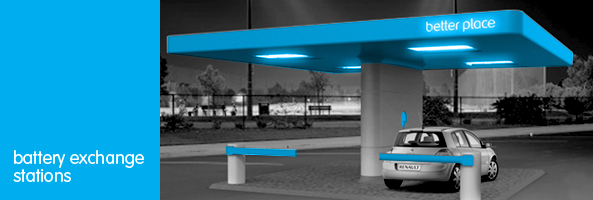




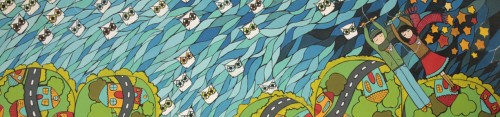
 Rima Malallah, a young woman living and creating in Amman, Jordan, is bringing her colorful handmade art to the Ammanian masses. Different from other galleries in Amman, Malallah offers a wide variety of products (including original paintings, prints, postcards, journals, cards, jewelry, handpainted ties, hand-knit scarves, bottle vases, key chains and coasters) and encourages interaction with her clients. Customers can walk in and commission a piece from her directly.