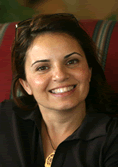
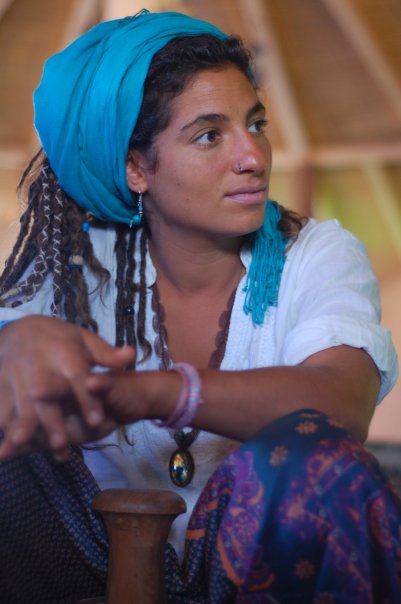
A young, ‘green’ peacemaker Ilana Meallem, who first wanted to serve her country in the army, now devotes herself to coexistence and environmental good works.
You’ll find her wherever the peacemakers and ecologists roam, at venues like the annual United Religions Initiative Middle East North Africa (MENA) region conference.
Today Ilana Muallem is one of the most remarkable “green” activists in the Middle East, inspiring, educating, promoting and drawing ecologically sound practices. In addition to leading EcoSpirit Middle East retreats in Jordan for young activists in the region, she is also currently in the process of creating an ecologically-built retreat, solar-powered of course, which will serve as a home and studio for young peacemakers from the Middle East region.
Thirty-two-year-old Meallem, a Londoner by birth, fell in love with Israel at an early age. She lived in the country for a year when she was two, and the memory somehow became a part of her identity. Raised in an orthodox family, her father was an Israeli-Egyptian who moved to the British city, and her mother, a British Jew. By the time she turned 18, the teenager was already working on enlisting in the Israel Defense Forces, strongly motivated to serve her new country.
When she said goodbye to her parents, two brothers and sister in England, en route to her new life in Israel, one brother’s parting words were: “Trust everyone.”
I find it fitting and perhaps a little ironic that I was asked to write a review about Adam Werbach’s popular book, Strategy for Sustainability, a book addressed to corporations large and small about how they can operate as leaders in sustainability.
Perhaps because my senior thesis as an undergraduate English major, was entitled “The Paradox of Corporate Environmentalism.”
I wrote that paper back in 1997 while attending University of California, Santa Barbara. I had the privilege of interviewing Congressman Henry Waxman (his son and I befriended one another at Tel Aviv University) for my thesis.
Extensive research and this interview with one of the true pioneers of incentive systems for marketable discharge permits, helped shape my view on corporate environmentalism. I learned a lot about various factions within the Green movement, corporate citizenship vs. government regulation, and the central role that economics played in all of these topics. My thesis volunteered that corporate citizenship was incredibly rare and statistically insignificant, like Nassim Nicholas Taleb’s Black Swan.
In Strategy for Sustainability, Werbach clearly takes another point of view with regard to corporate citizenship and I must admit it is a bit infectious.
Israel’s cabinet approved a joint proposal by the Ministry of Environmental Protection and the Ministry of Finance on Sunday to formulate a national plan on greenhouse gas emissions, the Globesnewspaper reported.
An inter-ministerial committee will be formed to study a range of issues, including energy efficiency, green construction, and the ramifications for Israeli industry and exports. The committee will be chaired by the director-general of the Ministry of Finance, Haim Shani, and is expected to submit its recommendations for an operational plan by October 2010.
In proposing a concerted national effort to reduce greenhouse gas emissions, the Ministry of Environmental Protection and Ministry of Finance emphasized the potential benefits for the Israeli economy and local cleantech industries in particular. Reducing emissions of greenhouse gases is also a condition for Israel joining the OECD, the Globes report notes.
The minister of environmental protection, Gilad Erdan, has been lobbying for the establishment of a greenhouse gases committee for several months. Erdan is scheduled to deliver a keynote address tomorrow at the Environment 2020 conference in Tel Aviv in a session entitled “Environmental Vision for the Next Decade.”
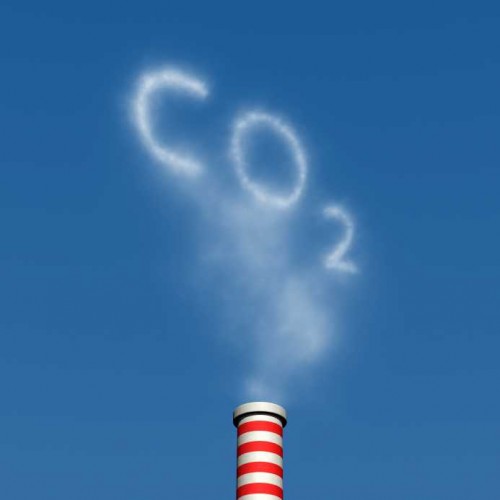
When you live in a city and pass the same developed areas day after day, you can forget that the concrete jungle is unnatural. Sure, it may feel natural to you after a while, but you would undoubtedly also enjoy some greenery. Some botanical specimens to offset the amounts of carbon dioxide released by the buses, taxis, and private vehicles. Which is why contemporary urban planners and architects often try to fuse the urban with the organic.
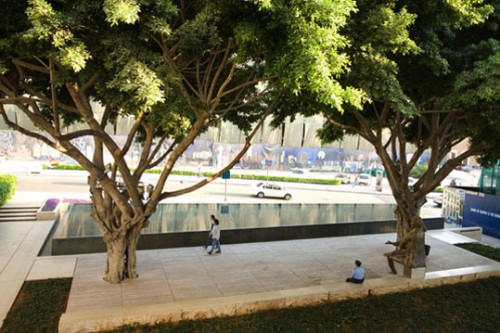
This fusion can be seen in Samir Kassir Square in the heart of Beirut, where two old Ficus trees provide shade and serenity. The surrounding garden, composed mostly of pools of running water, are also intended to cause passersby to feel connected to a more natural environment (although this Green Prophet wonders how water efficient the pools actually are).
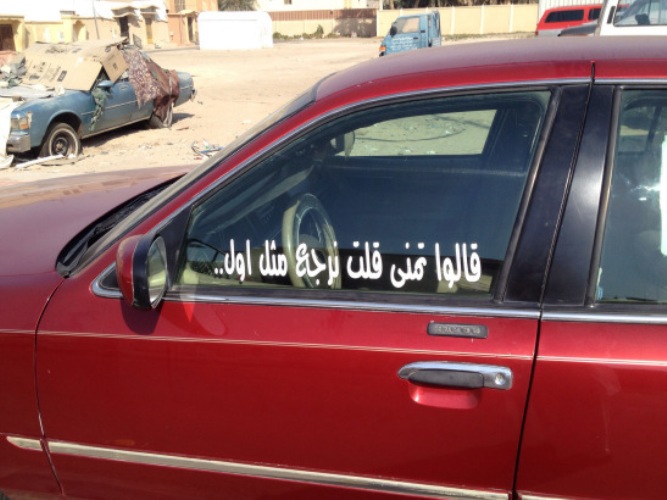
Time to turn Saudi youth onto bicycling: video of dangerous stunts on the rise in young Saudi males who purposefully “drift” cars.
An average of 17 Saudi Arabian residents die on the country’s roads each day, a report by the Kingdom’s General Directorate of Traffic has revealed. The news comes after the World Health Organization found Saudi Arabia to have the world’s highest number of deaths from road accidents, which now make up the country’s principal cause of death in adult males aged 16 to 36. First reported by the Saudi daily Arab News, the study found that 6,485 people had died and more than 36,000 were injured in over 485,000 traffic accidents during 2008 and 2009.
There was no official reaction to the unfortunate world record, and Saudi analysts pointed to larger underlying problems.
“The driving problems are with young people,” Ali Abdul-Rahman Al-Mazyad, a Saudi columnist in Riyadh told The Media Line. “There are very little outlets for young people to enjoy themselves and kids basically do what they want.”
“There is also not such great education in schools about driving and respecting the road,” he said. “Drug use is also a contributing factor. These are the central problems.”
The report found that almost a third of traffic accidents in the Saudi capital Riyadh were due to drivers jumping red lights, followed by 18 percent of accidents caused by illegal U-turns. The most common dangerous driving activities were speeding, sudden stops and speaking on the phone while driving.
Over the past two decades Saudi Arabia has recorded 4 million traffic accidents, leading to 86,000 deaths and 611,000 injuries, 7 percent of which resulted in permanent disabilities.
A recent study at the King Abdul Aziz City for Science and Technology (KACST), a Riyadh-based scientific research group, warned that if the current rise in road accident rates is not curbed, Saudi Arabia will have over 4 million traffic accidents a year by 2030. Oh, and Saudi Arabia wants to be the next Ibiza!
Silvio Saadi, a Jeddah-based businessman and film producer, argued that both the government and an out-of-control youth culture were to blame.
“You won’t believe what you see,” he told The Media Line. “It’s just crazy.”
“Saudis often try to drift with normal cars and thousands of spectators on the sides of the street,” he said, referring to an informal motor sport in which drivers intentionally over-steer so as to lose traction and drift on the road. “Sometimes the car drifts into the spectators, slamming them into buildings along the sidewalk.”
Saadi said that while the government has made some initiatives, they have fallen short of an aggressive road safety campaign.
“Outside the city, the police often cannot stop them,” he said. “The police are actually scared because there can be thousands of them. A few years ago they built a Jeddah raceway to attract young people to do it on the track instead of on the streets, but people still like to do it the old fashioned Bedouin way.”
“We get approached every year by government departments to produce public service announcements about speeding but most of the time nothing comes of it,” Saadi added. “Who knows what happens, but there is a lot of corruption. They probably take budgets from the government to do public service announcements and then don’t do it.”
Video of crazy road stunt as Saudi youth skate on the road.
Saudi Arabia has long had a taste for expensive cars, and spottings of young Saudis cruising the streets of Jeddah and Riyadh in Maseratis, Ferraris, Porsches and Harley Davidson motorbikes are increasingly commonplace.
One of the Middle East’s largest car markets, automobile sales make up about three percent of Saudi Arabia’s gross domestic product.
Following overstated fears that the global recession might seriously weaken the Arab world’s largest economy, Saudi car sales are now expected to boom. The kingdom’s car market, including both commercial automobiles and transport infrastructure, is currently worth about $9 billion. The market is expected to grow by 30 percent in 2010.
Over 675,000 cars are expected to be sold in 2010 to a population of just under 25 million.
(This story by Benjamin Joffe-Walt is reprinted with permission by The Media Line, the Mideast News Source.)
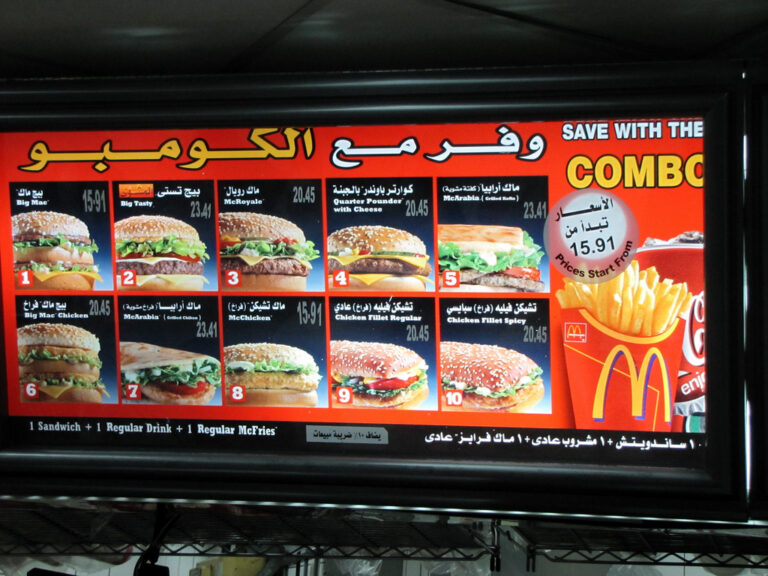
Egyptians are seeing soaring rates of colon cancer and obesity. Researcher links this to a change in diet. A McDonald’s sign in Arabic. Image via davidberkowitz
Professor of Oncology and the Director of the al-Qasr el-Aini Center for the Treatment of Tumors Yasser Abdul Kader said that colon cancer in Egypt ranges from between two to 6% of the total amount of cancer cases reported annually in Egypt.
He said that the number of colon cancer cases in Egypt is three-times higher among men than women. According to the professor, who was speaking at a local conference on the occasion of the international month to raise awareness of colon cancer, said that 30% of patients infected are younger than 45-years-old.
Abdul Kader added that the cause of the spread of colon cancer in Egypt is “due to the change of food habits of the citizens, as well as reliance on fast food, which is saturated fat and the prevalence of obesity.”
Why is there so much colon cancer in Egypt?
He continued that “in addition to this, smoking is another cause for the spread, and lifestyles do not encourage exercise and type II diabetes, indicating that colon cancer can be easily treated on the condition of early diagnosis, where the treatment success rate is high and can reach 90 percent in that situation.”
For his part, Mohammed Abul, a professor of nutrition at Cairo University, said that there is a close relationship between obesity and tumors of the digestive system, pointing out that the prevalence of obesity in Egypt is “up to 50 percent in men and more than 70 percent in women, as well as a faulty diet for most people, especially with the increasing rates of eating red meat at the expense of vegetables and fruit and the lack of exercise and sports, as well as avoiding eating fiber and preferring food with high salt.”
Mohsen Mokhtar, an Assistant Professor of Oncology and head of the Cancer Patients Support Association stressed that the association has launched an awareness campaign for the prevention and early detection of colon cancer, warning that “colon cancer is one of the main tumors affecting the digestive system, where the rate of infection is 5% of total cases of cancer in the world.”
He added that the total deaths per year are about 700,000 across the world, with 2000 cases a day, pointing to the presence of worrisome signs in Egypt “for a higher incidence of cancer among young people under the age of 30.”
Sea levels off Israel’s coast have been rising and falling over the last 2,500 years suggesting that short-term trends of rising sea levels may not necessarily reveal a long-term trend.
Researchers around the world are putting their minds together, focusing on both global and local patterns to find symptoms of climate change. Is there going to be global warming or cooling, from climate change? How can confusing statistics leaked to the media, set the record straight so limits can be set? From coring into ice samples at the North Pole, to measuring coral reef damage in the Red Sea, scientists want to know how man-made global warming will affect nature, and our place in it. With the basic tools of science, I’ve dug up three new studies from Israel: These researchers are looking to the past and present to understand climate in the Middle East — evidence which could be useful on the global scale.
Kitchen spices as medicine are a green way to get a useful, and always on hand supply, when you need it. Choose organic when you can.
This is the third post in a series on medicinal spices. You can read Part I and Part II by following the above links. If you’re a Green Prophet, you know that simplifying your life and using less chemicals can be good on you and the environment. Heading through the alphabet, today, we’re discovering the surprising properties of H to N: the value of hyssop, juniper berries, nigella, and nutmeg/mace.
Israeli startup SolarEdge partners with NASDAQ-traded Flextronics (FLEX) to ramp up solar energy harvesting systems.
Solar energy projects in Israel’s northern sectors are sure to get a boost from a signed agreement between SolarEdge Technologies Ltd and Flextronics Inc to produce systems for improving the efficiency of photovoltaic panels at Flextronics’ plant in Migdal Ha’Emek – to be sold all over the world.
SolarEdge which develops a system that maximizes power harvesting from PV installations (PowerBoxes – which are power optimizers that connect to the solar panels, as well as a DC-AC inverter and a monitoring portal), aims to ramp up production of solar power harvesting systems. The company was mentioned by Green Prophet back in August, 2008, in the article A Quick Guide to Israel Solar Energy Companies. And was recently voted by FAST as a Top 10 innovative company. SolarEdge is expecting sales of over 45MW (Mega Watts) of its products for 2010.
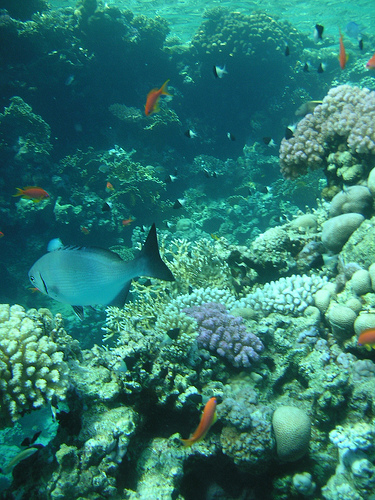
Sharm el-Sheikh, in the Sinai region of Egypt, has been a thriving tourist location for decades due to its incredible beaches and vast coral reefs. Its great attraction to tourists has also been its downfall, however. The reefs are currently under threat due to the dust caused by erosion.
With tourism accounting for a major part of Egypt’s GDP, something had to be done to protect Egypt’s natural (and money-making) resource, and grant it legitimacy in a world that increasingly wants to see environmental conservation efforts.
Egypt therefore recently announced its plan to become completely carbon neutral by 2020. The $238 million project hopes to accomplish this through the introduction of renewable energy, reduction of water use, improvement of waste management, and, in the future, the use of electric boats and hybrid buses.
The green initiatives are planned to start this month and be completed by the end of 2010. These early initiatives include new diving restrictions to help preserve already damaged reefs, and the powering of street lights with solar energy.
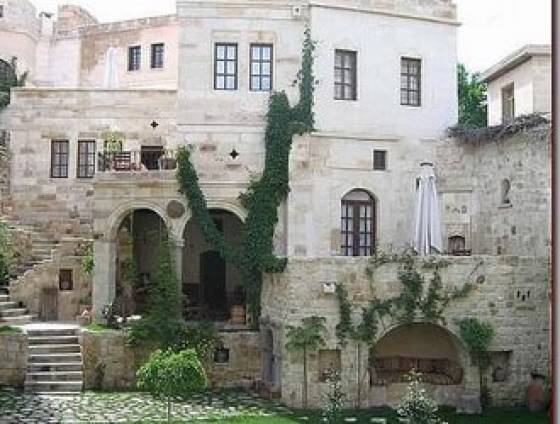
From a heritage building in the historic region of Cappadocia, Turkey, this hotel works with local crafts and craftsmen.
It is important to apply eco-friendly labeling carefully. This is especially true of the tourism industry that is often guilty of green-washing potential patrons to lure them to their site. We have written about eco-lodges such Feynan in Jordan and Al Karm Ecolodge in Egypt that deserve their “eco-friendly” status given their strident conservation efforts. Now we’d like to draw your attention to a boutique hotel in Ürgüp, Turkey that has partial claims to eco-friendliness and full claim to a fascinating architectural history.
If you were an aspiring actor, it would be like getting an invitation to a wine and cheese Hollywood party with the industry’s top directors. Or an aspiring chef, getting some in-person training with Le Cordon Bleu masters in Paris. If you are an Israeli clean technology entrepreneur in focus areas of renewable energy, water, or smart grid technologies, now is your time to shine under the sun of California’s hottest clean tech investors, potential partners and utilities companies.
The California Israel Chamber of Commerce (CICC) is making its last call for Israeli companies to apply to its prestigious 3-day event, promising to open doors to some of the best opportunities America has to offer. Will your company open that door on April 26 to 28 this year?
The Middle East is conservative. But could increased “polyamory” open people up to practices that could save the environment?
At first glance, sex and the environment don’t make obvious bedfellows. How can the answer to our environmental problems – global warming, access to fresh water, ecological sustainability, and the use of fossil fuels – possibly be found between the satin sheets of lovers? According to a growing number of greenies, free love may just save the world. In her newest book, Gaia: The New Politics of Love, author Serena Anderlini-D’Onofrio attempts to lay the groundwork for this premise.
The rich folk from the United Arab Emirates are known for their over-the-top cars and wealth. Like gold-plated mercedes. Faux or real, the oil-rich Arab countries, even when they make green initiatives do it in such a bombastic way, counter-intuitive to the gentler, earth-friendly approaches most of us Green Prophets would stand behind.
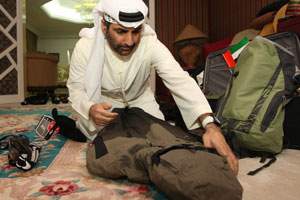
But all might not be lost if the United Arab Emirate’s “Green Sheikh” gets his way: Sheikh Abdul Aziz bin Ali Al-Nuaimi (who we interviewed on Green Prophet), a member of the ruling Ajman Royal Family is now being known not just for his wealth. Locals are calling him the “Green Sheikh” and “Down to Earth Sheikh” as a result of his concern for his local and the world’s environment as a result of pollution and climate change. His concern started young, says his family.
According to the National, Sheikh Al Nuaimi has embarked on a journey to Antarctica as part of a 70 member team to study the effects of global warming and climate change on what was once considered to be the world’s coldest place on earth.
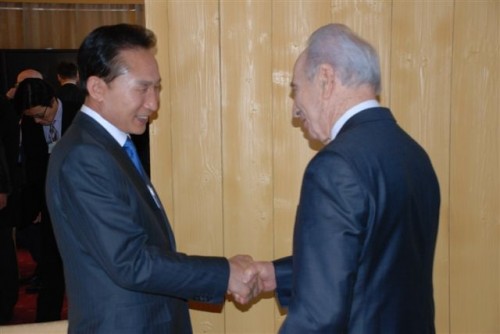
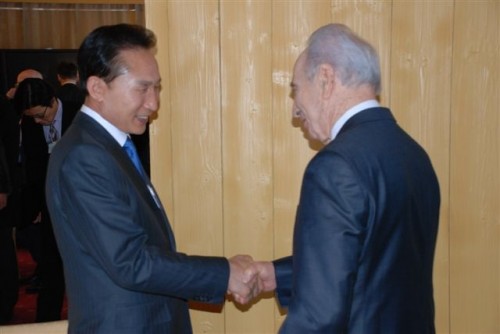
Shimon Peres from Israel and Lee Myung-bak from South Korea at Davos.(Image via Israeli Ministry of Foreign Affairs.)
A high-ranking delegation from South Korea is currently visiting Israel to explore possibilities for collaboration between the two countries on renewable energy. The 37-member delegation represents 22 companies, as well as local authorities and R&D centers, according to a report published in the Globesnewspaper.
During the extensive 10-day visit, the delegation will visit 13 Israel companies: Zenith Solar, Heliofocus, GreenSun Energy, BrightSource, Better Place, Seambiotic, IQWind, Arrow Ecology, ETV Motors, Ormat Industries, EnStorage, CellEra and Aqwise. The delegation will also meet with officials at Israel’s National Infrastructure Ministry, Industry Trade and Labor Ministry, and Foreign Ministry, and will visit Tel Aviv University and the Technion – Israel Institute of Technology.

 A young, ‘green’ peacemaker Ilana Meallem, who first wanted to serve her country in the army, now devotes herself to coexistence and environmental good works.
 When you live in a city and pass the same developed areas day after day, you can forget that the concrete jungle is unnatural. Sure, it may feel natural to you after a while, but you would undoubtedly also enjoy some greenery. Some botanical specimens to offset the amounts of carbon dioxide released by the buses, taxis, and private vehicles. Which is why contemporary urban planners and architects often try to fuse the urban with the organic.