Jean Pierre Conte is the chairman and managing director of Genstar Capital, a leading middle-market private equity firm with investments in healthcare, software, financial services and industrial technology.
Two thousand years ago, someone scratched a web of lines into stone in a Roman settlement on the empire’s northern edge. Soldiers, traders, or locals passing time in Coriovallum—now Heerlen in the Netherlands, moved small counters across those lines in a tactical duel of blockade and entrapment.
Unlike most recordings from this era, which were lost as early media deteriorated, the audograph discs survived and appear to have been uniquely used for underwater sound — making them a rare, possibly singular example of early ocean listening preserved from the dawn of marine acoustics.
Jean Pierre Conte is the chairman and managing director of Genstar Capital, a leading middle-market private equity firm with investments in healthcare, software, financial services and industrial technology.
Two thousand years ago, someone scratched a web of lines into stone in a Roman settlement on the empire’s northern edge. Soldiers, traders, or locals passing time in Coriovallum—now Heerlen in the Netherlands, moved small counters across those lines in a tactical duel of blockade and entrapment.
Unlike most recordings from this era, which were lost as early media deteriorated, the audograph discs survived and appear to have been uniquely used for underwater sound — making them a rare, possibly singular example of early ocean listening preserved from the dawn of marine acoustics.
Jean Pierre Conte is the chairman and managing director of Genstar Capital, a leading middle-market private equity firm with investments in healthcare, software, financial services and industrial technology.
Two thousand years ago, someone scratched a web of lines into stone in a Roman settlement on the empire’s northern edge. Soldiers, traders, or locals passing time in Coriovallum—now Heerlen in the Netherlands, moved small counters across those lines in a tactical duel of blockade and entrapment.
Unlike most recordings from this era, which were lost as early media deteriorated, the audograph discs survived and appear to have been uniquely used for underwater sound — making them a rare, possibly singular example of early ocean listening preserved from the dawn of marine acoustics.
Jean Pierre Conte is the chairman and managing director of Genstar Capital, a leading middle-market private equity firm with investments in healthcare, software, financial services and industrial technology.
Two thousand years ago, someone scratched a web of lines into stone in a Roman settlement on the empire’s northern edge. Soldiers, traders, or locals passing time in Coriovallum—now Heerlen in the Netherlands, moved small counters across those lines in a tactical duel of blockade and entrapment.
Unlike most recordings from this era, which were lost as early media deteriorated, the audograph discs survived and appear to have been uniquely used for underwater sound — making them a rare, possibly singular example of early ocean listening preserved from the dawn of marine acoustics.
Jean Pierre Conte is the chairman and managing director of Genstar Capital, a leading middle-market private equity firm with investments in healthcare, software, financial services and industrial technology.
Two thousand years ago, someone scratched a web of lines into stone in a Roman settlement on the empire’s northern edge. Soldiers, traders, or locals passing time in Coriovallum—now Heerlen in the Netherlands, moved small counters across those lines in a tactical duel of blockade and entrapment.
Unlike most recordings from this era, which were lost as early media deteriorated, the audograph discs survived and appear to have been uniquely used for underwater sound — making them a rare, possibly singular example of early ocean listening preserved from the dawn of marine acoustics.
Jean Pierre Conte is the chairman and managing director of Genstar Capital, a leading middle-market private equity firm with investments in healthcare, software, financial services and industrial technology.
Two thousand years ago, someone scratched a web of lines into stone in a Roman settlement on the empire’s northern edge. Soldiers, traders, or locals passing time in Coriovallum—now Heerlen in the Netherlands, moved small counters across those lines in a tactical duel of blockade and entrapment.
Unlike most recordings from this era, which were lost as early media deteriorated, the audograph discs survived and appear to have been uniquely used for underwater sound — making them a rare, possibly singular example of early ocean listening preserved from the dawn of marine acoustics.
Jean Pierre Conte is the chairman and managing director of Genstar Capital, a leading middle-market private equity firm with investments in healthcare, software, financial services and industrial technology.
Two thousand years ago, someone scratched a web of lines into stone in a Roman settlement on the empire’s northern edge. Soldiers, traders, or locals passing time in Coriovallum—now Heerlen in the Netherlands, moved small counters across those lines in a tactical duel of blockade and entrapment.
Unlike most recordings from this era, which were lost as early media deteriorated, the audograph discs survived and appear to have been uniquely used for underwater sound — making them a rare, possibly singular example of early ocean listening preserved from the dawn of marine acoustics.
Jean Pierre Conte is the chairman and managing director of Genstar Capital, a leading middle-market private equity firm with investments in healthcare, software, financial services and industrial technology.
Two thousand years ago, someone scratched a web of lines into stone in a Roman settlement on the empire’s northern edge. Soldiers, traders, or locals passing time in Coriovallum—now Heerlen in the Netherlands, moved small counters across those lines in a tactical duel of blockade and entrapment.
Unlike most recordings from this era, which were lost as early media deteriorated, the audograph discs survived and appear to have been uniquely used for underwater sound — making them a rare, possibly singular example of early ocean listening preserved from the dawn of marine acoustics.
Can the Gulf states beat dwindling oil supplies while keeping their own people moving?
The oil-rich states of the Middle East are planning for their burgeoning populations – and dwindling oil – by investing in an alternative to the very same private transport that made them rich in the first place. They are building a massive public railway system connecting the six states.
Is the Hebrew god’s wife, Asherah, The Tree of Life? Though an uncomfortable notion for some, scholarship suggests that God had a wife.
Scholars have known since the late 1960s that the ancient Israelites worshiped both Yahweh and his wife Asherah. Despite efforts by some editors to translate Asherah’s name to mean ‘Sacred Tree,’ archaeological findings and excerpts from the Book of Kings depict God’s wife as a powerful fertility Goddess.
(Read how present day Jews continue to maintain solid connections to nature.) Formerly an Oxford scholar and currently Senior Lecturer at the Department of Theology and Religion and the University of Exeter, Francesca Stavrakopoulou’s books, lectures and journal papers present background on a subject that is bound to be controversial.
You might know him as Yahweh, Allah or God. But on this fact, Jews, Muslims and Christians, the people of the great Abrahamic religions, are agreed: There is only one of Him, writes Stavrakopoulou in a statement released to the British media. He is a solitary figure, a single, universal creator, not one God among many … or so we like to believe.
In 1967, the historian Raphael Patai revealed that the ancient Israelites worshiped both Yahweh and his wife Asherah. Stavrakopoulous has since taken up this issue anew and after several years of research has presented several finds that remove all doubt.
Stavrakopoulou discovered references to Asherah in the Bible and an 8th century BC pottery inscription. Found in the Sinai desert at a site called Kuntillet Ajrud, the inscription, she says, in a petition for a blessing.
Crucially, the inscription asks for a blessing from ‘Yahweh and his Asherah.’ Here was evidence that presented Yahweh and Asherah as a divine pair. And now a handful of similar inscriptions have since been found, all of which help to strengthen the case that the God of the Bible once had a wife.
Many ancient texts, amulets, and figurines found mostly in the Canaanite city Ugarit (modern day Syria) reaffirm that Asherah was a ‘mighty and nurturing fertility goddess.’ The Book of Kings describes how she was worshiped in the temple of Jerusalem alongside Yahweh, and how female personnel wove ritual textiles for her.
Both J. Edward Wright, President of the Arizona Center for Judaic Studies and the Albright Institute for Archaeological Research, and Aaron Brody, Director of the Bade Museum and Associate Professor of the Bible and Archaeology at the Pacific School of Religion confirm Stavrakopolou’s assertions.
Brody notes that ancient authors intent on maintaining Judaism as a monotheistic tradition replaced mentions of Asherah with the translation ‘Sacred Tree.’
This is what he told Discovery News:
Asherah as a tree symbol was even said to have been “chopped down and burned outside the Temple in acts of certain rulers who were trying to ‘purify’ the cult, and focus on the worship of a single male god, Yahweh.”
Stavrakopolou’s research will form the basis of a three part documentary series airing in Europe.
Turkey’s Environment & Forestry minister has demanded that the state highway construction agency build “green bridge” crossings for wildlife.
Although the country’s environmental policy is rather bleak overall, with the prime minister vowing to continue building a nuclear reactor on a fault line in the southern region of Akkuyu, and the country’s clean energy program more rhetoric than reality, at least wild animals won’t have to risk their necks crossing Turkey’s highways anymore. Environment and Forestry Minister Veysel Eroğlu has called on the General Directorate of Highways, the state agency which constructs public roadways, to build wildlife crossings over highways that bisect major wildlife habitats.
This pipe was slated for use on Libya’s ambitious Man Made River project.
The Omar Mukhtar Reservoir in Libya’s southern desert is the second largest in the world, and an integral component of the $20 billion Great Man-Made River project (GMMR). Begun in 1984, the mammoth pipeline designed to transport water from the south to Libya’s dry northern cities has experienced huge setbacks as a result of Gaddafi’s power struggle with rebel forces. Despite the recently announced ceasefire, CNN reports continuing violence, which is taking its toll on the Canadian firm Pure Technologies’ bottom line.
Forty years in the making: Turkey still intent on building the country’s first nuclear reactor on this serene spot on the Mediterranean Coast. Cyprus says the zone falls right on a fault line.
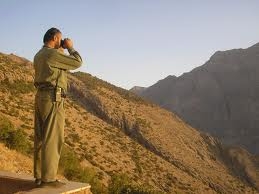
And yet, park rangers over the decades have been the target of uncalled-for violence. Global Voices report that four men were recently shot dead in a village in Sanandaj in Iran’s Kuridstan. In response, an environmentally-themed website invited bloggers to say their piece.
1,000 cars have been donated by the Alwaleed bin Talal Foundation to the recent Jeddah flood victims
Heavy rainfall in Jeddah in Saudi this January led to the deaths of a reported four people and left hundreds more families stranded and distraught as they dealt with the flood. Although the floods in 2010 did not cause the same level of destruction as the 2009 floods which left over 120 dead, many Saudis feel that the city’s flood protection remains inadequate.
So whilst the donation of 1,000 cars will no doubt be valuable to the victims of the floods, what is really needed is clear policy and plan of action to improve Jeddah’s flood defenses.
Israeli Solar energy company BrightSource is the child, but the real father of solar thermal technology.
SEC filings show BrightSource Energy Inc has raised $122.5 million in its fifth round of financing, according to Israel’s Globes.The company says it raised the capital in shares and warrants, as part of a planned $125 million offering. BrightSource Energy is now the California “parent company” of the actual “parent” – BrightSource Industries Ltd – if you consider parenting from the generative point of view. (Luz Rises Again as BrightSource for California)
Originally, the Israeli inventors developed the solar thermal technology that has now been proven since the eighties in the California desert and is fast becoming the industry standard. The Israeli “child” company is the real father of solar thermal technology, however.
Every barrel of oil co-produces 10 barrels of waste fluids hot enough to make energy
Towards the end of the life of an oil field or a natural gas field, the operating cost of managing the waste water is the main reason why fields are shut down, wells are plugged and abandoned. Oil and gas wells produce a lot of water.
For many well operators, once the water cut becomes too expensive to deal with, they’ll consider shutting the well. But if they can save money by using the water to generate electricity, the equation changes. An Ormat device has shown how that can be done and the US DOE has tallied its output.
The Gulf countries badly need to cut fuel subsidies in order to drive renewable generation projects, but in the current political climate, that would be suicidal.
The nuclear travesty in Japan has gripped news headlines, while the Middle East political drama has taken back stage. But it is still having huge ramifications in the region. Among the world’s worst polluters, and the biggest suppliers of emissions-causing fuel, the Gulf countries do have great intentions to boost their renewable energy supply. And not for purely altruistic reasons. By eating into their own oil supply, the United Arab Emirates, Kuwait, and Saudi Arabia among others limit the amount of oil that can be used for export. Increasing their renewable energy portfolio, however, depends richly on doing away with oil subsidies. And that, Reuters reports, is seemingly impossible amidst the current unrest.
Mekano Architects have dreamed up the ultimate solution for Cairo’s filthy Garbage City. Long an eye-sore and public health menace, the area on the outskirts of Egypt’s capital was once a recycling center for the Zabaleen. They sorted through waste and recycled it, and used pigs to devour organic waste. After swine flu emerged, however, the government culled the Zabaleen’s pigs and that waste has since stewed in its own fermenting juices. Mekano aims to put the resulting methane, and the towers of junk, to good, building use.
Turkey has a critical role to play in a clean energy future, says former vice president Al Gore. But when is it going to start taking that role seriously?
The unusual political identity of Turkey — a stable, democratic, Islamic country — serves as inspiration for democratic reformers in the Arab world. Its government is a model of political progressiveness for its neighbors to the east and south. In the same fashion, strong climate and energy policy in Turkey could inspire environmental action as radical as the democratic revolutions currently sweeping the region. That was the message of former U.S. vice president Al Gore at the “Leaders of Change” summit in Istanbul on Monday, according to the Turkish daily Today’s Zaman.






 Turkey’s Environment & Forestry minister has demanded that the state highway construction agency build “green bridge” crossings for wildlife.












 Turkey has a critical role to play in a clean energy future, says former vice president Al Gore. But when is it going to start taking that role seriously?