 A recent report by the BBC has revealed that holy water from Mecca known as ‘Zam Zam’ is contaminated with high levels of arsenic
It seems that these days nothing is holy. First the holy waters of the River Jordan were found to be sewage infested and now the ‘Zamzam’ holy waters of a sacred well in Mecca have tested high in arsenic, which is a poisonous carcinogenic. An undercover investigative report by the BBC has revealed that Zamzam water sold in the UK and also bottled at source in Mecca were poisonous and not safe for human consumption.
Genuine Zamzam water comes from a sacred well in Mecca in Saudi Arabia. It is illegal to export the water or to sell it commercially, therefore any water outside Saudi Arabia which claims to be Zamzam water should be treated with suspicion.
However, the BBC report found that large quantities of the water were being sold to the Muslim communities in east and south London and also in Luton in the UK. Dr Duncan Campbell, president of the Association of Public Analysts noted that the water was poisonous, particularly if consumed regularly.
Zamzam water is believed to be sacred as it is taken from a well discovered by the prophet Ismail when he was a baby when his mother, Hajar, the wife of the Prophet Ebrahim, was desperately searching for water in the desert.
It is believed that the water has healing properties and it is drunk by Muslims across the world. Many pilgrims returning from hajj, the Muslim pilgrimage in Mecca, will usually bring small amounts of Zamzam water as gifts for their friends and family.
Reports from the UK’s Food Standards Agency has been warning Muslim consumers not to drink bottled ‘Zamzam’ water since 2005 due to concerns over the high levels of arsenic found in the water.
During Ramadan in 2010, the Agency told Muslims to consider avoiding all drinking bottle water described or labelled as Zamzam water as “tests carried out on water described as Zam Zam in the UK over the past few years, including water brought into the country for personal consumption, have indicated the presence of arsenic at almost three times the legal limit.”
The Food Standards Agency also highlighted the health implications of continuing to consume contaminated Zamzam water:
“Drinking ‘Zam Zam’ water that is contaminated with arsenic could contribute to increasing people’s risk of cancer. People should consider avoiding drinking any water described as Zam Zam because there is no completely safe level of arsenic in water – and the more arsenic consumed the greater the risk.”
Although most Muslims tend to only drink small amounts of Zam Zam water during Hajj or from water brought home from Mecca by Pilgrims, more transparency is needed to explain why there is such a high level of arsenic in Zamzam water.
It appears that both ‘dubious’ and genuine Zamzam water is contaminated and so Saudi Arabia (which has failed to comment on the BBC report) needs to take on board this information and tackle the source of the contamination- for the safety and health of all those Muslims who consume it.
Read More on Hajj:
Swine Flu and Other Challenges of Hajj Pilgrimages to Saudi Arabia in 2009
Case Study: We Measure One Family’s Hajj Carbon Footprint
Four Steps to A Greener Hajj

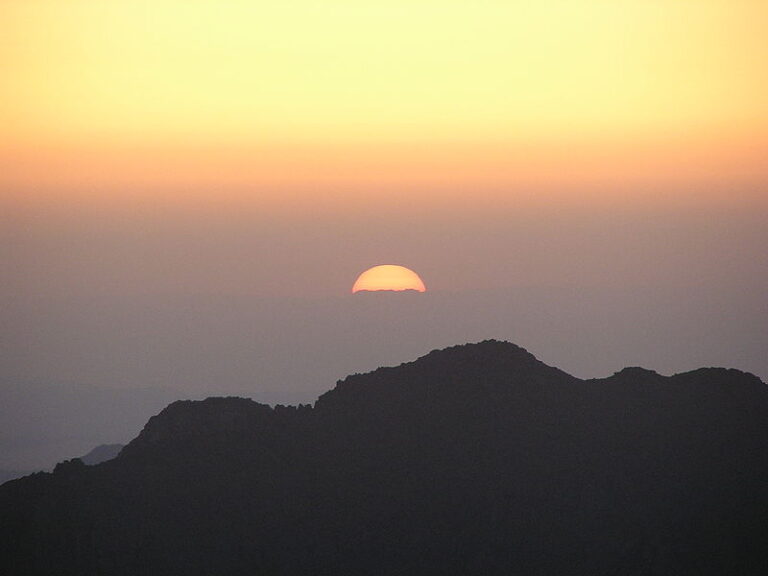
 Sunrise from summit of Mt. Sinai – some say “God’s Mountain”. The peninsula offers more than just pristine beaches.



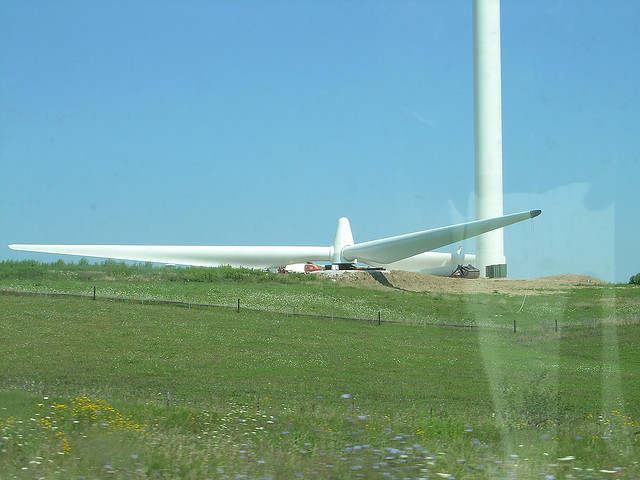
 The new roads required to transport wind turbines to installation sites in Turkey can delay projects and add to their costs, but also create hundreds of new construction jobs.



 Once common, animals and porcupines like this one are now becoming rare in Israel as development surges, and open spaces diminish.