According to statistics from the Ministry of Environment and Water, the total area of organic greenhouse farms reached 2,196 acres in 2010, up from just 110 acres in 2007. Whilst the growth is small, it is a step in the right direction in a country reluctant to reduce its dependency on oil to desalinate water or reduce its waste.
Greater flamingos and chicks found in Abu Dhabi once again.
Abu Dhabi’s remaining wetlands and its well publicized Bu Tinah archipelago have been mentioned a number of times by Green Prophet; especially with it being nominated for designation as one of the earth’s Seven World Wonders. But now this natural wonder, along with other designated wetlands such as Abu Dhabi’s Al Wathba Wetland Reserve, may once again become home to increasing numbers of beautiful Greater Flamingos that are attracted to these areas as nesting sites.
The municipality of Ramallah recently released a mission statement which says: “We want the city of Ramallah to be beautiful, green, safe, clean, and environmentally friendly for the sake of all its residents.” As part of the efforts to improve the city, the municipality states that more greenery will be planted, an awareness-raising campaign focused on schools will be launched and a clean-up programme initiated.
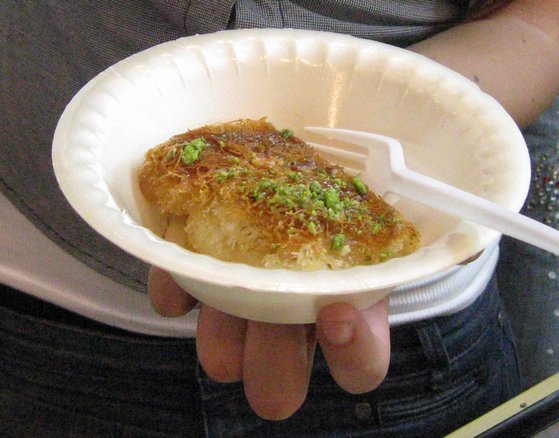
Kanafeh: sweet cheese filling under a crunchy topping. A favorite Ramadan dessert.
Ramadan 2011 begins after sunset on July 31st. One of the many luscious traditional pastries served during the night meals of Ramadan month is kanafeh. Subtly flavored with lemon and rosewater, doused with syrup, it makes up for all the calories burnt off during the daytime fast. Serve it with Turkish coffee.
Another lovely Arabic pastry for Ramadan break-fast or any time, is date-stuffed ma’moul cookies. Substitute dates for the nuts in the recipe, for dates are said to be the first food Muhammad ate when he broke his fast.
Kanafeh isn’t hard to make at home. The steps are simple and the ingredients widely available. If the classic kanaifa dough isn’t to be found in your area, substitute angel-hair (vermicelli) noodles. The trick is to massage the dough strands with melted butter – patience is required.
What I think is that it’s probably really good reflexology therapy, as the dough gently presses reflex points while you squeeze it. And the butter should leave you with the softest hands… But eaters won’t be concerned with the thoughts of the cook once they put a spoonful of kanafeh in their mouths. They’ll just want more kanafeh.
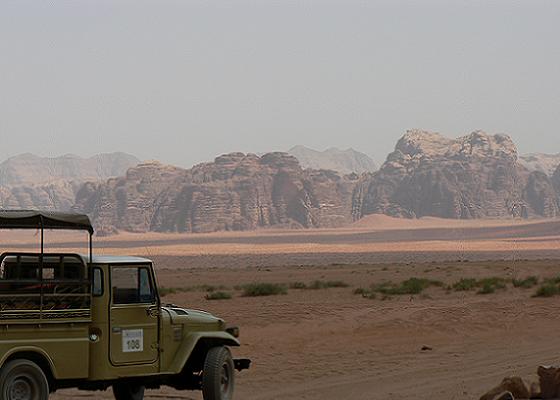
Can Wadi Rum cope with a predicted influx of tourists attracted by its World Heritage status?
In June, the Jordanian desert valley of Wadi Rum joined the UNESCO World Heritage List, with a decision which has been much predicted since the end of 2010. According to Green Prophet’s Tafline Laylin, writing in September 2010, UNESCO certification would “ease the task to sustainably manage both the cultural and natural beauty that makes this site such a strong candidate for the United Nations’ esteemed recognition”.
With the certification finally announced in summer 2011, Jordanian Minister of Tourism and Antiquities, Haifa Abu Ghazaleh told The Jordan Times newspaper that “This win is considered as a recognition for Jordan and its heritage, and will have a great impact on the country’s tourism sector”.
Led by Berber guides, five Australians and I head out on the Chebbi dunes outside Merzouga, Morocco for an unforgettable night under star-filled skies.
Yesterday, Merzouga in southern Morocco (a stone’s throw from the border of Algeria) was so hot that I almost passed out in the internet cafe where I worked all day. There’s no air-conditioning here and the fan seemed to only revolve once a minute.
Out on the dunes, the sun is even less forgiving, so our Berber guide, who is leading one of the last few tours that Tucan Travel will conduct in Morocco, postponed our departure until 6pm. After a few fits and giggles (think young girls on smelly, curmudgeonly camels), we and another two small groups made our steady way across some of Morocco’s most impressive sand dunes.
Lack of space in urban environments often means that farming opportunities are limited, but a technique of farming indoors and upwards may resolve this problem
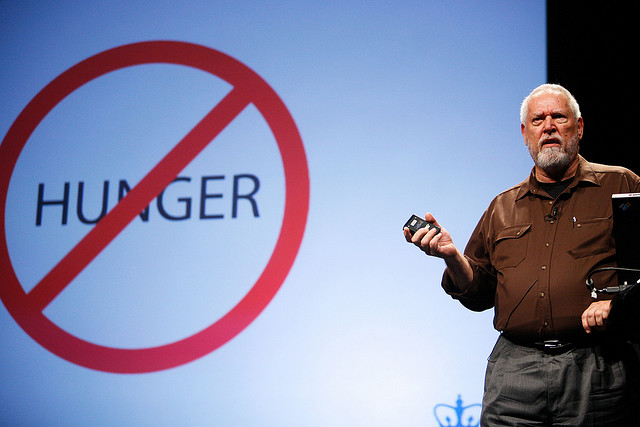
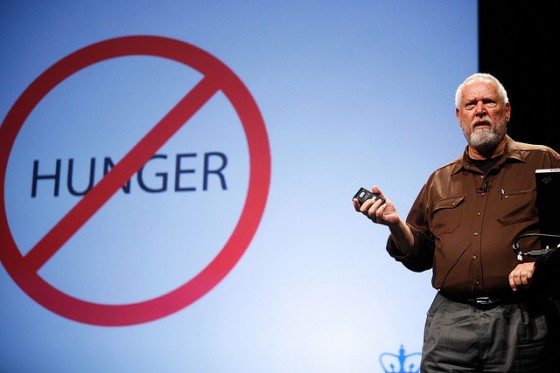
Over a week ago, I had the opportunity to attend an event featuring Dickson Despommier, the grandfather of vertical farming. As Green Prophet editor Karin explains in an interview with a vertical farming expert, vertical farming is where crops are grown in buildings and on various levels to save not only space but water. Despommier explains that in today’s world, 80% of the earth’s available land is already farmed and so we need to come up with better ways to grow food for our increasingly urban and populated world.
This device called Eddy makes it easy for anyone, anywhere to access the benefits of hydroponics. Until now you had to spend thousands of dollars for systems and know how. For more see www.fluxiot.com
Some of the advantages of vertical farming, which incorporates growing techniques such as hydroponics (growing without soil), is that there is no crop loss from severe weather events and you can grow crops all year. However, the big advantage for places such as the Middle East, is that vertical farming uses around 70% less water than traditional farming. As the growing conditions are a lot more controlled, water isn’t lost due to inefficiencies such as leaks and evaporation.
This is a huge advantage for those considering adopting the technique in the water-scare Middle East as it means that it could potentially make growing a lot more commercially viable. Indeed, Despommier revealed that countries such Saudi Arabia, Jordan and Qatar have already show interest in the technique. According to Despommier, there was a meeting in 2009 with the Jordan mayor office to discuss the farming technique and there were also a pyramid-shaped vertical farm designed for Dubai.
Whilst in its tentative stages, vertical farming in the Middle East could be a great solution to the regions current water problems and its huge reliance on food imports. This novel way of farming could also end the African land grab by countries such as Egypt, Saudi Arabia and the United Arab Emirates to secure food supplies.
Since the Arab Spring riots, which were in part sparked by food shortages and rising prices, food security has climbed up the agenda of many Middle Eastern governments. Let’s hope that they consider improving their own food self-sufficiency through green techniques such as vertical farming and not just buying up tracts of fertile land from drought-stricken and troubled nations in Africa such as Ethiopia, Sudan and Somalia.
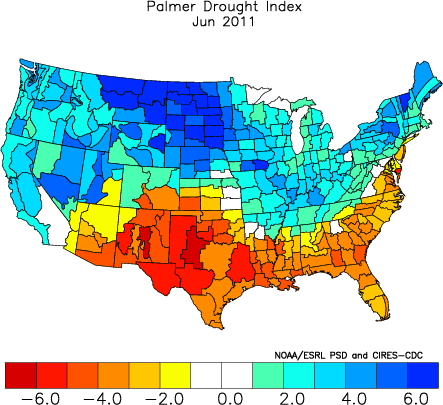
Weather paradox: severe drought in south with flooding elsewhere
With 122 degrees in New York City, intense drought and wild fires in several American states, and mass starvation due to abnormal drought in the Horn of Africa. Middle Eastern countries like Yemen are “running dry” , and ones like Egypt are in danger of not being able to feed themselves. All this appears to be pointing to very unnatural climate changes that are looking more and more as being caused by global warming. The extreme heat and lack of moisture occurring in many parts of the USA seem to be much different than the “drought indexes” of the 1930’s when states like Arkansas and Oklahoma were plagued by what was known as the “dust bowl” .
One of the world’s largest auto manufacturers, since 2000 Ford has donated more than $1 million to 130 environmental initiatives throughout the Gulf and the Levant, including to whale and dolphin research, beach cleanups, sea turtle and monk seal research off the coasts of Syria, and to Omani Leopard Conservation.
This year the company has teamed up with UNESCO to expand its reach. Government and non-government initiatives committed to Conservation Engineering, Protection of the Natural Environment, or Environmental Education are encouraged to apply for a share of $100,000 currently up for grabs. If that’s you, please visit Ford’s website and fill out the application before 10 September, 2011. Rules and further details available there.
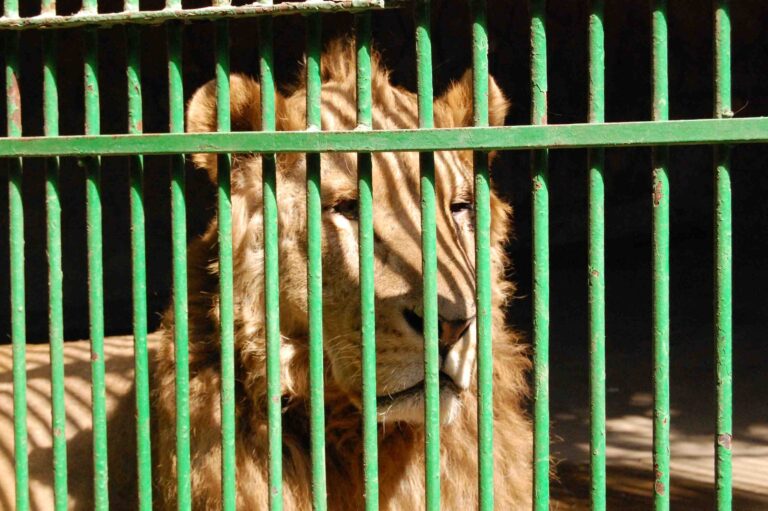
Despite disgusting facilities and maltreatment of wild animals, Egyptian zookeeper Ahmed-Al Timsah’s permit has been renewed.
When Apartheid ended officially in South Africa, racism didn’t go away. Likewise, though we had hope that a post-revolution Egypt would usher in a period of more humane treatment of animals, Egypt remains a corrupt society with a terrible track record of abuse. AlMasry Alyoum recently reported that one zoo owner has managed to secure renewed permitting for the Lion Village north of Cairo, despite the fact that its animals are subject to hot temperatures, lack of water, trash-filled cages, and space confinements that would make the sanest Monk stark raving mad.
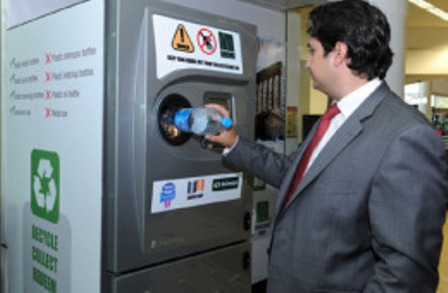
Lebanon could get a lot cleaner thanks to a brilliant plan devised jointly by Nestle Pure, Spinneys, and Servicorp.
That’s right. Nestle Pure, Spinneys, and Servicorp are planning to save Lebanon from the plastic waste that kills tens of thousands of Mediterranean creatures each year by introducing reverse vending machines to certain Spinneys locations throughout the country. Their initiative called “Protect Lebanon – Recycle Today” will allow users to return their empty plastic bottles and cans to the vending machines for a small return.
With nearly 200,000 employees, Nestle in particular is frequently criticized for promoting alternatives to breastmilk. Spinneys in the United Arab Emirates is known to stock endangered fish species, and I don’t have any juicy scoop on Servicorp. Suffice it to say that it was surprising to learn that these three businesses have devised a brilliant plan to energize Lebanon’s soporific recycling movement.
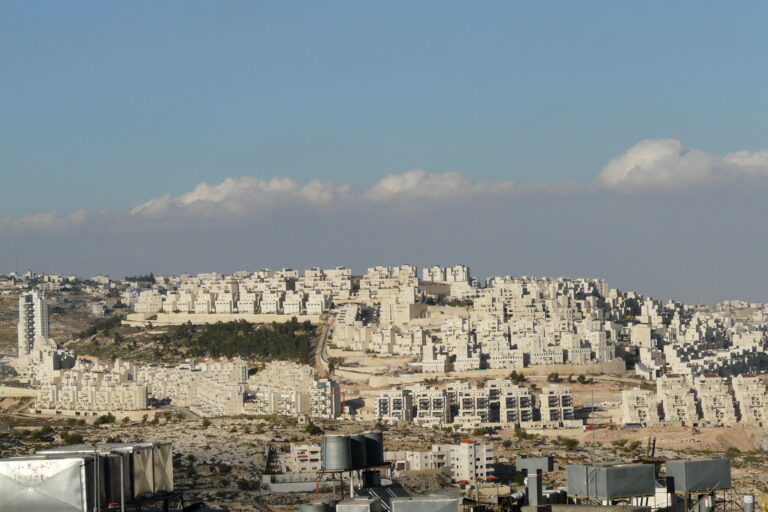
The Israeli cabinet has just announced a decision to invest millions in renewable energy projects in the controversial Israeli settlements of the West Bank
Whilst this move has been welcomed by green activists in principle, there have been concerns over the fact that solar fields will be built in the Israeli settlements of the West Bank. The continuing growth of the Jewish settlements across the West Bank is one of the most widely contested issues in the region and is considered to be a major barrier to Israel and Palestine reaching a peace deal. So does green progress outweigh these political downfalls?
Inflatable wind turbines are lighter and cheaper than heavy conventional ones
Following a number of Israeli clean technology companies being winners in the General Electric Company’s Green Innovation Marathon, GE has announced plans to establish a “Green Tech Shop” in Haifa in which a number of renewable energy and other green technology projects will be developed under the giant American electronics company’s sponsorship. One of these green companies, Winflex LTD, is set on proving that harnessing energy from the wind does not have to involve the use of large cumbersome wind turbines, such as the wind turbines now churning away on the Golan Heights.
Muslim, Jewish, and Christian leaders are meeting today in Jerusalem to discuss climate change and launch the new Interfaith Center for Sustainable Development.

 Since 2007, land dedicated to organic greenhouse farming across the United Arab Emirates has increased by 15 percent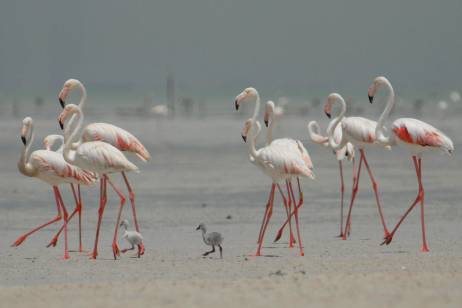



 Lack of space in urban environments often means that farming opportunities are limited, but a technique of farming indoors and upwards may resolve this problem