Home Blog Page 430

Severe Water Scarcity Could Hit Arab Region by 2015

1

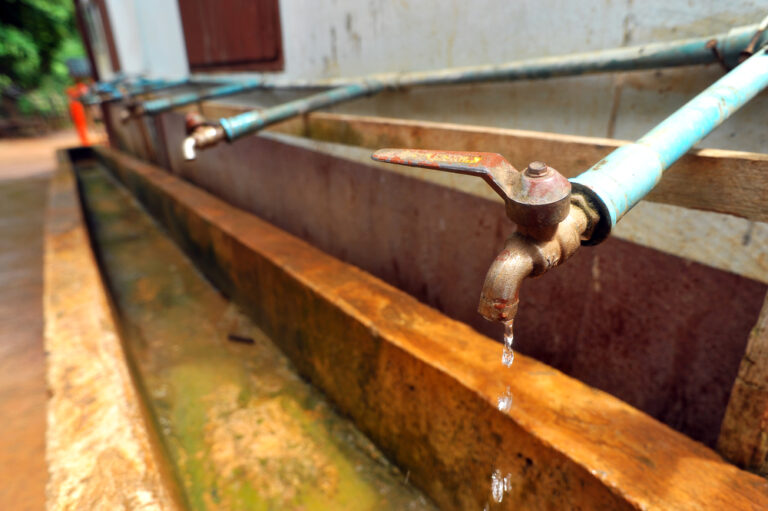
water tap shortageAlthough water scarcity is unlikely to lead to water waters, it is still devastating for the development and survival of any nation

The latest report by the Arab Forum for Environment and Development (AFED), “The Green Economy in a Changing Arab World”, definitely doesn’t make for happy reading. In fact, it is positively terrifying. According to the report, Arab countries could be facing a severe water crisis as early as 2015, with the region’s estimated annual per capita water share at less than one-tenth of the global average. That would bring it to just 500 cubic metres per capita – anything below 1,000 cubic metres is considered to pose a “significant constraint to economic development, health and well-being”. All these findings point to the fact that we are slowly but surely running out of time.

KarmSolar Prize Could Avail Solar-Powered Water Pump to Rural Egypt

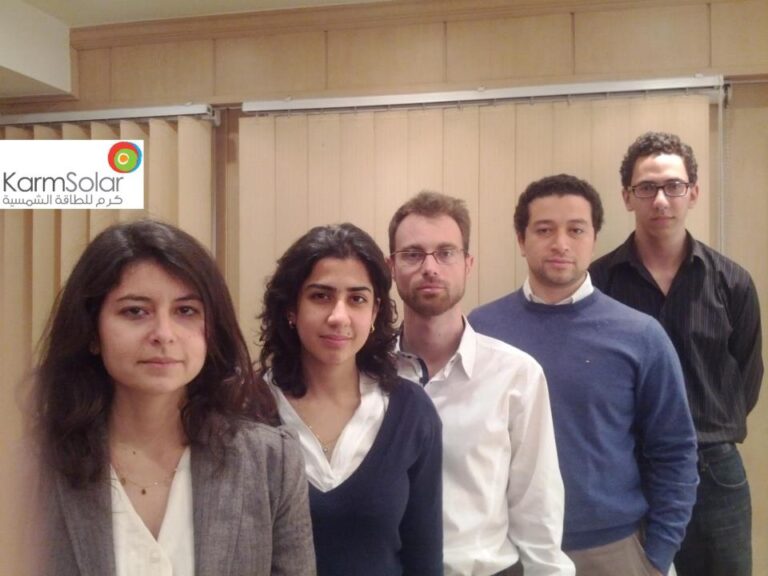
irrigation, cleantech, agriculture, solar-power, off-grid A dynamic young Egyptian firm has won an $11,000 innovation prize for an off-grid, solar-powered water pump. Judges of the first HCT-Wharton Innovation Tournament held last week in Abu Dhabi were impressed by KarmSolar because their design could easily have a high impact on great numbers of people, reduce dependency on diesel, and it would be quick to roll out.

Which is exactly what the firm hopes to do with their prize money: commercialize the pump as soon as possible in order to provide highly efficient off-grid irrigation to agricultural farms in rural Egypt.

Qatar (Still) Has the World’s Largest Carbon Footprint

0

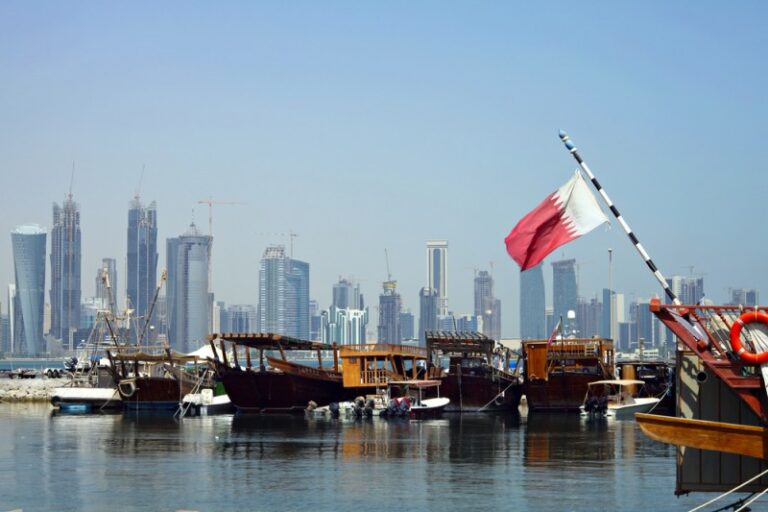
qatar-carbon-footprint-large-wwfAccording to the World Wildlife Fund’s latest report, Qatar still has the world’s largest carbon footprint

It’s been a couple of years since Qatar was awarded the ‘largest carbon footprint in the world‘ title (relative to the size of its population), but it appears little has changed since then. Despite various green initiative such as supporting local farms and ensuring that all new mosques were eco, they are still spewing record amounts of carbon for such a tiny nation. And once again, the nations next on the list were Kuwait and the United Arab Emirates. It seems that old habits die hard and no more so than in the Gulf.

Pesticides Causing Brain Damage to be Banned by Israel

1

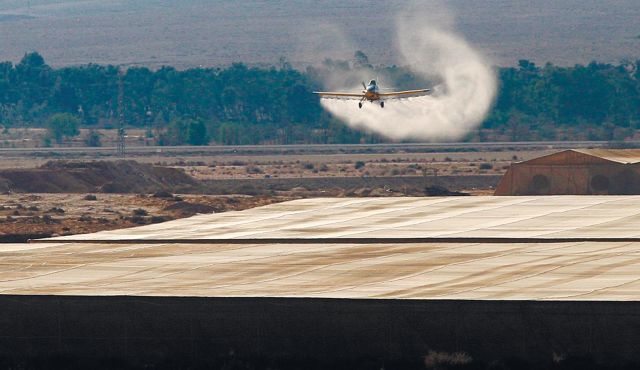
pesticides israelDown side of crop dusting is pesticides that cause neurological damage:  photo by Alberto Denkberg/Haaretz

Air and water pollution in Israel from insecticides, oil and other petroleum-based residues from older gas stations; and other chemicals are feared to be causing neurological damage to people according to new studies. Various forms of insecticides, especially the use of insecticides containing three types of organophosphate substances will be stopped in two months by the Israel Health Ministry, according to the Israeli newspaper Haaretz. 

Dubai Radio Mauls Gulf’s Un-green Malls

0

united arab emirates mall Emirati malls suffer a blistering review in a 21 minute podcast on green retail.

Radio station Dubai Eye 103.8 FM (which not long ago featured Green Prophet here) recently broadcast an interview with Buro Happold’s expert in sustainability and alternative technologies, Robert Cooke. Cooke, who is also Technical Committee Coordinator of Emirates Green Building Council, begins by saying malls in the United Arab Emirates are getting greener, then serves up a proper tongue-lashing on their environmental shortcomings. Click below to give a listen and to hear some straight talk about un-green retail; and the learn about the newest sustainability rating system coming online.

Eclectic HAAZ Art Gallery in Turkey Receives a Sustainable Upgrade

0

It has been a year since the HAAZ Design and Art Gallery in a popular shopping district of Istanbul received a sustainable upgrade from renowned designers Global Architectural Development (GAD), but the vibrant space continues to shine. As space and materials become increasingly limited in cities everywhere, it is more important than ever to make do with existing buildings.

But GAD does more than that. Their deft transformation of this double-storey apartment is art in itself – from zigzagging oak floors to graphic wallpaper, their signature light touch both meets and enhances the eclectic vision of gallery owners Özlem Avcıoğlu and Murat Patavi to create an almost otherworldly experience.

Ayoub Abu-Dayyeh is Jordan’s Environmental Champion

4

[youtube]http://www.youtube.com/watch?v=8Hh0-lxNqoo[/youtube]
Earlier this month, Japan ended its love affair with nuclear power. Does Jordan begin where Japan left off?

Environmentalists applaud the shutdown of Japan’s last working reactor, but economists are not as enthused.  Before the Fukushima disaster knocked out four of their 54 reactors, atomic energy provided almost 30% of the country’s electricity. All remaining reactors have been taken offline for mandatory maintenance. Severing nuclear ties provides unprecedented opportunity to transform national energy policy: ideally, Japan will tap into renewables and step up efficientcy to fill their energy production gap.

Meanwhile, in Jordan, there’s potential to revise the power strategy before catastrophe demands.

Earlier this year, The Jordan Times reported that energy officials were readying to select a vendor for the country’s first nuclear reactor:  a final decision was expected in March, despite growing public resistance.

Green Prophet’s interview with anti-nuke activist Basel Burgan attracted comments from both sides of the debate. Ayoub Abu-Dayyeh, lecturer on Environment and Energy at Zaytouneh University and part of UNESCO’s international committee on clean energy, was especially engaged.

The founder and President of the Environmental Conservation and Sustainable Energy Society (CASE), Dr. Abu-Dayyeh shares his views with Green Prophet.

7th Red Sea Oil Spill Since September Goes Virtually Unnoticed

0

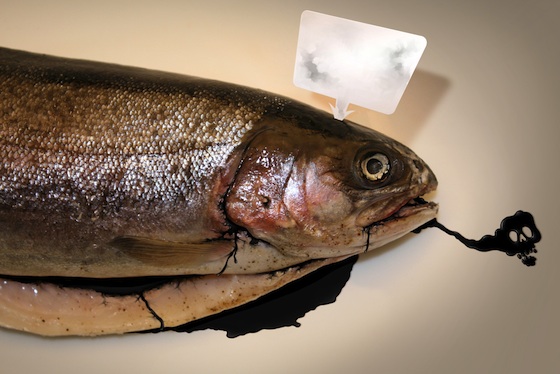
oil spill, Red Sea, nature conservation, pollution, natural resourcesThe seventh oil spill in the Red Sea since September, 2011 has gone virtually unnoticed. The most recent spill in Gamsha Bay, which has been attributed to General Petroleum Company, has received no additional press coverage after it was reported last week in Egypt Independent.

Both an onshore and offshore leak, it is particularly hazardous as large quantities of hydrogen sulfide gas are being released.

Director Hassan Abdel Salan said that the company is drilling an additional three wells to stem the leak, which appears to have been continuing over a period of several months, but blames Ministry of Environment researchers sent to evaluate the scene for failing to conduct thorough geophysical surveys.

Green Prophet has been unable to verify these reports but the local newspaper claims that General Petroleum has been fined $300,000 for their role in the spill. Even though Egypt is caught up in major political upheavals given the ongoing presidential race, if there is to be any hope of recovery, somebody ought to start paying serious attention to the country’s vulnerable natural resources.

Image credit: Contaminated Fish, Shutterstock

Owl Love Knows no Borders

0

wildlife, transboundary conservation, pest control, Israel, Jordan, LevantWe’re fond of saying that nature knows no borders but we could never have illustrated the point as well as a recent story from the Society for the Protection of Nature in Israel (SPNI).

The Barn Owls pictured above have recently parented seven little owlets in a nesting box situated on Kibbutz Ma’oz Hai’im just a skip from the border with Jordan, but here’s the rub: the male on the right is Israeli and the female on the left is Jordanian!

Nobel Winner Orhan Pamuk Devotes a Museum to Ordinary Things

stuff, consumerism, Orhan Pamuk, Istanbul, TurkeyPaying homage to a slower time, Turkey’s first nobel prize winning author Orhan Pamuk has immortalized the importance of everyday objects in The Museum of Innocence. Among the world’s most unique collections, the museum that opened last month in Istanbul’s Beyoğlu district contains 83 cabinets full of bits and pieces collected in flea markets and antique shops.

Each cabinet represents a chapter in Pamuk’s book of the same name in which the main character, Kemal Basmaci, the son of a wealthy industrialist, collects artifacts that remind him of his cousin – a poor sales woman (who is also his cousin) with whom he is completely smitten. 

May’s Seasonal Produce: Sour Plums and Cherries

7

image-sour-green-plumsSour green plums the size of large marbles are in the shuk now, a seasonal favorite of the Iraqi community. Eat them out of hand as a snack, sprinkling each bite with a little salt. The classic Iraqi way to cook them is to pair them with meat in a flavorful stew. And if you want to ask for them in Persian, say, “Gojeh sabz!”

Fruit: The summer wave of colorful fruit has begun, to the rejoicing of cooks who love to put up preserves.  Apricots, peaches, and nectarines have entered the markets, and are already sweet enough to be worth buying. Strawberries are still with us, although getting seedy in preparation for disappearing till next year. If you haven’t made your jam yet, here’s our recipe. Kiwis are sweet and ripe.

Cherries have arrived, and farmers predict huge crops this year due to the prolonged winter this region enjoyed, which allowed the trees to “sleep” and blossom after the windiest weather. Last year’s crop almost didn’t exist, due to windstorms that blew most of the blossoms off the trees.

Avocados are still in the market, but getting expensive again as their season wanes. As expected in warm weather, all the melons are sweet and ready for eating.  Fresh green almonds have a different character now, because the milky interior gel has hardened into soft, pale kernels already. If you like them, buy now, for they will soon disappear. Loquat season is prolonged and abundant this year, with bigger and sweeter fruit than I’ve ever seen before.

Citrus fruit are still in evidence, with oranges, pomelos, and clementines for sale. Lemons are big and juicy; some lemon trees give two yearly crops, which accounts for their almost year-round presence. Good news for those who like to put up salty preserved lemons.

Vegetables: Tomatoes are expensive and will remain so for the next week or two, when a new crop comes in. If budget-conscious, look for smaller, less glamorous-looking tomatoes; they are just as good and cheaper. Depending on the day, cherry tomatoes can be cheapest of all.

The best bargains in vegetables today are cauliflower and all the cabbages, which are big, firm, and cheap. Okra is in season, although expensive. String beans, broad Italian beans and wax beans look fine now, as does sweet corn.

Parsley root and celeriac continue full and fat, but as summer temperatures rise, these roots will shrink back and won’t be worth bothering with. The same is true of celery, by the way. Kohlrabi, fennel, beets, turnips, and red radishes are very good now, at reasonable prices.

Summer loves white and red potatoes; time to make one of those Middle Eastern potato salads fragrant with olive oil and lemon. Cucumbers, corn, and eggplants are good now. Come really hot weather, get to the market early for decent eggplants. They are susceptible to heat and in full summer, they buckle in, languishing on the vendor’s stands.

All the peppers are good in May. Look for baby bell peppers for stuffing.  Grilled, and combined with grilled eggplant, peppers make a delicious dip, similar to muhamarra.
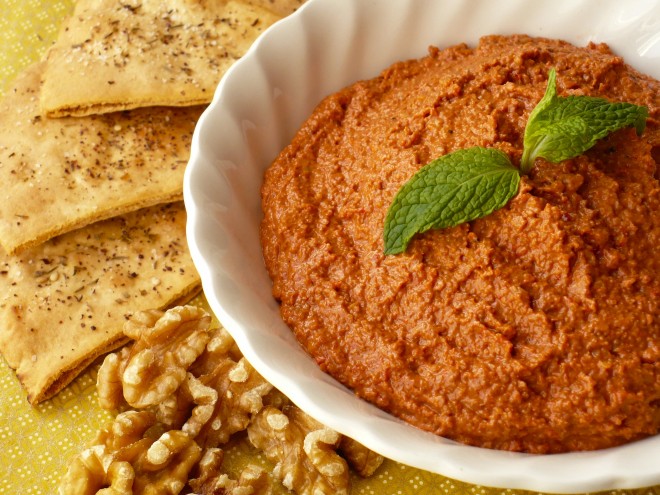
muhammara in a white bowl

Here’s our recipe: just substitute grilled eggplants for the bread. Another well-loved Middle Eastern dish is stuffed zucchini – and zukes are looking good now too.

Pumpkins and butternut squash are in season. Combine one of them with a cob of local sweet corn, an onion, a tomato and your favorite herbs for a delicious soup. As every good cook knows, foods that come into season at the same time taste good together.

Two Middle-Eastern summer specialties are akoub, or tiny wild artichokes. They’re very thorny and labor-intensive to clean, so they’re always expensive. But as a seasonal treat, they can’t be surpassed, with their unique, delicate flavor. Any prickles that remain after cleaning soften upon cooking.

Melokhia, or mulokhia, has started its brief season. Here’s our recipe for traditional melokhia soup. The leaves may be rinsed, patted dry, and hung up by their stems to dry for future soups.

Herbs: Basil is back again. At the herb vendors, there are plenty of parsley, coriander leaf, chives, celery, and scallions. Still in evidence are sorrel, tarragon, wormwood, Swiss chard, spinach, leeks and lettuces. Mint continues especially lovely. Grape leaves for stuffing are now being sold in stacks. You may find bunches of lemon verbena for sale now.

Fresh ginger root is in every spice vendor’s and also at the herb stands. Ginger root freezes well and is easy to peel and grate. Just put the remainder right back in the freezer after use, because it gets mushy once thawed out.

UPDATE MAY 2013: Stone fruit (apricots, peaches, nectaries) are still new in the markets and not really sweet yet. It’s worth waiting another week to start putting up preserves.

Cherries have arrived; still quite expensive at this writing.

Watermelons and cantaloups are already sweet and delicious.

Forager’s notes: The landscape is drying up, with winter’s juicy wild greens just a memory. But there is always something for the alert forager to bring home. Purslane, summer’s featured wild edible, has started to appear on the ground. It’s tender now, so if you come across a nice patch of it, bring it home for your salads.

For a sip of sweetness and to revive childhood memories, pluck a few honeysuckle blossoms. Honeysuckle can be made into wine: if you are determined and have access to a large quantity of pesticide-free blossoms, you can find the recipe online. To capture that elusive flavor more easily, just drop a handful into a jar, cover with sugar, and wait a week.  Rosemary is flowering, and it’s worth robbing the bees of a few blooms to flavor tea.

The dandelion of the Middle East is Taraxacum syriaca. It flowers sparsely and can only be found in hilly regions where winters are cold and consistently rainy. Dandelion is famous for liver support and as an effective diuretic. It’s also a natural superfood, loaded with minerals and vitamins.If you’re lucky enough to live where dandelions grow, pick the tender young leaves to marinate in vinaigrette before adding to salads. Older, tougher leaves are quite bitter, but a few cooked with almost any soup gives a delicious, not-bitter flavor. Dandelion roots are excellent in soups and stews. I used to make dandelion beer from the roots and leaves when I lived in the chilly north of Israel; there are recipes online. It was good beer, too.

Chicory shares all of dandelion’s medicinal properties, but is difficult to pick. The leaves are tiny, and the root almost impossible to dig out of the hardened soil where the plant is most often found. The fluffy blue flowers are a joy to behold early in the morning, though, especially when you catch just the moment when all of them open spontaneously at the same time.

Bindweed, the bane of farmers for its strong, thin vines that strangle crops in the fields, still produces beautiful pink and white flowers. Fill a vase with sprays of honeysuckle and bindweed for a wildflower bouquet to rest your eyes on.
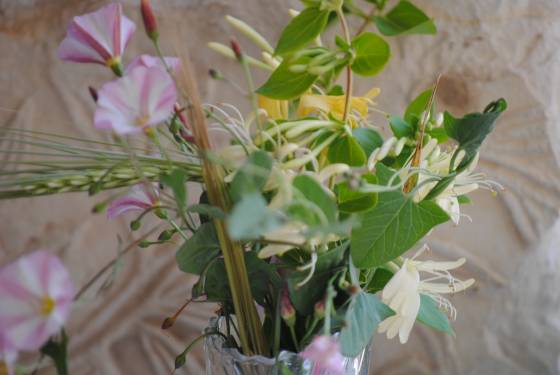
image-honeysuckle-bindweedRecipes starring Middle-Eastern produce in season now:

 Baba Ganoush

Stuffed Zucchini

Basil Pesto

Photos of sour plums in shuk Mahaneh Yehudah, Jerusalem and of honeysuckle/bindweed bouquet  by Miriam Kresh.

Israel Environment Minister Proposes Cuts to Gaza Electricity to Bridge Shortfalls

2

renewable energy, Israel, Ministry of Environment, electricity cuts, energy shortages, Gaza StripWe should all keep an eye on the Levant this summer as it manages a severe energy crisis, because what is currently unfolding on a regional scale is likely to eventually take place internationally as well. Israel, Jordan, Egypt and the Palestinian Territories are all taxed by dwindling energy supplies and rising demand, and each country’s response to this dual challenge is worth noting.

Egypt cut off its supply of natural gas to Israel, Jordan is working furiously to get oil shale plants online, foreign aid organizations have been supplying renewables to the West Bank and Gaza and most recently, Israel’s Environmental Minister proposed a plan to cut off Israel’s electricity supply to Gaza in order to prevent shortfalls in their own energy supply.

Enforcing Smoke-free Workplaces in Jordan

5

smoking cigarette jordan cartoon

I just spit out my coffee. About to move house for the fifth time in as many years, I take a day to escape the cardboard box Himalayas towering in the living room.  Plus there’s heavy construction going on next door, and it sounds like all of Amman’s stray cats are in heat. I grab a laptop and head to the nearby Taj Mall Lifestyle Destination, to experience a 90s cliché: sit in a coffee shop and quietly write. I fire up the Internet. See a news alert from The Jordan Times: Jordan featured as regional pioneer in enforcing smoke-free business environments? (There goes that coffee.)

Archaeologists Discover Lost Language In Southeastern Turkey

0

cuneiform tablet turkey lost languageA list of women’s names written in cuneiform is the only remnant of this unidentified language, which was spoken 2,500 years ago.

Found in the remains of an enormous palace that was destroyed by a fire around 700 BCE, the clay tablet pictured above holds the only remnants of a language previously unknown to modern scholars.

The language could contribute to our understanding of the ethnic groups who lived in the area thousands of years ago, and help map their interactions with the Assyrian Empire, according to Science Daily.

Jordanian Bank Sanabel Buys One Quarter of a Congo Forest

2

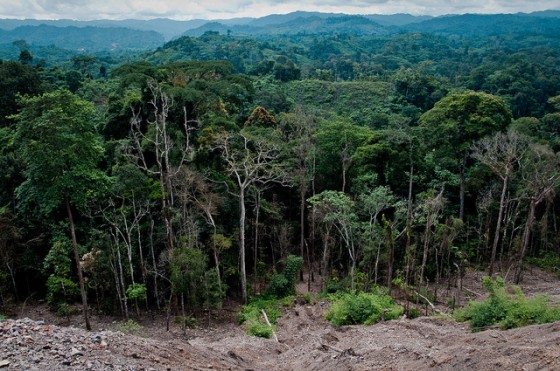
congo-forest-jordan-sanabelAn Islamic bank in Jordan, Sanabel, has bought up over a quarter of a Congo forest for ‘sustainable projects’

When I first read about the acquisition of 500,000 hectares of high value forest in the Democratic Republic of Congo by an Islamic investment bank in Jordan, I thought one thing: land grab.

Over the last couple of years, countries across the MENA region have been buying tracts of land all over Africa. Worried about the rising cost of food as well as declining natural resources locally, they have been trying to make sure that their eggs (so to speak) aren’t all in one basket. Egypt has bought up land in Sudan, Saudi Arabia has staked a claim on land in Ethiopia and the United Arab Emirates has farms in Sudan, Morocco and Algeria.

However, this latest land acquisition by Sanabel is a little more interesting as it claims to come with some green credentials. According to news reports, Sanabel which is Jordan’s first Islamic investment bank is considering a number of “Sharia’ compliant forestry activities” for the land it has purchased. These range from afforestation and reforestation projects, and protecting the land from deforestation and sustainable agro-forestry projects.

I have written about the ethical aspects of Islamic banking in the past and also the important role they could be playing in protecting the planet, so it’s great to see some action being taken. Indeed Al-Sanabel Chairman and CEO Khaldoun Malkawi explained that these activities are entirely compatible with Islamic banking principles since they simultaneously help to fight climate change by protecting biodiversity, reducing poverty and promoting corporate social responsibility.

Sanabel did however also add that this purchase is part of their plans to capitalise on the rapidly growing carbon trading market. This means that the company “will develop forest carbon credits projects that will protect the role of forests in mitigating climate change.”

As such Sanabel will be hoping to get companies to pay them to preserve the forestland in Congo and protect it from deforestation in return for carbon credits which help them meet their carbon reduction targets.

This is, however, where it gets a little messy.

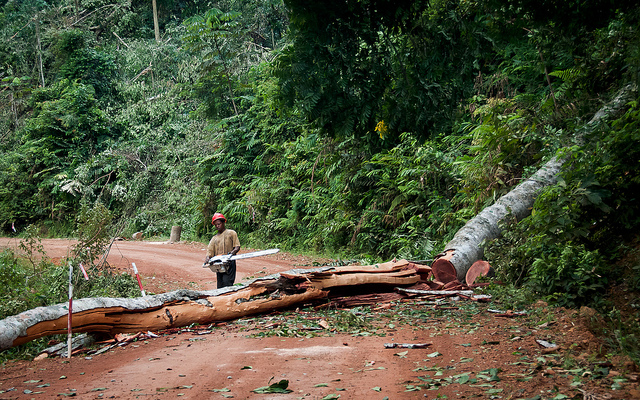
congo forestFirstly, the carbon credit market has been widely criticised for allowing business to continue spewing lots of emissions. It turns out that buying carbon credits from schemes such as the one that Sanabel will be running is a lot cheaper and easier for businesses than actually cutting their own emissions.

So instead of protecting the environment and helping tackle global warming, these scheme just help companies continue their destructive practices.

The second issue that needs to be considered is the displacement of poor people living in these forests. For example, 70,000 indigenous people living in the western region of Gambella in Ethiopia were forced to relocate as the land had been living on was bought up by foreign investors. Saudi Star Agriculture Development was one of the companies implicated in this forced displacement.

Land ownership is a hugely contested issue and passing on ownership to a foreign government can only make the situation more complicated.

So while I’m happy to see Islamic banks consider green projects, I think they need to do better next time. They need to show that they aren’t out just to make a quick buck and also that they take their environmental responsibilities seriously.

Update March 2020: the website/Facebook page for Sanabel is down.

Images of Congo forest via bobulix/flickr.

For more on African land grab see:
Egypt to Grab Sudanese Land To Meet Its Wheat Needs
Africa Up For Sale, Is The Middle East Buying?
Arab States Buy Up Vast Tracts Of African Farmland