“In the midst of uncertain time, renewable energy remains consistent and steadfast in its expansion,” said Francesco La Camera, IRENA’s Director-General. “A more decentralised energy system, with a growing share of renewables and more market players, is structurally more resilient.”
Health insurance is a regulated financial product. Insurers operate under binding contracts, overseen by state insurance commissioners, that legally obligate them to pay claims meeting policy terms. Policyholders who believe a covered claim was wrongfully denied have legal recourse through state regulatory channels.
The New Zealand Merino Company, now rebranded as Zentera, has quietly removed the phrase “world’s leading ethical wool brand” from its website, a notable change that comes after a disturbing investigation by PETA Asia-Pacific into the company’s ZQ-certified wool supply chain, PETA reports to Green Prophet.
Somehow vegetables with short seasons excite the imagination and appetite more sharply than produce that’s available all year around. Good Middle Eastern cooks have many recipes for delicate fava beans, and this turmeric-fragrant soup is one.
“In the midst of uncertain time, renewable energy remains consistent and steadfast in its expansion,” said Francesco La Camera, IRENA’s Director-General. “A more decentralised energy system, with a growing share of renewables and more market players, is structurally more resilient.”
Health insurance is a regulated financial product. Insurers operate under binding contracts, overseen by state insurance commissioners, that legally obligate them to pay claims meeting policy terms. Policyholders who believe a covered claim was wrongfully denied have legal recourse through state regulatory channels.
The New Zealand Merino Company, now rebranded as Zentera, has quietly removed the phrase “world’s leading ethical wool brand” from its website, a notable change that comes after a disturbing investigation by PETA Asia-Pacific into the company’s ZQ-certified wool supply chain, PETA reports to Green Prophet.
Somehow vegetables with short seasons excite the imagination and appetite more sharply than produce that’s available all year around. Good Middle Eastern cooks have many recipes for delicate fava beans, and this turmeric-fragrant soup is one.
“In the midst of uncertain time, renewable energy remains consistent and steadfast in its expansion,” said Francesco La Camera, IRENA’s Director-General. “A more decentralised energy system, with a growing share of renewables and more market players, is structurally more resilient.”
Health insurance is a regulated financial product. Insurers operate under binding contracts, overseen by state insurance commissioners, that legally obligate them to pay claims meeting policy terms. Policyholders who believe a covered claim was wrongfully denied have legal recourse through state regulatory channels.
The New Zealand Merino Company, now rebranded as Zentera, has quietly removed the phrase “world’s leading ethical wool brand” from its website, a notable change that comes after a disturbing investigation by PETA Asia-Pacific into the company’s ZQ-certified wool supply chain, PETA reports to Green Prophet.
Somehow vegetables with short seasons excite the imagination and appetite more sharply than produce that’s available all year around. Good Middle Eastern cooks have many recipes for delicate fava beans, and this turmeric-fragrant soup is one.
“In the midst of uncertain time, renewable energy remains consistent and steadfast in its expansion,” said Francesco La Camera, IRENA’s Director-General. “A more decentralised energy system, with a growing share of renewables and more market players, is structurally more resilient.”
Health insurance is a regulated financial product. Insurers operate under binding contracts, overseen by state insurance commissioners, that legally obligate them to pay claims meeting policy terms. Policyholders who believe a covered claim was wrongfully denied have legal recourse through state regulatory channels.
The New Zealand Merino Company, now rebranded as Zentera, has quietly removed the phrase “world’s leading ethical wool brand” from its website, a notable change that comes after a disturbing investigation by PETA Asia-Pacific into the company’s ZQ-certified wool supply chain, PETA reports to Green Prophet.
Somehow vegetables with short seasons excite the imagination and appetite more sharply than produce that’s available all year around. Good Middle Eastern cooks have many recipes for delicate fava beans, and this turmeric-fragrant soup is one.
“In the midst of uncertain time, renewable energy remains consistent and steadfast in its expansion,” said Francesco La Camera, IRENA’s Director-General. “A more decentralised energy system, with a growing share of renewables and more market players, is structurally more resilient.”
Health insurance is a regulated financial product. Insurers operate under binding contracts, overseen by state insurance commissioners, that legally obligate them to pay claims meeting policy terms. Policyholders who believe a covered claim was wrongfully denied have legal recourse through state regulatory channels.
The New Zealand Merino Company, now rebranded as Zentera, has quietly removed the phrase “world’s leading ethical wool brand” from its website, a notable change that comes after a disturbing investigation by PETA Asia-Pacific into the company’s ZQ-certified wool supply chain, PETA reports to Green Prophet.
Somehow vegetables with short seasons excite the imagination and appetite more sharply than produce that’s available all year around. Good Middle Eastern cooks have many recipes for delicate fava beans, and this turmeric-fragrant soup is one.
“In the midst of uncertain time, renewable energy remains consistent and steadfast in its expansion,” said Francesco La Camera, IRENA’s Director-General. “A more decentralised energy system, with a growing share of renewables and more market players, is structurally more resilient.”
Health insurance is a regulated financial product. Insurers operate under binding contracts, overseen by state insurance commissioners, that legally obligate them to pay claims meeting policy terms. Policyholders who believe a covered claim was wrongfully denied have legal recourse through state regulatory channels.
The New Zealand Merino Company, now rebranded as Zentera, has quietly removed the phrase “world’s leading ethical wool brand” from its website, a notable change that comes after a disturbing investigation by PETA Asia-Pacific into the company’s ZQ-certified wool supply chain, PETA reports to Green Prophet.
Somehow vegetables with short seasons excite the imagination and appetite more sharply than produce that’s available all year around. Good Middle Eastern cooks have many recipes for delicate fava beans, and this turmeric-fragrant soup is one.
“In the midst of uncertain time, renewable energy remains consistent and steadfast in its expansion,” said Francesco La Camera, IRENA’s Director-General. “A more decentralised energy system, with a growing share of renewables and more market players, is structurally more resilient.”
Health insurance is a regulated financial product. Insurers operate under binding contracts, overseen by state insurance commissioners, that legally obligate them to pay claims meeting policy terms. Policyholders who believe a covered claim was wrongfully denied have legal recourse through state regulatory channels.
The New Zealand Merino Company, now rebranded as Zentera, has quietly removed the phrase “world’s leading ethical wool brand” from its website, a notable change that comes after a disturbing investigation by PETA Asia-Pacific into the company’s ZQ-certified wool supply chain, PETA reports to Green Prophet.
Somehow vegetables with short seasons excite the imagination and appetite more sharply than produce that’s available all year around. Good Middle Eastern cooks have many recipes for delicate fava beans, and this turmeric-fragrant soup is one.
“In the midst of uncertain time, renewable energy remains consistent and steadfast in its expansion,” said Francesco La Camera, IRENA’s Director-General. “A more decentralised energy system, with a growing share of renewables and more market players, is structurally more resilient.”
Health insurance is a regulated financial product. Insurers operate under binding contracts, overseen by state insurance commissioners, that legally obligate them to pay claims meeting policy terms. Policyholders who believe a covered claim was wrongfully denied have legal recourse through state regulatory channels.
The New Zealand Merino Company, now rebranded as Zentera, has quietly removed the phrase “world’s leading ethical wool brand” from its website, a notable change that comes after a disturbing investigation by PETA Asia-Pacific into the company’s ZQ-certified wool supply chain, PETA reports to Green Prophet.
Somehow vegetables with short seasons excite the imagination and appetite more sharply than produce that’s available all year around. Good Middle Eastern cooks have many recipes for delicate fava beans, and this turmeric-fragrant soup is one.
Graduation by Demonstration is a school assignment on steroids.
Educators Michael Gohde and Molly Van Cleave dreamed up this novel project over three years ago as a means to exercise all the skills in an 8th grader’s backpack.
Middle school lays the foundation for high school. Kids learn to write. Really write. They learn to dig in, conduct serious research to support their ideas. They tap into facts and use logic. They’re challenged by teachers and critiqued by their peers. Their minds open to new ideas. They become more effective communicators with key skills that will last a lifetime.
Amman’s American Community School is a melting pot of culture, religion, income and family make-up. The student body is a rich soup made up one part Americans; two parts Jordanians with a US connection; and a heaping spoonful of English-speaking Europeans, Asians, Africans and South/Central Americans with Jordan-employed parents. The faculty is equally diverse.
The district of Sulukule has been home to Istanbul’s Roma community since Byzantine times, but many of its residents were displaced to make way for a development project that started three years ago.
Sulukule was declared a target area for “urban transformation” by the Turkish cabinet in 2006. Six years, four lawsuits, and many evictions later, an Istanbul court has finally declared the project not to be in the public interest, reports Turkish independent media center Bianet. In the meantime, however, irreparable demolition and damage has occurred to the area and its residents.
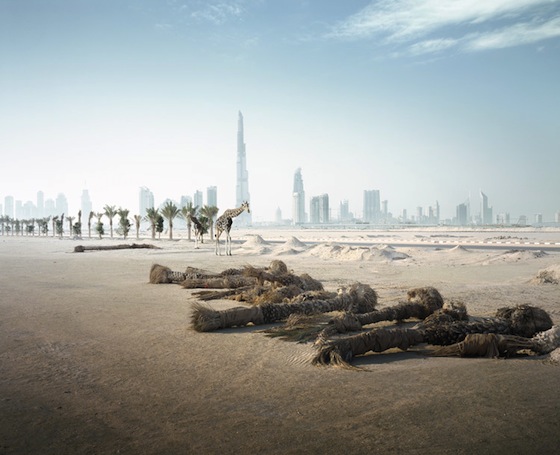
We’ve never been able to shake the vision of an apocalyptic Dubai – a seemingly inevitable time when the scores of largely unoccupied skyscrapers inching towards the Gulf will be evacuated and swallowed up by the surrounding desert. And now renowned British photographer Richard Allenby Pratt has created a series of images called Abandoned that makes such a nightmare tangible. By inserting images of the odd lion, rhino, or kangaroo in the dry and broken landscape, Richard calls attention to the plight of the world’s creatures that we have so shamelessly plundered in our ceaseless devotion to acquisition.
Israeli diplomats and ministers have taken a quasi-Messianic tone as the Rio+20 United Nations conference approaches.”Our main message is that the world has the problems and challenges and Israel has the solutions,” said Galit Cohen, senior deputy director-general of Israel’s Environment Ministry. “Israeli innovation for the world.”
Israel has a reputation as an international hub of green technology. It has not only fostered a market for clean technology and sustainable innovation, but has also made these developments a national priority.
Egypt, Jordan, Lebanon, Libya, Morocco, the Palestinian Authority, Tunisia and Turkey were among the representatives at the SafeMed course on the environmental risk of ballast water last month. The course was offered in Malta and is designed to emphasize the effective implementation of the International Convention for the Control and Management of Ships’ Ballast Water and Sediments (BWM Convention).
SafeMed is funded by a number of Mediterranean nations. It is designed to encourage cooperation between members in maritime safety, security and the prevention of pollution and ecological damage from shipping. Ballast water exchanges are designed to facilitate safe and efficient shipping but if not carefully managed, they can spread invasive species around the world.
The Israeli government continues to process a bill that will regulate, for the first time, management of the country’s electronic waste. If it gets approved by the Knesset, the bill would require manufacturers to finance the proper recycling of their materials.
The bill would also stipulate that by 2020 it would be illegal to send electronic products that had not been recycled or reused to the regular landfill. Data from the Environmental Protection Ministry suggests that Israel produces 85,000 tones of electronic waste a year.
We’ve featured some of the world’s most beautiful mosques on Green Prophet, but this is the first that resembles a cave. Slated for a prairie landscape in Buyuk Cekmece on the outskirts of Istanbul, the Sancaklar Mosque by Emre Arolat Architects is designed to offer genuine reprieve from the growing madness of urban life.
This is achieved in part by surrounding the park’s higher elevation with tall walls that draw a distinct boundary it and the surrounding landscape. And then natural stone steps lead to a peaceful underground space that promotes a heightened spiritual experience.
The mayor of Lebanon’s capital Beirut has launched “Beirut is Amazing,” an ambitious plan to finally green up the infamous concrete city. Following dedicated activism and scores of complaints from urban planners and designers, the city recruited the private sector to help regenerate existing green spaces and to create a few more.
But Horsh Beirut, which constitutes 77% of the city’s green lung, will not be opened to the public yet, though mayor Bilal Hamad told The Daily Star that studies are being conducted to determine how to manage the park so that it is not destroyed. Meanwhile, a coalition of 12 non-government organizations will stage guerrilla picnics tomorrow at 13 spots throughout Beirut as part of ongoing efforts to gain access to the park, which has been closed for 20 years.
We’ve been wanting to write a post that will get our readers in the mood for summer eco-travel, but it’s bad business to send people to countries that are bubbling with underlying trouble. Here’s the kind of letter we’re expressly trying to avoid: “Your writers recommended that we visit Egypt to sample biomimicry tours or Fayoum’s gorgeous new eco-haven but then we were harassed in Tahrir Square and abducted in Sinai. We’re dumping you!”
Of course, we would never recommend anything we wouldn’t do, and are heading to Egypt next week despite the ongoing uncertainty, but we decided to keep this post really safe by suggesting a visit to five countries that have options for the earth-conscious travelers and that, for now, are unlikely to erupt in mayhem. And we really hope to never eat those words.
Essentially, if you’re coming from the US or Europe, don’t be surprised to find that there are no recycling bins outside your hotel rooms or earth-friendly shampoo in retail outlets. Instead, having a light footprint while traveling through the Middle East and North Africa requires critical thinking and often a little more effort than home.
Here are five countries that make it a little easier to connect with the earth without destroying it:
1. Oman
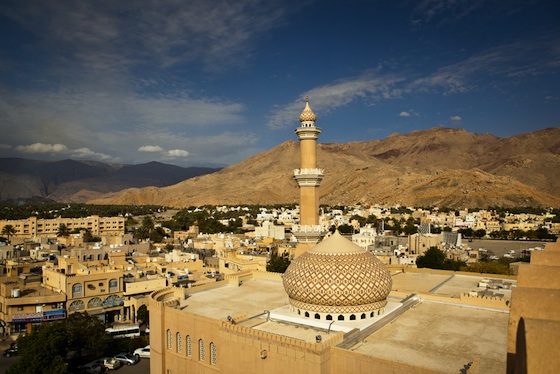
Technically-speaking, Oman is located in SW Asia on the Arabian Peninsula. But it’s a Sultanate, an Arab-speaking country, and lies within our realm of concern. It is also one of the most beautiful countries in the region, having retained so much more of the slow desert pace than its neighbors Saudi Arabia and the United Arab Emirates.
There are 2,092 kilometers of shoreline, a central desert plain and rugged mountains in the north and south and 32 Marine and littoral protected areas ensure that these vast natural reserves are reasonably well protected. It is also one of the premier diving spots in the world, a little known fact in the west, with over 100 dive sites to choose from around Musandam alone.
People are friendly and hospitable, it’s easy to obtain visas, and it is incredibly stable and peaceful.
2. Morocco
Although Morocco doesn’t have a pristine human rights record and activists constantly call attention to corruption, somehow King Mohamed VI has managed to quell any would-be riots.
Which means that tourists can travel without fear by bus and train to most locations, ensuring a lighter footprint than that of cars and planes, to resplendent locations that boast the nation’s rich cultural and natural heritage. There are eco-lodges galore, including one that looks like a castle, vegetarian restaurants, local crafts, and outdoor activities that draw scores of French and Spanish tourists from across the Mediterranean each year.
If you haven’t hiked to the top of Mt. Toubkal, slept under the stars in the Sahara, or sampled the ubiquitous tagine, this summer is as good a time as any. (Update 2024: European tourists were murdered on Mt Toubkal a few years ago. Women: travel with caution, and with a guide.
3. Jordan
King Abdullah II of Jordan has not been immune to the Arab Spring uprisings, nor has the country escaped rigorous anti-nuclear activism that has finally paid off, but the country is a reasonably-peaceful place to visit and there are an increasing number of activities for the earth-hearted traveler.
Occasionally there are small protests on Habib Bourguiba Avenue, the main road in downtown Tunis, and social inequities abound, but it’s a rising nation that does boast a small selection of earth-friendly attractions (in addition to a host of pressing ills).
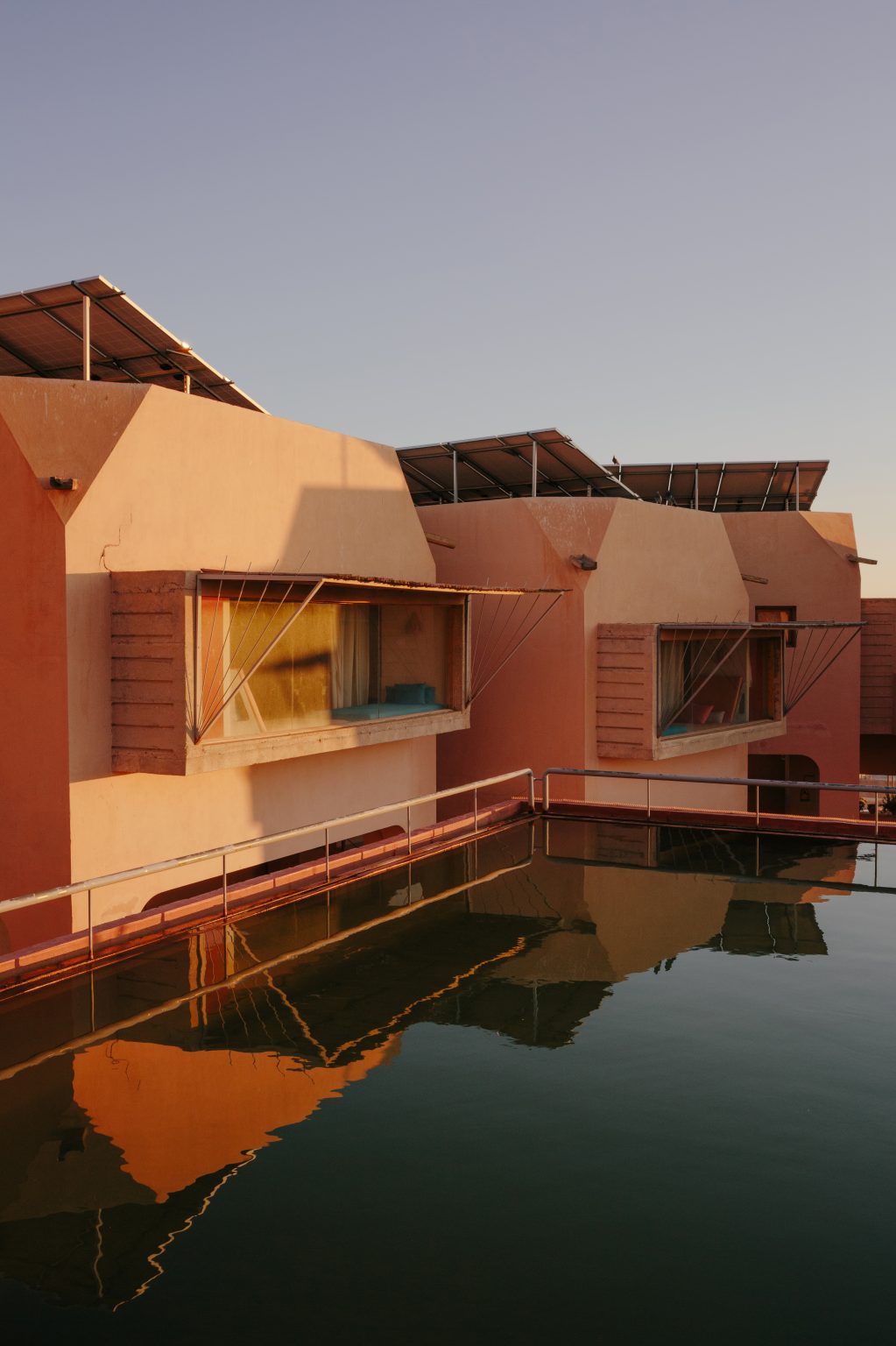
DAR HI eco-retreat in southern Tunisia
For a beautiful place to stay, try the DAR HI eco-retreat in southern Tunisia designed by Matali Crasset, and not far from there, a visit to the Matmata troglodytes are an illuminating experience (especially if undertaken at times when the tourist rush has either yet to fire up or has already simmered for the day.)
5. ISRAEL
Of all these countries, Israel is probably the greenest. And, it is also probably one of the safest despite the impression of relentless violence that mot media outlets portray.
Although political drama abounds, mostly it is restricted to the West Bank and Gaza Strip and even then, visitors are usually perfectly safe traveling through all of the areas that are open to them. The heavy security may be off-putting, but unless you’re actively seeking ways to get involved, it is surprisingly easy to take a break from current events.
We recently reviewed a handy DIY guide to Tel Aviv that points out many of the green options available in the city, including where to eat and sleep, and there are numerous hiking opportunities as well. During summer months, it’s probably more comfortable to hike in the mountains up north, although it isn’t unknown to set out on early morning trips in the Negev or along the Dead Sea.
Happy Summer Green Prophet readers. Stay safe, stay hydrated and most of all, stay green!
Kuwait is planning to build a city in the desert for 2,500 residents, and the Sabah Al-Ahmad Culture Center will be its nucleus. Albeit materially extravagant, BDP. has proposed a design that takes energy conservation very seriously. And in this relentlessly hot and humid seaside environment along the Gulf, that won’t be easy.
Integrated with photovoltaic panels, a lily pad roof hovering over the center will provide both power and shading, while cooling and ventilation towers combined with high thermal massing will establish a comfortable microclimate for what is expected to be a vibrant public gathering space brimming with educational, entertainment, research and exhibition opportunities.
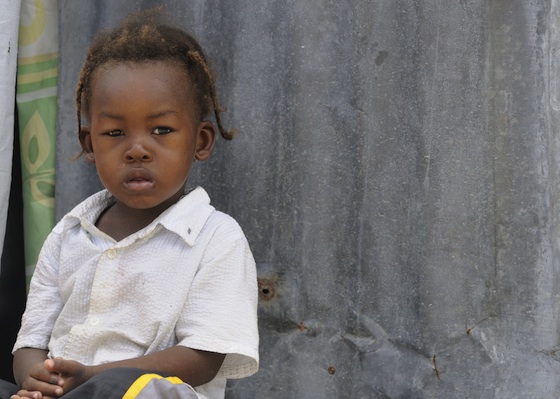
A young child sits in a Haitian tent city – a temporary housing solution for displaced refugees. Thousands of African migrants will soon be moved to similar units in Israel’s Negev Desert to the dismay of local residents.
Following a spate of violence against African migrants living in southern Tel Aviv, the Defense Ministry has dispatched dozens of bulldozers to Ketziot near the Egyptian/Israeli border to clear land for a detention center. Called Ir Amim, which means City of Nations in Hebrew, the desert asylum center will initially contain enough recycled shipping containers to house 3,000 African migrants.
Eventually the Ketziot center will be expanded to accommodate an additional 8,000 people. The Defense Ministry also announced that it will erect up to 25,000 tents for migrants in five detention centers that will be run by the prison service. The idea is to keep African migrants out of Israeli cities and create a deterrent to any future asylum-seekers. But the Negev Regional Council and local residents are deeply opposed to the plan.
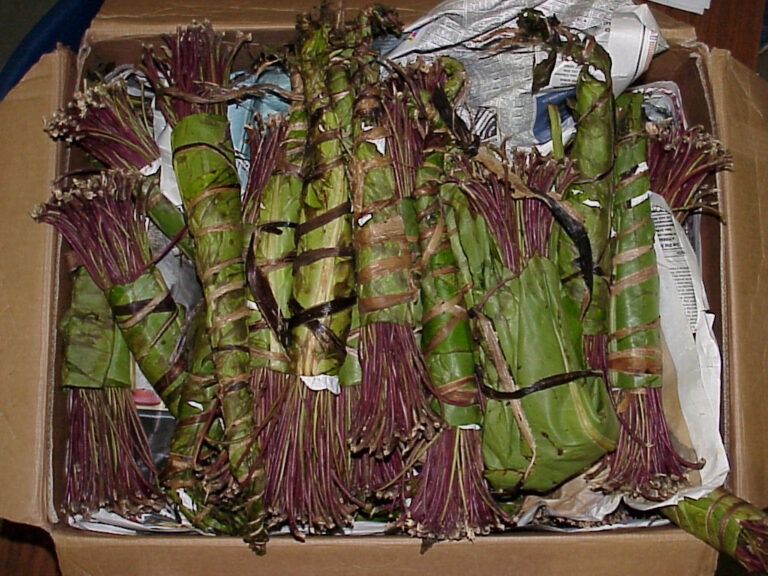
An illuminating article in Haaretz describes how certain industrious Israelis realized the marketing potential of khat juice – an exhilarating stimulant made from extracts of Catha edulis and other ingredients – and turned the potent drink into one of the most highly sought after drugs in all of Tel Aviv.
Dafna Arad goes into significant detail about the local social and health impact of this new trend, describing a society so eager to prolong their dancing and productive hours that they are flocking to restaurants to buy it, but does a little less to address the trend’s potential environmental consequence or its greater social impact.
Ruz Bukhari, a traditional and well-loved Arabic dish.
Pilgrims from Uzbekistan brought Ruz Bukhari with them long ago, as they traveled to Mecca and Medina. We’re sure they traveled by camel caravan, but nowadays pilgrims make their haj in all kinds of ways, even by bike. Along the way, the recipe infiltrated borders, as recipes tend to do, with Pakistan, Afganistan, and Arabic countries, eventually reaching Yemen.
Every country has its own version. Some cook Ruz Bukhari with lots of blended tomatoes. Some like it with fewer spices but accompany it with a salad made fiery with chillis. I prefer to serve this vegetarian version hot-spicy, with a cooling drink like Turkish Aryan or cold almond milk. Seasonings vary with the characteristic taste of every region. But everyone agrees that the spices make the dish.
Make this with brown rice for more nutrition, or white for more tradition. But the rice must be Basmati quality and no other.
Ruz Bukhari
Serves 6
Ingredients:
2 cups Basmati rise, rinsed and soaked in salt water 1/2 hour, then drained
2 tablespoons olive oil
3 onions, chopped
1/2 cup black raisins
3 teaspoons salt
1 teaspoon ground allspice or baharat spice
1 teaspoon turmeric
1/2 teaspoon pepper
1/4 teaspoon cayenne flakes
1 teaspoon ground cardamom
5 whole cloves
1/2 teaspoon cumin seeds
1 cinnamon stick
1 bay leaf
1 large carrot, diced
500 grams – 1 lb. fresh tomatoes, peeled and chopped
3 cups water, boiling
Equipment:
Medium-sized pot
Clean kitchen towel
Sauté onion in the olive oil till golden.
Keep heat at medium and add all the spices, stirring and cooking for 3 minutes.
Add carrots. Cook 5 minutes.
Add tomatoes and continue stirring for 10 minutes. Cook until the tomato juices have reduced and are just beginning to dry. You must keep a sharp eye on the pot here.
Add water carefully, avoiding the steam that will spurt up. Stir the bottom of the pot to loosen anything sticking there.
Add rice and raisins.
Cover with a kitchen towel and then the pot lid. Reduce heat to minimum. Steam for 20-30 minutes.
Allow the rice to sit off the heat 5 minutes before serving.
Researchers discover the negative link between Palm plantations, nesting birds and manta ray populations.
Over meals and sunset chats at a remote research station in Palmyra Atoll in the Pacific, a group of researchers from Stanford University discover one of the longest ecological interactions ever documented. While Douglas McCauley and Paul DeSalles were tracking manta ray movements for a predator-prey interaction study, Hillary Young was studying palm tree proliferation’s effects on bird communities and native habitats. Soon through discussions of their work and observations, the group of scientists began to see a link between manta ray population densities, bird communities and palm plantations.
Doctors at the Memorial Hospital, Istanbul, help patients’ recovery with soulful music.
In the Intensive Care unit, Dr. Erol Can puts a flute to his lips. He is wearing blue hospital scrubs and his stethoscope still hangs around his neck. Propped up in bed and connected to an oxygen tank, a patient listens as the anesthetist plays a makam – a piece in a classic Arabic/Turkish musical style.
A monitor displays his galloping pulse and blood pressure slowing down to a healthier pace. Dr. Can plays on, weaving music and science, body and soul together.

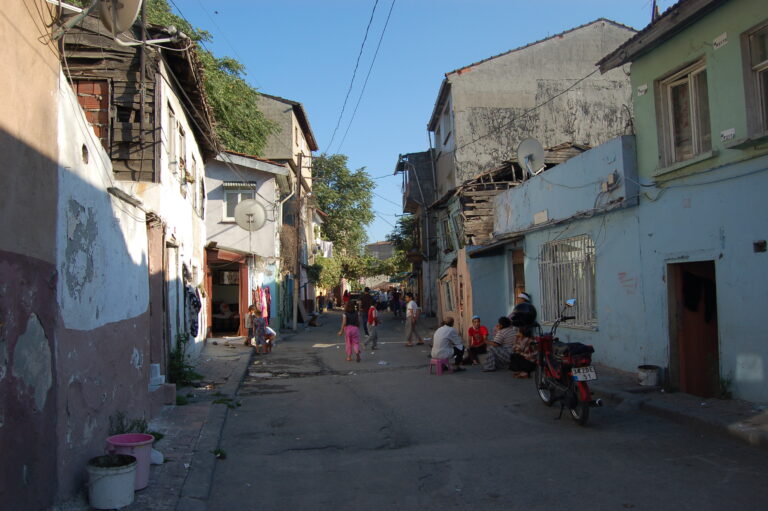
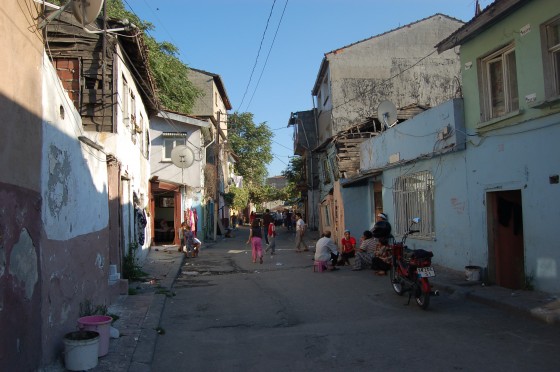 The district of Sulukule has been home to Istanbul’s Roma community since Byzantine times, but many of its residents were displaced to make way for a development project that started three years ago.