
 We first learned about Nature Iraq’s conservation in a combat zone in 2010. Back then Iraq’s only conservation NGO seemed to receive little ministerial support; three years later and the Council of Ministries has approved the group’s push to protect the Mesopotamian Marshlands as the country’s first national park.
Iraq’s Newly Protected Marshes a Huge Conservation Turnaround
$325,000 Fake Beef Burgers Grown in a Lab & Coming to a BBQ Near You!

 Green Prophet’s told you about fish reared on pork products and Jordanian cows banned because of lumpy skin, but this story about beef burgers cooked up in a petrie dish really takes the cake! The world’s first laboratory-grown hamburger was just served up in London.
Eating tabouleh with Druze in the Galilee
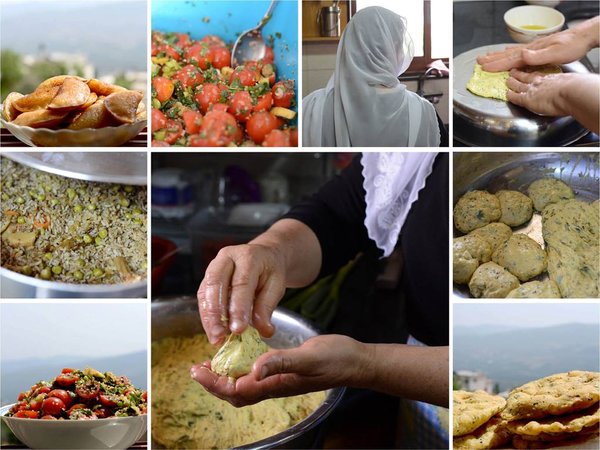
Fourteen picturesque Druze communities huddle in the shelter of Israel’s Galilee mountains. Although they flow freely in and out of Israeli society, the Druze stay close to home, marrying only other Druze and adhering to an Islam-based religion that they don’t discuss with outsiders. I have often wanted to know more about the Druze, to talk to their women and taste their food. But It never seemed possible to establish a contact with them.
Then I discovered a tour that brings outsiders like me to their homes, and indeed into their very kitchens. Paul Nirens, originally Australian and a long-time resident of the Galilee, organizes charming culinary workshops with Arab and Druze families, through his Galileat project. The families welcome paying visitors into their homes – or in my case, into their small restaurant – for classes where they teach, hands-on, how to cook a variety of traditional dishes.
Together with another group, I finally got to enjoy the authentic Druze cuisine. Under the watchful eyes of our hosts, we cooked most of a traditional meal, and then sat down to eat it. It wasn’t surprising, given the rural lifestyle, that Druze cuisine is based on vegetables grown in their own gardens, like baba ganoush, and home-pickled olives, and tahini. (Here are 8 delicious ways to enjoy tahini).
Our hostess wore the traditional long black dress and covered her hair with a light scarf. Her husband was on hand to answer questions about Druze life and society. I learned that traditional Druze women are not allowed to drive, and that both sexes observe strict modesty laws. Druze don’t eat pork, seafood or insects, nor do their laws allow alcohol.
However, I also learned that there there are those who live by a more liberal point of view. Some Druze women drive, work outside the community, and even own businesses. For the women who teach cooking, the workshops are a step towards financial independence or easing of a strained family budget. A surprise benefit is a new self-esteem.
“I do this as a business, clearly,” says Nirens. “But I get a sort of “added value” out of seeing how the women have suddenly developed a sense of empowerment through their ability to earn money. It never occurred to them that they have something to offer to people outside their village; that they have important skills. The fact that people come and find them interesting, that they can teach things that otherwise these people couldn’t learn, is very important. That, and the respect they gain.”
 Nirens adds, “I could make the workshops cheaper by paying the families less. They would accept that because they need the income. But then I wouldn’t sleep at night. I’ve been told I over-pay, but I believe I’m only paying what’s fair. And visitors get a fantastic, totally authentic cultural experience lasting three hours, with a great meal at the end.”
I can testify to that. In fact, I can personally testify to the deliciousness of the typical dishes because the Galileat workshop I attended was, surprisingly, kosher and under the supervision of the regional rabbinical council. It is the only workshop that is kosher in the Galileat project. As a kosher-keeper, I wouldn’t have been able to enjoy the experience half so much if I hadn’t been able to partake of the hearty, aromatic cooking. Although I confess that I cooked less and photographed more.
The recipe below reflects the home gardens and use of available products that come so naturally to the Druze. It’s a herby twist on tabuleh that features brilliant red cherry tomatoes. Enjoy!
Cherry Tomato Tabuleh Recipe
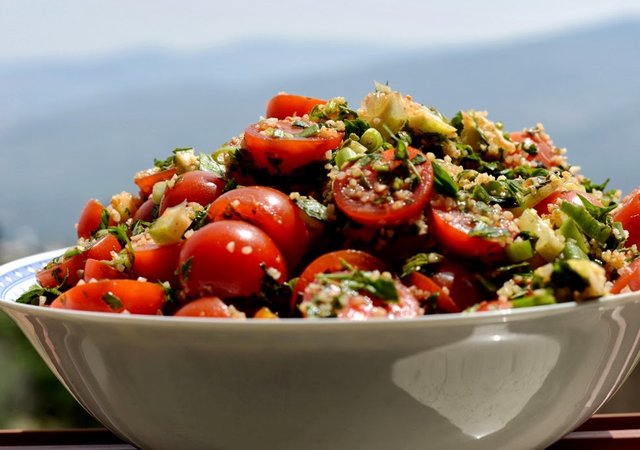
Ingredients:
1/2 kg cherry tomatoes
6 spring onions
I lemon
1/2 bunch fresh parsley (about 1 cup, chopped)
1/2 cup fresh mint, chopped
3 tablespoons fine burghul
1/2 teaspoon sweet paprika
Optional: 1/4 teaspoon hot paprika
1/2 cup freshly squeezed lemon juice
1/4 cup good olive oil
Slice cherry tomatoes in half. Finely chop spring onions and mix with tomatoes. Chop parsley and mint as finely as possible. Add to tomatoes. Dice lemon into small pieces, with rind and add to tomatoes.
Soak burghul for at least 15 minutes in lightly salted water. When burghul is soft, add to salad. Mix well.
Sprinkle paprika into salad mixture. Add lemon juice and olive oil. Correct flavors with salt and black pepper. Mix well.
The salad should be prepared at least 30 minutes before serving.
Serve at room temperature.
Our hint: Freeze and thaw the lemon ahead of time: it will soften and be easier to cut.
You’ll enjoy these additional Middle Eastern recipes from Green Prophet:
All photos courtesy of Paul Nirens.
Morocco to Tender Two More Solar Power Plants
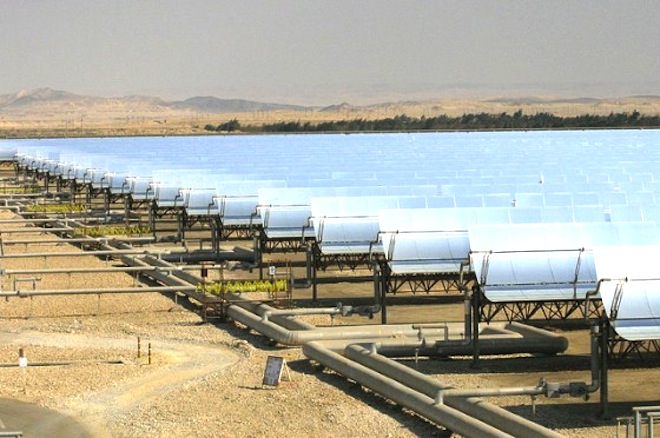
Morocco recently announced that it has pre-selected several solar power producers to build two additional concentrated solar power plants (CSP) in Ourzazate. Saudi Arabia’s Acwa Power, which is currently building a 160MW CSP plant in the same area, is among the firms picked to bid.
Zameeg: Ancient Persian Eco-Love for US Clothing Line

For as long as they’ve known each other, Mohsen and Sepideh have dreamed of having an ethical fashion line that conveys how deeply the earth, or Zameeg in ancient Persian, needs our protection. And now the dream is manifesting.
UAE & Saudi Seek Whopping $1 billion for Solar

Two of the top four oil-producing OPEC members, Saudi Arabia and the United Arab Emirates, have joined forces in a push to secure $1 billion in funding for Middle East solar-power, Bloomberg reports.
Moroccan Governor Pushes to Legalize Marijuana

Beyond the Mediterranean coastline, northern Morocco’s mountains are pocked with small scale dope farms. The government has tried hard to eradicate them, to little effect, but one governor sees green in the “illicit” plants.
Four Tweets Get Female Kuwaiti Blogger Jailed for 20 Months

Kuwait didn’t earn a mention in the “worst countries for journalism” published by online ‘zine Foreign Policy, even though three of its Middle Eastern neighbors made the cut. But it should be named and shamed for the recent prosecution of a young microblogger.

To the Dead Sea from the Red Sea Looks To Be Dead
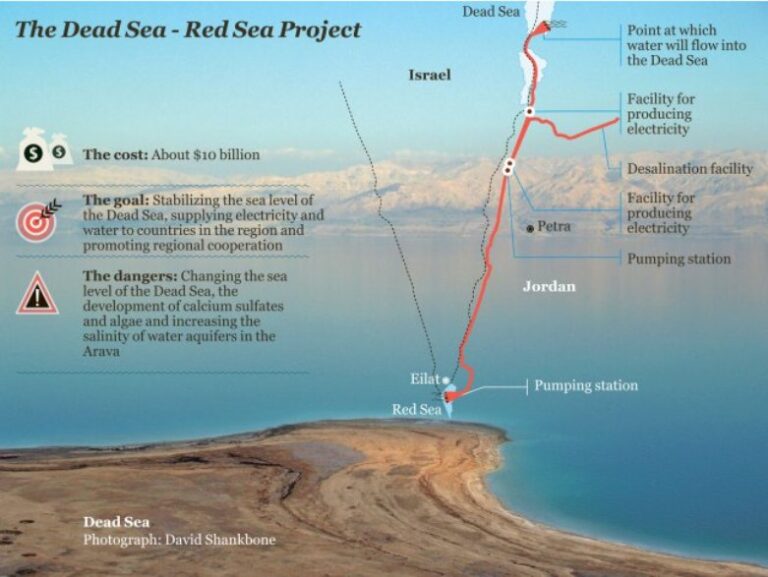
 Jordan’s Minister of Water and Irrigation and Agriculture, Hazim Al Naser, disclosed that the controversial Red-Dead Water Conveyor project may now be shelved in favor of a series of smaller schemes to provide the kingdom with drinking water.
His statements mark the first time that a ranking official questioned the project’s viability. Al Naser spoke at a recent presentation of the final Environmental Impact Assessment (EIA) for the project, where the World Bank and the Ministry of Environment advised stakeholders of the plans more dubious aspects.
Dubai’s Outdoor Workers Get Solar-Powered Cooling Hats!

Employers in Gulf countries often come under fire for making their employees work during hot summer days, when temperatures regularly hit the 40°C or 100°F mark, so the Dubai municipality came up with a curious solution.
Better Place EV Buyers are Late with Their Bill
Sunrise Ltd, the court-appointed new owners of Israel’s Better Place electric vehicle company, now known as Green EV, is struggling to pay the company’s liquidators, and other potential buyers are asking the courts to reassign assets. Green EV is having a hard time paying off its bills, and that is surprising? Step in for a short history lesson.
Israeli Kobi Levi Still Designing Outrageous Footwear

 Olive Oyl is so much more than a 1930’s cartoon character, she was my first role model. This dark-haired skinny-bones with the giant feet was a working woman and single mom who always had two muscle-bound sailors fighting over her. What a welcome relief from Malibu Barbie! So when I spotted a set of bulbous heels named “Olive Oyl” (image below) I had to see who was behind them.
Palestine’s First Bike Lane in Jericho Brings Oldest City Up to Speed
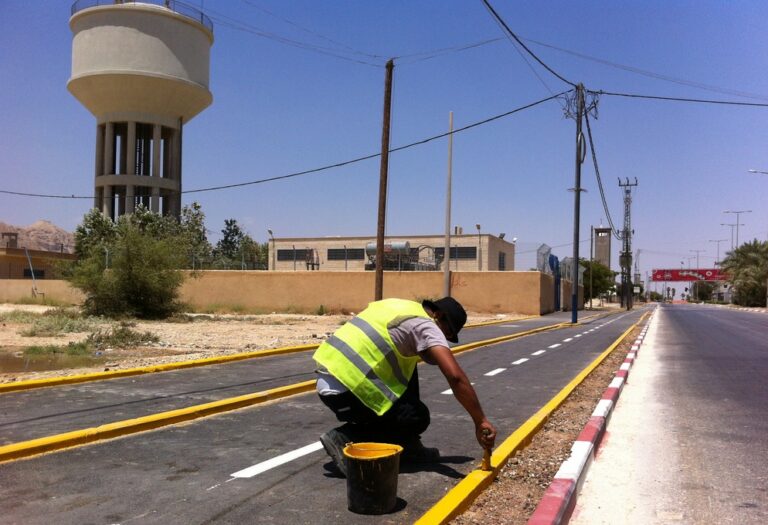
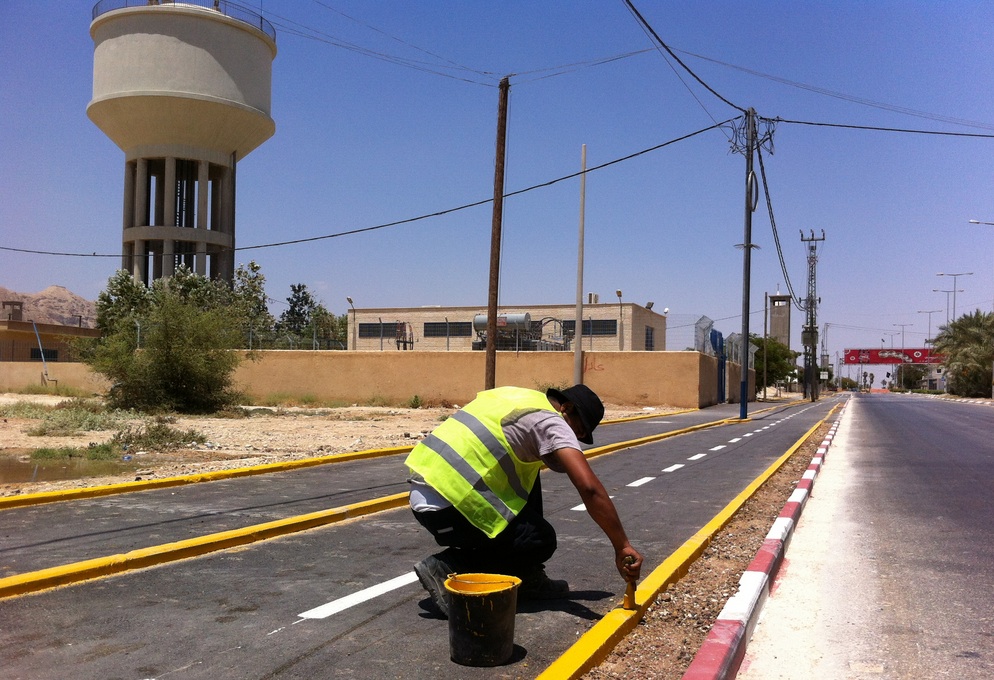
Biking enthusiasts in Palestine have welcomed the construction of the first cycle lane in the Palestinian territories on the main road leading from Jericho to Jerusalem.
The 1,200-metre two-way cycle lane on the west side of Jerusalem Street in Jericho was completed in July at a cost of 179,000 euros and will be formally opened after the end of Ramadan.
Burj Doha and Qatar’s First Vertical Garden (Photos)
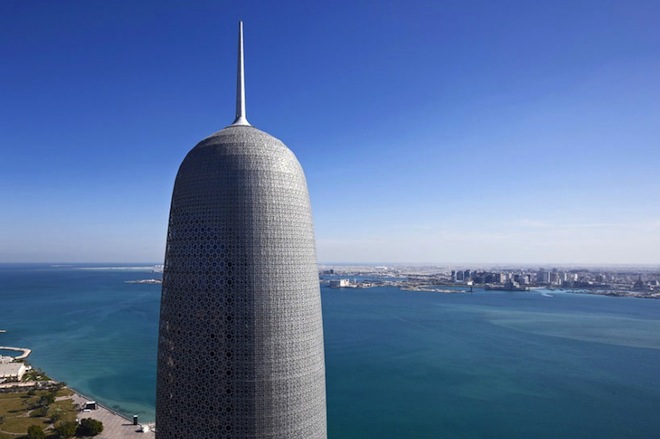
Cousin to the world’s tallest building, the rounded silhouette of Burj Doha soars over the capital of Qatar’s skyline. Designed by Jean Nouvel, it is the first building in the emirate with a vertical garden, and check out that modern mashrabiya.