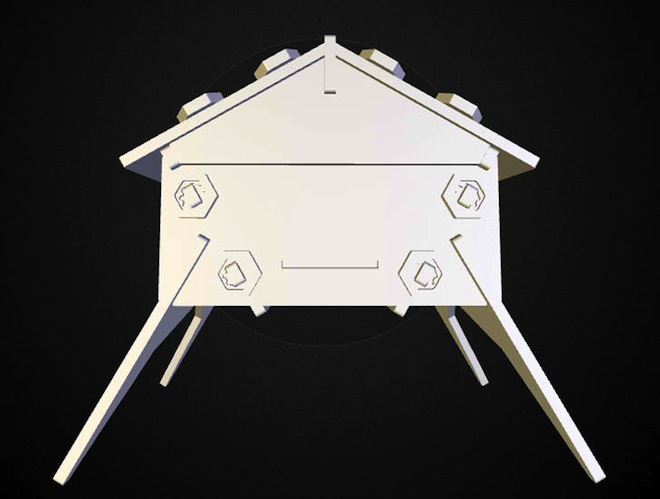
Enlisting the masses to save the bees, Open Tech Forever has developed a high tech CNC-cut hive that allows global citizens to keep an eye on our precious pollinators.
Enlisting the masses to save the bees, Open Tech Forever has developed a high tech CNC-cut hive that allows global citizens to keep an eye on our precious pollinators.
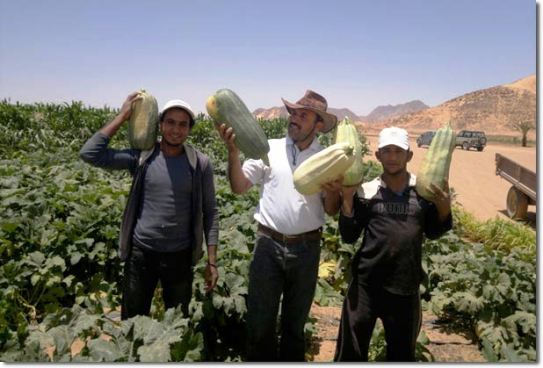
Who says you can’t make the desert bloom? The desert regions of Israel and Jordan have for years been the subject of numerous agricultural projects. Some of these projects include creating community gardens by residents of desert towns; and being involved in epic Sahara forest projects. Now let’s look at what’s happening in Wadi Rum.

Residents of Abu Dhabi might be familiar with buildings made from palm leaves and earth, but cardboard? Legendary Japanese architect Shigeru Ban built Design Souq – a mobile, recyclable pavilion made entirely out of cardboard that is every bit as sturdy as brick or stone.
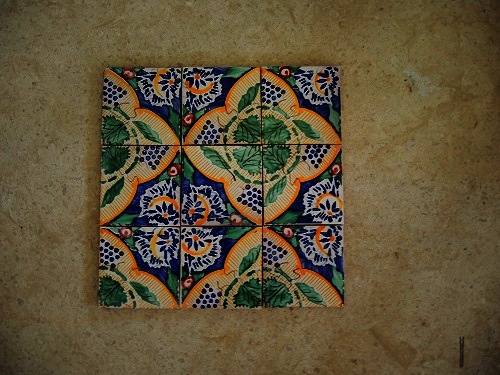
The history of handmade tiles in Tunisia is fascinating. Green Prophet digs deep between the tiles of a rundown factory in Roman Neapolis, Nabeul, a historic tile making center in Tunisia, to discover what fragments remain of this disappearing art.


We love olive oil and hummus, but there is more to the Mediterranean diet than just food. UNESCO has recently added the rituals, knowledge, and skills associated with the food common to residents of Cyprus, Croatia, Spain, Greece, Italy, Morocco, and Portugal to its list of heritage “intangibles” that are worthy of protection.
To eat cous cous, chickpea soup or other spicy Moroccan dishes means to consume not just the plate of food at hand, but also a long history of rich cultural tradition, ritual, and knowledge – from animal husbandry to water management and terraced agriculture.
This accumulated knowledge and tradition is so rich and so important that UNESCO, which is also tasked with protecting physical landmarks and historical monuments as heritage sites, believes they deserve urgent safeguarding.
Which is why they added The Mediterranean Diet and other intangible cultural relics from the Middle East and North Africa to their heritage site.
“The Mediterranean diet involves a set of skills, knowledge, rituals, symbols and traditions concerning crops, harvesting, fishing, animal husbandry, conservation, processing, cooking, and particularly the sharing and consumption of food,” writes the group.
“The Mediterranean diet emphasizes values of hospitality, neighbourliness, intercultural dialogue and creativity, and a way of life guided by respect for diversity.”
Turkish coffee – that potent caffeinated soup common throughout the region – has also been added to the list of cultural relics that should be preserved.
“Turkish coffee combines special preparation and brewing techniques with a rich communal traditional culture,” according to UNESCO.
“Traditionally, Turkish coffee is made in a finjan,” according to our in-house food writer Miriam Kresh to preface this fantastic recipe.
“It’s a special pot with a long handle, wider at the bottom so that most of the grounds stay behind when you pour the coffee out. In the Middle East, they’re commonly available. But if you don’t have a finjan, any small pot still makes good coffee.”
UNESCO calls the tradition itself a symbol of hospitality and friendship that “permeates all walks of life.”
“An invitation for coffee among friends provides an opportunity for intimate talk and the sharing of daily concerns.”
Other rituals from the region include the annual pilgrimage to the mausoleum of Sidi And el-Qader Ben Mohammed, a trip that nomadic and settled Sufi communities undertake a pilgrimage beginning each year on the last Thursday of June, as well as practices and knowledge linked to the Imzad of the Tuareg communities of Algeria, Mali and Niger.

Some more convincing evidence that the effects of global warming are real and now. Nasa’s satellites have recorded the coldest temperature ever recorded on earth this week –– a freezing -94.7C.

Park your complaints about cramped seats.The growing gripe in the flying experience lies in luggage fees as costs for checked bags rise (and weight allowances reduce).
But there is a loopy loophole that luggage jackets want to solve. Airlines don’t (yet) regulate the weight of passengers’ clothing. Why carry luggage when you can wear it instead?
New luggage jackets let you skirt the rules as you cram your essentials into their roomy reinforced pouches. So what if you look like the Michelin man, you’ve saved cash and beaten baggage claim lines too. And ponder the carbon reduction as you lessen dependence on diesel-fueled baggage tugs and electric baggage handling systems. Fashion can save the world!
 1. Rufus Roo (about $50 above) is the simplest form of wearable luggage: an ultra-light polyester utility vest with huge pockets that can stow a weekend’s worth of clothes and amusements, even a laptop. Load it up, pop it on, and catwalk your way through check-in.
Stuff it into the overhead bin once you board the plane. It’s got a 10kg loading limit, likely because the fabric is so thin. It also comes in tiny sizes, letting the kids earn their plane fare by schlepping their own gear.
 2. Stuffa (about $115) (above) was created more to provide additional storage than to replace a full suitcase. It’s a stylized flak-jacket with 12 concealed pockets. Two external pockets allow easy access to essentials like your phone, passport, or tickets. This one comes with a loading max of 5kg.
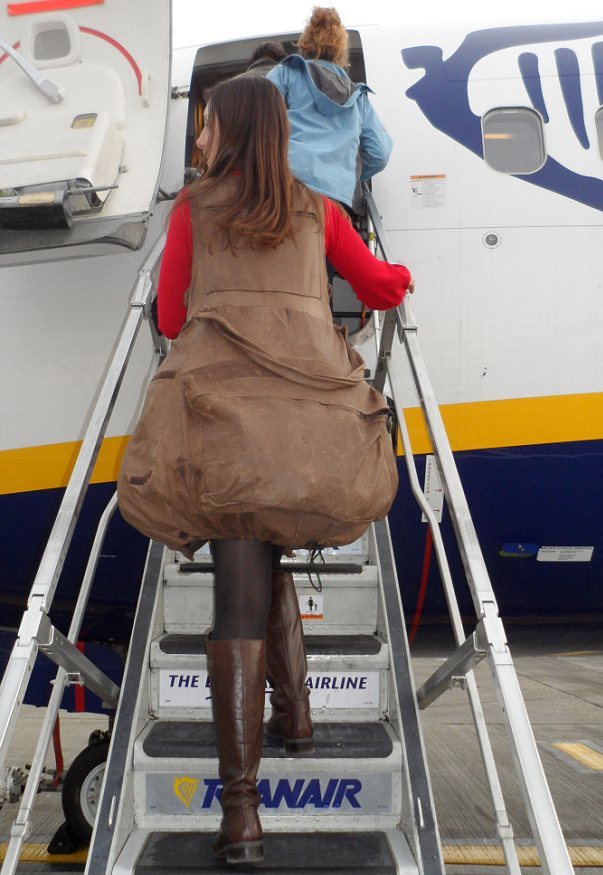 3. Jaktogo (starting at about $105) also works as a garment just long enough to get you past boarding. It’s enormous (pictured above and in lead “x-ray” photo) with massive pockets and a complicated packing process that involves lots of Velcro. Made of polyester, it’s lightweight and weather resistant, and also comes in leather and denim versions. Assume a positive reply to the query, “Does this suitcase make my ass look big?”, but there’s no flight discount gain without a bit of sartorial pain.
4. Bagket (about $115) is a shape-shifting jacket that allows you to carry it as a bag until you check-in. Then put it on as a jacket, bypassing baggage baloney, and cleverly revert it to a carry-on case once you board the flight. It’s big, with 22 pockets. Made from strong polyamide fabric with durable shoulder straps and heavy duty zippers, it seems able to exceed the recommended 7kg of packing. Check out the video, above, to see how it works.
The concept of dual-function clothing isn’t new.. My job once demanded frequent flying between Dublin and Glasgow; a 50 minute flight on an infamous low-cost Irish carrier. My meager carry-on was given over to a laptop and paperwork. I could snap up toothpaste and shampoo once I landed, but what about everything else?
Decades earlier, I’d scored a bright orange field jacket at a Patagonia discount outlet in Maine. Lightweight yet impervious to wind and water, it was my go-to gear for sailing or skiing, with enough pockets to replace a backpack.
It wasn’t rocket science to see how this beauty could fix my airborne commute, and it became my flying uniform. Pockets bulged with socks and underwear, a paperback and travel documents, and a few sheep’s worth of yarn to keep me knitting along the way. The only limit on what I could (freely!) take with me was the weight my back could handle.
Today there are loads of wearable luggage options on the market. Check them out; they’ll help you to Keep Calm and Carry On.
![Step back Amazon drones, Amazon rockets will deliver packages in 5 minutes or less [video]](https://www.greenprophet.com/wp-content/uploads/Amazon-Rockets.png "Step back Amazon drones, Amazon rockets will deliver packages in 5 minutes or less [video]")
Amazon’s drones are expected to deliver packages within 30 minutes, but they’ll also clog the skies, make a terrible noise, and encourage even more excessive consumerism. Zach King’s hilarious spoof video explores the issues with Amazon rockets that will “deliver packages in five minutes or less.”


Some good news out of the Middle East region for a change: It was announced at the Israel Business Forum that Israel has signed an historic water-sharing agreement with Jordan and the Palestinian Authority. But not all parties are happy with political manoeuvrings around the announcement.


The good news is that 800 tons of Syria’s chemical weapons are scheduled to be destroyed before the end of December. The bad news is, the byproducts of this chemical weapon destruction will be dumped into the Mediterranean Sea where they could damage fragile ecosystems.
![Palestinians make epic Volvo “Split” video to highlight Gaza energy crisis [video]](https://www.greenprophet.com/wp-content/uploads/gaza-split-van-damme-video-energy-768x438.jpg "Palestinians make epic Volvo “Split” video to highlight Gaza energy crisis [video]")

You’ve probably seen the Volvo video where a zen-looking Jean Claude van Damme does the splits. Now in a hilarious parody from the Gaza Strip, Tashwesh Productions does a low-scale production to highlight the Gaza energy crisis. Watch this video below and share it with all your friends!

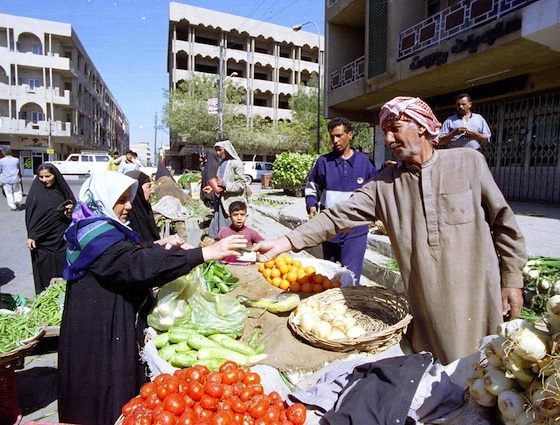 Want to get close to Iraqi food traditions and culture? This cook book is for you. Lyrical memoirs of Nawal Nasrallah’s childhood in Iraq, and the place that food had in that culture, drift through the pages, pausing for sidebars that offer tidbits like four paragraphs on ancient wives in ancient kitchens.
Or samples from a tenth-century cookbook. Or amusing little line drawings, or a page on an abandoned Jewish delicacy made from cattail reed pollen.
 After a scholarly introduction the recipes begin on Chapter One, Bread. It’s studded with proverbs, folk songs, photographs, drawings, and transcriptions of ancient documents relating to food. Can you resist a recipe for a bread called Lover’s Window? Its sweet, sesame-sprinkled bread whose dough is stretched out in the middle to make holes that you can peer through.
And that’s only the first chapter. The second, dealing with dairy products, includes a modern recipe for Geymer, a thick clotted cream, with a folk song comparing a lover’s white cheeks to it. In all, there are 20 chapters that cover vegetables, salads, snacks, sandwiches, side dishes, meat main dishes, stuffed foods (where the emphasis is on kubba), fish, poultry, grains and beans. savory pastries, every kind of sweet, and beverages. One chapter is dedicated to rice alone.
It’s easy to see that the author has tested and cooked every recipe herself. Tips and hints are attached to the recipes, that can only have come from her kitchen experience. The photographs aren’t gorgeous, but more than adequate to express appetizing foods like baked fish stuffed with za’atar and sumac. From simple peasant food like the combination of rice and lentils known as majadra, to a sumptuous, entire lamb stuffed with almonds, rice, raisins, peas and spices, this cookbook will keep the creative cook busy for at least a year, if one chooses to cook everything in it.
The great thing about all this delicious exotic cooking is that almost always, ingredients are easily found. Most are already in your pantry. Some ingredients may have to be especially shopped for, like tamarind concentrate or sumac, but if you enjoy browsing through Middle East markets, that’s just part of the fun.
At the end of the book are sections on menus (including pages on historical table manners and hygiene), an excellent glossary and recipe index, a bibliography, and separate indexes covering ancient, medieval, and Ottoman foods and ingredients, plus a name and subject index. This book is a treasure. It’s just a matter of parking it somewhere in your kitchen where you can flip it open and go on to cook the next mouthwatering recipe.
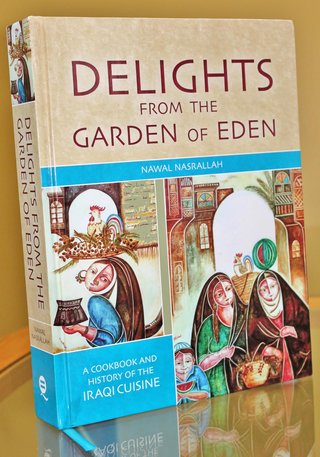
A Cookbook and History of the Iraqi Cuisine is the sub-title of this food encyclopedia.
Ms. Nasrallah was a professor of English and Comparative Literature at the universities of Baghdad and Mosul. Her English translation of the 10th-century Annals of the Caliph’s Kitchens and Delights From The Garden of Eden have won Gourmand World Cookbook Awards in 2007. We reviewed her book Dates here on Green Prophet.
Delights From The Garden of Eden: a cookbook and history of the Iraqi cuisine.
Equinox Publishing Ltd.
ISBN 978-1-84553-457-8.
574 pages.
You can order Ms. Nasrallah’s books online here.
Recipes from Nawal Nasrallah:

The environmentalists trying to protect the birds might not be happy, but as Turkey continues to be the address for investments for some of the world’s largest mega companies, General Electric takes the lead in wind.

I founded Green Prophet because I truly believe that the people of the prophets – the monotheistic faiths of Judaism, Christianity and Islam can see eye to eye in the Middle East when we talk about shared environmental problems and solutions.

Have news to share? Renewable energy news, architectural, artificial intelligence, biotech, sustainable design ideas, eco-architecture, green travel?
Email us: [email protected]
Get important news delivered directly to your inbox and stay connected!
© 2007 to 2026 Green Prophet, All Rights Reserved