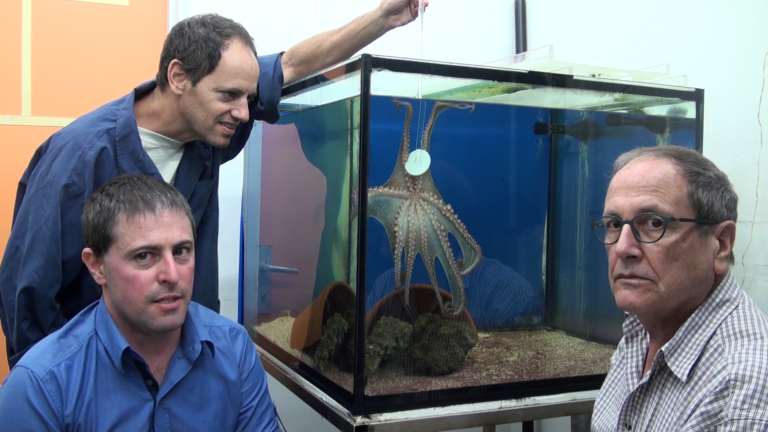
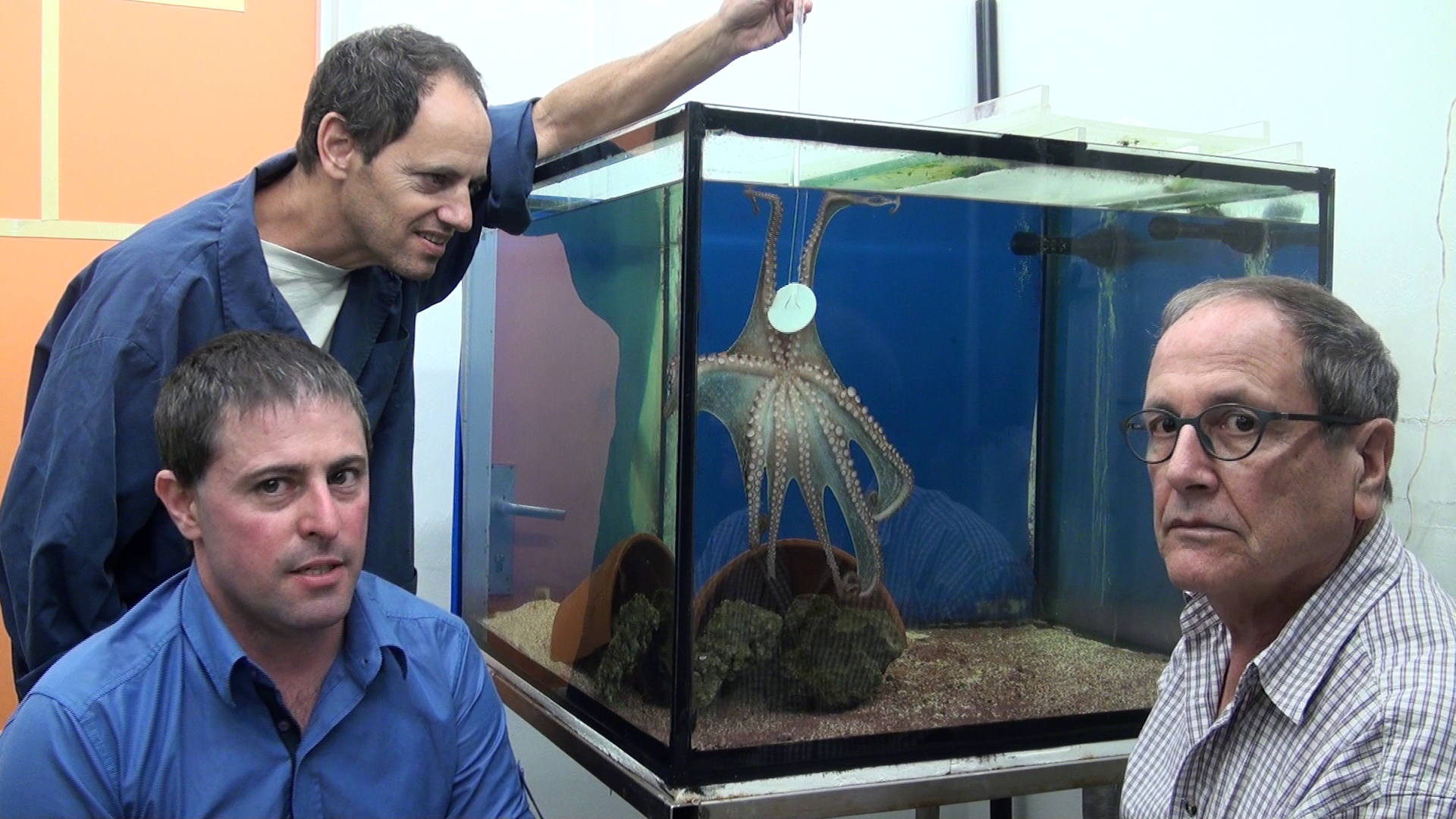
This is one for the kids to answer at dinnertime: An octopus’s arms are covered in hundreds of suckers that will stick to just about anything, with one important exception: those suckers generally won’t grab onto the octopus itself. If they did, the flexible animals would quickly find themselves all tangled up.
Jameel prizewinner reinvents the iconic Middle Eastern rug
Green Prophet’s brought you the story behind this year’s winner of the Jameel Prize – 3, an international award for contemporary design inspired by ancient Islamic tradition. But there are nine other finalists who warrant a closer look. Meet fiber artist Faig Ahmed – guaranteed his amazing rugs will trip you up!
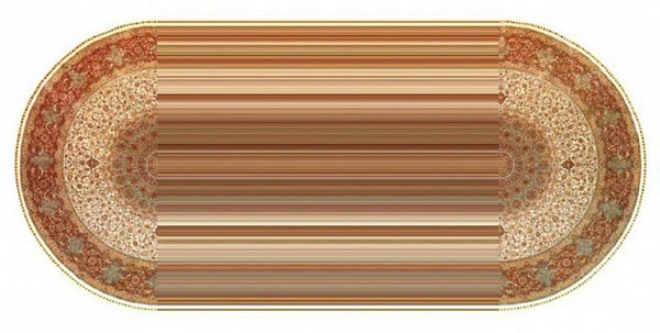
The Azerbaijan-based mixed-media artist redefines the visual boundaries of iconic middle eastern carpets by distorting the conventional structure of their generally symmetrical patterns. The striking results invite us to look back to the originals with new appreciation of traditional forms. His work is reminiscent of Irish photographer David Thomas Smith who “Google maps” major cities into virtual Persian carpets.
Most of Ahmed’s work revolves around the construction and deconstruction of the intricately patterned rugs and carpets native to Azerbaijan, Iran, and Turkey. He rearranges aspects of traditional composition, sometimes pulling fragments into three dimensions.
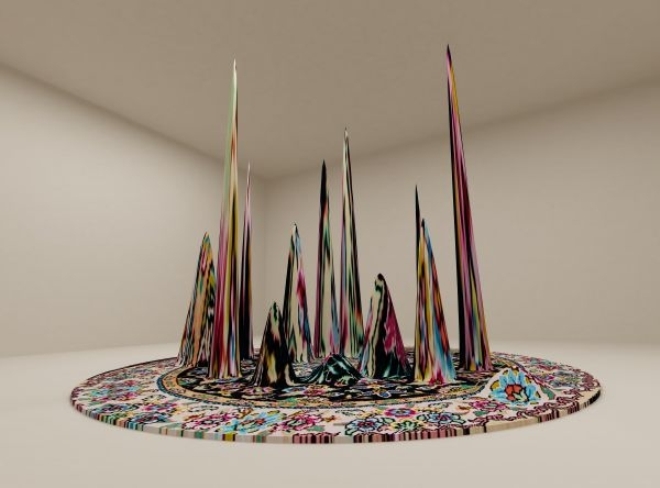
“To be honest, things I do are not always right and beautiful. I do it without thinking, it’s my instantaneous expression. I just make bold experiments, putting them into the art scene, trusting myself and my viewers,” he told website DZineTrip.
This experimentation leads to style mash-ups like tagging a classical pattern with graffiti (painstakingly woven into the piece – no spray paint was hurt in the making of this carpet!).
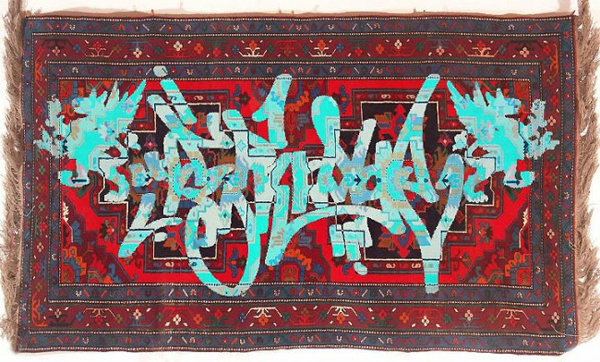
The artist views the carpet as a symbol of invincible Middle East tradition, an enduring icon; a painstakingly crafted artwork that functions – often for centuries – as a pragmatic household artifact. A slight change in form dramatically alters its structure, and in the process, pulls it into the 21st Century.
In his artist’s statement, Ahmed says “I’ve been always fond of investigating and researching every detail of anything that had interested me and sometimes this research reaches inconceivable depths mixing up with my imagination. I’m harried by a question others have left in childhood – ‘what is inside?’ That’s why I’m changing visually static objects making them spatial, giving them a new depth and revealing the essence of the object – which, just a moment ago, was mediocre.”
That’s quite a mouthful – so let’s stick with the images.
The carpet pictured below was one featured in the Jameel Prize 3 Exhibition held at London’s Victoria & Albert last April. The classical pattern devolves into pixels as the expert handcrafting and brilliantly colored fibers remain consistent. It’s simultaneously jarring and gorgeous.
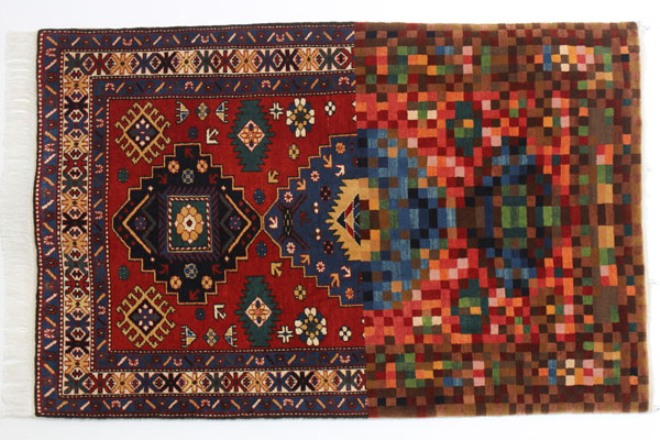
Ahmed uses ancient, handmade techniques (employing local artisans) to create designs inspired by digital corruption and image manipulation. His rug patterns swirl and melt and bloat – sometimes dripping off walls or literally unraveling.
Check out his website (link here) for more of his wild reinterpretations. His carpets have been featured in the Wall Street Journal, Beautiful Decay, The Grumpy Owl and Stylus. Based in Azerbaijan capital Baku, there is no information as to when or if his rugs will be commercially available.
Deadly Turkish mine explosion spurs massive social protest
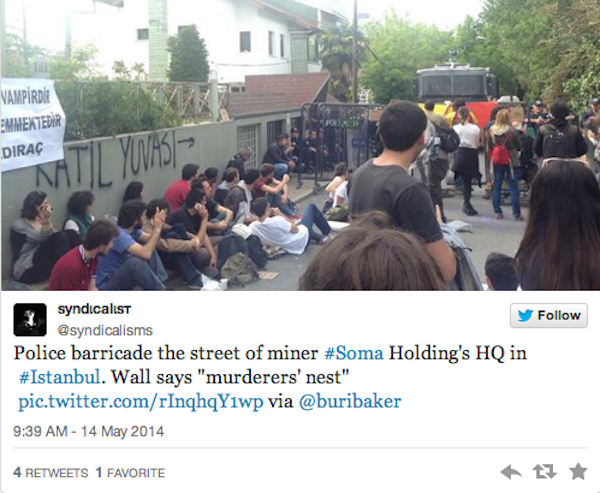
Protests broke out across Turkey after an explosion at a coal mine on Tuesday afternoon has killed at least 270 people. Opposition politician Ozgur Ozel recently proposed to investigate mine safety following earlier deaths, but the government shut him down. Now outraged citizens are urging Prime Minister Recep Tayyip Erdogan to resign.
Green up or ship out – Saudi clamps down on construction industry
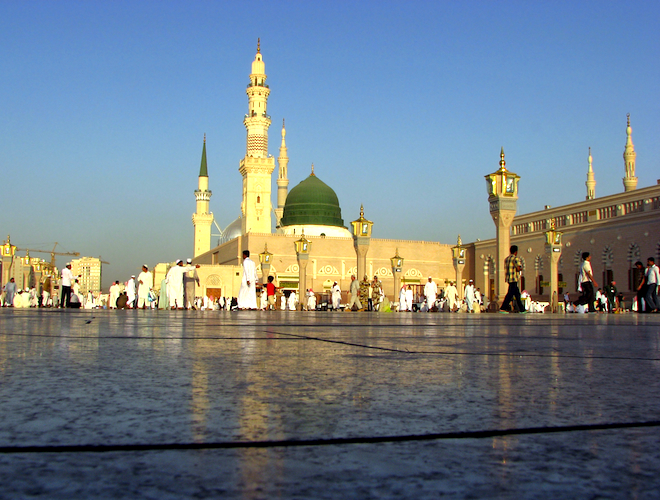
Saudi Arabia has announced that the construction industry has five years to “green” up their business. Amid a massive construction boom, the Presidency of Meteorology and Environment (PME) has decreed that all companies must reduce their air, water and noise pollution in keeping with regulations approved in 2008.
Soylent, a beige goop alternative to eating food?
A liquid formula that goes down easy and provides you enough nutrients for the day. Would you ever start eating soylent?
MERS means ride camels with masks, and pass on the camel burger?
About 500 people have died from the Middle East Respiratory Syndrome (MERS) believed to be transmitted by camels. And now Saudi Arabia is issuing a warning to camel handlers. This warning should go into effect for tourists who seek out the thrill of a camel ride as well.
3-D print your makeup for a gorgeous carbon footprint!
The $55 billion beauty industry may have been dealt a fatal blow by a brainy Harvard Business School beauty! Inventor Grace Choi has come up with a way to circumvent pricey cosmetics counters with a point-and-click process in your own home or office. Choi lets you turn any phone, camera or computer into your own personal beauty store!
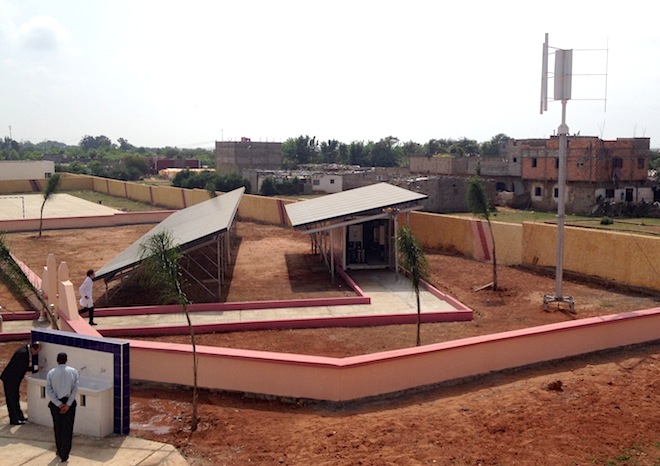
IRIS sea pods make energy and a social statement in Beirut
Remember the old days in Beirut when you could actually see the Mediterranean Sea? The crew over at Najjar & Najjar Architects remember, and they want it back! Their Kinematic IRIS sea pods are designed to not only provide refuge for residents living in the shadow of urban regurgitation, but to generate energy as well.
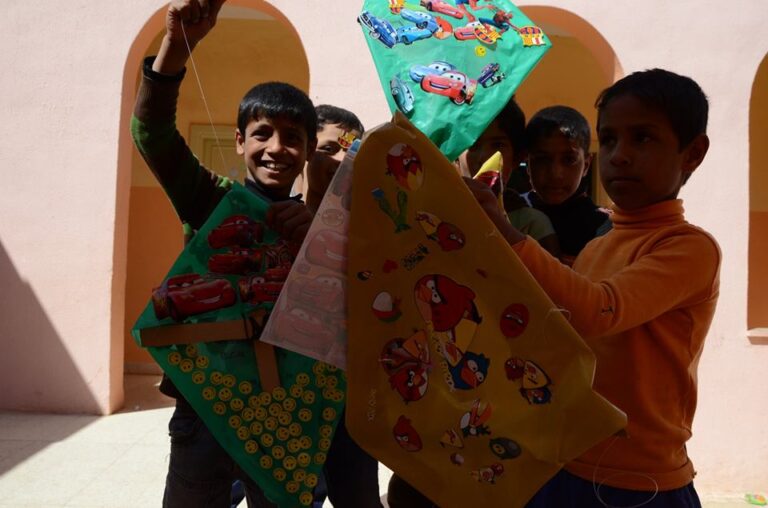
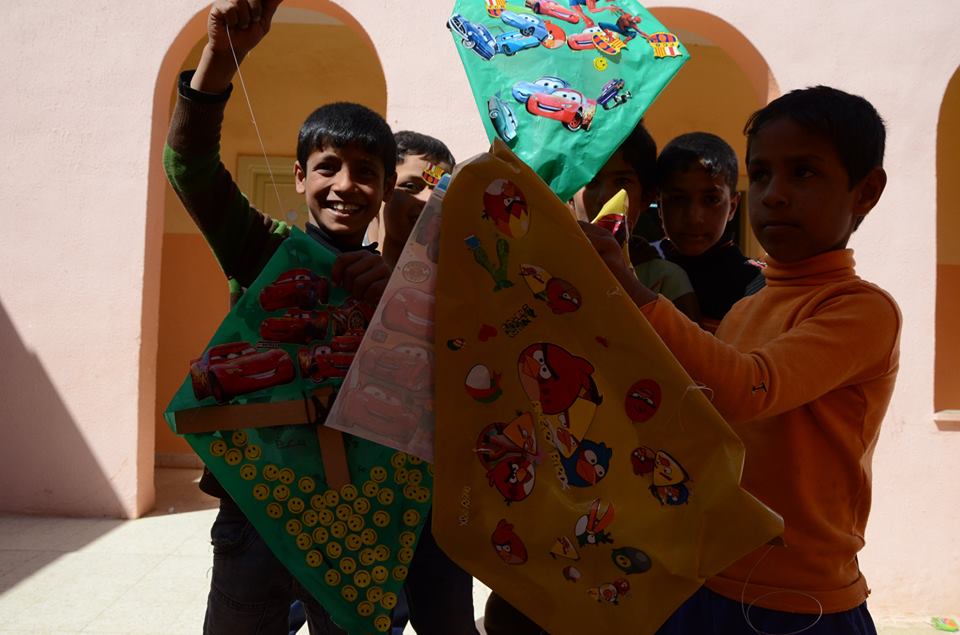
Syrian refugee children upcycle Jordan’s litter into kites
Syria’s war has killed 150,000 people and forced more than three million from their homes. About a million of these refugees live in Jordan and as many as 200,000 have lived in the Zaatari refugee camp near Jordan’s Syrian border. This Green Prophet visited nearby Zaatari village where another 500 refugees live.
Moroccan desert spider flees predators in 6.6 ft back flips
Ever seen a spider do back flips? If you have arachnophobia, you might not want to, but for everyone else, the spinning Cebrennus rechenbergi desert spider in Morocco is quite a sight.
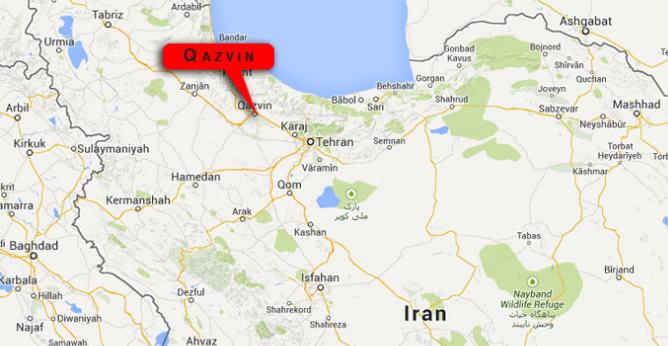
Massive mystery explosion in Iran

According to local news reports, a massive fire has torn through the city of Qazvin, north Iran. The blast is suspected by some to be nuclear in origin and high numbers of casualties are expected.
Tires upcycled as Arabian stools
Rubber tires are pure nastiness, especially when they’re no longer useful for cars. They languish in landfills, provide habitat for mosquitoes and rats, and often cause horrendous fires – like this one in Kuwait that was visible from space. Hit the jump to find out how Hala Smadi is putting them to good (re)use in Jordan.
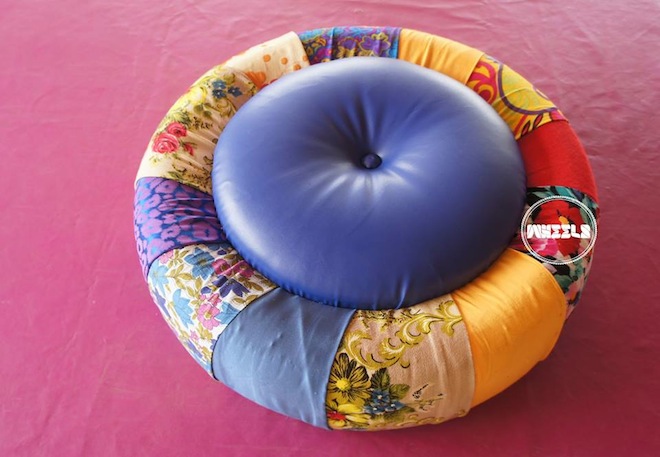
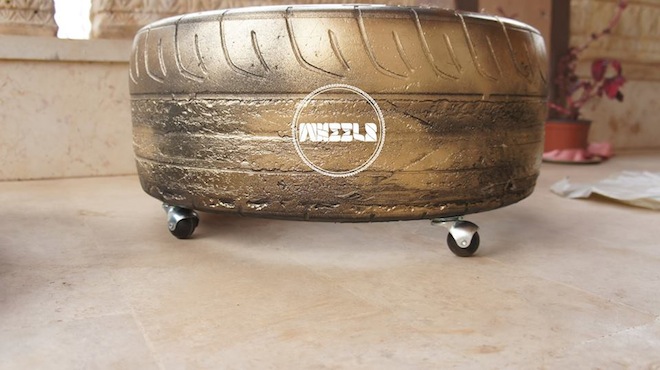
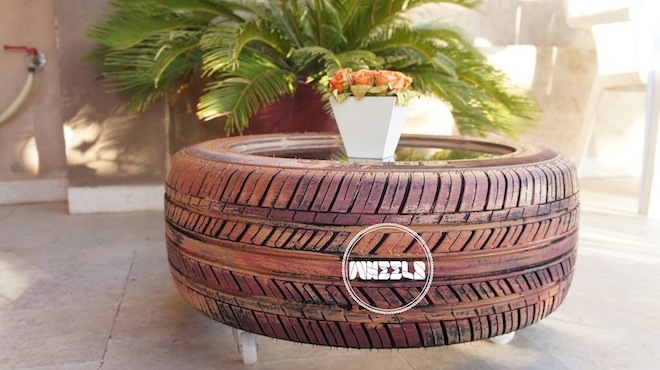
A graphic designer, Hala Smadi also has a way with recycled tires. Similar to Bokja’s tires wrapped in exotic and colorful fabrics as a form of protest in Lebanon, Smadi’s recycled “Wheels” also puts disused tires to new purpose.
After rolling the tires to the nearby gas station where they are cleaned, the Petra University graduate brings the tires back to her own home and then weaves some kind of special magic.
Either she paints them in elaborate designs to be used as plant pots, or covers them in durable fabrics (often sent from Dubai by her Aunt who lives there) for use as a decorative piece, or even upcycles them as hipster stools.
Related: Bokya burns tires to protest pollution in Beirut
Speaking to Humanity Can Wait (HCW), a great website that chronicles grass roots art, culture, design and activities in Jordan, Smadi describes how interest from people both in Jordan and abroad spurred her to pursue this line of decorate Wheels (which many might see as a particularly disgusting thing to have in one’s house.)
In addition to being a unique way to express her talents, Wheels allows Smadi to attack a particularly vexing situation that the entire MENA region faces – mountains of scrap tires that are vectors of disease and potentially dangerous because of the way they retain heat and cause fires.
Asked by HCW how she finds her chosen medium, Shami says:
Anywhere and everywhere! I go around shops asking for wheels all the time. It’s incredibly time-consuming and hectic. I do buy some of them sometimes, but other times a lot of people give them to me. There are a lot of potential uses for old wheels and tires, but most of them are just thrown away. It’s a really good opportunity for me to recycle them.