
Israel’s Best-Loved Vegetables Carry Heavy Pesticide Loads

israeli-produce-pesticides

Are Israelis eating a mouthful of pesticides for breakfast?

If there’s one food group that Israelis love, it’s vegetables. In fact, all over the Middle East, vegetables are treated with love and presented at table in infinite artful ways. And people are picky about their produce, carefully inspecting each tomato and cucumber before consenting to buy.

But health hazards lurk on the well-loved produce. According to Haaretz, 11% of produce tested by the Israel Health Ministry showed unacceptably high levels of pesticide residues. Of over 5000 samples taken from 108 kinds of foods, 56% had traces of different pesticides.

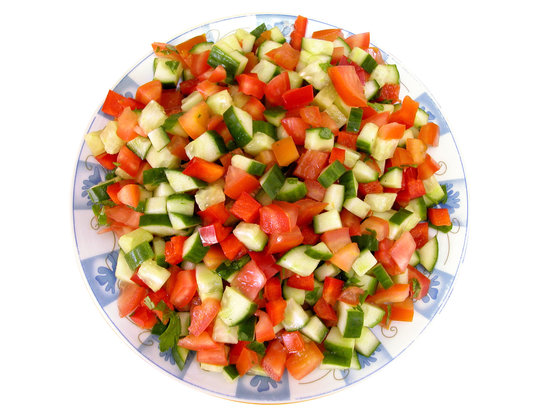
A scary tomato yielded 50 kinds of residues, while a cucumber showed 30 types. 46 kinds of pesticides were found on parsley. Those are the main ingredients of the famous Israeli salad. Are Israelis indeed eating pesticides with every bite of salad? Studies like the one showing how pregnant Jerusalemite women have higher pesticide levels in their bodies than pregnant New Yorkers  support this suspicion.

Even so, the Health Ministry stated that the pesticide residues on produce don’t represent a public health risk. Their argument is that the quantity of pesticides on raw samples doesn’t represent the quality of the same food when it’s peeled and cooked. Then there was the study from Stanford University that concluded that organic food isn’t really healthier.

The Israel Union for Environmental Defense (and common sense) reply that health risks to sensitive populations like children, people with allergies, and the elderly are not yet known, nor what the accumulative effects may be.

At least, there is awareness of the issue in Israel, and testing occurs regularly. Fish and eggs are said to have minimal excess pesticide residues; poultry none. No excess, that is – just “acceptable” levels . Israelis won’t find pesticide-free foods unless they have connections with organic farms. Still, it’s a move forward.  The samples of this study were collected from 2006-2010. A later study from 2008-2011 resulted in the banning of three organophosphates and limiting Simazine, another herbicide.

One wonders what pesticide levels might be present in the produce of other Middle Eastern countries, where regulations are not up-to-date and enforcement is slack, or as in Egypt, where the former agriculture minister allowed the importation of carcinogenic pesticides.

I’m looking forward to the appearance of the first “bio-strawberries.” New in the markets last year, these berries are far sweeter and more flavorful than the usual commercial ones. It’s worth the little trouble of more washing to rid them of grit, for the authentic flavor and health benefit of fruit grown organically.

Read more about pesticides in the Middle East:

::Haaretz

Image of Arab salad via Shutterstock.
Miriam Kresh
Miriam Kreshhttps://www.greenprophet.com/
Miriam Kresh is an American ex-pat living in Israel. Her love of Middle Eastern food evolved from close friendships with enthusiastic Moroccan, Tunisian and Turkish home cooks. She owns too many cookbooks and is always planning the next meal. Miriam can be reached at miriam (at) greenprophet (dot) com.
1 COMMENT
  1. Only organically grown vegetables are safe to eat. All nations should make that the requirement for all their food producers, which means truck gardens instead of mega-farms.

Comments are closed.

Hot this week

The Christ’s thorn (sidr tree) is also a well-known folk medicine

Christ’s thorn jujube (Ziziphus spina-christi) also known as the sidr tree is a real, identifiable tree native to the Middle East, and it appears—directly or indirectly—in Islam, Judaism, and later Christian tradition. The connections between the three faiths are not theological agreements but overlapping uses, names, and symbolic associations rooted in the same landscape.

Farm To Table Israel Connects People To The Land

Farm To Table Israel is transforming the traditional dining experience into a hands-on journey.

The Lote Tree of the Utmost Boundary, explained

In Islamic tradition, there is a point where creation ends — a boundary that marks the limit of what any created being can reach. That boundary is called Sidrat al-Muntahā, often translated as “the Lote Tree of the Utmost Boundary.”

The Air Tea Kettle creates a new way to meet plants and herbalism

Air Tea is a new technology. Instead of drinking tea, you inhale herbal vapor through warm air extraction. There is no water and no combustion. The warm air releases essential oils that are often lost in hot water and digestion.

Why Health Systems Are Reaching a Turning Point

Health emerges from a continuous energy and material flow from water through food to human physiology. Technical energy systems support this cycle through water treatment, agriculture, and infrastructure.

Topics

The Christ’s thorn (sidr tree) is also a well-known folk medicine

Christ’s thorn jujube (Ziziphus spina-christi) also known as the sidr tree is a real, identifiable tree native to the Middle East, and it appears—directly or indirectly—in Islam, Judaism, and later Christian tradition. The connections between the three faiths are not theological agreements but overlapping uses, names, and symbolic associations rooted in the same landscape.

Farm To Table Israel Connects People To The Land

Farm To Table Israel is transforming the traditional dining experience into a hands-on journey.

The Lote Tree of the Utmost Boundary, explained

In Islamic tradition, there is a point where creation ends — a boundary that marks the limit of what any created being can reach. That boundary is called Sidrat al-Muntahā, often translated as “the Lote Tree of the Utmost Boundary.”

The Air Tea Kettle creates a new way to meet plants and herbalism

Air Tea is a new technology. Instead of drinking tea, you inhale herbal vapor through warm air extraction. There is no water and no combustion. The warm air releases essential oils that are often lost in hot water and digestion.

Why Health Systems Are Reaching a Turning Point

Health emerges from a continuous energy and material flow from water through food to human physiology. Technical energy systems support this cycle through water treatment, agriculture, and infrastructure.

Sustainability That Sells: How Profit and Purpose Come Together in the Hive

Whether you are a commercial grower, hobbyist beekeeper or retail equipment supplier, this system opens a new income stream with minimal environmental impact.

The Fitness App Revolution: Building the Future of Wellness Through Strategic Development

In an era where smartphones are ubiquitous and health consciousness is at an all-time high, the fitness industry has undergone a radical digital transformation. Fitness applications have moved far beyond simple pedometers, evolving into comprehensive wellness platforms that serve as personal trainers, nutritionists, and community hubs right in our pockets.

A Brief History of Basil From India to Italy

Beloved, fortunate, sweet, and royal; an herb with a long and storied history in Asia and across the world. Called by many names, basil has featured in previous Green Prophet articles, so enjoy another serving, a brief history of basil.

Related Articles

Popular Categories