Aging Israeli Nuclear Reactor Could Face Meltdown if Cooling System Fails

Israel’s aging nuclear facilities are “beyond safe operating ages“.

It sits in the middle of Israel’s Negev desert region, far from the Mediterranean seacoast and the possibility of a catastrophic 14 meter high Tsunami like the one which severely damaged the Japanese Fukushima nuclear power plant. It’s also not in nearly as serious an earthquake zone as the Japanese nuke plants. Yet, Israel’s aging and outdated scientific nuclear reactor near the town of Dimona could very well be approaching the possibility of facing a meltdown crisis of its own if the 50 year old cooling system fails to protect the reactor’s nuclear core.
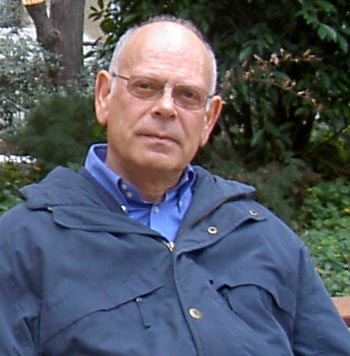
Prof. Uzi Even

This fear is now being expressed by Professor Uzi Even, a well known chemistry academic and former member of Knesset, who spent his military service working at the Dimona reactor, according to an article in Globes.

According to Professor Even, when interviewed by Globe’s reporter, he compared the Dimona reactor to those built in Japan during the late 1950’s:

“The reactors were built about the same time, 40-50 years ago. In principle, the planning of the reactors is similar. The soft underbelly is the cooling system, which must be operated with great force, even after the reactor is turned out. If there is a breakdown in the cooling system, it will cause the core to collapse. That’s what happened at the Japanese reactors.”

This is not the first time that Prof. Even has spoken up about the Dimona reactor he knows so well. In another interview with YNet News back in April, 2010, Even said that he believes it is time that Israel end its so-called “nuclear ambiguity” and agree to sign the international Nuclear Non-Proliferation Treaty.
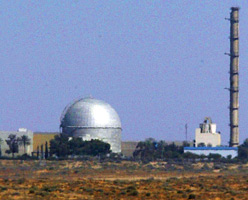
Dimona reactor: outdated technology

His article at that time coincided with rumors that Israel may be “ready to come out of the nuclear closet” by considering the building of at least one nuclear power plant.
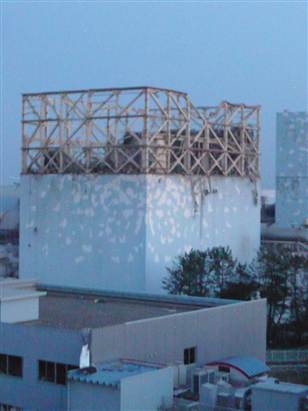
Could Dimona reactor become like this?

Building new nuclear reactors to replace the aging one at Dimona, is something very critical, according to Prof. Even, who told YNet’s reporters:

“The policy prevents the supply of necessary materials and goods for the development of our nuclear capabilities, and prevents the proper training of scientists. It prevents us from building a nuclear reactor in Israel instead of the one in Dimona, which has long ago passed the age in which it should have been shut down.”

The professor added that countries like India and Pakistan started out with policies of ambiguity but now are recognized in the international nuclear field.

By continuing the same nuclear policy Israel is not able to replace the aging reactor at Dimona with a modern and safer one. Due to the still ongoing  nuclear plant crises in Japan, however, Israeli Prime Minister Binyamin Netanyahu now says that his country has no current plants to build a nuclear power plant facility, even though it was recently said that a nuclear power plant might be built in the country’s northern Negev region.

The only “good news” to the issue of the aging Dimona reactor is that due to its small size – much smaller that those in Japanese nuclear facilities, the danger of  radioactive contamination from a breakdown would be a lot less.

Is that really good news?

Read more on Israeli and Japanese nuclear reactors:

As Japanese Nuke Plants Meltdown, Israel May Build a “Safe” One in the Desert

Is Israel Coming Out of the Nuclear Closet by Planning a Nuclear Power Station?

Israel Seeks to Build Nuclear Power Plants with Arab Neighbors

Photo: Wikipedia.org

Maurice Picow
Maurice Picowhttps://www.greenprophet.com/
Maurice Picow grew up in Oklahoma City, U.S.A., where he received a B.S. Degree in Business Administration. Following graduation, Maurice embarked on a career as a real estate broker before making the decision to move to Israel. After arriving in Israel, he came involved in the insurance agency business and later in the moving and international relocation fields. Maurice became interested in writing news and commentary articles in the late 1990’s, and now writes feature articles for the The Jerusalem Post as well as being a regular contributor to Green Prophet. He has also written a non-fiction study on Islam, a two volume adventure novel, and is completing a romance novel about a forbidden love affair. Writing topics of particular interest for Green Prophet are those dealing with global warming and climate change, as well as clean technology - particularly electric cars.

Hot this week

Why Health Systems Are Reaching a Turning Point

Health emerges from a continuous energy and material flow from water through food to human physiology. Technical energy systems support this cycle through water treatment, agriculture, and infrastructure.

Sustainability That Sells: How Profit and Purpose Come Together in the Hive

Whether you are a commercial grower, hobbyist beekeeper or retail equipment supplier, this system opens a new income stream with minimal environmental impact.

The Fitness App Revolution: Building the Future of Wellness Through Strategic Development

In an era where smartphones are ubiquitous and health consciousness is at an all-time high, the fitness industry has undergone a radical digital transformation. Fitness applications have moved far beyond simple pedometers, evolving into comprehensive wellness platforms that serve as personal trainers, nutritionists, and community hubs right in our pockets.

A Brief History of Basil From India to Italy

Beloved, fortunate, sweet, and royal; an herb with a long and storied history in Asia and across the world. Called by many names, basil has featured in previous Green Prophet articles, so enjoy another serving, a brief history of basil.

How Renewable Energy is Revolutionizing the Way We Power Our World

Solar has become the star of the transition thanks to modular hardware and straightforward installation. It fits dense cities and remote towns alike. Many companies are turning to rooftop arrays and carport systems - and exploring commercial solar installation as a practical way to lock in future savings.

Topics

Why Health Systems Are Reaching a Turning Point

Health emerges from a continuous energy and material flow from water through food to human physiology. Technical energy systems support this cycle through water treatment, agriculture, and infrastructure.

Sustainability That Sells: How Profit and Purpose Come Together in the Hive

Whether you are a commercial grower, hobbyist beekeeper or retail equipment supplier, this system opens a new income stream with minimal environmental impact.

The Fitness App Revolution: Building the Future of Wellness Through Strategic Development

In an era where smartphones are ubiquitous and health consciousness is at an all-time high, the fitness industry has undergone a radical digital transformation. Fitness applications have moved far beyond simple pedometers, evolving into comprehensive wellness platforms that serve as personal trainers, nutritionists, and community hubs right in our pockets.

A Brief History of Basil From India to Italy

Beloved, fortunate, sweet, and royal; an herb with a long and storied history in Asia and across the world. Called by many names, basil has featured in previous Green Prophet articles, so enjoy another serving, a brief history of basil.

How Renewable Energy is Revolutionizing the Way We Power Our World

Solar has become the star of the transition thanks to modular hardware and straightforward installation. It fits dense cities and remote towns alike. Many companies are turning to rooftop arrays and carport systems - and exploring commercial solar installation as a practical way to lock in future savings.

How does one start prepping?

Faced with an extreme winter storm this year, Americans wonder how to be prepared for catastrophe. Miriam has lived through wars in the Middle East - so she's prepared on giving you a guide to prepping.

Fishermen sue tire manufacturers on behalf of the salmon

A federal trial in San Francisco has brought US tire manufacturers, fishing groups, and environmental scientists into court over a chemical most drivers have never heard of — but which scientists say may be silently reshaping aquatic ecosystems.

Listening to Water: Tarek Atoui’s Next Work for Tate Modern

Born in Beirut, Lebanon in 1980 and now living in Paris, Atoui has spent years building instruments that don’t sit comfortably in concert halls. Many of them involve water, glass, and ceramics — materials that react to sound instead of simply producing it.

Related Articles

Popular Categories