
World Cup 2022: Is Qatar Too Hot To Bid?

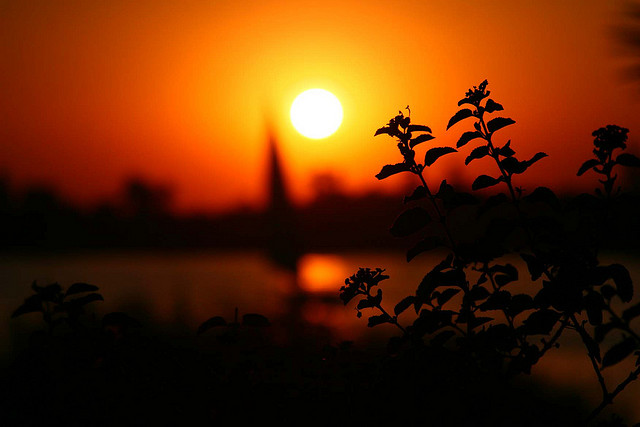
soccer-ball-on-fireQatar aims to build twelve stadiums for the 2022 World Cup in one of the hottest places on earth? Will that plan go up in smoke?

Even the most stalwart fans are bound to protest a FIFA decision to hold the 2022 world cup in Qatar. Aren’t they? From July to September, although humidity levels do simmer down slightly, the United Arab Emirates is one giant fireball. But the Qatar Foundation is pushing its Stadium and Sports Complex design anyway, which will address the heat problem by incorporating solar power and other undisclosed techniques.

In a recent discussion with AMEinfo, the architects discuss the challenges of hosting the world cup in the desert, and claim that modern stadiums can define the city in which they’re built. Does Qatar really want to be the country that tried to defy nature’s limits with this costly design?Mark Fenwick, who is RFA Fenwick Iribarren Architects’ Senior Partner, spoke to AMEinfo.

“Certainly the most important challenge for stadium design in the Middle East has to do with the need to cool the interior environment to an acceptable level, especially in the summer months,” he said.

However, he claims that northern countries have to be concerned with heating, and that people rarely dispute that as ardently as they dispute the need for cooling. Nonetheless, Mr. Fenwick views this as an interesting challenge that he washes down with the “R” word (emphasis added).

“One of the most exciting challenges in modern stadiums in the Middle East, is to develop a design which allows cooling for the players and the spectators, and to resolve a responsible energy source, such as solar power,” he said.

While that may be the case, can’t we use stadiums that have already been built? (Qatar plans to build twelve structures for 2022 if they win the bid.) Can we really afford to keep on building more giant structures that will thereafter be left for dead?

Consider South Africa: Politicsweb claims that the country will have to spend the equivalent of nearly $20 million every year to maintain its six swanky new stadiums. The world cup may have brought the country together but everyone is back at each others throats, and as one person noticed it’s now time to “Kak en betaal,” an Afrikaans expression that means “sh#t and pay up.”

And then there is Qatar’s image. Writing for Huffington Post, Anne Peterson, who works for Education City, lauded the Qatar Foundation for its desire to “develop with integrity,” elevating the Emirate’s best intentions over “the crass indulgence of Dubai.”

If this is true, and if the stadium does become the “symbolic representation of a culture” as Mr. Fenwick suggests, then what message will Qatar send?

That nature poses no limits on humanity?

:: AMEinfo

More architectural news from the UAE:

Ferrari Theme Park Revs Up Abu Dhabi’s Ecological Demise

Gerard Evenden Lifts Masdar’s Veil Of Mystery – Half Way

American “Eco-Geek’s” First Week At The Masdar Institute

image via HalfBloodPrince74
Tafline Laylin
Tafline Laylinhttp://www.greenprophet.com
As a tour leader who led “eco-friendly” camping trips throughout North America, Tafline soon realized that she was instead leaving behind a trail of gas fumes, plastic bottles and Pringles. In fact, wherever she traveled – whether it was Viet Nam or South Africa or England – it became clear how inefficiently the mandate to re-think our consumer culture is reaching the general public. Born in Iran, raised in South Africa and the United States, she currently splits her time between Africa and the Middle East. Tafline can be reached at tafline (at) greenprophet (dot) com.
2 COMMENTS
  1. They are claiming that their new stadiums will be built to be dismantled and donated to other countries, so no white elephants. Regardless I do agree with you that its the worst possible venue. Imagine the fans walking in and out of the ‘cooled’ stadia? They will be drenched by the humidity by the time they get in. Be prepared to see a lot of naked fans and with alcohol consumption and the heat there will be many medical emergencies.

Comments are closed.

Hot this week

How Renewable Energy is Revolutionizing the Way We Power Our World

Solar has become the star of the transition thanks to modular hardware and straightforward installation. It fits dense cities and remote towns alike. Many companies are turning to rooftop arrays and carport systems - and exploring commercial solar installation as a practical way to lock in future savings.

How does one start prepping?

Faced with an extreme winter storm this year, Americans wonder how to be prepared for catastrophe. Miriam has lived through wars in the Middle East - so she's prepared on giving you a guide to prepping.

Fishermen sue tire manufacturers on behalf of the salmon

A federal trial in San Francisco has brought US tire manufacturers, fishing groups, and environmental scientists into court over a chemical most drivers have never heard of — but which scientists say may be silently reshaping aquatic ecosystems.

Listening to Water: Tarek Atoui’s Next Work for Tate Modern

Born in Beirut, Lebanon in 1980 and now living in Paris, Atoui has spent years building instruments that don’t sit comfortably in concert halls. Many of them involve water, glass, and ceramics — materials that react to sound instead of simply producing it.

Leading Through a Dual-Energy Transition: Balancing Decarbonisation with Energy Security

Experience in one area of the energy industry isn't enough to guarantee readiness across all the others. That's where a structured program like an MBA in energy can come in. Today's advanced curricula explore energy economics, finance, policy, and strategic management alongside the technical subjects. And when pursuing an energy MBA online, professionals can skill up and retrain without having to step out of the labor market -- an important perk at a time when skilled professionals are already in short supply.

Topics

How Renewable Energy is Revolutionizing the Way We Power Our World

Solar has become the star of the transition thanks to modular hardware and straightforward installation. It fits dense cities and remote towns alike. Many companies are turning to rooftop arrays and carport systems - and exploring commercial solar installation as a practical way to lock in future savings.

How does one start prepping?

Faced with an extreme winter storm this year, Americans wonder how to be prepared for catastrophe. Miriam has lived through wars in the Middle East - so she's prepared on giving you a guide to prepping.

Fishermen sue tire manufacturers on behalf of the salmon

A federal trial in San Francisco has brought US tire manufacturers, fishing groups, and environmental scientists into court over a chemical most drivers have never heard of — but which scientists say may be silently reshaping aquatic ecosystems.

Listening to Water: Tarek Atoui’s Next Work for Tate Modern

Born in Beirut, Lebanon in 1980 and now living in Paris, Atoui has spent years building instruments that don’t sit comfortably in concert halls. Many of them involve water, glass, and ceramics — materials that react to sound instead of simply producing it.

Leading Through a Dual-Energy Transition: Balancing Decarbonisation with Energy Security

Experience in one area of the energy industry isn't enough to guarantee readiness across all the others. That's where a structured program like an MBA in energy can come in. Today's advanced curricula explore energy economics, finance, policy, and strategic management alongside the technical subjects. And when pursuing an energy MBA online, professionals can skill up and retrain without having to step out of the labor market -- an important perk at a time when skilled professionals are already in short supply.

From Green Energy to Healthy Societies: Why old systems thinking is becoming relevant again

Across the Middle East and North Africa, large investments are being made in green hydrogen, renewable energy, water infrastructure and sustainability. Most of these efforts are discussed in the context of climate change, decarbonization and economic diversification. That framing is important, but it may not capture their full value.

We saw peace – an interreligious encounter deep in our eyes

They came from Israel, Palestine, Jordan, Iraq, Yemen, Morocco, Tunisia, Lebanon, Egypt… There are Sunni Muslims, Shiite Muslims, Jews (Orthodox and Reform), Orthodox Christians, Coptic Christians, Protestant Christians, Druze, Baha'is, a Scientologist.

Can biochar reduce ‘Forever Chemicals’ in food if it’s used in farms?

Biochar is produced by heating organic material in a low-oxygen environment so it does not burn. This process, known as pyrolysis, transforms plant matter into a stable, carbon-rich material.

Related Articles

Popular Categories