
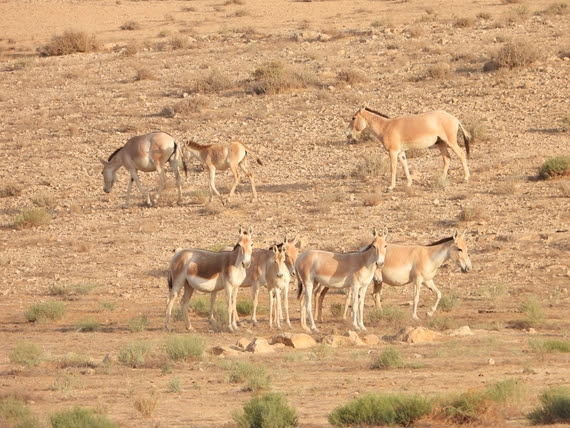
Israel and the UAE find that animal conservation can be as easy as adding new watering hole

Adding a watering hole increases mating opportunities

Sometimes conservation doesn’t begin with moving animals around in cages or intervening in their genes. Sometimes it begins with something quieter and easier: where you place water, how you let a landscape develop, how you choose to share its resources. And in this research project, it’s a first for me: the first one that I have seen that is funded between the UAE, and Israel. Peace happens when partners have a common interest

A research team from Ben-Gurion University of the Negev is suggesting that small, thoughtful shifts in habitat management can ripple outward into the genetic future of a species.

In a paper published this month in Ecological Applications, Dr. Shirli Bar-David, Prof. Amos Bouskila, and PhD researcher Noa Yaffa Kan-Lingwood explore how the simple redistribution of essential resources can reshape mating systems, reproductive success, and ultimately genetic diversity in wild populations.

Their case study takes us into the Negev Desert, where the Asiatic wild ass (Equus hemionus) still moves across a harsh and beautiful terrain. Here, survival (and love!) revolves around water.

Related: see how watering holes are helping animals in the jungle

These animals follow a mating system known as resource-defense polygyny: males establish territories near scarce water sources, and in doing so, gain access to females. Control the water, and you shape the social order, hypothesized the researchers.

So they something deceptively simple: they increased the number of water points from one to three. The result wasn’t just ecological, it was social, and political.
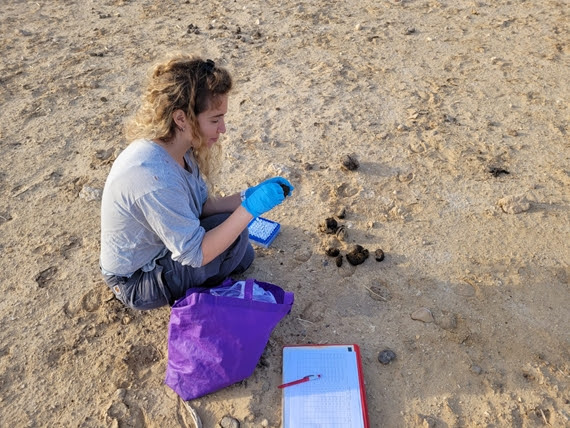
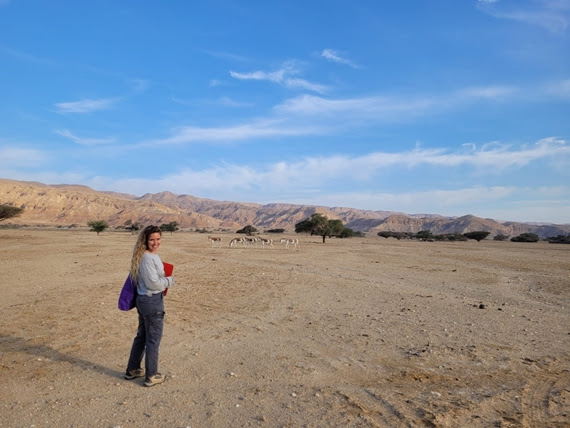
Researchers augment the reserve in low-cost ways for monumental success: supplied by BGU

Before the intervention, only about 16% to 18% of males held territories and reproduced. Afterward, that number rose sharply to 42%to 48% because more males had a chance. And in terms of science, more makle voices entered the genetic conversation.

And with that, genetic diversity increased as well, from 34.9 to 38.4.

“We saw new reproducing males establishing themselves בעיקר near the new water sources,” says Kan-Lingwood, pointing to how quickly landscapes can reorganize social hierarchies when resources shift.

The new males didn’t come from nowhere. They emerged at the edges, near the newly available water, claiming space that didn’t exist before. A quiet redistribution of opportunity.

Bar-David notes that the implications stretch far beyond the Negev: species under pressure — especially those clustered around limited resources in deserts may benefit from this kind of low-intervention thinking. In a warming world, where habitats are shrinking and fragmenting, the idea that we can support genetic resilience without capture, relocation, or heavy-handed management is more than useful.

Additional contributors to the study include Dr. Liran Sagi, Prof. Alan R. Templeton, Naama Shahar, Ariel Altman, Nurit Gordon, Prof. Daniel I. Rubenstein, and Prof. Amos Bouskila.

The research was supported by the United States-Israel Binational Science Foundation and the Mohamed bin Zayed Species Conservation Fund. In the end, it’s a reminder: sometimes the most powerful conservation tool isn’t intervention. It’s placement.


LEAVE A REPLY

Please enter your comment!
Please enter your name here

TRENDING

Is Britain creating a smoke-free generation by banning sales to those born after 2008?

Today, Britain is attempting something that would have seemed unthinkable back then. Lawmakers have passed legislation designed to create a “smoke-free generation,” meaning that people who are currently children will never legally be able to purchase tobacco if the policy remains in place. They have started by promoting that sales of tobacco will be banned to anyone born after 2008. 

Japan wants to build a solar panel ring around the moon

Unlike solar power on Earth, which is limited by night cycles, weather, and seasons, the Moon offers something close to uninterrupted exposure to the Sun. By placing solar infrastructure in orbit or along the lunar surface, engineers could generate continuous clean energy at a scale that may exceed global electricity demand,  the Japanese scientists say.

African kids born in these Star Homes are less likely to die

What the Star Home demonstrates is something bigger: that health can be built into infrastructure. Instead of relying only on healthcare systems, communities can reduce disease at the source—through smarter design.

Art from Oman at the Venice Biennale

Oman is returning to the Venice Biennale with Zīnah, an immersive installation by artist and curator Haitham Al Busafi that transforms a traditional form of horse adornment into a large-scale sensory experience.

Korean researchers create battery from greenhouse gases

Professor Ji-Soo Jang, in collaboration with Professor Taekwang Yoon of Ajou University and Professor Hansel Kim of Chungbuk National University, has developed a novel energy device that generates electricity during the process of capturing greenhouse gases.

Nobul’s Regan McGee on Shareholder Value: “Complacency Is the Silent Killer” 

Why the governance framework designed to protect shareholders so...

Should You Invest in the Private Market?

startustartup Unlike public stock exchanges, which offer daily trading, strict...

How to build a 100-year-company

Kongō Gumi is a Japanese construction company, purportedly founded in 578 A.D., making it the world's oldest documented company. What can we learn about building sustainable businesses from them?

From Pilot Plant to Global Stage: How Aduro Clean Technologies’ 2026 Expansion Signals a Turning Point for Chemical Recycling Investors Like Yazan Al Homsi

The company's Next Generation Process (NGP) Pilot Plant in London, Ontario, has officially moved into initial operating campaigns, generating the kind of structured, repeatable data that separates laboratory promise from commercial viability.

How AI Helps SaaS Companies Reduce Repetitive Customer Support Work

SaaS products are designed for large numbers of users with different levels of experience, and also in renewable energy.

Pulling Water from the Air

Faced with water shortage in Amman, Laurie digs up...

Turning Your Energy Consultancy into an LLC: 4 Legal Steps for Founders in Texas

If you are starting a renewable energy business in Texas, learn how to start an LLC by the books.

Tracking the Impacts of a Hydroelectric Dam Along the Tigris River

For the next two months, I'll be taking a break from my usual Green Prophet posts to report on a transnational environmental issue: the Ilısu Dam currently under construction in Turkey, and the ways it will transform life along the Tigris River.

Related Articles

Popular Categories