The holy sidr tree can stop desertification

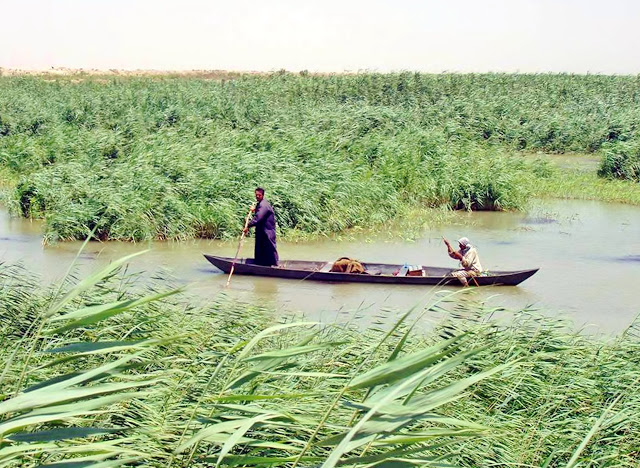
Iraq marsh people know how to live with water. New research from Iraq shows us how to reclaim the earth from the desert.

There is one tree that unites all monotheistic faiths, and it’s the sidr tree. Judaism, Islam and Christianity all have mystical connections to the tree. And besides the real-world honey that it provides (see our article on Yemeni sidr honey) Iraqi scientists say that the sidr tree, beloved by nations, can stop desertification. In a new article published by Faiza Khadim Dawood Al-Rumaydh, at the University of Thi Qar, Iraq, Sidr Trees Between Windbreaks and Production, he says the sidr (Ziziphus spina-christi) is a great contender for undoing the deserts. (We have a guide here which shows the sidr tree’s natural medicine)

“Because of their remarkable resistance to drought, salinity, and harsh conditions, sidr trees have a long history in the Arab world and around the world,” Al-Rumaydh writes.

That sentence alone explains why the sidr tree keeps showing up in conversations about desertification control. Long before sustainability plans and carbon accounting, this tree learned how to live with heat, wind, and water scarcity, and how to protect the land around it while doing so.

A complete ecosystem that provides sustainable protection for the soil

Al-Rumaydh describes the Sidr less as a single organism and more as a working ecological unit. Its deep roots reach down toward groundwater, while lateral roots spread wide to catch surface moisture. Its dense canopy slows wind instead of blocking it abruptly, reducing erosion.

A mudhif, marsh Arab home in Iraq

In dry regions where wind strips topsoil and salinity creeps upward, this matters. Sidr trees, planted in rows or allowed to mature naturally, function as biological windbreaks—quiet infrastructure that doesn’t require electricity, sensors, or software updates.

Al-Rumaydh calls the Sidr “a complete ecosystem that provides sustainable protection for the soil.”

That phrase complete ecosystem reframes the tree from crop to collaborator. The Sidr doesn’t just survive harsh conditions; it reshapes them, creating shade, stabilizing soil, and allowing other life to persist nearby.

The Sidr’s value isn’t limited to ecology. Al-Rumaydh documents its economic importance across arid and semi-arid regions, especially in Iraq. The tree produces edible fruits rich in sugars and vitamin C, leaves that double as livestock fodder during drought, durable wood, and, perhaps most famously, honey. In English, fruits from the tree are called jujubes, and you can find them in Middle East, MENA and Levantine markets.

“Sidr honey is a complete bioactive complex rather than just a natural sweetener,” Al-Rumaydh notes, explaining why it commands high prices and international demand.

That honey economy matters. In rural areas where employment options are shrinking, Sidr trees support beekeeping, small-scale agriculture, and local markets. They reward long thinking. A Sidr tree can remain productive for decades, even as surrounding conditions deteriorate.

Yemen beekeepers keep ancient tradition alive
Yemen beekeepers make honey from the sidr tree, image via FAO and reprinted with permission.

Al-Rumaydh’s paper stays firmly in the scientific lane, but it brushes up against something harder to quantify: continuity. Sidr trees have been present across Iraq and the wider region for generations.

That familiarity is part of why Sidr keeps resurfacing in modern sustainability discussions. When communities talk about restoring land, they often gravitate toward species that already belong there, not imported solutions, but remembered ones. Like the millions of mangrove trees restoring habitat in Saudi Arabia. It is also known as black magic medicine in Quranic literature, so watch out!
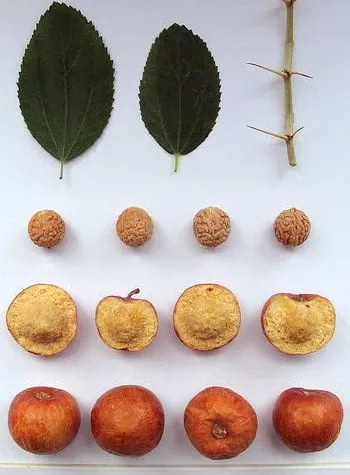
Sidr tree leaves, seeds, stems, fruit can be used for warding off the evil eye or black magic against your foes. image via IQS

Could sidr trees become part of shared restoration efforts across the region? Not as symbolic gestures, but as practical acts—windbreaks planted along vulnerable farmland, buffer zones around settlements, living barriers against soil loss. Could all the nations of the world band together and make this happen?

Al-Rumaydh is careful to note that Sidr cultivation requires planning, spacing, early irrigation, and respect for local conditions. This isn’t a miracle tree but it’s a resilient one.

For those insisting on sustainable peace, the science article and applications can be found here.


Karin Kloosterman
Karin Kloostermanhttp://www.greenprophet.com
Karin Kloosterman is an award-winning journalist, innovation strategist, and founder of Green Prophet, one of the Middle East’s pioneering sustainability platforms. She has ranked in the Top 10 of Verizon innovation competitions, participated in NASA-linked challenges, and spoken worldwide on climate, food security, and future resilience. With an IoT technology patent, features in Canada’s National Post, and leadership inside teams building next-generation agricultural and planetary systems — including Mars-farming concepts — Karin operates at the intersection of storytelling, science, and systems change. She doesn’t report on the future – she helps design it. Reach out directly to [email protected]

LEAVE A REPLY

Please enter your comment!
Please enter your name here

TRENDING

The Air Tea Kettle creates a new way to meet plants and herbalism

Air Tea is a new technology. Instead of drinking tea, you inhale herbal vapor through warm air extraction. There is no water and no combustion. The warm air releases essential oils that are often lost in hot water and digestion.

The Two Types of Beer Lovers and What It Means for Sustainable Craft Brewing

At its core, this study rewrites a long-standing assumption: that beer drinkers form a homogeneous crowd. Far from it—your audience may fall into flavor extremes. As craft brewers, you now have the tools to tailor your offerings, sharpen your sustainability goals, and deepen consumer engagement.

Make safe herbal anti-acne products and masks

The FDA is recalling certain acne medications for cancer link. Our herbalist Miriam Kresh takes her decades of experience and creates a guide to natural acne care.

Ayahuasca in 2025: Where the Sacred Vine Still Grows

But with popularity comes complexity. Indigenous leaders and activists have raised concerns about cultural appropriation, overharvesting of ayahuasca vines, and the commercialization of sacred traditions. Some Amazonian communities are pushing back, creating frameworks for reciprocity and ethical sourcing.  Organizations like The Indigenous Medicine Conservation Fund are advocating for fair compensation, intellectual property protection, and cultural sovereignty for the original stewards of the medicine.

Shilajit honey is a superfood discovered by monkeys

Shilajit honey is a powerful natural health product that...

6 Payment Processors With the Fastest Onboarding for SMBs

Get your SMB up and running fast with these 6 payment processors. Compare the quickest onboarding options to start accepting customer payments without delay.

Qatar’s climate hypocrisy rides the London Underground

Qatar remains a master of doublethink—burning gas by the megaton while selling “sustainability” to a world desperate for clean air. Wake up from your slumber people.

How Quality of Hire Shapes Modern Recruitment

A 2024 survey by Deloitte found that 76% of talent leaders now consider long-term retention and workforce contribution among their most important hiring success metrics—far surpassing time-to-fill or cost-per-hire. As the expectations for new hires deepen, companies must also confront the inherent challenges in redefining and accurately measuring hiring quality.

8 Team-Building Exercises to Start the Week Off 

Team building to change the world! The best renewable energy companies are ones that function.

Thank you, LinkedIn — and what your Jobs on the Rise report means for sustainable careers

While “green jobs” aren’t always labeled as such, many of the fastest-growing roles are directly enabling the energy transition, climate resilience, and lower-carbon systems: Number one on their list is Artificial Intelligence engineers. But what does that mean? Vibe coding Claude? 

Somali pirates steal oil tankers

The pirates often stage their heists out of Somalia, a lawless country, with a weak central government that is grappling with a violent Islamist insurgency. Using speedboats that swarm the targets, the machine-gun-toting pirates take control of merchant ships and then hold the vessels, crew and cargo for ransom.

Leopoldo Alejandro Betancourt López Turned Ocean Plastic Into Profitable Sunglasses

Few fashion accessories carry the environmental burden of sunglasses. Most frames are constructed from petroleum-based plastics and acrylic polymers that linger in landfills for centuries, shedding microplastics into soil and waterways long after they've been discarded. Leopoldo Alejandro Betancourt López, president of the Spanish eyewear brand Hawkers, saw this problem differently than most industry executives.

Why Dr. Tony Jacob Sees Texas Business Egos as Warning Signs

Everything's bigger in Texas. Except business egos.  Dr. Tony Jacob figured...

Related Articles

Popular Categories