‘Arabian Ark’ is saving UAE wildlife from extinction

Arabian OnyxOryx, giraffes and cheetahs – species once facing regional extinction – are making a robust reappearance on a desert island off the coast of Abu Dhabi. Sheikh Zayed Bin Sultan al-Nahayan, founder of the United Arab Emirates (UAE), created the remote nature reserve in 1971.  Forty years after Sir Bani Yas island received its first ‘imported’ animals, over 13,000 protected creatures now call the “Arabian Ark” home.

Twenty-five species of mammals, including striped hyenas, desert lynx, and Arabian Oryx, and 170 types of birds live on the 3,500 acre reserve.  The antelope-like oryx once roamed freely across the Arabian Peninsula but rampant hunting made the species extinct in the wild. Some remained in zoos and in small nature reserves, but conservationists believe the last remaining wild Arabian Oryx killed in the Omani desert in 1972.
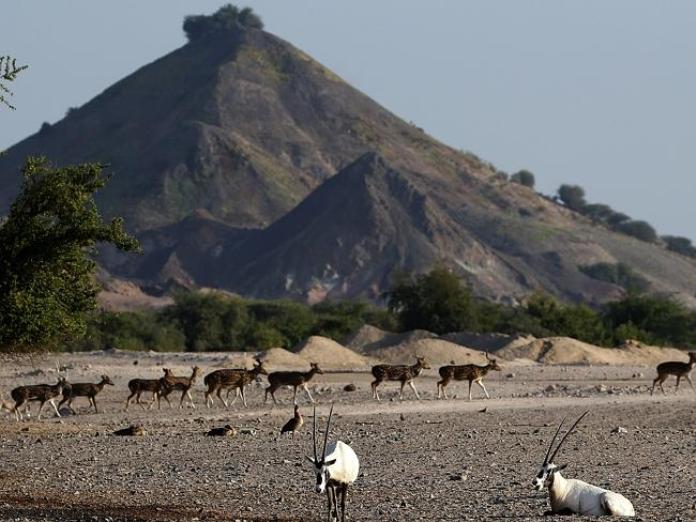
Arabian Ark nature reserve UAE

An ambitious breeding program at the Arabian Ark has produced about 500 oryx and in 2011, the International Union for Conservation of Nature removed the animal from the global list of endangered species, now classifying them as ‘vulnerable’.

Other island inhabitants include Axis deer and the Arabian tahr, a small goat-like mammal indigenous to the Hajar Mountains that cross between the UAE and Oman. Sand and mountain gazelles have been “re-wilded”, a process that teaches animals raised in captivity to survive on their own. Park managers have also introduced non-indigenous animals such as the scimitar-horned oryx, the reticulated giraffe and blackbuck antelope to the island habitat.
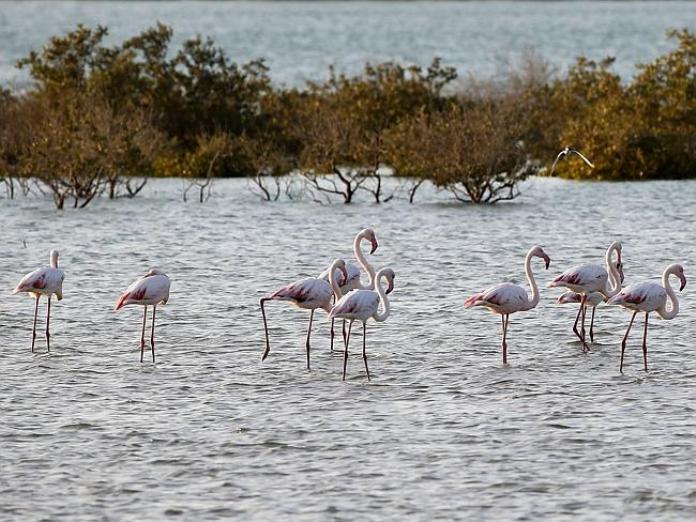
UAE nature reserve

In 2008, the reserve imported four cheetahs to help maintain a natural balance between species. They taught the captivity-bred cheetahs to hunt, mainly sand gazelles. Two years later, conservationists recorded the first cheetah cubs born on the island. Like the Arabian Oryx, the once-indigenous cheetah had become extinct in the Middle East wild by the early 1970s.

The island is 106 miles from the capital of Abu Dhabi and is accessed by boat or airplane. The Tourism Development & Investment Company (TDIC) is developing the island, which opened to the public six years ago.

Visitors can explore the reserve in guided safaris, ride bikes along the expansive beachfront,  hike its wadis (valleys) and enjoy its pristine beaches. There is a water sports center for snorkeling and sailing and four resorts – three deemed “luxury”.
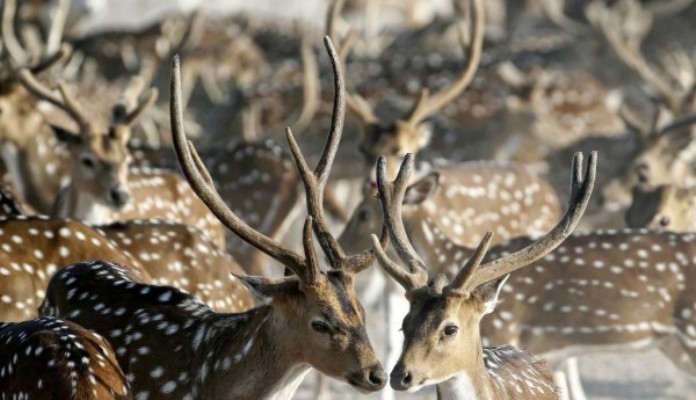
Sheikh Zayed nature reserve

“In 1992, we began exploration and excavation works and have since uncovered 36 archeological sites, most importantly a Christian monastery dating back to 600 AD,” Fatima Mutawaa of TDIC told News.Com.Au.

Each island visit results in a mangrove planting, either by tourists or by the reserve on their behalf. To date, the program has planted about 2.5 million trees on Sir Bani Yas.

Looking for an antidote to the shopping malls and skyscrapers of Dubai and Abu Dhabi? Check out Sir Bani Yas island and experience the raw, natural environment of the UAE.

Images from AFP

LEAVE A REPLY

Please enter your comment!
Please enter your name here

TRENDING

Colossal’s Veterinary Breakthrough: Pioneering Medical Care for De-Extinct Species

When the world's first de-extinct animals were born, they presented veterinary professionals with an unprecedented challenge: how do you provide medical care for species that haven't existed for over 12,000 years? The dire wolf pups at Colossal Biosciences represent not just a scientific breakthrough, but a new frontier in veterinary medicine and animal husbandry.

A Fox Rescuer’s Final Battle: Remembering Mikayla Raines of Save A Fox

The animal rescue world is mourning the tragic loss of Mikayla Raines, founder and executive director of Save A Fox Rescue, who died recently after what her friends and colleagues described as a lifelong struggle with mental illness. She committed suicide after experiencing online harassment. Her passing has left a powerful legacy—and painful questions—rippling through the fox rescue and wildlife rehabilitation communities.

How Dire Wolf Technology is Saving the Rarest Wolves on Earth

While the resurrection of the dire wolf has captured global headlines, an equally significant achievement has been unfolding alongside it: the birth of four healthy red wolf pups named Hope, Blaze, Cinder, and Ash. Using the same groundbreaking technologies developed for de-extinction, Colossal Biosciences has potentially altered the fate of North America's most endangered canid, demonstrating how ancient DNA science can directly benefit species still clinging to existence.

Seychelles and the battle with royalty, rats, and the last truly wild places left on Earth

Off the powder-soft sands and turquoise waters of the Seychelles, a quiet storm is brewing—one that involves royalty, rats, and the last truly wild places left on Earth.

Crows are nature’s mathematical geniuses and sneaky scavengers

“Claiming that it is specific to us humans, that only humans can detect geometric regularity, is now falsified,” said Andreas Nieder, the study’s lead researcher. “Because we have at least the crow.”

Qatar’s climate hypocrisy rides the London Underground

Qatar remains a master of doublethink—burning gas by the megaton while selling “sustainability” to a world desperate for clean air. Wake up from your slumber people.

How Quality of Hire Shapes Modern Recruitment

A 2024 survey by Deloitte found that 76% of talent leaders now consider long-term retention and workforce contribution among their most important hiring success metrics—far surpassing time-to-fill or cost-per-hire. As the expectations for new hires deepen, companies must also confront the inherent challenges in redefining and accurately measuring hiring quality.

8 Team-Building Exercises to Start the Week Off 

Team building to change the world! The best renewable energy companies are ones that function.

Thank you, LinkedIn — and what your Jobs on the Rise report means for sustainable careers

While “green jobs” aren’t always labeled as such, many of the fastest-growing roles are directly enabling the energy transition, climate resilience, and lower-carbon systems: Number one on their list is Artificial Intelligence engineers. But what does that mean? Vibe coding Claude? 

Somali pirates steal oil tankers

The pirates often stage their heists out of Somalia, a lawless country, with a weak central government that is grappling with a violent Islamist insurgency. Using speedboats that swarm the targets, the machine-gun-toting pirates take control of merchant ships and then hold the vessels, crew and cargo for ransom.

Leopoldo Alejandro Betancourt López Turned Ocean Plastic Into Profitable Sunglasses

Few fashion accessories carry the environmental burden of sunglasses. Most frames are constructed from petroleum-based plastics and acrylic polymers that linger in landfills for centuries, shedding microplastics into soil and waterways long after they've been discarded. Leopoldo Alejandro Betancourt López, president of the Spanish eyewear brand Hawkers, saw this problem differently than most industry executives.

Why Dr. Tony Jacob Sees Texas Business Egos as Warning Signs

Everything's bigger in Texas. Except business egos.  Dr. Tony Jacob figured...

Israel and America Sign Renewable Energy Cooperation Deal

Other announcements made at the conference include the Timna Renewable Energy Park, which will be a center for R&D, and the AORA Solar Thermal Module at Kibbutz Samar, the world's first commercial hybrid solar gas-turbine power plant that is already nearing completion. Solel Solar Systems announced it was beginning construction of a 50 MW solar field in Lebrija, Spain, and Brightsource Energy made a pre-conference announcement that it had inked the world's largest solar deal to date with Southern California Edison (SCE).

Related Articles

Popular Categories