Arab investors and land grabbers wanted by Egypt

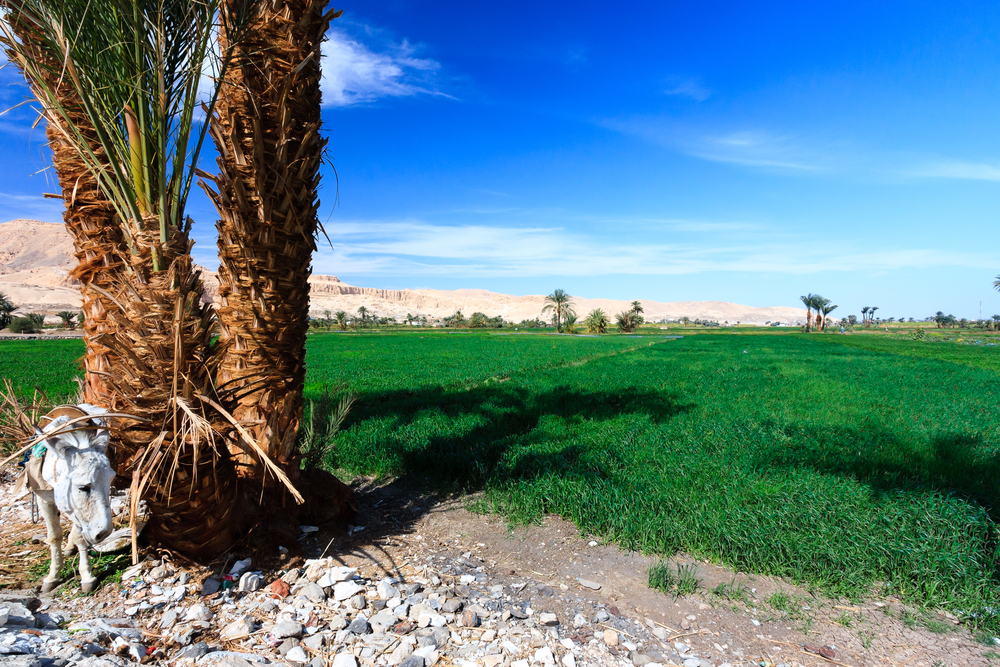
cultivated field near LuxorEgypt plans to lease 25,000 hectares of agricultural land to Arab investors. Agriculture minister Ayman Abu Hadid made the announcement in Tunis recently. Egypt is hoping that sustainable farmers will apply. 

The meeting was hosted by the Arab Authority for Agriculture Investment and Development (AAAID); it’s part of a plan to attract foreign investment in sustainably developing the country’s agriculture sector.

Egypt’s agricultural land base measures around 8.4 million feddans (an Egyptian unit of area equal to 1.038 acres) and, as of 2010, the water-starved nation imported 40% of its food.

For the past decade, Arabian Gulf nations have been exploring ways to secure tracts of agricultural land in water-rich countries in Africa and Asia.

Absent sufficient freshwater to grow crops to feed their increasing populations, nearly half a billion acres of land – eight times the area of Great Britain – were sold or leased in transnational deals – and the Middle East is among the busiest land-grabbers.

A 2012 report by the Land Matrix project, a coalition of research centers and civil societies, indicates:

  • Saudi Arabia purchased about 5.5 million acres, the largest being 675,000 acres in the Philippines by Eastern Renewable Fuels Corporation for agriculture.
  • Israel acquired about 5.9 million acres, 4.9 million of them in the Democratic Republic of Congo by an unknown investor for agriculture.

Now Egypt is jumping aboard, according to Mada Masr news, leasing land in nearby Sudan.

Attempts to buy or lease farmland have raised controversy in host countries, leading to accusations of neo-colonialism, demonstrations, and violence. At a minimum, the practice raises questions about fair pricing, implications to local labor and resultant environmental impacts.

Buying into established agricultural firms in food exporting countries such as Serbia, Nigeria and even China sidesteps most obstacles.

The AAAID is comprised of 20 Arab and African member states seeking food security for their populations.

Saudi Arabia is the largest shareholder, contributing over 22% of organizational capital, followed by Kuwait with 19.5%, and the United Emirates, Sudan and Iraq each with a 15% share.  Egypt contributes just 3%.

Hadid did not disclose where the land location or what crops would be grown, but he told Reuters Egypt that he hopes to give the land to a company partnered with AAAID.

Image of cultivated field near Luxor from Shutterstock

2 COMMENTS

Comments are closed.

Hot this week

Why Health Systems Are Reaching a Turning Point

Health emerges from a continuous energy and material flow from water through food to human physiology. Technical energy systems support this cycle through water treatment, agriculture, and infrastructure.

Sustainability That Sells: How Profit and Purpose Come Together in the Hive

Whether you are a commercial grower, hobbyist beekeeper or retail equipment supplier, this system opens a new income stream with minimal environmental impact.

The Fitness App Revolution: Building the Future of Wellness Through Strategic Development

In an era where smartphones are ubiquitous and health consciousness is at an all-time high, the fitness industry has undergone a radical digital transformation. Fitness applications have moved far beyond simple pedometers, evolving into comprehensive wellness platforms that serve as personal trainers, nutritionists, and community hubs right in our pockets.

A Brief History of Basil From India to Italy

Beloved, fortunate, sweet, and royal; an herb with a long and storied history in Asia and across the world. Called by many names, basil has featured in previous Green Prophet articles, so enjoy another serving, a brief history of basil.

How Renewable Energy is Revolutionizing the Way We Power Our World

Solar has become the star of the transition thanks to modular hardware and straightforward installation. It fits dense cities and remote towns alike. Many companies are turning to rooftop arrays and carport systems - and exploring commercial solar installation as a practical way to lock in future savings.

Topics

Why Health Systems Are Reaching a Turning Point

Health emerges from a continuous energy and material flow from water through food to human physiology. Technical energy systems support this cycle through water treatment, agriculture, and infrastructure.

Sustainability That Sells: How Profit and Purpose Come Together in the Hive

Whether you are a commercial grower, hobbyist beekeeper or retail equipment supplier, this system opens a new income stream with minimal environmental impact.

The Fitness App Revolution: Building the Future of Wellness Through Strategic Development

In an era where smartphones are ubiquitous and health consciousness is at an all-time high, the fitness industry has undergone a radical digital transformation. Fitness applications have moved far beyond simple pedometers, evolving into comprehensive wellness platforms that serve as personal trainers, nutritionists, and community hubs right in our pockets.

A Brief History of Basil From India to Italy

Beloved, fortunate, sweet, and royal; an herb with a long and storied history in Asia and across the world. Called by many names, basil has featured in previous Green Prophet articles, so enjoy another serving, a brief history of basil.

How Renewable Energy is Revolutionizing the Way We Power Our World

Solar has become the star of the transition thanks to modular hardware and straightforward installation. It fits dense cities and remote towns alike. Many companies are turning to rooftop arrays and carport systems - and exploring commercial solar installation as a practical way to lock in future savings.

How does one start prepping?

Faced with an extreme winter storm this year, Americans wonder how to be prepared for catastrophe. Miriam has lived through wars in the Middle East - so she's prepared on giving you a guide to prepping.

Fishermen sue tire manufacturers on behalf of the salmon

A federal trial in San Francisco has brought US tire manufacturers, fishing groups, and environmental scientists into court over a chemical most drivers have never heard of — but which scientists say may be silently reshaping aquatic ecosystems.

Listening to Water: Tarek Atoui’s Next Work for Tate Modern

Born in Beirut, Lebanon in 1980 and now living in Paris, Atoui has spent years building instruments that don’t sit comfortably in concert halls. Many of them involve water, glass, and ceramics — materials that react to sound instead of simply producing it.

Related Articles

Popular Categories